Learn Types Of Spin Bowling - ස්පින් බොලිං Importnat for All
Learn Types Of Spin Bowling - ස්පින් බොලිං Importnat for All
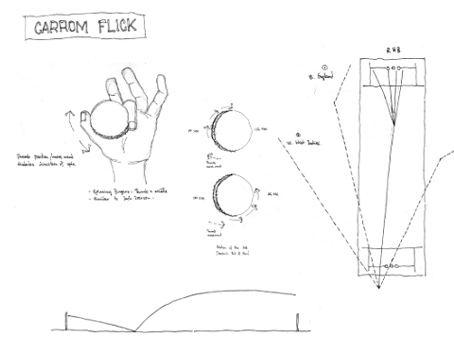
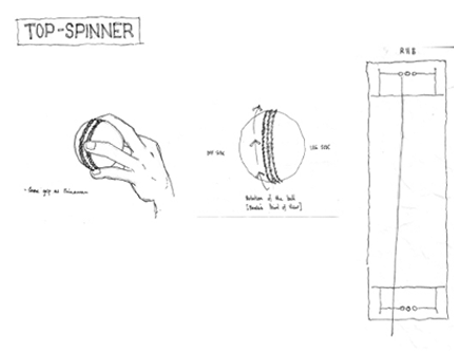
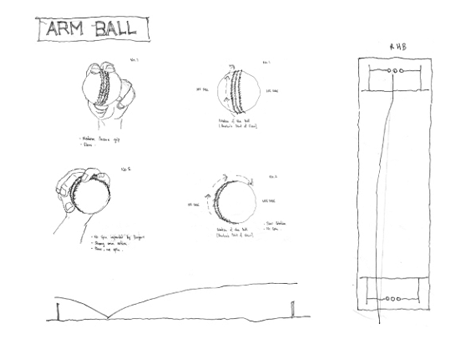
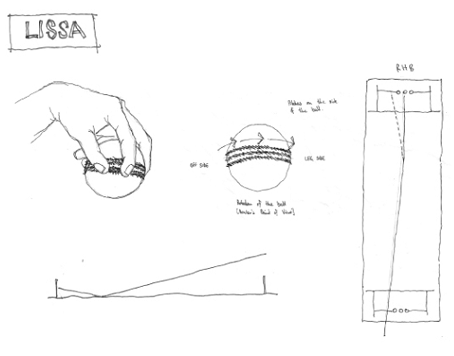
මේ වෙබ් Site එක මට හම්බුනේ අහම්බෙන්.. ඒත් මේ Articles ඉතා වැදගත් නිසා ලියන්න හිතුන.. මේක කොපි කරන කෙනෙක් කරුනාකරල මේ source එකත් එක්කම blog වලට දාන්න. මොකද අපිවත් මේ ක්රීඩකයට නිසි ගව්රවය දක්වමු.. දැනට ලොකෙයේ දග පන්දු යවන්නන් භාවිත කරන පන්දු විශේෂ ගොඩක් මෙතන දාලා තියෙනව. ඒ අතරේ ලංකාවට ආවෙනික නම් වලින් හදුන්වපු පන්දුත් තියෙනව.
TV එකේ ඔය බොල ගැන කියද්දි කට ඇරගෙන අහන් හිටියට. කොහොමද දාන්නෙ ?? බොලෙ grip කරන්නෙ කොහොමද ? එවගෙ idea එකක් නැහැනෙ. ඔන්න දැන් කොල්ලො සෙට් වෙල wwekend එකේ ක්රිකට් පාරක් ගහද්දි ටෙස්ට් කරල බලන්න පුලුවන්.. හැබැයි ටෙනිස් බොලෙන් ඔව දාල නැව් ගුටි කන්න වෙන්නෙ..
මේ Articles තිබුන තැනින් කොපි කරල මම එහෙම්මම දාන්න හිතුව. ඔක සින්හලට හරවන්න යොදන කාලය අපරාධයක් වෙන නිසා. English බැරි අය EK එකේ ඉන්න විදියක් නැහැනෙ. ඉන්නවනම් අදම EK එකටම කාලෙ නාස්ති නොකර ඉංග්රීසි ටිකක් ඉගෙන ගන්න ට්රයි එකක් දෙන්න.. ඒක සුද්දාගෙ බාසාව උනාට නැතුවම බැරි දෙයක් වෙලා ඉවරයි.. සුද්දගෙ ක්රීඩාවට ආස කරනව වගේම.. ඒ ගැනත් හිතන්න..
මුරලි හා අජන්ත මෙන්ඩිස් නිසා අමුතු බොල ගැන අහන්න ලැබුනට... කවුරුත් නොදන්න ලාංකිකයෙක් ලංකාවට සෙල්ලම් කරල තියෙනව..
මෙ පොස්ට් එක උඩින් ටික කාලයක් තියන්න Sup එකක් දෙන්න.. Re post ද දන්නෙ නැහැ එහෙම උනත් ප්රශ්නයක් නැහැ මොකද.. පරණ පොස්ට් එක මම දැක්කනම් මෙක දන්නෙ නැහැනෙ..
බයිල ගැහුව ඇති වැඩෙට බහිමු...
http://www.pradeepmathew.com
Pradeep Mathew's amazing deliveries
Webpage dedicated to the varied talents of Pradeep Mathew: Sri Lanka's greatest unsung cricketer.

Pradeep Mathew Pradeep Sivanathan Mathew (born February 4, 1965, Colombo) is a former Sri Lankan cricketer who played in 7 Tests and 27 ODIs from 1985 to 1995. He lives in New Zealand with his wife and two sons, where he now coaches.
Full name
Pradeep Sivanathan Mathew
Born
February 19th 1965, Colombo
School
Thurstan College
Club
Bloomfield CC
Batting Style
Right-hand batsman
Bowling Style Left-arm Chinaman.
Test Debut vs India, Colombo, 1985
ODI Debut vs West Indies, Hobart, 1985
Pradeep Matthew was a spinner of some promise who has excelled for Bloomfield, becoming the 2nd highest wicket-taker in the 1986 Lakspray Trophy. He made his debut in Sri Lanka’s inaugural test victory against India. He played mainly as a test bowler despite good performances in the 1985/86 world series, including 2 five-wicket bags against Australia and the Windies. External Links - Photo Gallery of Pradeep Mathew
The Chinaman
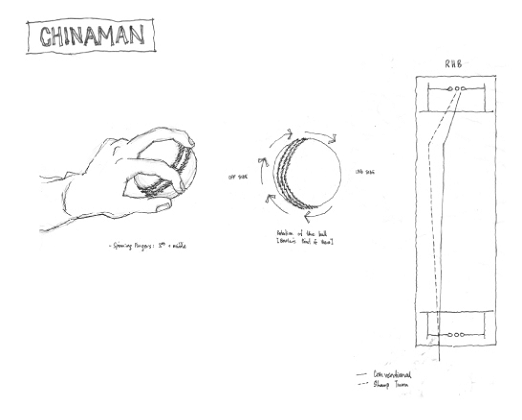
“Fancy being done by a bloody Chinaman,” said 1930s English batsman Walter Robins in a jibe that today would have required a disciplinary hearing. It was Mathew’s bread-and-butter delivery. The stock ball. Pitching outside off and cutting into the batsman. Ellis Achong, a West Indian of Chinese descent, dismissed Robins with one such delivery, and sparked both the outburst and the term.
A ball turning in from a left-arm bowler is not considered as dangerous as one that turns away. The logic being that it is not difficult to combat something that moves towards you. Mathew bowled two variations of the chinaman. One with cocked wrist and one with rolling fingers. He would drift it to wide outside off, giving it the appearance of a wayward delivery, and then rip it in at awkward angles.
The chinaman accounted for most of Mathew’s early wickets. And remained his stock delivery throughout his career. Proving that it can be difficult to combat something that moves towards you, if it arrives unexpectedly.
The Googly
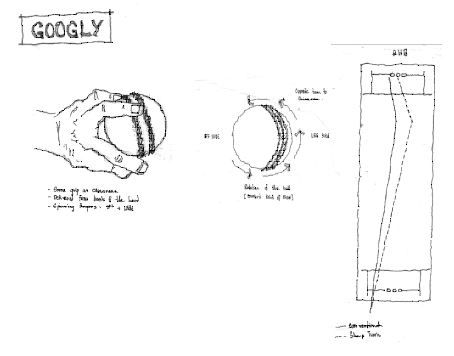
By the time he was selected for the Sri Lanka squad in 1984, Pradeep had perfected the googly. A ball that looks like a chinaman, but turns the other way. To pursue the racial metaphor, beneath the veneer of a benign Chinaman lurks a hungry Turk with a machete.
Invented by English slow bowler Bernard Bosanquet at the turn of the century, the googly was initially seen as a dishonest sleight of hand, as “not quite cricket.” Today it is acknowledged as one of the game’s most brilliant inventions.
Pitch a googly around middle stump after bowling a succession of chinaman deliveries and you can slice a batsman in half, if lucky, clipping his glove or the bails of the wicket. To have a ball do the opposite of what you expect is unnerving.
Mathew delivered the googly from the back of his hand with the seam turning the other way. The googly accounted for all three wickets that he took in his debut against India.
A chinaman spinner can ply a decent trade with a stock ball and a googly. These variations provide enough succour to sustain an average first-class career. Mathew had both mastered by his 20th birthday and, over the next ten years, would develop 12 other deliveries in a career that boasted many highlights, but few accolades.
The Orthodox
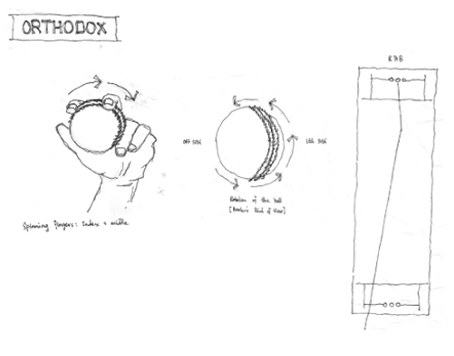
Of course, there is nothing legendary about orthodox finger spin. Most slow left-armers adopt it as weapon of choice, the ball that angles in at the batsman’s pads and leaves him.
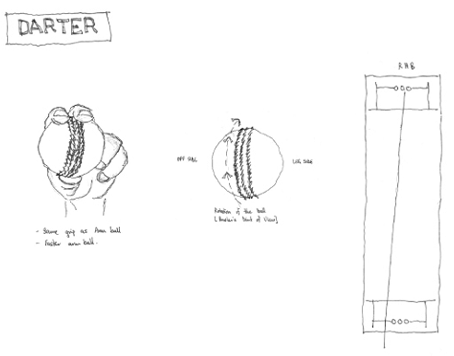
It is quicker than the chinaman and requires an equal but opposite wrist action. The wrist rolls against the movement of the arm. An orthodox bowler rarely bowls chinaman and vice versa. So how did Mathew do both so proficiently?
In his third year of club cricket, against the touring Englishmen, Mathew would drop dart-like finger spinners amidst clusters of looping chinamen and googlies. Commentator Bob Willis described him as a “bowler suffering from schizophrenia” even though it was the English top order that suffered most. Graham Atherton succumbed to it four times on that tour. As did Robin Hick and Chris Thorpe.
Against the New Zealanders Mathew developed a wrist-spinning version. A ball bowled with a chinaman action, where the wrist is flung at the last minute towards slip. It was perhaps this joint pivot that caused the carpal tunnel syndrome that would later stall Mathew’s career. In the 1988 Asia Cup, 6 of Mathew’s 17 wickets came from this delivery.
Towards the end of his career, when not sulking or fighting with management, Mathew would sit with the juniors and share the wisdom of his years. Did he share his wrist-spinning manoeuvre with the shy dark Tamil off-spinner from Kandy who shared his room during the 1994 New Zealand tour? I would place seven lakhs on the answer being yes.
The Undercutter
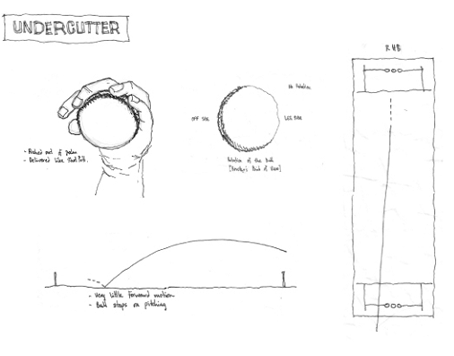
My personal favourite. It was used in the ’92 World Cup and the ’93 season with Bloomfield. The ball is rested on the palm and pushed out by the mound of Venus. The result is muffled backspin that causes the ball to stay low. It works particularly well in overcast conditions. The spin is subtle, and not sharp.
Mathew’s most famous dismissal with the undercutter was Javed Miandad, who, so annoyed by the umpiring and the unplayable delivery, jumped into the crowd to hammer a cheeky spectator with his bat.
The Boru Ball (Doosra )
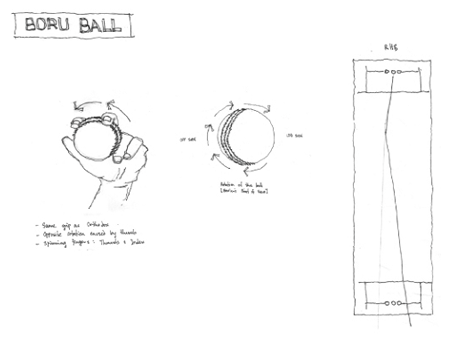
Ari and I are in disagreement over the legitimacy of this ball. And as we lack footage of the ’87 Asgiriya test, a match that history does not recognise, we have no way to settle this score. This is for the aficionados. The ball pitches on off and cuts in. Like Mathew’s bread-and-butter delivery, the chinaman. So, you ask, why don’t we call it a chinaman and save some ink? It’s because it is delivered with an orthodox action. The boru ball only works within a set context.
If you’re bowling a spell of orthodox finger spin, like Mathew did against New Zealand in ’87, a boru ball will serve the function of a googly or a doosra. The term doosra meaning ‘second one’ is currently in vogue thanks to a Pakistani spinner claiming to have invented the off-spinner’s googly. I wrote to Wisden claiming that Mathew’s boru ball and Ramdhin’s googly preceded the Pakistani’s claim, but this is yet to be published.
If you slip a boru ball in during a spell of chinaman, as Mathew would do infrequently, the change of wrist action will alert the batsman to a variation, when in fact the ball will do exactly what it did before. I would describe this ball as a clever double bluff. Ari would describe this whole chapter as a complete and utter bluff.
Learn Types Of Spin Bowling - ස්පින් බොලිං Importnat for All
මේ වෙබ් Site එක මට හම්බුනේ අහම්බෙන්.. ඒත් මේ Articles ඉතා වැදගත් නිසා ලියන්න හිතුන.. මේක කොපි කරන කෙනෙක් කරුනාකරල මේ source එකත් එක්කම blog වලට දාන්න. මොකද අපිවත් මේ ක්රීඩකයට නිසි ගව්රවය දක්වමු.. දැනට ලොකෙයේ දග පන්දු යවන්නන් භාවිත කරන පන්දු විශේෂ ගොඩක් මෙතන දාලා තියෙනව. ඒ අතරේ ලංකාවට ආවෙනික නම් වලින් හදුන්වපු පන්දුත් තියෙනව.
TV එකේ ඔය බොල ගැන කියද්දි කට ඇරගෙන අහන් හිටියට. කොහොමද දාන්නෙ ?? බොලෙ grip කරන්නෙ කොහොමද ? එවගෙ idea එකක් නැහැනෙ. ඔන්න දැන් කොල්ලො සෙට් වෙල wwekend එකේ ක්රිකට් පාරක් ගහද්දි ටෙස්ට් කරල බලන්න පුලුවන්.. හැබැයි ටෙනිස් බොලෙන් ඔව දාල නැව් ගුටි කන්න වෙන්නෙ..
මේ Articles තිබුන තැනින් කොපි කරල මම එහෙම්මම දාන්න හිතුව. ඔක සින්හලට හරවන්න යොදන කාලය අපරාධයක් වෙන නිසා. English බැරි අය EK එකේ ඉන්න විදියක් නැහැනෙ. ඉන්නවනම් අදම EK එකටම කාලෙ නාස්ති නොකර ඉංග්රීසි ටිකක් ඉගෙන ගන්න ට්රයි එකක් දෙන්න.. ඒක සුද්දාගෙ බාසාව උනාට නැතුවම බැරි දෙයක් වෙලා ඉවරයි.. සුද්දගෙ ක්රීඩාවට ආස කරනව වගේම.. ඒ ගැනත් හිතන්න..
මුරලි හා අජන්ත මෙන්ඩිස් නිසා අමුතු බොල ගැන අහන්න ලැබුනට... කවුරුත් නොදන්න ලාංකිකයෙක් ලංකාවට සෙල්ලම් කරල තියෙනව..
මෙ පොස්ට් එක උඩින් ටික කාලයක් තියන්න Sup එකක් දෙන්න.. Re post ද දන්නෙ නැහැ එහෙම උනත් ප්රශ්නයක් නැහැ මොකද.. පරණ පොස්ට් එක මම දැක්කනම් මෙක දන්නෙ නැහැනෙ..
බයිල ගැහුව ඇති වැඩෙට බහිමු...
http://www.pradeepmathew.com
Pradeep Mathew's amazing deliveries
Webpage dedicated to the varied talents of Pradeep Mathew: Sri Lanka's greatest unsung cricketer.

Pradeep Mathew Pradeep Sivanathan Mathew (born February 4, 1965, Colombo) is a former Sri Lankan cricketer who played in 7 Tests and 27 ODIs from 1985 to 1995. He lives in New Zealand with his wife and two sons, where he now coaches.
Full name
Pradeep Sivanathan Mathew
Born
February 19th 1965, Colombo
School
Thurstan College
Club
Bloomfield CC
Batting Style
Right-hand batsman
Bowling Style Left-arm Chinaman.
Test Debut vs India, Colombo, 1985
ODI Debut vs West Indies, Hobart, 1985
Pradeep Matthew was a spinner of some promise who has excelled for Bloomfield, becoming the 2nd highest wicket-taker in the 1986 Lakspray Trophy. He made his debut in Sri Lanka’s inaugural test victory against India. He played mainly as a test bowler despite good performances in the 1985/86 world series, including 2 five-wicket bags against Australia and the Windies. External Links - Photo Gallery of Pradeep Mathew
The Chinaman

“Fancy being done by a bloody Chinaman,” said 1930s English batsman Walter Robins in a jibe that today would have required a disciplinary hearing. It was Mathew’s bread-and-butter delivery. The stock ball. Pitching outside off and cutting into the batsman. Ellis Achong, a West Indian of Chinese descent, dismissed Robins with one such delivery, and sparked both the outburst and the term.
A ball turning in from a left-arm bowler is not considered as dangerous as one that turns away. The logic being that it is not difficult to combat something that moves towards you. Mathew bowled two variations of the chinaman. One with cocked wrist and one with rolling fingers. He would drift it to wide outside off, giving it the appearance of a wayward delivery, and then rip it in at awkward angles.
The chinaman accounted for most of Mathew’s early wickets. And remained his stock delivery throughout his career. Proving that it can be difficult to combat something that moves towards you, if it arrives unexpectedly.
The Googly

By the time he was selected for the Sri Lanka squad in 1984, Pradeep had perfected the googly. A ball that looks like a chinaman, but turns the other way. To pursue the racial metaphor, beneath the veneer of a benign Chinaman lurks a hungry Turk with a machete.
Invented by English slow bowler Bernard Bosanquet at the turn of the century, the googly was initially seen as a dishonest sleight of hand, as “not quite cricket.” Today it is acknowledged as one of the game’s most brilliant inventions.
Pitch a googly around middle stump after bowling a succession of chinaman deliveries and you can slice a batsman in half, if lucky, clipping his glove or the bails of the wicket. To have a ball do the opposite of what you expect is unnerving.
Mathew delivered the googly from the back of his hand with the seam turning the other way. The googly accounted for all three wickets that he took in his debut against India.
A chinaman spinner can ply a decent trade with a stock ball and a googly. These variations provide enough succour to sustain an average first-class career. Mathew had both mastered by his 20th birthday and, over the next ten years, would develop 12 other deliveries in a career that boasted many highlights, but few accolades.
The Orthodox

Of course, there is nothing legendary about orthodox finger spin. Most slow left-armers adopt it as weapon of choice, the ball that angles in at the batsman’s pads and leaves him.
It is quicker than the chinaman and requires an equal but opposite wrist action. The wrist rolls against the movement of the arm. An orthodox bowler rarely bowls chinaman and vice versa. So how did Mathew do both so proficiently?
In his third year of club cricket, against the touring Englishmen, Mathew would drop dart-like finger spinners amidst clusters of looping chinamen and googlies. Commentator Bob Willis described him as a “bowler suffering from schizophrenia” even though it was the English top order that suffered most. Graham Atherton succumbed to it four times on that tour. As did Robin Hick and Chris Thorpe.
Against the New Zealanders Mathew developed a wrist-spinning version. A ball bowled with a chinaman action, where the wrist is flung at the last minute towards slip. It was perhaps this joint pivot that caused the carpal tunnel syndrome that would later stall Mathew’s career. In the 1988 Asia Cup, 6 of Mathew’s 17 wickets came from this delivery.
Towards the end of his career, when not sulking or fighting with management, Mathew would sit with the juniors and share the wisdom of his years. Did he share his wrist-spinning manoeuvre with the shy dark Tamil off-spinner from Kandy who shared his room during the 1994 New Zealand tour? I would place seven lakhs on the answer being yes.
The Undercutter

My personal favourite. It was used in the ’92 World Cup and the ’93 season with Bloomfield. The ball is rested on the palm and pushed out by the mound of Venus. The result is muffled backspin that causes the ball to stay low. It works particularly well in overcast conditions. The spin is subtle, and not sharp.
Mathew’s most famous dismissal with the undercutter was Javed Miandad, who, so annoyed by the umpiring and the unplayable delivery, jumped into the crowd to hammer a cheeky spectator with his bat.
The Boru Ball (Doosra )

Ari and I are in disagreement over the legitimacy of this ball. And as we lack footage of the ’87 Asgiriya test, a match that history does not recognise, we have no way to settle this score. This is for the aficionados. The ball pitches on off and cuts in. Like Mathew’s bread-and-butter delivery, the chinaman. So, you ask, why don’t we call it a chinaman and save some ink? It’s because it is delivered with an orthodox action. The boru ball only works within a set context.
If you’re bowling a spell of orthodox finger spin, like Mathew did against New Zealand in ’87, a boru ball will serve the function of a googly or a doosra. The term doosra meaning ‘second one’ is currently in vogue thanks to a Pakistani spinner claiming to have invented the off-spinner’s googly. I wrote to Wisden claiming that Mathew’s boru ball and Ramdhin’s googly preceded the Pakistani’s claim, but this is yet to be published.
If you slip a boru ball in during a spell of chinaman, as Mathew would do infrequently, the change of wrist action will alert the batsman to a variation, when in fact the ball will do exactly what it did before. I would describe this ball as a clever double bluff. Ari would describe this whole chapter as a complete and utter bluff.
Last edited: