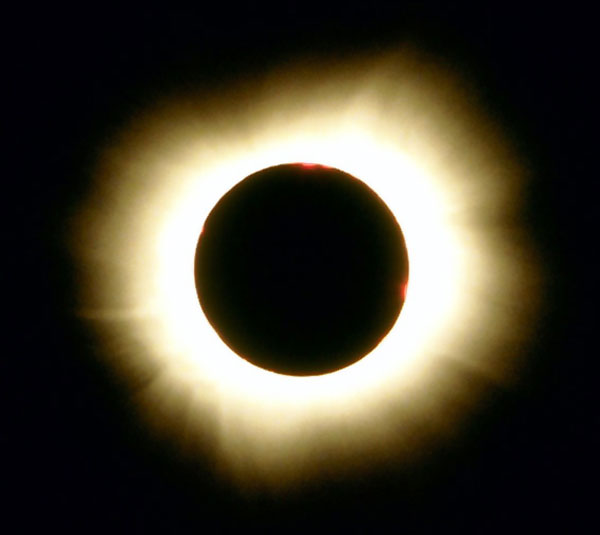
Solar eclipse of August 1, 2008(sri lanka)
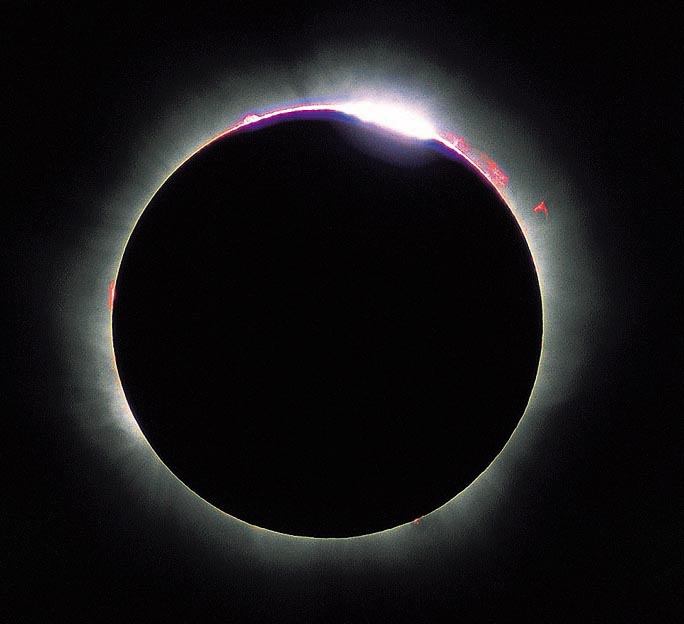
The Solar Eclipse that takes place on August 1, 2008, will be a total eclipse of the Sun with a magnitude of 1.039 that will be visible from a narrow corridor through northern Canada (Nunavut), northern part of Russia, western Mongolia, and China. It belongs to the so-called midnight Sun eclipses, as it will be visible from regions experiencing Midnight sun.
In Siberia, the total eclipse zone will pass through populated places, including the "capital of Siberia" Novosibirsk, and the cities of Nizhnevartovsk, Barnaul, Biysk. Greatest eclipse duration will be reached near the town of Nadym in Yamalo-Nenets Autonomous Okrug in Northern Siberia.
A partial eclipse will be seen from the much broader path of the Moon's penumbra, including eastern North America and most of Europe and Asia.
Statistics
Notable times and coordinates
Event Time (UTC)
Beginning of the general eclipse 08:04:06
Beginning of the total eclipse 09:11:07
Beginning of the central eclipse 09:24:10
Greatest eclipse 10:21:08
End of the central eclipse 11:18:29
End of the total eclipse 11:21:28
End of the general eclipse 12:38:27
Type of the eclipse
Nature of the eclipse Total
Gamma 0.8306
Magnitude 1.0394
Duration at greatest eclipse point 147 s (2 min 27 s) at 10:21:08 UTC, in northern Russia: [show location on an interactive map] 65°38′48″N, 72°16′24″E
Maximum width of band 236.9 km


more
http://en.wikipedia.org/wiki/Solar_eclipse
The Solar Eclipse that takes place on August 1, 2008, will be a total eclipse of the Sun with a magnitude of 1.039 that will be visible from a narrow corridor through northern Canada (Nunavut), northern part of Russia, western Mongolia, and China. It belongs to the so-called midnight Sun eclipses, as it will be visible from regions experiencing Midnight sun.
In Siberia, the total eclipse zone will pass through populated places, including the "capital of Siberia" Novosibirsk, and the cities of Nizhnevartovsk, Barnaul, Biysk. Greatest eclipse duration will be reached near the town of Nadym in Yamalo-Nenets Autonomous Okrug in Northern Siberia.
A partial eclipse will be seen from the much broader path of the Moon's penumbra, including eastern North America and most of Europe and Asia.
Statistics
Notable times and coordinates
Event Time (UTC)
Beginning of the general eclipse 08:04:06
Beginning of the total eclipse 09:11:07
Beginning of the central eclipse 09:24:10
Greatest eclipse 10:21:08
End of the central eclipse 11:18:29
End of the total eclipse 11:21:28
End of the general eclipse 12:38:27
Type of the eclipse
Nature of the eclipse Total
Gamma 0.8306
Magnitude 1.0394
Duration at greatest eclipse point 147 s (2 min 27 s) at 10:21:08 UTC, in northern Russia: [show location on an interactive map] 65°38′48″N, 72°16′24″E
Maximum width of band 236.9 km


more
http://en.wikipedia.org/wiki/Solar_eclipse
Last edited: