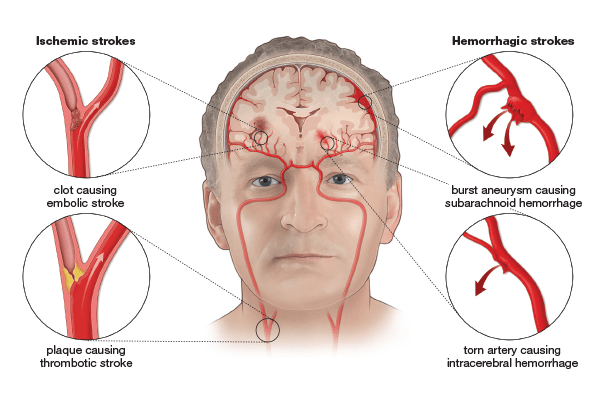
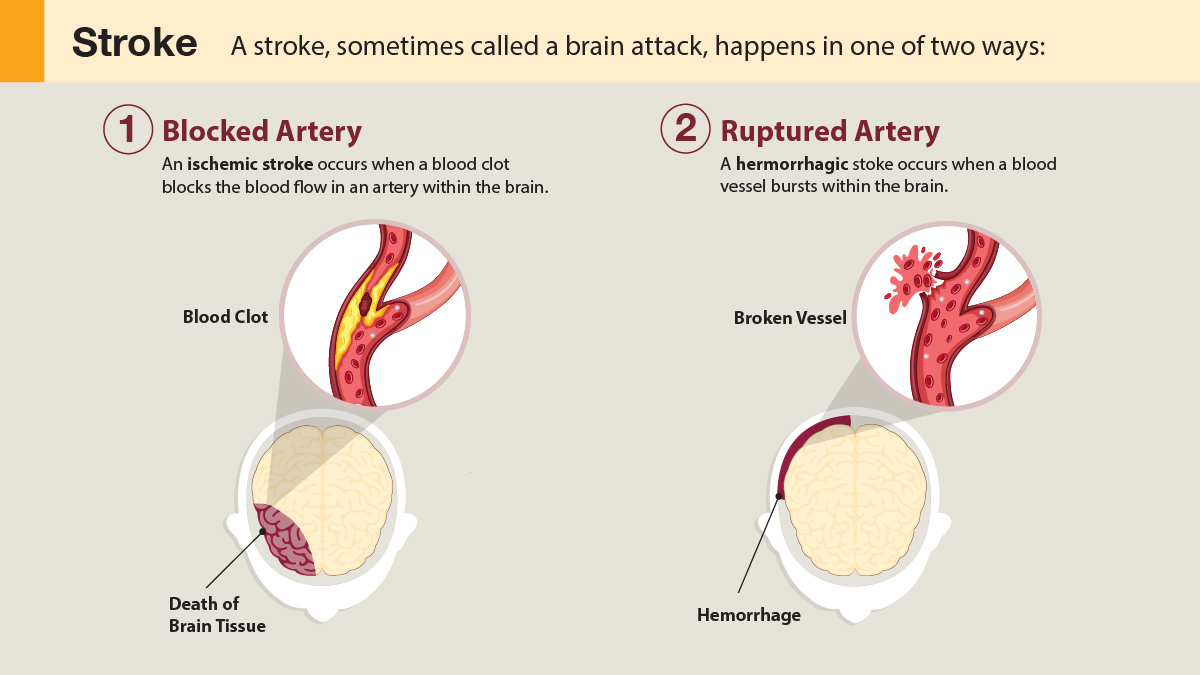
Ischemic stroke occurs when a blood clot blocks or narrows an artery leading to the brain. A blood clot often forms in arteries damaged by the buildup of plaques (atherosclerosis). It can occur in the carotid artery of the neck as well as other arteries. This is the most common type of stroke.
A transient ischaemic attack (TIA) or "mini-stroke" is caused by a temporary disruption in the blood supply to part of the brain. The disruption in blood supply results in a lack of oxygen to the brain. This can cause sudden symptoms similar to a stroke, such as speech and visual disturbance, and numbness or weakness in the face, arms, and legs. But a TIA does not last as long as a stroke. The effects last a few minutes to a few hours and fully resolve within 24 hours.