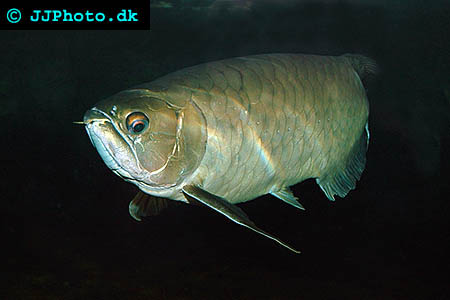
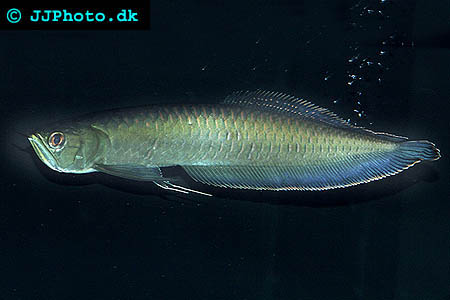
Arowana Fish Loveres , Share You'r Experianses...

shiwankaswe

Well-known member
  • Apr 30, 2007
    7,557
    631
    113
    Colombo Sri Lanka
    Arowana Fish Loveres


    Share You'r Experianses...


    I Am Going To Buy Arowana Today
    please Share You'r Experineces with Arowana

    That Will really Help Full To myself and Arowana fish Lovers

    thanks
     
    Last edited:

    shiwankaswe

    Well-known member
  • Apr 30, 2007
    7,557
    631
    113
    Colombo Sri Lanka
    5.-Arowana-1.jpg

    Red+Tail+Goldem+Arowana.jpg

    Oddbal13.jpg
     

    shiwankaswe

    Well-known member
  • Apr 30, 2007
    7,557
    631
    113
    Colombo Sri Lanka
    Arowana Fish (sometimes called dragon fish) can be a great choice for those that think big. Some varieties can grow up to Four feet long (120cm). They can be feisty, though become tamer with age to the point of eating from your fingers, and not the fingers themselves. The Arowana Fish comes from somewhat primitive origins (Jurassic Age), and some varieties are nicknamed “Bony Tongued Fish”.

    Arowana fish are carnivores, though will generally eat nearly anything. Young Arowana Fish may be fed frozen or live brine shrimp, black worms, and even small fish. When older, some larger fish will do. Baby Arowana Fish should be fed maybe 3 times a day, medium sized twice a day, and adults once a day, or even once every other day. Variety is important for a well balanced diet in Arowana Fish just like for most other fish.

    The Arowana eating habits produce a lot of waste and you should therefore, pay extra attention to water conditions (Ammonia, Nitrite, and Nitrate) in your aquarium. Changing 25% to 33% of the water weekly is advisable, or better yet, 20% twice a week. You should maintain the pH neutral. Pay particular attention to the temperature and pH ranges suggested below on the various species, since if you have it too warm, it might cause them to age faster, look less Arowana, and even shorten their life. A to cold temperature might on the other hand kill them.

    Generally, a good healthy Arowana Fish will grow to be at least 24 to 30 inches (60-75cm). Some varieties can become 48 inches (120 cm) in the wild. They may be aggressive (definitely not good community fish), and Arowana fish can sometimes be best kept alone in an aquarium. Remember that other smaller fish in the tank may become their dinner.

    Arowana fish will often swim in the top of the aquarium, and are capable of jumping from the aquarium. Keep the aquarium well covered to avoid coming home to a dead pet. Silver Arowana Fish in the wild have been known to jump at insects in trees.

    Arowana Fish may live for many years, and if well cared for Arowana fish may live longer than 20 years in captivity. If you keep the aquarium temperature towards the lower end, they may look young longer than they would in a higher temperaturel. Please pay particular attention to each Arowana Fish’s needs below.

    The Asian Arowana or Golden Arowana (Scleropages formosus) is considered an endangered species. Care should be taken to follow the law in purchasing and transporting them. Asian Arowana fish generally can grow to about 36 inches, and are often much more expensive then the other Arowana species. These are well known and popular South East Asia where they are believed to bring luck. Feeding them healthy Guppies, Gold Fish, Frogs, or Shrimp makes a good stable diet. The temperature is best kept between 75 and 86 degrees Fahrenheit (24-30 C), and a pH level between 7.0 and 7.5 are advisable.

    scleropages_formosus_4.jpg


    The Silver Arowana (Osteoglossum bicirrhosum) comes from the Amazon Basin. They can grow to around 48 inches in the wild, and are usually the cheapest Arowana species. Silver Arowana can be more jumpy then the other species and more than one Silver Arowana have jumped to their death in a badly covered aquarium.

    Silver Arowana may take a while to adjust to non-live food. Sometimes to the brink of starvation. Feed them meaty food like, fish, crab, or Shrimp (try to avoid the salt). This Arowana Fish thrives in temperatures between 75 and 86 degrees Fahrenheit (24-30 C), and pH between 6 and 7. Young Silver Arowana should not be in a tank shorter then 36 inches/ 90 cm, and as they get older, 48 inches/ 120 cm though when your Arowana fish reaches 15 inches/ 40 cm they will need a much larger tank. These Arowana Fish can become aggressive towards similar species and should be kept alone in the aquarium tank unless it is very big. They can also be kept with larger catfish and a few other species. They are a definitely predator and will eat smaller fish. As juveniles, they may be suitable for smaller home aquarium, though with growth, they are likely to outgrow the home and become suitable only for large public aquariums.
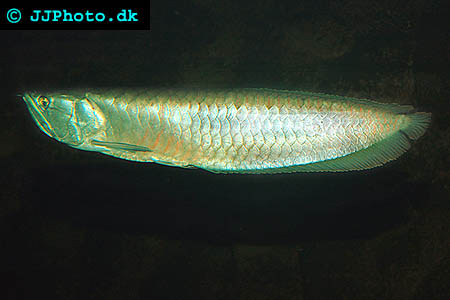
    osteoglossum_bicirrhosum_adult_3.jpg


    The Spotted Arowana (Scleropages leichardti) is mostly found from Southern Australia. They can grow to around 36 inches/ 90 cm (they do however only seldom reach this length in an aquarium), and are less sought after then the Asian Arowana. They are also called Dawson River Saratoga, Southern Saratoga, Spotted Barramundi, Australian Spotted Arowana, and Leichardti Saratoga. They tend to stay closer to the bottom than other Arowana fish species. This means that it sometimes is possible to keep them with Silver Arowana fish. As far as food, they are capable of eating most things that will fit their mouth (crickets, Hikari pellets, insects, etc). This Arowana fish species prefers a temperatures between 75 and 86 degrees Fahrenheit (24-30 C), and a pH level between 6.5 and 7.5. They may be territorial and aggressive.
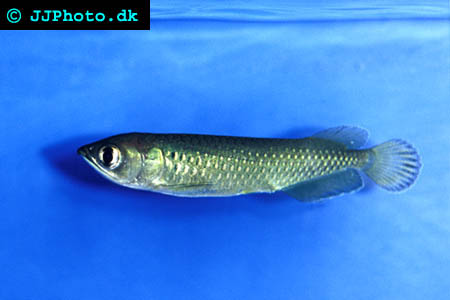

    scleropages_leichardtii_1.jpg


    The Northern Arowana (Scleropages jardini) is found mostly in Northern Australia. They can grow to around 36 inches/ 90 cm. They are also called Northern Saratoga, Jardine Saratoga, Gulf Saratoga, Australian Gold or Pearl Arowana and Jardini Saratoga. They eat similar food as the Spotted Arowana (Southern Australia), and are less likely to jump out of the tank than other species (though they might). This variety of Arowana Fish is best kept at a pH level of 6.0 - 7.5 and temperatures of 72 to 80 degrees Fahrenheit (22-27 C). While less aggressive then others, they are still predators and will likely eat anything that will fit in their mouths. They will eat Crayfish, Fish, Insects, and pellets with a little effort to get them started.
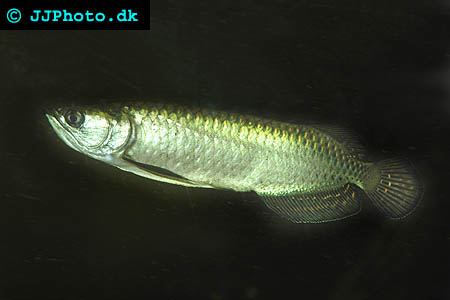

    scleropages_jardinii_3.jpg


    The African Arowana (Heterotis niloticus) comes from western and central Africa. They grow up to around 40 inches/100 cm. They are more rare than other Arowana Fish species. They are predators known to eat small fish. This Arowana Fish prefers temperatures between 75 and 86 degrees Fahrenheit (24-30 C) and a pH level of 6.7 to 7.5 (7.0 preferred). They eat shrimp, fish, live worms, and insects in captivity.

    The Black Arowana fish (Osteoglossum ferreirai) comes from South America in the Rio Negro basin. They grow up to around 40 inches / 100 com, though they seldom reach this length in captivity. The Black Arowana fish eat live fish, large insects, spiders, Tubifex worms, and may also eat pellets and flakes (not all specimens accept pellets and flakes). Young Arowana fish of this species tend to be delicate, though older fish tend to be more hardy. They prefer a pH level of 5-7 with 6.4 being the optimum level, and temperatures between 75 and 86 degrees Fahrenheit (24-30 C).

    osteoglossum_ferreirai_1.jpg
     

    UNDERTAKERR

    Member
    Mar 11, 2010
    1,342
    67
    0
    red and blue bit expensive and also smaller than silver one.don't give live fish for his meal.deela purudu karagaththoth winasaie.
     

    shiwankaswe

    Well-known member
  • Apr 30, 2007
    7,557
    631
    113
    Colombo Sri Lanka
    Some Common Diseases That Can Affect Your Young Arowana
    Steven Date : October 18, 2011 ·

    Owning an arowana takes a lot of responsibility, from feeding to helping them keep their balance to taking care of them and treating them when they are sick. No matter how we take care of our fish, it remains possible for them to become sick one time of another, just like us. Other than that, it’s very easy to keep an arowana healthy at home. icon wink Some Common Diseases That Can Affect Your Young Arowana
    Below are some diseases that may affect your arowana.

    1. Warped Scales
    Also known as cone scales, warped scales affect young arowanas more easily than adults. This condition is caused by immediate temperature change in the aquarium water and poor quality of water. This disease will start with just few scales warping with congested roots. If this is not attended immediately, the scales tend to bend and swell. When the scales raise, this will minimize the capability of the fish to protect itself from pathogen invasions. The scales will drop off and expose a certain area of its body increasing the susceptibility of bacterial attack. Then this will lead to ulceration and eventually causes death.

    To stop the condition from getting worse, add in one kilo of salt to every 100 liter of aquarium water. Maintain the temperature at 32 to 34 degrees. Every three days or so, change about 20% of the water. Before you add in new water, make sure to heat up the water. It also makes sense to add antibiotic to the water if the affected area seems huge enough, to prevent infections.

    2. Water Mycosis
    The fungus stays in the wound of your arowana. It is light gray in color. Water mycosis is caused by fungal hyphae that cover the wound. This causes instability to the movement of the fish as it swims and rubs its body against parts of the tank to try and stop the itch. If this condition continues, it could be fatal to your arowana as it tends to lose it’s appetite as well as get secondary infections caused by bacteria in the water.

    To treat water mycosis, you need to add in salt to the aquarium water with one percent consistency. Put disinfectant to the wound or you can add methyl red (4-5 drops) in every 100 liters of water at 5 percent consistency. For about 3 minutes, add in potassium chromatic solution of 1/30000 unit to the water.

    3. Ascites
    Young arowanas are the ones who are usually affected by this disease. This is usually caused by either decaying food which has been left in the water for too long or if the fish had accidentally swallowed something sharp (like a fish bones or prawn head pincer) which could have hurt its internal organs. This would lead to vibrion infection and ascites. This infection will cause stomach flatulence and swollen anal region. The arowana will tend to have problems balancing itself with its head pointing down most of the time.

    Treating ascites includes administration of sulphonamide or antibiotic. The water also needs to be changed and temperature raised by 2-3 degrees to give it a chance to recover. But I have to say, the chances of recovery is slim when this condition hits.
     

    shiwankaswe

    Well-known member
  • Apr 30, 2007
    7,557
    631
    113
    Colombo Sri Lanka
    What You Need To Give Your Arowana A Good Home
    Steven Date : September 29, 2011 · 1 Comment

    An Arowana, also known as bony-tongues or Dragon Fish, is a carnivorous freshwater fish. It is characterized by a bony head and long body with large, heavy scales. Arowanas can live up to 25 years. They are pretty easy to look after but you do need to understand some of their ‘peculiar’ behavior. A dedicated fish owner will not find it hard to take care of arowanas.

    What’s in a Crowd?

    Arowanas are usually solitary creatures. Several arowanas can be placed together in a tank in groups BUT ONLY IF they are put together since young. (I personally recommend odd numbers.) If you try to put adult arowanas together in a tank, they will fight and this can be fatal. BE WARNED!!!
    They also have tendencies to become aggressive and dominant over other fishes. Should you decide to give your arowana some non-arowana tank mates, do not put in fishes that are small enough to fit easily into its mouth. It is also better to add fishes that are semi-aggressive. Stingrays, oscars, clown knifefish, and parrotfish are good company for your arowanas.

    In the Tank

    The size of your fish tank must be able to accommodate territorial needs of your arowana. I would recommend a tank size of at least 4x2x2feet to start off with. This would probably be able to accommodate 2-3 fishes for at least 3 years. You should keep your tank covered as arowanas are known to jump up to 6.6 feet high. This fish needs to live in a well-filtered and clean tank. Being meat-eaters, they tend to excrete a lot of wastes. Poor maintenance of tank could lead to nitrate and ammonia toxicity.
    Also at least 20% water change is desirable once a week. Clear water does not mean the water quality is good!!! Water pH level is ideally kept from pH6.5 to pH7.0. You should also keep your tank away from direct sunlight as algae grows easily in such condition and will cause oxygen levels to drop in the water.
    Sudden rise or drop of water temperature can be harmful and can lead to shock. Maintain your tank’s water temperature to 26 to 30 degree Celsius. Investing in an aquarium temperature checker will do your fishes well. You may put some fine gravel on your tank’s bottom surface but bear in mind that cleaning can be a hassle if you have this. You can also add some rocks or plants to create a natural looking environment for your fish. Be careful not to put anything inside the tank that has sharp edges.

    Moving Your Fish to a Larger Tank

    This can be stressful for you (and the fish) but you will probably have to do this once or twice when your arowana grows in size. Remember to cycle the water in your new tank for at least 2 weeks. Catch your arowana from the old tank using plastic bags and bring the entire bag into the new tank. Open the bag and mix the water in it with the water in the new tank. This will help to ensure that the water temperature does not change too much as arowanas gets stressed when water temperature changes too drastic too suddenly. Let this bag float for about 20 minutes and then add more water into it. Do this about 3 times and then release your arowana into the new tank. It will usually take your arowana 2-3 weeks to adapt to the new tank and environment. It is also common for them to stay off food during this period.
    You can check out this post as I show you first hand how I moved my new arowanas home.