


Piggish for power
We can see two very good examples towards which Mahinda Rajapaksa is heading today. They are Ferdinand Marcos of Philippines and Robert Mugabe of Zimbabwe.
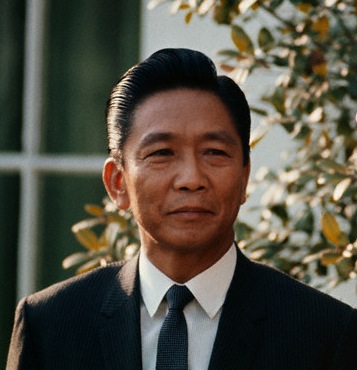
Ferdinand Marcos of Philippines was an elected President in 1965 for the first term. In 1969 he was re-elected for the second term. Due to leftist unrest in 1970, he declared Martial Law in 1972, and amended the constitution allowing him to contest in the presidential election for more than the two term limit. Elections for the third term were held soon after Martial Law was lifted in January 1981. In other words, twelve years after the previous presidential election.
In February 1986, Marcos called for a snap Presidential election. In this election, even though Marcos was declared winner, widespread violence and tampering of election results were reported. The National Citizens' Movement for Free Elections – NAMFREL, an election watchdog in the Philippines declared, Corazon Aquino as the winner. Corazon Aquino is the widow of Senator Benigno Aquino Jr., the leader of the opposition who was assassinated by Marcos government at Manila Airport in August 1983. Soon after the Presidential election in 1986, People Power Revolution forced Marcos to flee Philippines.
When will a courageous Sri Lankan Corazon Aquino appear, to re-instate democracy in Sri Lanka?
In April 1979, black people in former Rhodesia (now Zimbabwe) voted for the first time in a democratic election. The majority of the people supported Abel Muzorewa, the bishop in the United Methodist Church. He was the first black prime minister of Zimbabwe.
Within a year, in 1980, another election was held in Zimbabwe. In this election Robert Mugabe won the majority of the vote through intimidation and threat. He openly said that if he lost the election there would be a civil war. In 1980, Mugabe became the Prime Minister for the first time. Since then until today, he and his political party continued to win every election through his usual tactics of manipulation, intimidation and vote-rigging.
Robert Mugabe was the Prime Minister of Zimbabwe from 1980 to 1987 and in December 1987, he was declared Executive President of Zimbabwe by parliament.
Since 1980, six parliamentary elections (1980, 1985, 1995, 2000, 2005, 2008) and since 1990 four presidential elections (1990, 1996, 2002, 2013) have been held in Zimbabwe. In all parliamentary elections Robert Mugabe’s “Zimbabwe African National – Patriotic Front (ZANU-PF)” won with a huge majority. Robert Mugabe won in all presidential elections, except a constitutional referendum which took place in February 2000. The result of the referendum was a great victory for the opposition group, Movement for Democratic Change – MDC, lead by Morgan Tsvangirai.
Will this be the fate of Sri Lanka in the near future?


