


Learning Disabilities and Disorders

Does your child struggle with school? Do they dread reading out loud, writing an essay, or tackling math? Here’s how to recognize the signs of different types of learning disorders.
What are learning disabilities?
Learning disabilities or learning disorders are umbrella terms for a wide variety of learning problems. A learning disability is not a problem with intelligence or motivation and kids with learning disabilities aren’t lazy or dumb. In fact, most are just as smart as everyone else. Their brains are simply wired differently—and this difference affects how they receive and process information.Simply put, children and adults with learning disabilities see, hear, and understand things differently. This can lead to trouble with learning new information and skills and putting them to use. The most common types of learning disabilities involve problems with reading, writing, math, reasoning, listening, and speaking.
While every kid has trouble with homework from time to time, if a certain area of learning is consistently problematic, it might indicate a learning disorder.
Children with learning disabilities can, and do, succeed
It can be tough to face the possibility that your child has a learning disorder. No parent wants to see their child suffer. You may wonder what it could mean for your child’s future, or worry about how they will make it through school. Perhaps you’re concerned that by calling attention to your child’s learning problems they might be labelled “slow” or assigned to a less challenging class.But the important thing to remember is that most kids with learning disabilities are just as smart as everyone else. They just need to be taught in ways that are tailored to their unique learning styles. By learning more about learning disabilities in general, and your child’s learning difficulties in particular, you can help pave the way for success at school and beyond.
Signs and symptoms of learning disabilities and disorders
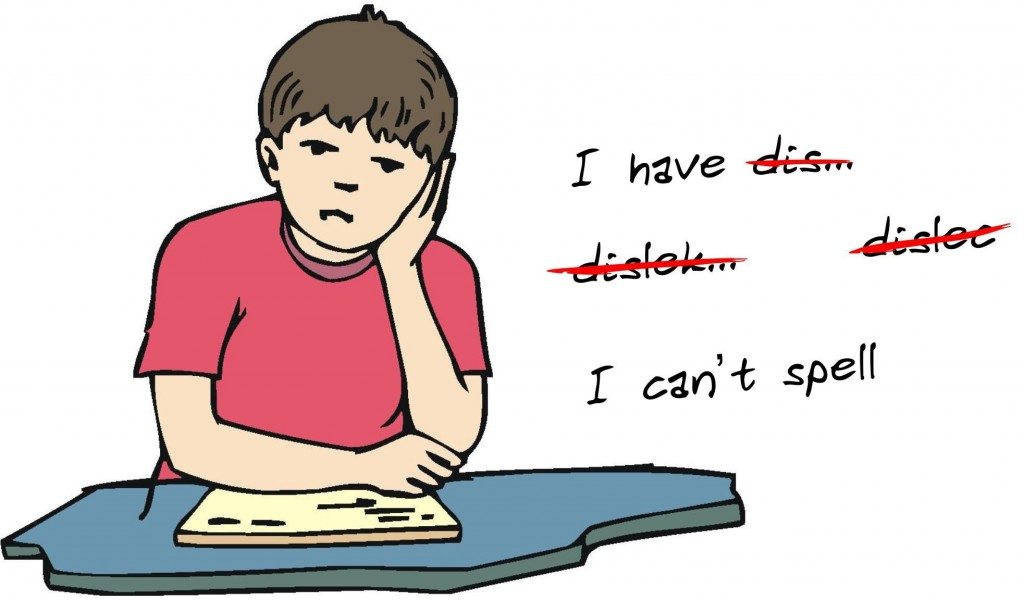
If you’re worried, don’t wait
If you suspect that your child’s learning difficulties may require special assistance, please do not delay in finding support. The sooner you move forward, the better your child’s chances for reaching their full potential.Learning disabilities look very different from one child to another. One child may struggle with reading and spelling, while another loves books but can’t understand math. Still another child may have difficulty understanding what others are saying or communicating out loud. The problems are very different, but they are all learning disorders.
It’s not always easy to identify learning disabilities. Because of the wide variations, there is no single symptom or profile that you can look to as proof of a problem. However, some warning signs are more common than others at different ages. If you’re aware of what they are, you’ll be able to catch a learning disorder early and quickly take steps to get your child help.
The following checklists offer some common red flags for learning disorders. Remember that children who don’t have learning disabilities may still experience some of these difficulties at various times. The time for concern is when there is a consistent unevenness in your child’s ability to master certain skills.
Signs and symptoms of learning disabilities: Preschool age
- Problems pronouncing words.
- Trouble finding the right word.
- Difficulty rhyming.
- Trouble learning the alphabet, numbers, colours, shapes, or days of the week.
- Difficulty following directions or learning routines.
- Difficulty controlling crayons, pencils, and scissors, or colouring within the lines.
- The trouble with buttons, zippers, snaps, or learning to tie shoes.
Signs and symptoms of learning disabilities: Ages 5-9
- Trouble learning the connection between letters and sounds.
- Unable to blend sounds to make words.
- Confuses basic words when reading.
- Slow to learn new skills.
- Consistently misspells words and makes frequent errors.
- Trouble learning basic math concepts.
- Difficulty telling time and remembering sequences.
Signs and symptoms of learning disabilities: Ages 10-13
- Difficulty with reading comprehension or math skills.
- The trouble with open-ended test questions and word problems.
- Dislikes reading and writing; avoids reading aloud.
- Poor handwriting.
- Poor organizational skills (bedroom, homework, and desk are messy and disorganized).
- Trouble following classroom discussions and expressing thoughts aloud.
- Spells the same word differently in a single document.
Paying attention to developmental milestones can help you identify learning disorders
Paying attention to normal developmental milestones for toddlers and preschoolers is very important. Early detection of developmental differences may be an early signal of a learning disability and problems that are spotted early can be easier to correct.A developmental lag might not be considered a symptom of a learning disability until your child is older, but if you recognize it when your child is young, you can intervene early. You know your child better than anyone else does, so if you think there is a problem, it doesn’t hurt to get an evaluation. You can also ask your paediatrician for a developmental milestones chart or access one in the Get more help section below.
Problems with reading, writing, and math
Learning disabilities are often grouped by school-area skill set. If your child is in school, the types of learning disorders that are most conspicuous usually revolve around reading, writing, or math.Learning disabilities in reading (dyslexia)
There are two types of learning disabilities in reading. Basic reading problems occur when there is difficulty understanding the relationship between sounds, letters and words. Reading comprehension problems occur when there is an inability to grasp the meaning of words, phrases, and paragraphs.Signs of reading difficulty include problems with:
- Letter and word recognition.
- Understanding words and ideas.
- Reading speed and fluency.
- General vocabulary skills.
Learning disabilities in math (dyscalculia)
Learning disabilities in math vary greatly depending on the child’s other strengths and weaknesses. A child’s ability to do math will be affected differently by a language learning disability, a visual disorder, or a difficulty with sequencing, memory, or organization.A child with a math-based learning disorder may struggle with memorization and organization of numbers, operation signs, and number “facts” (like 5+5=10 or 5×5=25). Children with math learning disorders might also have trouble with counting principles (such as counting by twos or counting by fives) or have difficulty telling time.
Learning disabilities in writing (dysgraphia)
Learning disabilities in writing can involve the physical act of writing or the mental activity of comprehending information. Basic writing disorder refers to physical difficulty forming words and letters. Expressive writing disability indicates a struggle to organize thoughts on paper.Symptoms of a written language learning disability revolve around the act of writing. They include problems with:
- Neatness and consistency of writing.
- Accurately copying letters and words.
- Spelling consistency.
- Writing organization and coherence.


