Mahawansayata Elakiri teekawak

coolgayathra

Member
Jan 18, 2009
35,418
61
0
....Sri lanka..Land of brave lions...
hi guys
i am starting this thread to discuss about our great ,super,historical written history whiich is many thousands of years old....
when white men were savages our great kings rules the owrld.
made huge buildings are structures..
we must be proud of that...
yess

"mahawansaya " is the written history of lions..
in this thread all are invited to post information y get about mahawansaya/..
any article..
and news..
any photos.
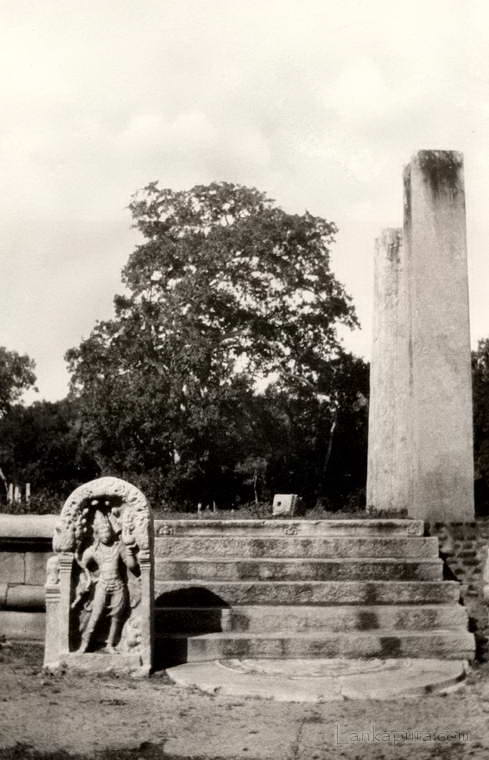
83-guard-stone.jpg
.

or yr thoughts and knowledge about it..
my aim is to cover as many information about mahawansaya
And sri lankan past kings and queens and greta events here..
thankssssssssss.
:yes::yes::yes::yes::yes::yes::yes::yes::yes::yes::yes::yes::yes::yes::yes:
The Mahavamsa

logo.jpg
The Mahavamsa "The Great Chronicle" otherwise known as "The Great Dynasty" is the single most important work of Lankan origin (written in Pali language). It describes the life and times of the people who forged our nation, from the coming of Vijaya in 543 BCE to the reign of King Mahasena (334 – 361) (6th Century BC to 4th Century AD). A companion volume, the Culavamsa or Choolavansha ("lesser chronicle"), covers the period from the 4th century to the British takeover of Sri Lanka in 1815.
The Mahavamsa itself is actually comprised of three parts, all written at different times in Lankan history. The combined work, sometimes collectively referred to as the "Mahavamsa" or "Mahawansha", provides a continuous historical record of over two millennia and can be considered as the world’s longest unbroken historic record


Last edited:

coolgayathra

Member
Jan 18, 2009
35,418
61
0
....Sri lanka..Land of brave lions...
In the year 1826 an Englishman, the Hon. George Turnour (1799–1843), sat in his office in the Kachcheri buildings at Ratnapura in the Saffragam Province of Ceylon. Those were the days of Empire, full-blooded and confident. The Colonial Service, in particular, was attracting men of culture and high feeling, for whom the betterment of mankind in general, and not personal prosperity, was the principal objective.
George Turnour was one of these men, and history has shown him scant recognition, for his contribution to a fuller knowledge of the past must be considered unique.
The documents which lay on the desk before him that morning were not connected with his routine duties as Government Agent of the Province. They afforded the key, if a scholar could be found to decipher them, to such fabulous historic riches that the mere sight of them filled Turnour with excitement. He resolved to dedicate his own life to the task of solving the problem.

At the opening of the nineteenth century, the existence of an historical record called the Mahavansa, or Great Dynasty, was known to a handful of Buddhist priests. It was a metrical chronicle, hiding in mystical verse the most astonishing dynastic history of any people, covering a period of no less than twenty-three centuries from the year 543 B.C. to A.D 1758. The language employed was Pali, which had long passed out of use, and to those who had, with difficulty, managed to translate a verse or two, the work had not seemed worth proceeding with. The authors of the chronicle had, it appeared, sacrificed sense for rhyme, the poem being mystical, ver-bose, and incomprehensible. It had fallen into such disrepute that few, even among the Buddhist priesthood, knew of its existence.
One of the priests, however, named Gallé, recognized in Turnour a man of genius, and it is certain that, without Gallé, the history of Ceylon would have been lost. He sought out the Government Agent, and told him of his conviction that a “tika” of the Mahavansa was still in existence. Now a “tika” is a prose key, which, fitted into the mystical verse of the earlier poets, reduces it to a commonsense narrative. Gallé was convinced that that was just what the Mahavansa was, an accurate record of events obscured by the flowery outer-cover of metrical rhetoric.
Turnour ’s interest was aroused, and between them a search was made of the only possible repositories of such a set of documents: the old Buddhist temples. They were successful. The missing “tika” was found at Mulgirigalla, near Tangalle, a temple founded one hundred and fifty years before the birth of Christ. It was this manuscript which lay on Turnour ’s desk that morning in 1826.
The difficulties of his task must have appalled the Government Agent. Although fluent in the Sinhalese vernacular, with a considerable knowledge of Sinhalese script, he knew nothing of Pali; an extinct language at that time. It is the root language of Sinhalese, but clearly distinct from it. There were no textbooks nor vocabularies available, and no parallel documents for comparison. Turnour knew that he would be compelled to spend months delving into the minds of the very few Buddhist priests who were still able to remember a few words of Pali And he would have to dedicate many years of his life to the work of research, for there were one hundred books of the Mahavansa, and they covered, in detail, two thousand years of Ceylon history during which fifty-four kings of the Great Dynasty-the Mahavansa of the title -and one hundred and eleven sovereigns of the Sulavansa or lower race, sat on the throne of Lanka.
I like to think of him faced with that colossal challenge, rising from his desk and turning to the vast mountain wall outside the Kachcheri windows for inspiration. To the north, and very close at hand, rearing its forest-clad summit 7,000 feet into the burnished blue of the sky, stood Adam’s Peak, incarnation of beauty and majesty. The sheer bulk of the cliffs, rising in precipitous grandeur from the foothills, induce feelings of awe and exultation, and it is from Ratnapura that the most devout pilgrims make their ascent of this holy mountain. To George Tumour the sight must have afforded all the comfort, hope, and encouragement he needed. His decision was made, with the result that some thirty books of the Mahavansa were translated, edited and arranged by him during his lifetime and published in 1836; ten years after his first glimpse of the “tika.”
He did not live to complete the whole vast chronicle, but recognition of the value of the record was instantaneous. It was revealed as one of the most remarkable histories in existence, unrivalled as a dynastic narrative of an ancient and cultured civilisation.
That was not all. Turnour ’s research opened the path to the study and translation of carved inscriptions found all over India and among the countless monuments of two of the most remarkable lost cities in the world: Anuradhapura and Polonnaruha, abandoned and forgotten in the arid plains of central Ceylon. His name has never received the recognition which is its due. It is almost unknown, but his work is of an importance which increases with the passing of the years.
“Ceylon” Pearl of the East, by Harry Williams
 

coolgayathra

Member
Jan 18, 2009
35,418
61
0
....Sri lanka..Land of brave lions...
Choranaga: (63 BC – 51 BC)

After the death of Mahachuli, Choranaga became the King of the country.
Destruction of Buddhist Temples:
After becoming the ruler, Choranaga’s very first act was to destroy the eighteen Viharas that did not provide him refuge while in hiding.
(Author’s Note: Choranaga can be considered as the very first King to destroy Buddhist Viharas).
Baminitiya Saaya – (Baminitiya Famine)
According to Rajavaliya, major famine known as “Baminitiya saaya” occurred in the country. Many people died from it. Mahavamsa is silent on Baminitiya famine.
Story of Anula Devi (Queen Anula):
Choranaga’s first wife was Anula Devi. She poisoned Choranaga to death.

Tissa:(51 BC – 48 BC)

After the death of Choranaga, his nephew, Tissa became the King.
Anula Devi: (48 BC – 42 BC) - (First Woman Ruler)

Tissa was also poisoned by Anula and had the kingdom turned over to her secret lover Siva. Siva ruled the country for one year and two months. He was also poisoned by Anula and had the kingdom transferred to a Damila named Vatuka. Vatuka ruled the country for one year. Anula poisoned him as well and had the country transferred to Dharubatika Tissa. Dharubatika Tissa did not rule for too long, since Anula poisoned him as well. She transferred the kingdom to another Damila named Niliya. Anula poisoned Niliya and became the ruler of the country.
(Author’s Note: Anula Devi is the very first woman to become the ruler of the country. Mahavamsa paints Anula Devi as a sex addicted woman. There could be another side to the story. Anula was trying to capture power for herself from the very beginning by creating various alliances with other men. When she saw the opportunity to capture power she did not hesitate to do so.)
Kutakanna Tissa: (42 BC – 20 BC)

Anula Devi ruled the country for a period of four months. Mahachuli’s son Kutakanna Tissa came with an army and defeated Anula and became the King. Kutakanna Tissa ruled the country with justice for all.
Bathikabhaya: (20 BC – 8 AD)

After Kutakanna Tissa’s death his son Bathikabhaya became the ruler of the country. Bathikabhaya constructed an eight finger thick plaster on the Mahathupa. (Approximately 3 to 4 inches thick). King Bathikabhaya raised water from Abhaya wewa, using machines to bathe Mahathupa. (Author’s Note: Interestingly Mahavamsa provides an account of pumping machines used by King Bathikabhaya. One could imagine a pumping device powered by horses or buffalos. Further, King Bathikabhaya is credited with constructing a wide stairway to Mihintale. This wide stairway still exists in Mihintale at the bottom of the hill). King Bathikabhaya was a very pious King who constructed many Viharas. He conducted the great Vesak festival every year. Dancers, drummers and musicians participated in the festival held in honor of the great Bodhi tree.
Mahadathika Mahanaga: (8 AD – 20 AD)

After the death of King Bathikabhaya, his younger brother Mahadathika became the King. King Mahadathika built the Amabatthala Vihara in Mihintale.
Amanda Gamini Abhaya: (20 AD – 30 AD)

After Mahadathika’s death his son Amanda Gamini Abhaya became the ruler. King Amanda Gamini built the Ridhee Vihara.
Kaniraja Tissa: : (30 AD – 33 AD)

King Amanda Gamini Abhaya was overthrown by his younger brother Kaniraja Tissa.
Murder of Bhikkus: Kaniraja Tissa charged sixty bhikkus of treason and had them thrown from a mountain. (Chetiya Pabbatha). (Author’s Note: Kalani Tissa was the first King to kill a bhikku. As per Mahavamsa, Kaniraja Tissa was the second King to kill bhikkus. Mahavamsa states Choranaga destroyed Viharas but does not say whether he killed any bhikkus).
Chulabhaya: : (33 AD – 34 AD)

After Kaniraja Tissa’s death, previous King Amanda Gamini Abhaya’s son Chulabhaya came to power.
Sivali (Queen): (34 AD – 34 AD) (Second Woman Ruler)

After the death of Chulabhaya, his sister, Sivali came to power. (Author’s Note: Queen Sivali was the second woman to become the ruler of the country).
Ilanga: : (34 AD – 40 AD)

Queen Sivali was overthrown by her nephew Ilanga. King Ilanga had a problem with a powerful group of people known as “Lambakanna”. King had Lambakannas build a road to Mahathupa and had Chandalas as overseers.
(Author’s Note: This is the very first time Mahavamsa mentions the Lambakanna clan. Initially there was Sihala, who came along with Vijaya. Now Mahavamsa introduces this new group – Lambakanna. Later Lambakannas captured power from the Sihala and ruled the country for nearly 1,000 years).
Lambakannas were angry with King Ilanga for this insult and plotted against him. They conducted a coup and held the King in hostage inside the castle. Kings people had the royal elephant breakthrough the castle and saved the King. King Ilanga fled the capital and spent three years in hiding. King gathered a large army and came to the capital and captured the power.
Chandha Mukaseeva: (Sandha Muhunu) : (40 AD – 49 AD)

After the death of Ilanga, his son Chandha Mukaseeva became the King.
Yasalalaka Tissa: : (49AD – 56 AD)

Chandha Mukaseeva was overthrown by his brother Yasalalaka Tissa.
Subha and Yasa Story: King Yasalalaka Tissa had a gate keeper named Subha, who had similar features as the King. King decided to play a practical joke on his ministers. King had the gate keeper dress as the King and he himself dressed as the gate keeper. The ministers came and paid homage to the gate keeper believing him to be the real King. Seeing this, King Yasalalaka Tissa (now disguised as the gate keeper) could not stop laughing. At this point Subha asked the ministers why that gate keeper is laughing. Ministers said they do not know. Then Subha ordered to put Yasalalaka Tissa to death. After the death of Yasalalaka Tissa, Subha the gate keeper became the King.
Subha: : (56 AD – 62 AD)

During Subha’s reign, a fortune teller predicted that a Lambakanna man named Vasabha would become the next ruler of the country. Fearful of this prophecy, Subha ordered that all the men with the name “Vasabha” to be killed. The real Vasabha never got caught. Vasabha raised an army and defeated Subha
 

coolgayathra

Member
Jan 18, 2009
35,418
61
0
....Sri lanka..Land of brave lions...
King Vasabha First Lambakanna King (62 AD – 106 AD)

King Vasabha after capturing power from Subha, asked the fortune teller who predicted his ascension to power how long would he rule the country. The fortune teller said he would rule the country for twelve years. Unhappy with this prediction, King Vasabha asked Mahasangha, how to prolong his life. Mahasangha stated by conducting meritorious deeds, he would be able to prolong his life. Hearing this, King started a major campaign to construct temples and reservoirs. He had thousand lamps lighted in Mahathupa, Thuparama, Great Bodhi Tree and Chetiya Pabbatha. He restored many ruined Viharas and stupas. He built a huge wall around the city to protect it from enemy attack. (According to Mahavamsa Tika, the wall was approximately 27 feet high).
King Vasabha constructed twelve reservoirs and twelve canals.
Rajavaliya provides the full list of the twelve reservoirs built by King Vasabha:
Nitupatuna, Kebagalureru, Manikaveti, Kelani kolonna, Kalivasama, Mangunna, Alavadunna, Radupulla, Kalusilubala, Makulla, Vadunna, Abivudunna
King Vasabha constructed bathing tanks inside the city. He built tunnels to bring water to them. During the time of King Vasabha, the country was prosperous. King Vasabha ruled the country for forty four years.
(Author’s Note: King Vasabha is the first Lambakanna King to capture power from the Sihala. Mahavamsa clearly differentiate Lambakannas from Sihala. Later, long line of Kings spun out from the Lambakannas. With time, Lambakannas lost their distinct identity and became part of the majority Sihala. King Vasabha is considered to be one of the hardest working Kings of all time. Water tunnel built by King Vasabha has not been found. If Mahavamsa is correct, Vasabha’s tunnel would be the world’s first water tunnel).
Inscriptional Evidence:
Gold plate inscription was found in Vallipuram with information regarding the construction of a Vihara by the minister of Nagadipa.
“Siddha! (Hail) In the reign of the great King Vahaba and when the minister Isigiriya was governing Nakadiva (Nagadeepa), Piyaguka Tissa caused a Vihara to be built at Badakara Stana”
“Siddha, Maharaja Vahaya Rajehi Amathe
Isigiriya Nakadiva Bujameni
Badakara atanehi Piyaguka Tissa
Vihara Karithe”
(Ref: Epigraphia Zeylanica – Volume IV –Don Martino De Zilva Wikramasinghe)
Great Elahara Canal:
King Vasabha started construction of the Great Elahara canal that brings water from Amban Ganga and feeds hundreds of reservoirs including Minneri, Girithale and Kanthalai reservoirs. Obviously most of these reservoirs did not exist during King Vasabha’s time period. Elahara canal was later extended to the today’s length of 54 miles by greatest reservoir builder of the ancient world, King Mahasen. (See under King Mahasen for the description of the Elahara canal).
Vanka Nasika Tissa (106 AD – 109 AD)

After the death of King Vasabha, his son Vanaka Nasika Tissa (Literally - Round Nosed Tissa) became the King. King Vanka Nasika Tissa built a Vihara named Mahamangala.
King Gajabahu (109 AD – 131 AD)

After the death of Vanka Nasika Tissa, his son Gajabahuka Gamini (or popularly known as Gajabahu) came to power. King Gajabahu built Abhayuttara Thupa and Gaminitissa reservoir.
Story of 12,000 slaves and Warrior Neela: (not mentioned in Mahavamsa)
King Gajabahu had a habit of wondering in the city at night. One day when he was walking along a road, he heard a woman crying. King marked a cross on the door and left. Next day King sent his soldiers and brought the woman to his castle. King asked the woman why she was crying. The woman stated that her two sons and twelve thousand others were taken as slaves by a Damila King. Hearing this, King Gajabahu and warrior Neela went to Jambudeepa (India). Warrior Neela used his yagadha (heavy steel pole) to move water in the sea. King Gajabahu went to the land of Damilas and waged war. After winning many battles in Damila country, he brought the twelve thousand Sihala prisoners and additional twelve thousand Damila prisoners. According to ancient Chola inscriptions, King Gajabahu attended a Patthini Puja in South India with the Chola monarch. This confirms King Gajabahu’s visit to the Chola country.
( From Rajavaliya )
(As per Codrington - Ref. Ancient India, S. Krishnaswami Aiyanagar, 1911, p. 363 and Journal of the Royal Asiatic Society C.B xiii, No. 44, p 81, and JRAS No. 45 pg 144).
 

coolgayathra

Member
Jan 18, 2009
35,418
61
0
....Sri lanka..Land of brave lions...
Mahallaka Naga: (131 AD – 137 AD)

After King Gajabahuka Gamini’s death his father in law Mahallaka Naga (Old Naga) came to power. Mahallaka Naga constructed seven Viharas during his short time as the King.

Bhatika Tissa: (137 AD – 161 AD)

After the death of Mahallaka Naga, his son Bhatika Tissa became the ruler of the country. King Bhatika Tissa built a wall around Mahavihara. Further he built Randhakandaka reservoir and Mahamani reservoir.
Kanitta Tissaka: (161 AD – 179 AD)

After Bhatika Tissa’s death his son Kanittha Tissaka became the King of the country. Kanitta Tissaka ordered to restore the temple in Nagadheepa.
Kanittha Tissaka built houses for both Abhayagiri (Mahayana) and Mahavihara (Theravadha) bhikkus. He built a road to Dakkinavihara.
Construction of Madirigiriya Watadageya:
King Kanitta Tissaka built the Mandalagirika. (Mandalagirika is identified to be Watadage of Madirigiriya).
Kanittha Tissa conducted many meritorious acts and went to heaven after his death.
Kujja Naga: (179 AD – 181 AD)

After Kanittha Tissaka’s death his son Kujja Naga became the King of the country.
Kuncha Naga: (181 AD – 182 AD)

Kujja Naga was over powered by his brother Kuncha Naga and became the King of the country. After two years at the throne, Kuncha Naga was overthrown by the commander of his army, “Sirinaga”.
Sirinaga: (182 AD – 201 AD)

Sirinaga rebuilt the Lowa Maha Paaya to five stories.
(Author’s Note: Original Lowa Maha Paaya built by King Dutugamunu was nine stories high. The structure was destroyed due to a fire during King Saddha Tissa’s time. Saddha Tissa rebuilt it to seven stories. Now, many centuries later it was rebuilt to five stories by King Sirinaga)
Voharika Tissa: (201 AD – 223 AD)

After the death of King Sirinaga, his son Voharika Tissa became the ruler of the country. Voharika Tissa ruled the country with fairness to all. He provided state support to both Abhayagiri and Mahavihara bhikkus. King Voharika Tissa ruled for twenty two years.
Abhaya: (223 AD – 231 AD)

King Voharika Tissa was overpowered by his brother, Abhaya.
Sirinaga II: (231 AD – 233 AD)

After the death of Abhaya, King Voharika Tissa’s son Sirinaga became the King.
Vijaya Kumaraka: (233 AD – 234 AD)

After Sirinaga II, his son Vijaya Kumaraka came to power.
Story of Three Lambakannas: (Sirisanga Bo, Sangha Tissa and Gothabhaya):
Three men belonging to the Lambakanna ethnic group were walking towards the city. A blind fortune teller yelled out that he could hear foot steps of three future leaders of the country. At that time Gothabhaya was walking last and stopped near the blind fortune teller and asked him “Whose lineage would endure”. The fortune teller said that lineage of the person walking last would endure. Gothabhaya remembered blind man’s premonition. He was walking last.
Three men became highly acclaimed officials of the government of King Vijaya Kumaraka. Once they acquired enough power, they overpowered the King and captured the kingdom.
Sangha Tissa: (234 AD – 238 AD)

Sangha Tissa (one of the three friends) became the King after Vijaya Kumaraka.
 

coolgayathra

Member
Jan 18, 2009
35,418
61
0
....Sri lanka..Land of brave lions...
Siri Sangha Bo (238 AD – 240 AD)

After the death of Sangha Tissa, Siri Sangha Bo became the ruler. He was a very pious King, who conducted many meritorious deeds.
Devil Ratakki:
During King Siri Sangha Bo’s time period, red eye disease spread through the country. The disease was caused by a devil known as “Ratakki”. Many people died due to the disease. King Siri Sangha Bo lied on the ground and wished that he would not raise from the ground unless Ratakki come to him. As King wished, Ratakki the devil came to King Siri Sangha Bo. King asked the Ratakki to take him and save the people from the disease. Ratakki did not agree. Ratakki stated that he wants half the country. King said that’s impossible. Finally Ratakki agreed to accept offerings from each house every day.

Gothabhaya’s Rebellion:
During King Siri Sangha Bo’s time, his former friend, Gothabhaya started a rebellion against the King. Refusing to fight, King left the kingdom and Gothabhaya became the ruler.
Gothabhaya: (240 AD – 253 AD)

After King Siri Sangha Bo left the city, Gothabhaya became the new King. He was suspicious that Siri Sangha Bo would come back with an army. Gothabhaya promised to provide huge sum of money to anyone who would bring Siri Sangha Bo’s head.
Siri Sangha Bo Giving His Head to a Poor Man:
One day in the jungle, Siri Sangha Bo met a very poor man. King removed his head and gave it to the poor man so that he could claim the prize. The homeless man took the head to King Gothabhaya. King was not sure whether it belongs to Siri Sangha Bo. At this point, the head started to talk and confirmed that it is really Siri Sangha Bo and Gothabhaya should provide the promised prize to the poor man. King Gothabhaya gave the promised prize to the poor man.
King Gothabhaya renewed stone pillars at Lowa Maha Paaya.
(Author’s Note: Mahavamsa provides a detailed list of meritorious acts conducted by King Gothabhaya. He is the father of one of the greatest Kings of Lanka, King Mahasen).
King Githabhaya’s Two Sons: (Jetta Tissa and Mahasen):
King Gothabhaya had two sons. Jetta Tissa was the older son and Mahasen was the younger son. A Chola monk named Sanghamittha was the mentor of two young boys. Thera Sanghamittha was against Mahavihara (Theravadha) bhikkus. King Gothabhaya was closer to Thera Sanghamittha and obtained advice from him against the wishes of Mahavihara bhikkus. Two sons grew up under Sanghamittha. Bhikku Sanghamittha was more fond of Mahasen than Jetta Tissa. Due to this reason, older son Jetta Tissa was not happy with bhikku Sanghamittha.
Jetta Tissa: (253 AD – 263 AD)

After the death of Gothabhaya, Jetta Tissa became the King. Jetta Tissa was a cruel man. He had ministers of his father’s court killed during the funeral of King Gothabhaya and had the bodies impaled around the pyre. Bhikku Sanghamittha left the country, knowing that he was hated by Jetta Tissa..
King Jetta Tissa increased the Lowa Maha Paaya to seven stories. After King Jetta Tissa’s death, his brother, Mahasen became the ruler.
 

coolgayathra

Member
Jan 18, 2009
35,418
61
0
....Sri lanka..Land of brave lions...
After Mahasen was consecrated, his mentor Mahayana bhikku Sanghamittha came back to the city. Bhikku Sanghamittha convinced King Mahasen that Mahavihara bhikkus were not teaching real Vinaya (Disciplinary Code of Buddhism).
Penalty for People Who Provided Food to Mahavihara Bhikkus:
King Mahasen established a fine for anyone who provided food to Mahavihara bhikkus. Due to this reason, Mahavihara bhikkus were unable to survive in the capital city. They abandoned Mahavihara and went to Rohana. (Southern part of the country).
Destruction of Mahavihara and Lowa Maha Paaya:

Bhikku Sanghamittha advised the King, that since Mahavihara is abandoned by bhikkus, the land now belongs to the King himself. King gave permission to destroy Mahavihara. Bhikku Sanghamittha sent soldiers and destroyed Mahavihara and Lowa Maha Paaya. The building materials obtained from two buildings were used to build more buildings in Abhayagiri Vihara.
(Author’s Note: Original Mahavihara was built by King Devanam Piya Tissa for the use of Mahinda Thera. Now almost six hundred years later it was destroyed during the time of King Mahasen).
Rebellion by Minister Maghavannabaya:

King Mahasen’s destruction of Mahavihara and Lowa Maha Paaya distressed many people in the country. One minister (who was a good friend of the King) named Meghavannabaya went to Rohana and gathered an army. King Mahasen came with the state army to fight the minister. Two armies camped on either side of Duratissa reservoir. During the night, minister thought I should have dinner with my good friend, King Mahasen, who is camped on other side of the reservoir. (Two were about to fight with each other next morning). The minister went to King’s camp and introduced himself and the King let him come to the camp. Two had dinner together. King asked why, he (the minister) became a rebel. The minister stated that destruction of Mahavihara by the King made him a rebel.
King apologized for the deed and promised to reconstruct Mahavihara.

Death of Sanghamitta:

After destroying Mahavihara, bhikku Sanghamittha came with men to destroy Thuparama. At that time one of King’s wives provided money to workers to kill Sanghamittha. The workers killed Sanghamittha and saved Thuparama from destruction.
As promised, King built the Mahavihara. Bhikkus who left Mahavihara came back to dwell there.

Construction of the Jethavana Vihara:

A friend of Sanghamitta, Thera Tissa was the Mahathera or the chief monk of Dakkinarama. He convinced the King to build a huge Thupa in the land belonging to Mahavihara. Mahavihara bhikkus tried to stop this action but was unable to do so. Jethavana Vihara was built on the land belonging to Mahavihara.
King Mahasen built Manihira (Minneriya) reservoir and fifteen other reservoirs and the Pabbathantha canal.
Sixteen reservoirs built by King Mahasen are; (Manihira, Mahagama, Challura, Khanu, Mahamani, Kokavata, Dhammarama, Kumbalaka, Vahana, Ratmalakandaka, Tissavadamanaka, Velangavitthi, Mahagallaka, Cira, Mahadaragallaka, Kalapasana).
As per Mahavamsa, he gathered much merit and much sin.
Author’s Note: Ratmalakandaka is identified to be Padawiya reservoir, Tissavadamanaka as Kaudulla reservoir, Mahadaragallaka as Nachchaduwa reservoir.
Author’s Note: King Mahasen’s time period was a golden era in Lanka but not for Buddhism. King Mahasen was the first to destroy Mahavihara yet after his death, people made him a god. Even today, almost two thousand years later people in Sri Lanka call him Mahasen Deviyo or Minneri Deviyo).
Elahara Canal:

King Vasabha initiated the Elahara canal scheme and King Mahasen built it to the present status. The canal, which was neglected for centuries, was restored by the restoration program started by British Governor Henry Ward. Elahara canal starts from Amban river near Elahara and carries water to large reservoirs in north, Minneriya, Girithale and Kantalai reservoirs. Total length of the canal is 54 miles and the width varies from 70 ft to 200 ft. (Compare this with a 300 ft length of a soccer field).

The Greatest Canal in the Ancient World:

(Ref: Sir Emerson Tennent)
“Excepting the exaggerated dimensions of the lake Moeris in Egypt and the mysterious basin of Al Aram, no similar construction was formed by any race whether ancient or modern, exceed in colossal magnitude of the stupendous tanks of Ceylon. The reservoir of Kohrud of Isphan, the artificial lake of ajmeer, or the tank of Hyder in Mysore can no more be compared in extent or grandeur with Kala Wewa or Padawiya. The conduits of Hazekiah, the Kanat of the Persian or the subterranean water courses of Peru can vie with the Elahara canal, which probably connected the lake of Minneri with Sea of Parakrama (Parakrama Samudra) with the Amban river”
(Sir Emmerson Tennent, Ref: R.L Brohier, Ancient Irrigation Works of Ceylon – Edited for brevity).

Path of the Elahara Canal:

Milepost 0.0 - Amban river was dammed and water was diverted to the Elahara canal.
Milepost 4.0 - Canal crosses the Kongeta Oya (river)
Milepost 5.0 - Canal crosses the Kirandagalle Ela (river)
Milepost 6.2 - Canal is provided with an overflow weir (Galwana – 50 ft wide with wing walls).
Galwana would let flood water escape without damaging the canal bund.
Milepost 6.5 - Canal crosses the Heerati Oya (70 ft wide breach in the canal bund) Milepost 7.5 -
Second overflow weir
Milepost 9.0 - Sluice to feed tributary canals
Milepost 10.0 - Canal crosses the Kottapitiya Oya (50 ft wide breach in the canal bund)
Milepost 12.0 - Second sluice to obtain water
Milepost 14.5 - Overflow weir (Galwana)
Milepost 16.0 - Canal crosses the Athanakadawela Oya (70 ft wide breach in the canal bund)
Milepost 16.5 - Overflow weir (Galwana)
Milepost 16.8 - Meegolla Ela (river) enters the canal
Milepost 17.0 - Meegolla Ela (river) departs the canal
Milepost 18.0 - Canal crosses the Radawige Oya
Milepost 19.0 - Canal feeds the Konduruwewa reservoir
Milepost 20.0 - Overflow weir (Galwana)
Milepost 20.7 - Main canal branches off to three sub canals.
Milepost 21.0 - Canal feeds the Minneriya reservoir.
Milepost 22.5 - Canal feeds the Rotawewa reservoir
Milepost 25.0 - Canal feeds the Matalewewa reservoir
Milepost 26.0 - Crosses the Gal Oya – Polonnaruwa road (Canal bund is 10 feet high)
At the 54th milepost, canal enters the Kantalai reservoir.
(Ref: R.L Brohier, Ancient Irrigation Works of Ceylon – Edited for brevity
Cost Estimate to Build First 24 Miles of The Elahara Canal:
British Governor, Henry Ward calculated the cost to build the first 24 miles of the Elahara canal to be 200,000 British Pounds in 1857 based on labor and material rate existing at that time. “To conduct the water of the Ambanganga to Minnery, and to divert the streams falling from this range of hills, this wonderful embankment which extended without intermission for 24 miles was constructed. Its height as before mentioned varies from 40 to 90 feet, but taking its average at 50 feet it must have contained more than 3,800,000 cubic yards of earthwork which with the masonry would have cost at the present rate of labor not less than 200,000 British Pounds”.
(Ref: Sir Henry Ward’s Minutes and Collected Papers, Ceylon Almanac, 1857)
Assuming an inflation rate of 5% over the years, this sum would be equal to 250 million British Pounds today. (390 million US Dollars).
Kanthalai Reservoir: (Ganthalwa Wewa):

This is another stupendous work of King Mahasen. He built this reservoir during the end of his reign. Originally known as Ganthalwe Wewa (plain gifted to temples) corrupted by Englishmen to Kanthalai. It has a circumference of 20 miles with a height of 30 ft. The bund of the reservoir at the base is measured to be 150 ft. (Half the length of a soccer field!). It has a submerged area of 3,700 acres. The bund was built using large stones piled up in a manner to contain water. Stupendous amount of labor was expended for the construction of the bund of this reservoir. The ancient Engineer selected this location for the reservoir due to surrounding hills. He made maximum use of the existing hills to contain water. Henry Cave writes the following on Kanthalai.
“Spotted deer are browsing: Peacocks airing their gaudy plumage, strut over the plain; a majestic elephant is enjoying his evening bath in the shallows; herds of buffaloes leave the shade of the woods to slake their thirst; grim crocodiles are basking on the shore; troops of chattering monkeys are sky larking in the trees, while the stately cranes and pink flamingos stalk the shallows. Such are the scenes that surround the lake of Kanthalai”
(Ref: R.L Brohier, Ancient Irrigation Works of Ceylon – Edited for brevity)
 

coolgayathra

Member
Jan 18, 2009
35,418
61
0
....Sri lanka..Land of brave lions...
Kaudulla Reservoir: (Tissavaddhamanaka of Mahavamsa)

Kaudulla has a bund of 120 ft wide at the base extending to a greater height than the bund of Minneriya. Height of the bund of this reservoir is measured to be 50 ft. In 1680 AD, an Englishman named Mr. Pybus had written that this reservoir was in working order.
Padawiya Reservoir: (Ratmalakandaka of Mahavamsa)

This is another huge reservoir built by King Mahasen. The bund of this reservoir is much larger than the bund of the Minneriya reservoir measuring 70 ft in height, 180 ft at the base and 30 ft at the top with a length of 11 miles.
fig (seven story) pic coming soon
Needs Million Workers for 10 to 15 years: (Governor Henry Ward)

“Padawiya reservoir, most gigantic works of all the reservoirs – 30 ft broad at the summit, 180 ft at the base and seventy feet high. Its construction must have occupied a million people for 10 to 15 years” Governer Henry Ward
(Ref: R.L Brohier, Ancient Irrigation Works of Ceylon)
The reservoir obtains water from damming Yan Oya and Ma Oya. The sluice of this reservoir was considered to be built using very high Engineering knowledge.
Padawiya sluice:
“The existing sluice is a remarkable work, not merely from its dimensions but from the ingenuity and the excellence of its workmanship. It is built of layers of hewn stones varying from 6 to 12 feet in length and still exhibiting a sharp edge and every mark of the chisel. These rise to a ponderous wall immediately above the vents which regulated the escape of the water, and each layer of the work is kept in its place by the frequent insertion, endwise of long plinths of stone, whose extremities project beyond the surface” Sir Emesrson Tennent
(Ref: R.L Brohier, Ancient Irrigation Works of Ceylon)
Padawiya Inscription:

Inscription was found in Padawiya reservoir indicating it to be restored by King Parakramabahu at later times.
Wahalkada Reservoir:
Another large reservoir built by King Mahasen. Mora Oya was dammed and a canal known as Yoda Ela was built to bring water to this reservoir. The bund of this reservoir ranges from 50 to 60 ft in height.
Mahadaragala Reservoir: (Nachchaduwa Reservoir)
Mahadaragala reservoir (today known as Nachchaduwa reservoir) is considered to be one of the sixteen large reservoirs built by King Mahasen. Mahadaragala lies just outside the city of Anuradhapura. Centuries later King Dhatusena built a canal (Jayaganga) to bring water to this reservoir from Kalawewa. This reservoir is considered to be a bold scheme since huge flood water with very high velocity could come down the valley. Mahavamsa probably makes another reference to this reservoir during the time of King Moggallana II. It is said that King Moggallana II, who lived 300 years later built Passapatanavapi reservoir by damming the Kadamba river (Malwathu Oya). This description matches well with Nachchaduwa. It is possible that Moggallana II could have expanded the work of Mahasen.
The embankment is 5,550 ft long, 36 ft high with a slope of 2.5 ft horizontal to 1 vertical. The slope facing the water is armed with stones. The reservoir has a capacity of 525 million Cu. ft and a surface area of 2,015 acres. 167 feet long and 44 feet wide masonry structure was provided for flood escape.
(Overflow weir or Pitawana in Sinhalese).
“It was a bold scheme as floods estimated to amount to 11,000 cu ft per second were to be expected and there was no suitable rock over which they could be allowed to flow, but it was carried out successfully”
(Ref: H. Parker, Ancient Ceylon)
Minneriya Reservoir: (Manihira in Mahavamsa)
This is the crowning glory of King Mahasen. Minneriya reservoir is 21 miles in circumference. The bund is built solidly as other works of King Mahasen has a height of 50 ft. The reservoir submerges 4,670 acres and has a capacity of 70,730 acre ft.
(1 acre ft = 272,140 gallons). The reservoir was so huge people of later times believed that it was built by demons. Amount of labor expended on this reservoir amazed many including the British Governer Henry Ward.
“No wisdom and no power in the ruler can have forced such efforts even upon the most passive oriental nations, without general persuasion that the work was one of paramount necessity and that all would participate in its benefits” Governer Henry Ward
(Ref: R.L Brohier, Ancient Irrigation Works of Ceylon). Note by R. L Brohier (Ref: Seeing Ceylon):
“No wisdom and no power in the ruler can have forced such efforts even upon the most passive oriental nations, without general persuasion that the work was one of paramount necessity and that all would participate in its benefits” Governer Henry Ward
(Ref: R.L Brohier, Ancient Irrigation Works of Ceylon). Note by R. L Brohier (Ref: Seeing Ceylon):
Thanks to Elahara canal that brings water from both Mahavali river and Amban river, Minneri is supplied with water year round.
Siyambalagamuwa Reservoir:
Another huge reservoir built by King Mahasen, located west of Kalawewa. Three centuries later King Dhathusena built a canal from Kalawewa to supply water to this reservoir.
Pabbathantha Canal:
Mahavamsa states that King Mahasen built a canal known as Pabbatanta canal. The Kalinga Yoda Ela (canal) that extends from Mahavali river near Kalinga Nuwara matches well with the description given in Mahavamsa. (Ref: Brohier R.L, Seeing Ceylon). There are two other canals in the vicinity. They are Aciravathi and Gomathi canals. Mahavamsa says, that these two canals were restored by King Parakramabahu. It is clear that during ancient times Kalinga Nuwara irrigation scheme was a great feat comparable to Elahara canal and Minneri combination.
King Mahasen - Greatest Reservoir Builder of The Ancient World:

King Mahasen is considered to be the greatest reservoir builder of the ancient world. Only King Parakramabahu the Great could come close in that regard. King Mahasen built sixteen large reservoirs and two long canals.
Restoration of Ancient Reservoirs: (Note on Governer Sir Henry Ward):
Restoration of most of the ancient work was conducted during British era thanks to Governor Henry Ward. Here I have included a portion of an article written by first Prime Minister of modern Lanka, D.S Senanayaka.
(Ref: R.L Brohier, Irrigation Works in Ancient Ceylon).
“If any governor deserved the gratitude of the people of this country, Sir Henry Ward has a preeminent claim to it. Seeing the country for himself with his own eyes and not through rose colored spectacles, investigating personally with all the force an acumen of an experienced statesman the actual conditions of the country and the people he was called upon to govern, he was imbued with a deep sympathy for the people whose agricultural system had been permitted by his predecessors to crumble through neglect. All irrigation activity in the country to date must trace its origins to the policy which Governor Ward declared”
D.S Senanayaka, Minister of Agriculture, 1934 Author’s Note: As mentioned earlier, construction of Elahara canal alone would cost 390 million US dollars. Cost of construction of sixteen large reservoirs would definitely tip the balance at 4 to 5 billion US dollars, if they were to be constructed today. On top of that, King Mahasen constructed the huge Jethavana Vihara.
God Kataragama:

As per Sinhalese tradition King Mahasen after his death became god Kataragama. (On the other hand Tamils believe God Kataragama to be God Skandha of South India). Wilhelm Geiger believes, Mahavamsa compiled by Mahathera Mahanama came to an end with this chapter. Mahathera Mahanama compiled Mahavamsa, during the time of King Dhatusena, 150 years after King Mahasen. It is not clear why Mahathera Mahanama did not continue the work till King Dhatusena’s time period. Mahavamsa, after the time period of King Mahasen was compiled by Dhammakitthi Mahathera.