


Russian Wildfires. July-August 2010, Faces of Death Pictures
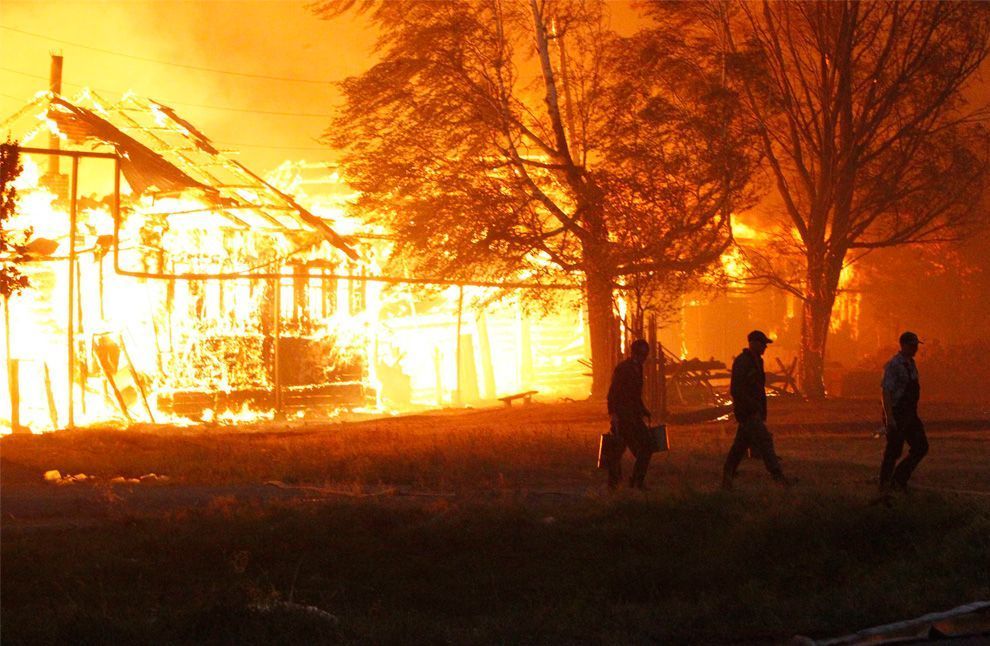
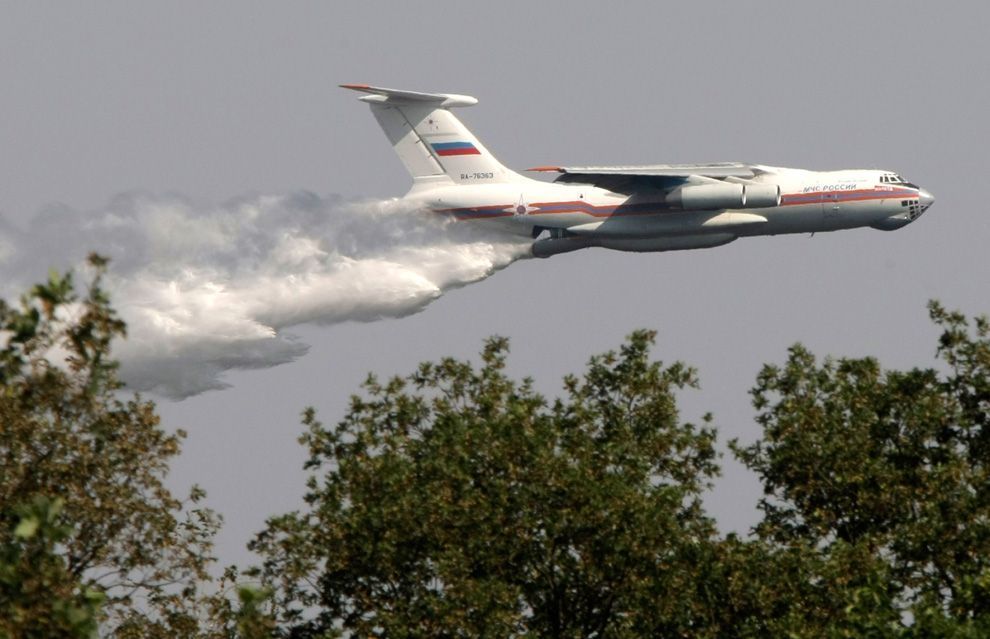
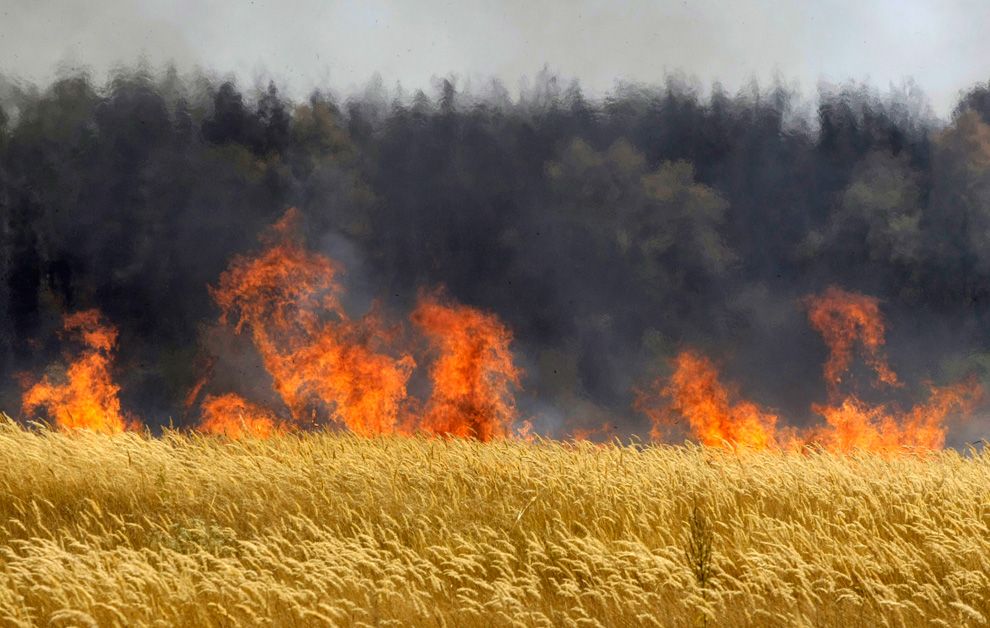
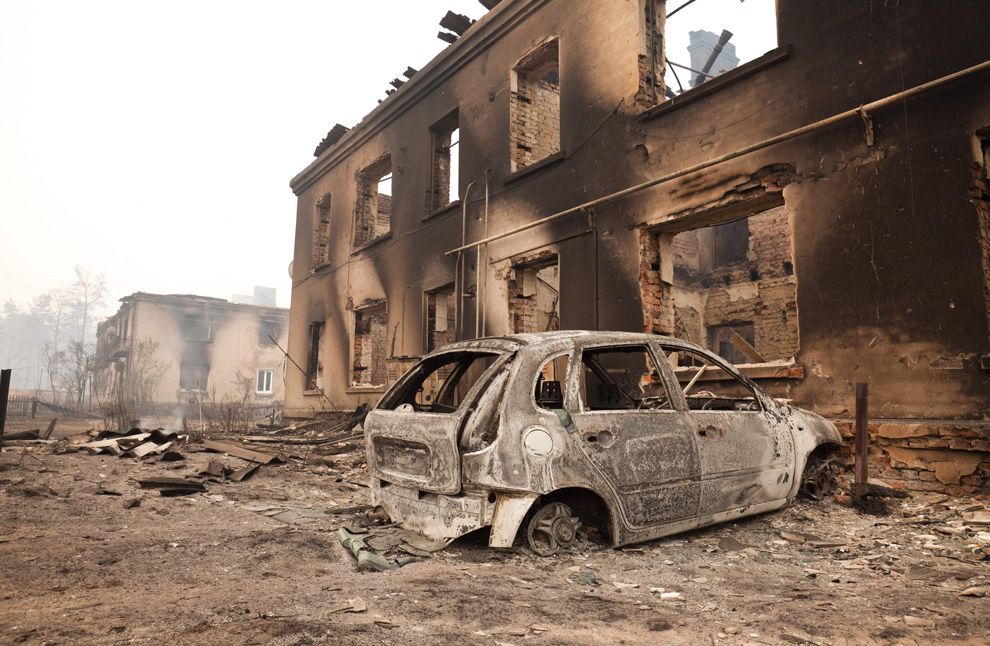
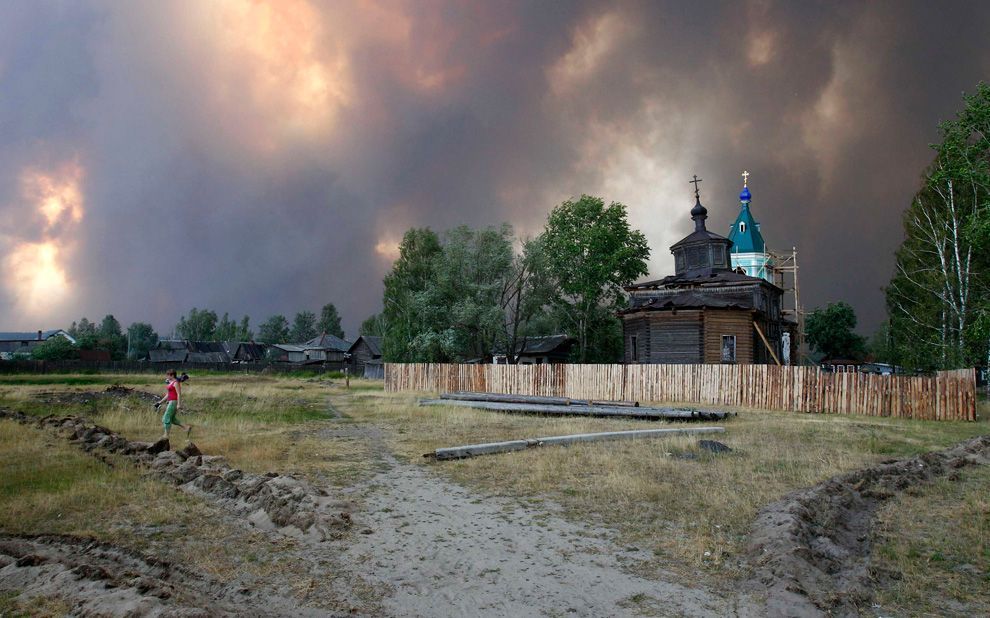
The 2010 Russian wildfires are a series of hundreds of wildfires that broke out across Russia, primarily in the west, from late July 2010 into August, due to record temperatures and drought in the region. The President of Russia has declared a state of emergency in seven regions for the fires, while 28 other regions were under a state of emergency due to crop failures caused by the Russian drought.
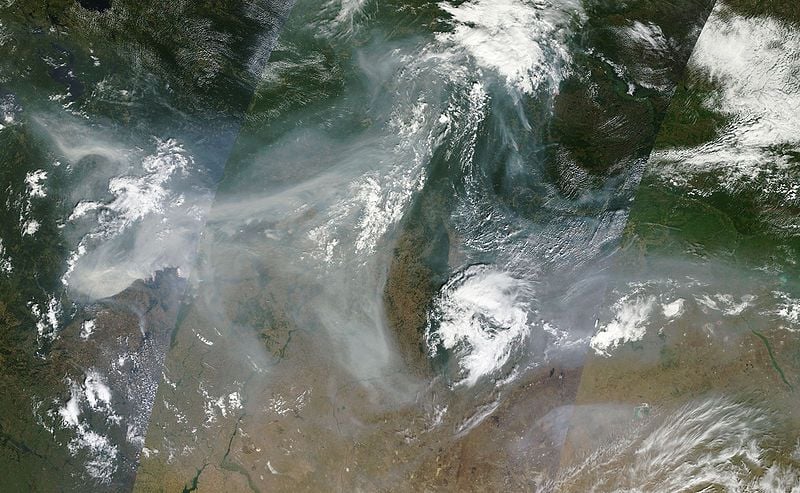
Smoke over western Russia on 4 August 2010
TIMELINE
29th July
Peat fires start in the Nizhny Novgorod Oblast, the Voronezh Oblast, and across central and western Russia in response to unseasonably hot weather.
31st July
The head of EMERCOM, Sergey Shoygu, reported on 31 July 2010 that the fire situation in the seventeen federal subjects of Russia, especially in Vladimir and Moscow Oblasts, may be complicated. He claimed that in Nizhny Novgorod Oblast the velocity of fires was 100 meters per minute, and the fiery air flow tore trees from the root, like a hurricane. A YouTube video was uploaded, showing a group of men escaping from burning village in Vyksa district by driving their car over a burning road.
1st August
On 1 August 2010, the area of the forest fires was 114,000 ha (1,140 km2).
The Central Regional Center MOE Russia website reported that in Moscow Oblast 130 foci of natural fires were detected, covering the area of 880 hectares. Of those, 67 fires covered an area of 178 hectares.
2nd August
According to "Interfax" referring to the head of the National Center for Crisis Management of EMERCOM Vladimir Stepanov, as of 2 August 2010, Russia revealed approximately 7,000 fires in the area over 500,000 ha (5,000 km2). Fire was also burning in fourteen federal subjects of Russia, and on 2 August 2010, officials reported the death of 34 people.
All parts of Moscow on Monday were shrouded with smoke, with reduced visibility on roads and a strong smell of fire.
On Monday, 2 August 2010, Vladimir Putin scheduled a meeting with the Governors of Voronezh, Novgorod, Samara, Moscow, Ryazan, and Vladimir Oblasts, as well as the Head of the Republic of Mordovia.
4 August
By 4 August, the wildfires were still burning over 188,525 ha (1,885.25 km2), with the death toll standing at 48. Some major fires were burning in areas contiguous to the nuclear research center in Sarov. However Rosatom head Sergey Kiriyenko dismissed apprehension of an atomic explosion.
President Dmitry Medvedev cut short his summer break to return to Moscow for an emergency meeting of the national security council to address the crisis. At an international meeting on July 30, amid the ongoing heat wave and wildfires, Medvedev had announced on television that "practically everything is burning. The weather is anomalously hot. What's happening with the planet's climate right now needs to be a wake-up call to all of us, meaning all heads of state, all heads of social organizations, in order to take a more energetic approach to countering the global changes to the climate".
Medvedev sacked some of his senior navy officers after one fire destroyed Russian navy equipment. The officers were accused of "incomplete professional responsibility" after several buildings were allowed to burn down and vehicles and equipment destroyed. He suggested anyone who had neglected their duties would be prosecuted. On the same day it was reported that another fire was approaching a major secret nuclear research facility in the city of Sarov.
Environmental groups and opposition politicians suggested firefighting has been slowed down by the Forest Code law passed by the Duma in 2006 at the order of Putin.
5 August
According to the Emergencies Ministry in Russia, there were 843 reported outbreaks of fires, including 47 peat fires. There were 73 large fires.
The fires threatened an animal sanctuary for over 1,800 animals, including dogs and retired circus animals such as bears, monkeys, foxes and tortoises on 5 August. Close to 600 fires were still burning in the country, and around 2,000 homes had been destroyed. The President fired several high-ranking military officials after fires burned through a military base.
6 August
According to the Emergencies Ministry, there were registered 831 fires, including 42 peat fires. 80 large fires were registered in an area of 150,800 ha (1,508 km2). Almost 162,000 people were reported to be fighting with the flames in the regions of Moscow, Voronezh, Nizhny Novgorod, Ryazan, Ivanovo, Vladimir, Yaroslavl, Tver, Yekaterinburg, Republic of Mordovia, and Mari El Republic. The death toll rose to 52.
According to the State environmental agency "Mosekomonitoring", in the morning in Moscow, the maximum concentration of carbon monoxide in the air exceeded the acceptable norm by 3.6 times, the content of suspended particles by 2.8 times, and specific hydrocarbons by 1.5 times.
The Moscow airports of Domodedovo and Vnukovo are not able to land more than 40 planes and were only able to send about 20 planes due to the strong haze caused by the smoke. As of 10 a.m., visibility at Domodedovo was 350 m and 300 m at Vnukovo. According to the Federal Air Transportation Agency, the Sheremetyevo airport works as usual because of visibility of about 800 m.
An international football friendly match (Russia–Bulgaria) scheduled for 11 August was moved to St. Petersburg. Two Russian Premier League football games were postponed because of the severe environmental situation.
According to the spectrometric data received from the NASA satellites Terra and Aqua, the smoke from the fires in some places rose to a height of about 12 kilometers and ended up in the stratosphere, which usually only occurs during volcanic eruptions. Satellite imagery showed that a cloud of smoke 1,850 mi (2,980 km) wide covered Western Russia.
7 August
Emergency officials registered 853 outbreaks of fires by 7 August, including 32 peat fires, with a total area of 193,516 ha (1,935.16 km2), in which 244 islands of fire were put out, and 290 new fires sprung up.
In Moscow, by noon the concentration of airborne pollutants intensified and reached at 6.6 times normal level for carbon monoxide, and 2.2 times for suspended particulate matter.[26] Seven flights heading for Domodedovo and Vnukovo airports were redirected to alternate airfields.[27] The temperature may reach 40 °C (104 °F) in Moscow Oblast. At Sheremetyevo International Airport, visibility was reduced to 325 meters.
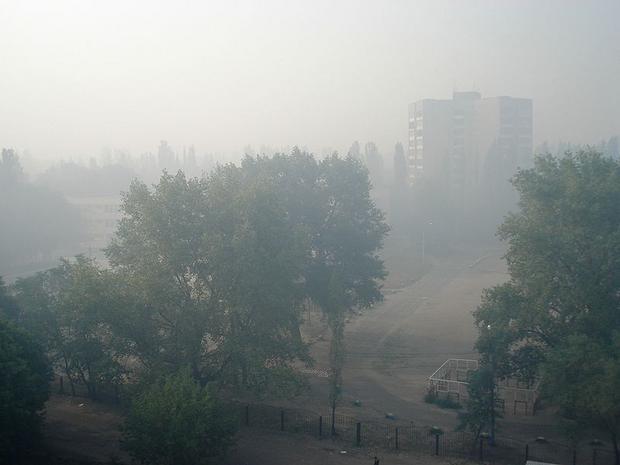
Smoke in Voronezh. 31 July 2010
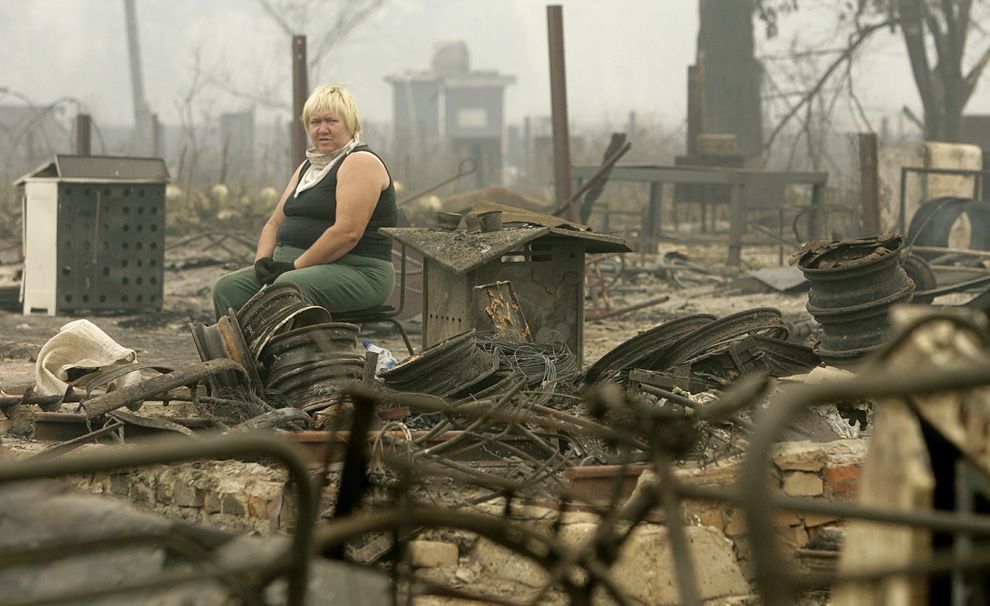
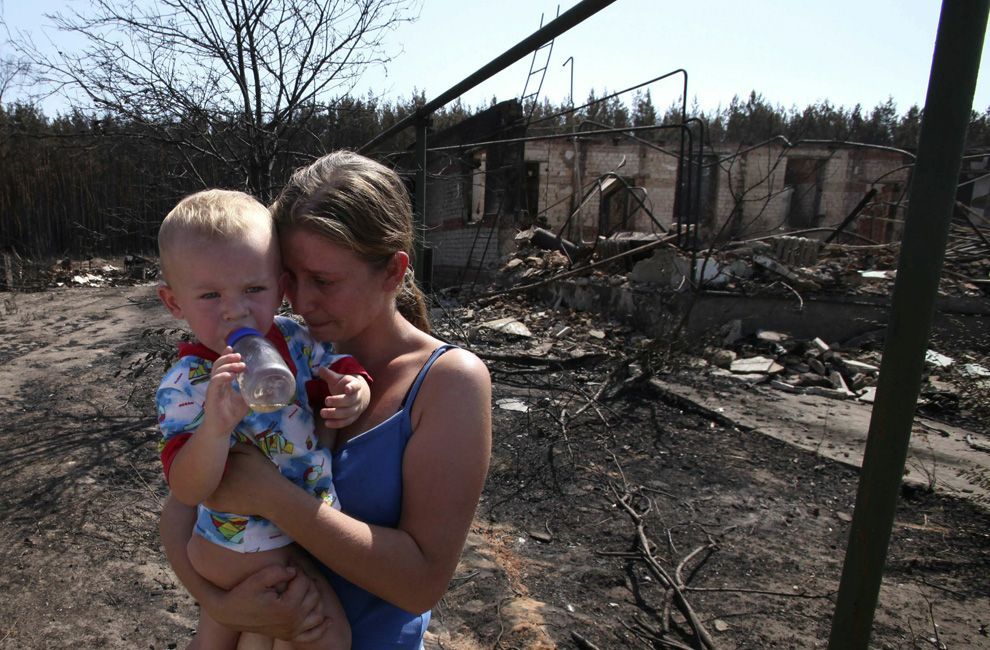
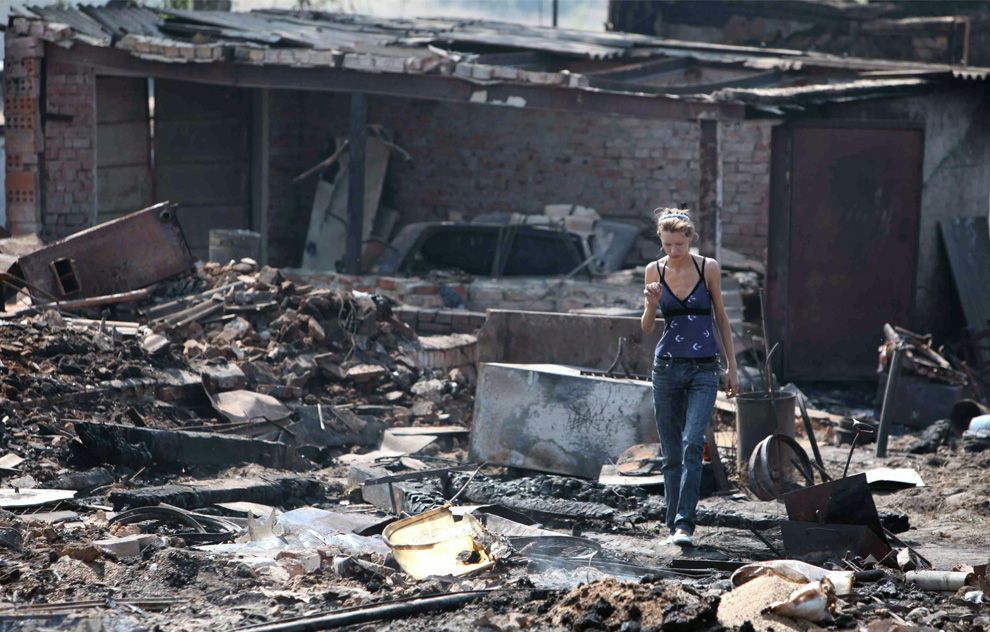
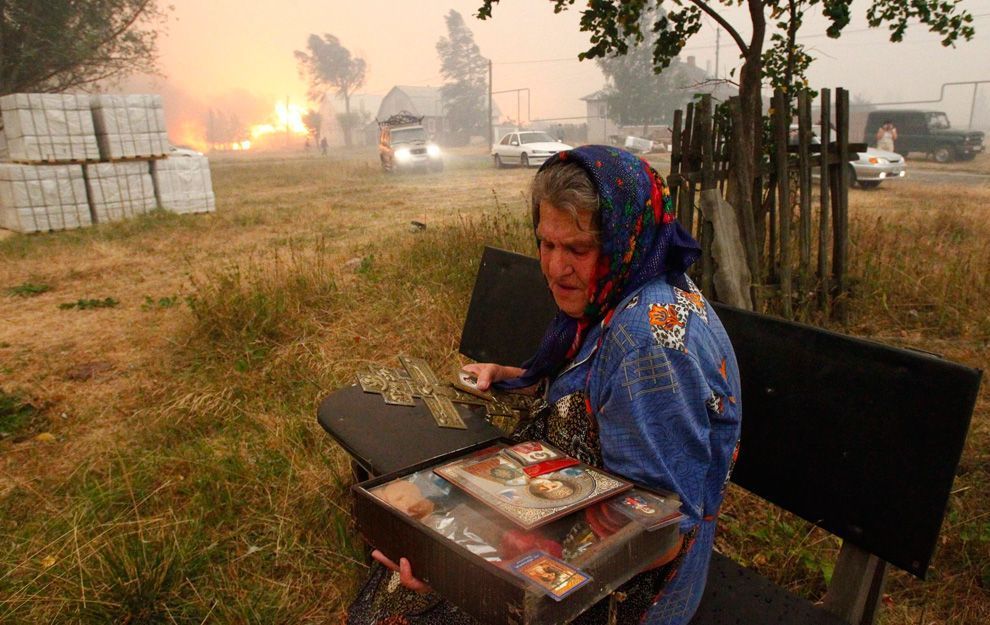
A woman sits surrounded by the remains of her house in the village of Mokhovoye, some 130 kilometers from Moscow on July 31, 2010.
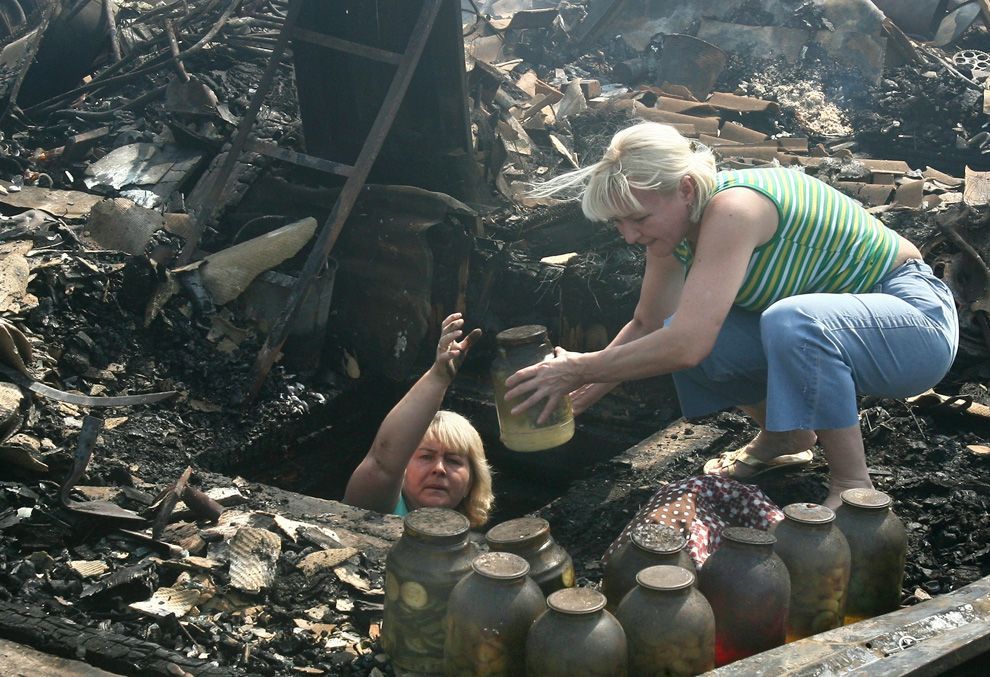
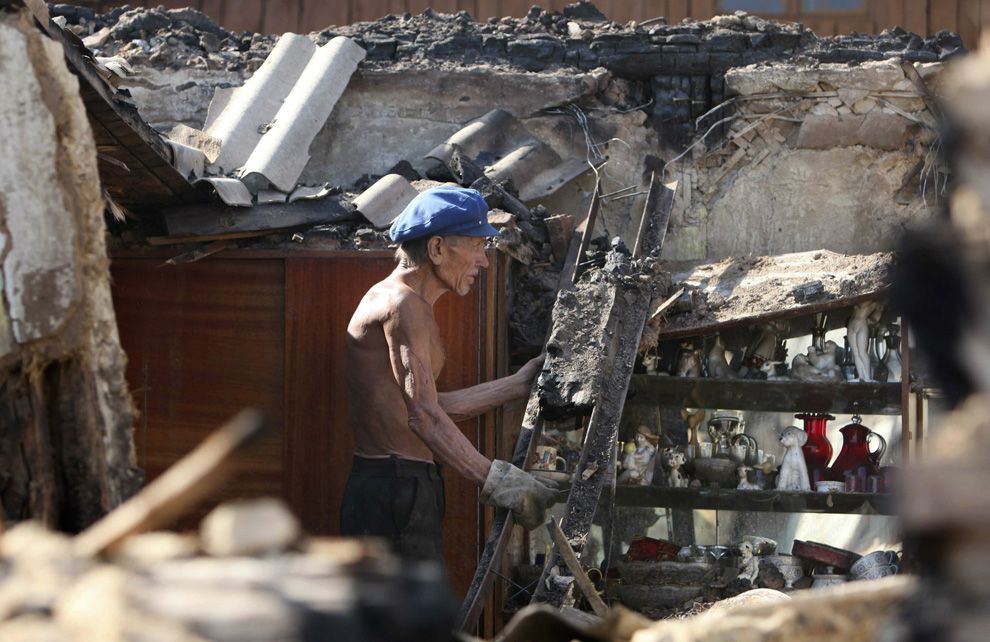
Russian women remove jars of preserved food from the cellar of their burnt home 15km from Moscow in Ostafyevo on August 2, 2010.
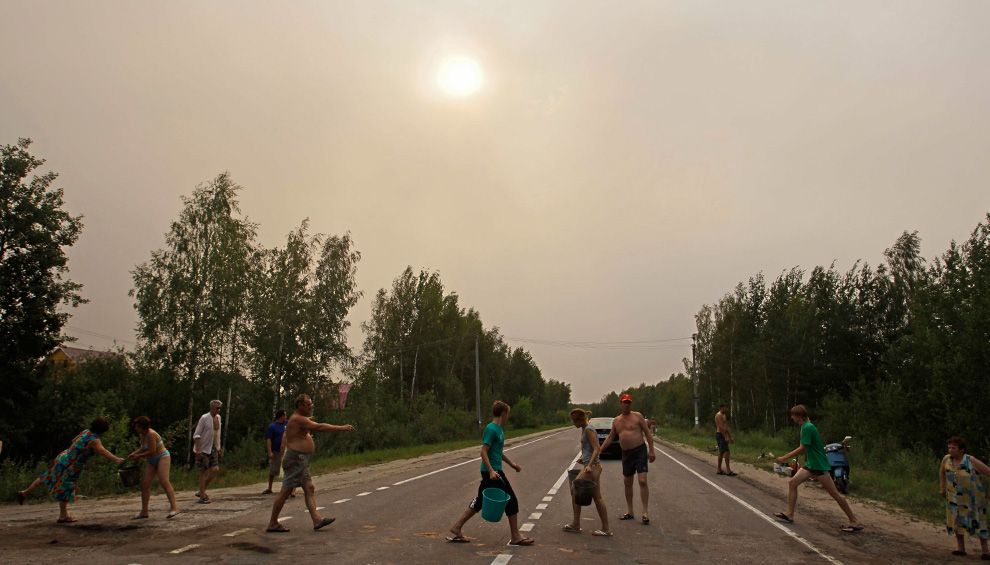
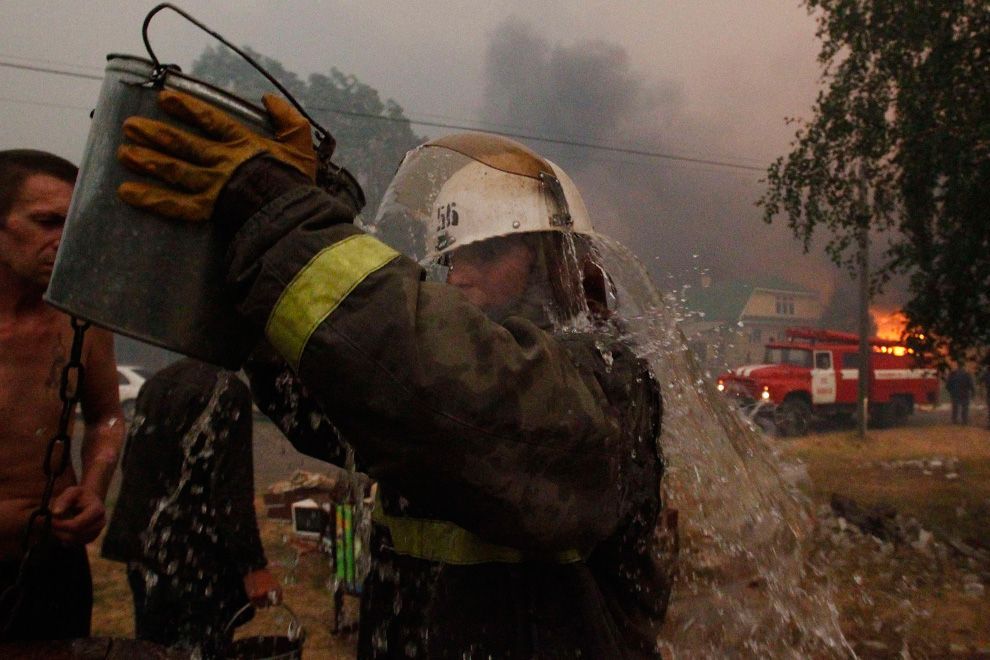
Local residents form a bucket brigade to carry water to extinguish a peat fire in a forest near the town of Shatura, Russia on Thursday, July 29, 2010.
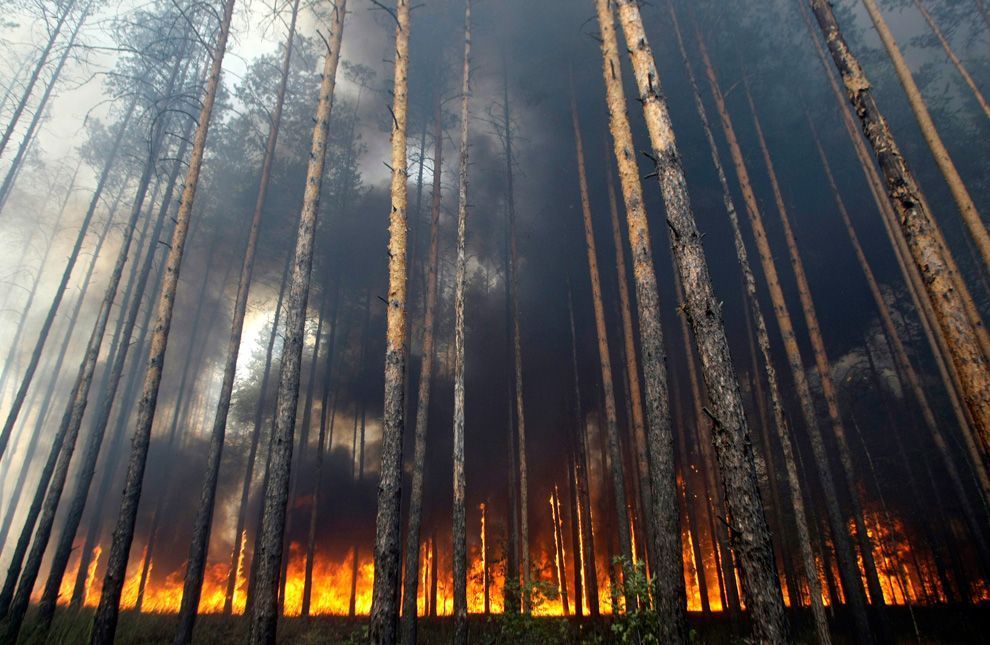
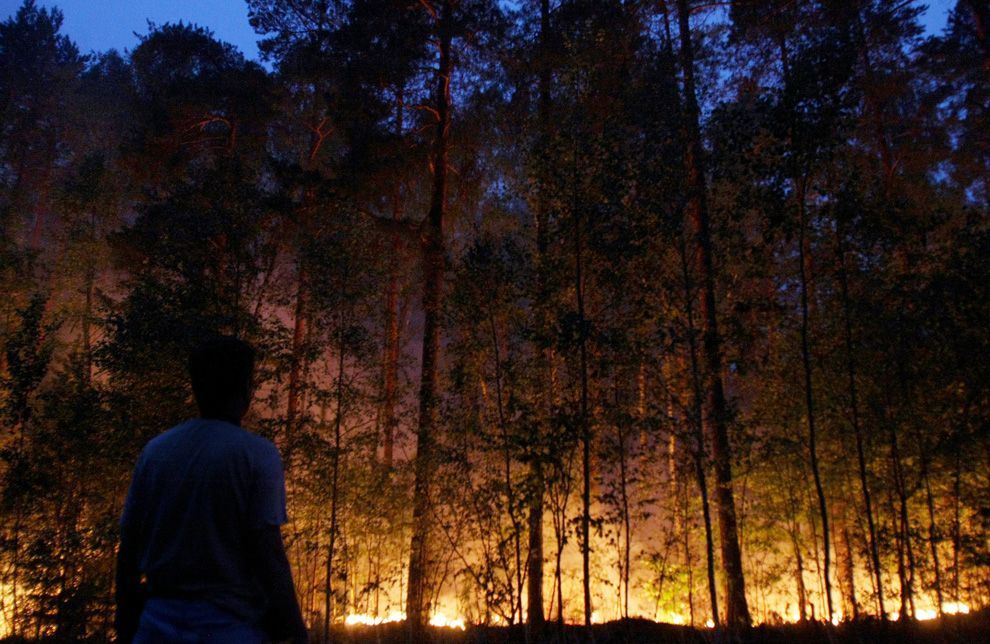
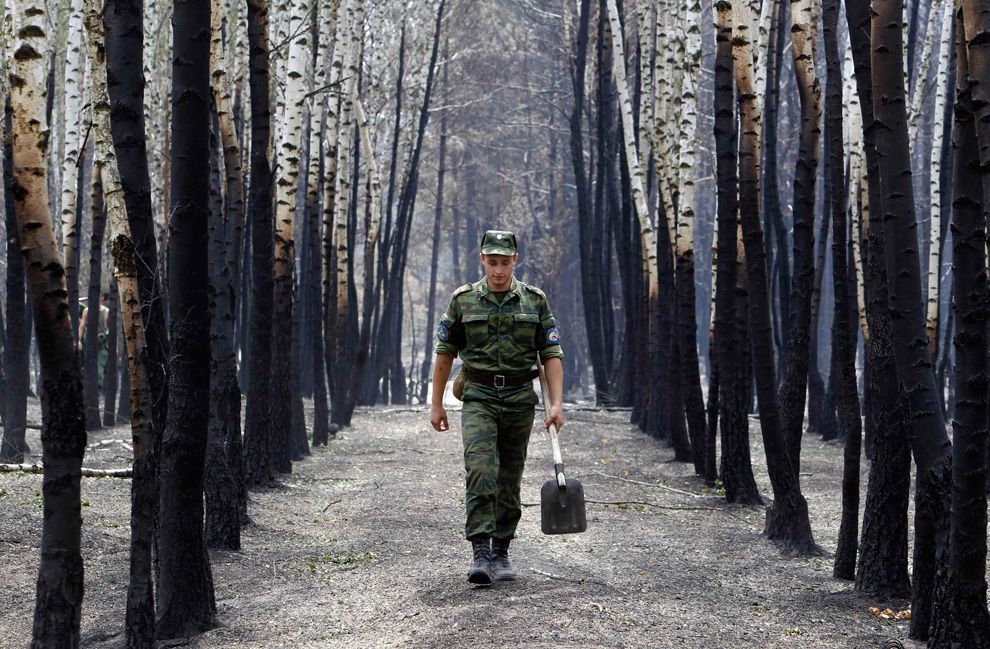
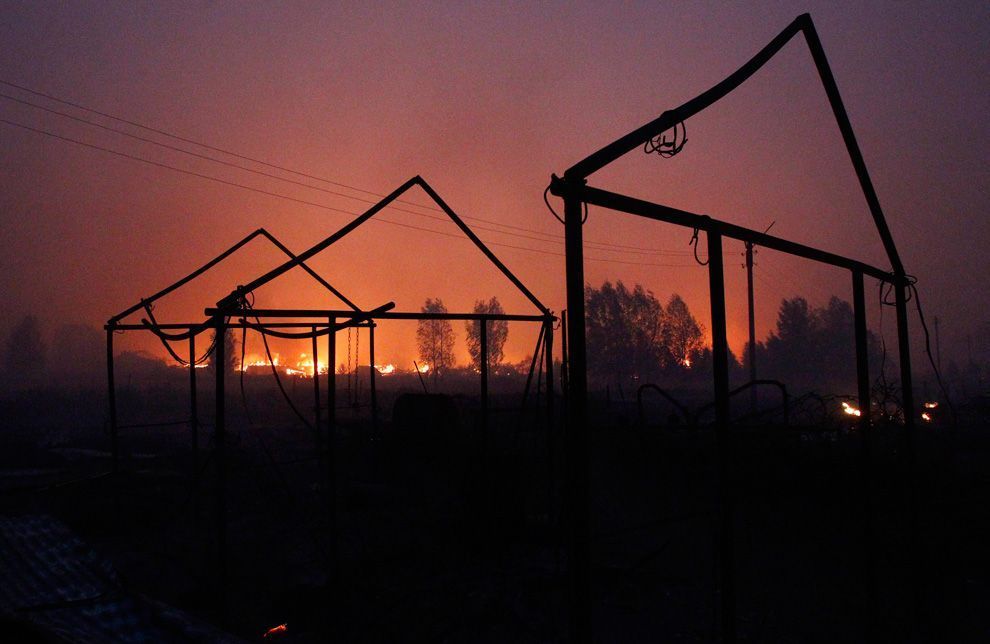
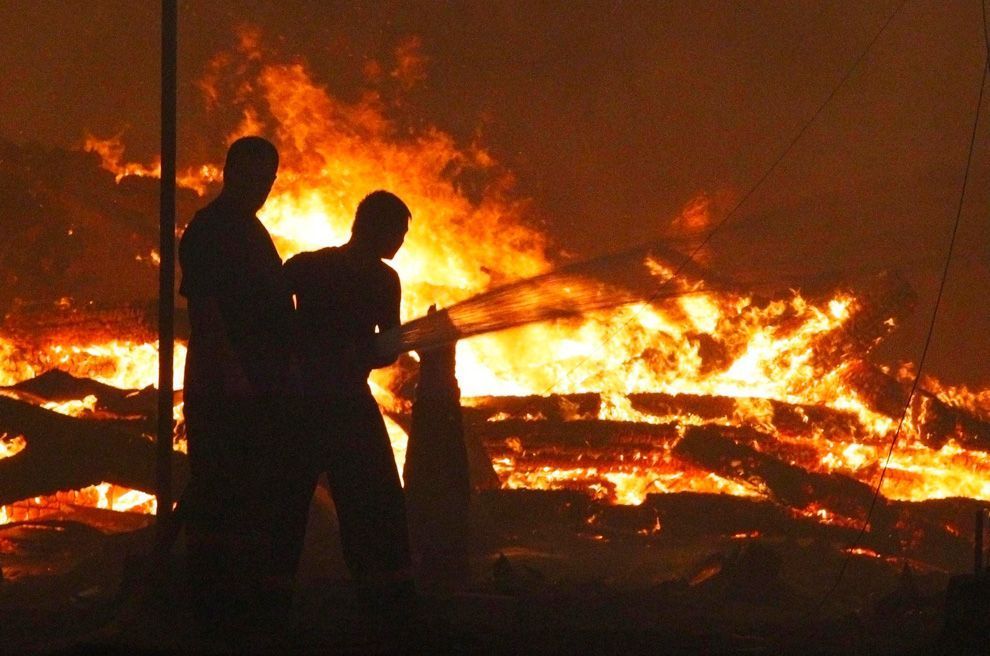
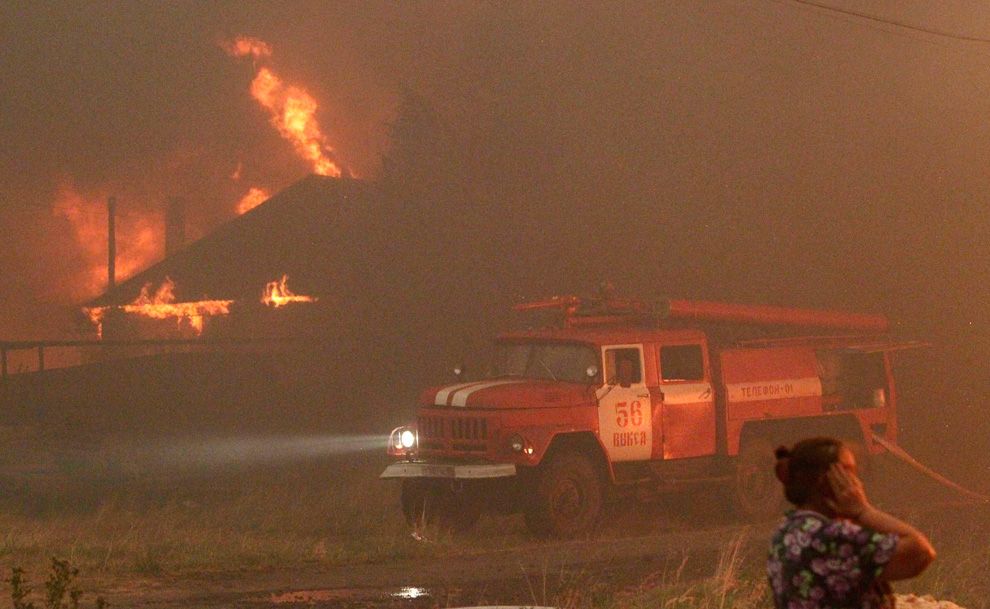
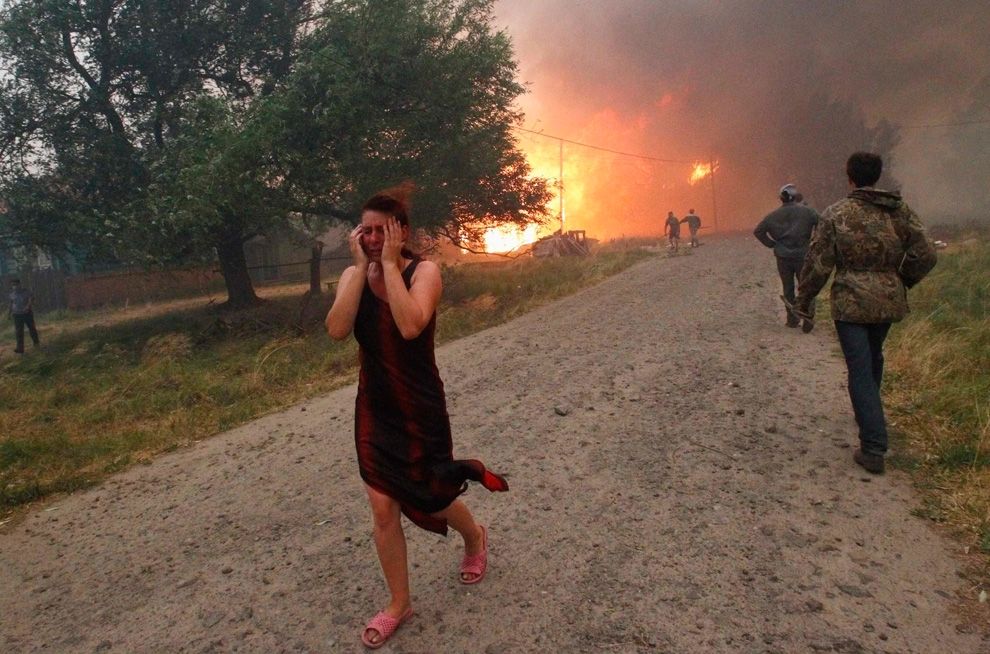
The 2010 Russian wildfires are a series of hundreds of wildfires that broke out across Russia, primarily in the west, from late July 2010 into August, due to record temperatures and drought in the region. The President of Russia has declared a state of emergency in seven regions for the fires, while 28 other regions were under a state of emergency due to crop failures caused by the Russian drought.
Smoke over western Russia on 4 August 2010
TIMELINE
29th July
Peat fires start in the Nizhny Novgorod Oblast, the Voronezh Oblast, and across central and western Russia in response to unseasonably hot weather.
31st July
The head of EMERCOM, Sergey Shoygu, reported on 31 July 2010 that the fire situation in the seventeen federal subjects of Russia, especially in Vladimir and Moscow Oblasts, may be complicated. He claimed that in Nizhny Novgorod Oblast the velocity of fires was 100 meters per minute, and the fiery air flow tore trees from the root, like a hurricane. A YouTube video was uploaded, showing a group of men escaping from burning village in Vyksa district by driving their car over a burning road.
1st August
On 1 August 2010, the area of the forest fires was 114,000 ha (1,140 km2).
The Central Regional Center MOE Russia website reported that in Moscow Oblast 130 foci of natural fires were detected, covering the area of 880 hectares. Of those, 67 fires covered an area of 178 hectares.
2nd August
According to "Interfax" referring to the head of the National Center for Crisis Management of EMERCOM Vladimir Stepanov, as of 2 August 2010, Russia revealed approximately 7,000 fires in the area over 500,000 ha (5,000 km2). Fire was also burning in fourteen federal subjects of Russia, and on 2 August 2010, officials reported the death of 34 people.
All parts of Moscow on Monday were shrouded with smoke, with reduced visibility on roads and a strong smell of fire.
On Monday, 2 August 2010, Vladimir Putin scheduled a meeting with the Governors of Voronezh, Novgorod, Samara, Moscow, Ryazan, and Vladimir Oblasts, as well as the Head of the Republic of Mordovia.
4 August
By 4 August, the wildfires were still burning over 188,525 ha (1,885.25 km2), with the death toll standing at 48. Some major fires were burning in areas contiguous to the nuclear research center in Sarov. However Rosatom head Sergey Kiriyenko dismissed apprehension of an atomic explosion.
President Dmitry Medvedev cut short his summer break to return to Moscow for an emergency meeting of the national security council to address the crisis. At an international meeting on July 30, amid the ongoing heat wave and wildfires, Medvedev had announced on television that "practically everything is burning. The weather is anomalously hot. What's happening with the planet's climate right now needs to be a wake-up call to all of us, meaning all heads of state, all heads of social organizations, in order to take a more energetic approach to countering the global changes to the climate".
Medvedev sacked some of his senior navy officers after one fire destroyed Russian navy equipment. The officers were accused of "incomplete professional responsibility" after several buildings were allowed to burn down and vehicles and equipment destroyed. He suggested anyone who had neglected their duties would be prosecuted. On the same day it was reported that another fire was approaching a major secret nuclear research facility in the city of Sarov.
Environmental groups and opposition politicians suggested firefighting has been slowed down by the Forest Code law passed by the Duma in 2006 at the order of Putin.
5 August
According to the Emergencies Ministry in Russia, there were 843 reported outbreaks of fires, including 47 peat fires. There were 73 large fires.
The fires threatened an animal sanctuary for over 1,800 animals, including dogs and retired circus animals such as bears, monkeys, foxes and tortoises on 5 August. Close to 600 fires were still burning in the country, and around 2,000 homes had been destroyed. The President fired several high-ranking military officials after fires burned through a military base.
6 August
According to the Emergencies Ministry, there were registered 831 fires, including 42 peat fires. 80 large fires were registered in an area of 150,800 ha (1,508 km2). Almost 162,000 people were reported to be fighting with the flames in the regions of Moscow, Voronezh, Nizhny Novgorod, Ryazan, Ivanovo, Vladimir, Yaroslavl, Tver, Yekaterinburg, Republic of Mordovia, and Mari El Republic. The death toll rose to 52.
According to the State environmental agency "Mosekomonitoring", in the morning in Moscow, the maximum concentration of carbon monoxide in the air exceeded the acceptable norm by 3.6 times, the content of suspended particles by 2.8 times, and specific hydrocarbons by 1.5 times.
The Moscow airports of Domodedovo and Vnukovo are not able to land more than 40 planes and were only able to send about 20 planes due to the strong haze caused by the smoke. As of 10 a.m., visibility at Domodedovo was 350 m and 300 m at Vnukovo. According to the Federal Air Transportation Agency, the Sheremetyevo airport works as usual because of visibility of about 800 m.
An international football friendly match (Russia–Bulgaria) scheduled for 11 August was moved to St. Petersburg. Two Russian Premier League football games were postponed because of the severe environmental situation.
According to the spectrometric data received from the NASA satellites Terra and Aqua, the smoke from the fires in some places rose to a height of about 12 kilometers and ended up in the stratosphere, which usually only occurs during volcanic eruptions. Satellite imagery showed that a cloud of smoke 1,850 mi (2,980 km) wide covered Western Russia.
7 August
Emergency officials registered 853 outbreaks of fires by 7 August, including 32 peat fires, with a total area of 193,516 ha (1,935.16 km2), in which 244 islands of fire were put out, and 290 new fires sprung up.
In Moscow, by noon the concentration of airborne pollutants intensified and reached at 6.6 times normal level for carbon monoxide, and 2.2 times for suspended particulate matter.[26] Seven flights heading for Domodedovo and Vnukovo airports were redirected to alternate airfields.[27] The temperature may reach 40 °C (104 °F) in Moscow Oblast. At Sheremetyevo International Airport, visibility was reduced to 325 meters.
Smoke in Voronezh. 31 July 2010
A woman sits surrounded by the remains of her house in the village of Mokhovoye, some 130 kilometers from Moscow on July 31, 2010.
Russian women remove jars of preserved food from the cellar of their burnt home 15km from Moscow in Ostafyevo on August 2, 2010.
Local residents form a bucket brigade to carry water to extinguish a peat fire in a forest near the town of Shatura, Russia on Thursday, July 29, 2010.


