


World's Newest Natural Wonders
Each year, the United Nations unveils a list of the world's most stunning natural attractions, called World Heritage sites, and chances are, you've never heard of them—Papahanaumokuakea, anyone? The designation shines the spotlight on a handful of hidden gems, while also protecting them from man.
Over the past 28 years, the United Nations Educational, Scientific and Cultural Organization (UNESCO) has identified more than 180 of these natural wonders across 77 countries. These "World Heritage Sites" are deemed "unique, irreplaceable, and authentic." The esteemed club includes the likes of the Grand Canyon, Mount Everest, and Victoria Falls among other iconic sites. (Manmade landmarks, such as Rome's Colosseum, are counted separately.)
China
China Danxia
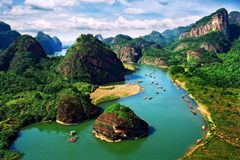
The region known as China Danxia spans six subtropical areas approximately 310 miles southwest of Xi'an, home of the terra-cotta warriors. Red sandstone pillars, ravines, and other fantastical shapes recall Mars more than they do southwestern China.
Kiribati
Phoenix Islands Protected Area
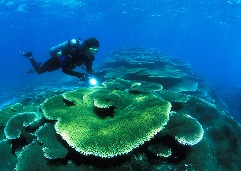
Hundreds of species of fish, mammals, and birds have made their home in and around the Phoenix Islands, about 6,000 miles northwest of Fiji in the South Pacific. The island region is the world's largest marine protected area.
France
Réunion National Park, Réunion Island
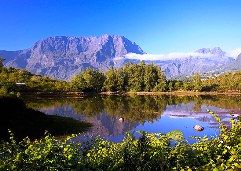
Creole-flavored Réunion Island lies in the southwest Indian Ocean approximately 400 miles off the eastern coast of Madagascar and is towered over by two volcanic peaks.
Hawaii
Papahanaumokuakea
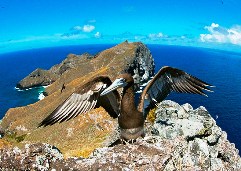
Preposterously clear lagoons and extensive coral reefs protect rare marine life around this set of tiny islands and atolls in northwestern Hawaii (reachable only by chartered plane). Ghost alert! As native tradition has it, spirits return to this area after death.
Tanzania
Ngorongoro Conservation Area
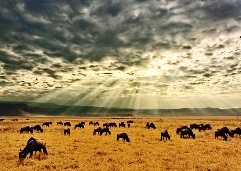
Zebras, wildebeests, and big cats wander the grass that covers the enormous crater of the extinct Ngorongoro volcano. The entire Ngorongoro Conservation Area covers over 3,200 square miles and lies to the east of the decidedly more famous Serengeti National Park.A World Heritage site since 1979, Ngorongoro's received an extended designation this year to also recognize its cultural significance: It's where evidence of humanity's distant ancestors was discovered.
Oaxaca province, Mexico
Prehistoric Caves of Yagul and Mitla
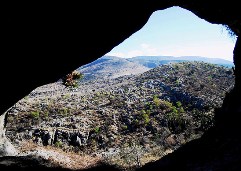
Archaeologists discovered the historic cave dwellings with rock art in the central Mexican province of Oaxaca, about 340 miles south of Mexico City. In addition to rock art, the caves are famous for the 10,000-year-old Cucurbubitaceae seeds and corncob fragments found here—the earliest evidence of domestic plants on the continent.
Russia
Putoransky State Nature Reserve
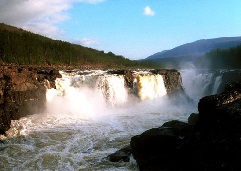
This nature reserve is situated more than 62 miles north of the Arctic Circle in northern Central Siberia, and is a vital migration route for reindeer crossing its tundra and rivers. the Putoransky State Nature Reserve is technically a desert because it rains and snows so little here, though snowfall does tend to linger owing to the icy temperatures.
Sri Lanka
Central Highlands
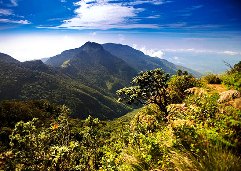
The Sri Lankan leopard, slender loris, and other endangered animals roam the Sri Lankan highlands. Their forest habitat lies over 8,000 feet above sea level on this teardrop-shaped island off the southern tip of India in the Indian Ocean.
See More Pictures of the World's Newest Natural Wonders
Each year, the United Nations unveils a list of the world's most stunning natural attractions, called World Heritage sites, and chances are, you've never heard of them—Papahanaumokuakea, anyone? The designation shines the spotlight on a handful of hidden gems, while also protecting them from man.
Over the past 28 years, the United Nations Educational, Scientific and Cultural Organization (UNESCO) has identified more than 180 of these natural wonders across 77 countries. These "World Heritage Sites" are deemed "unique, irreplaceable, and authentic." The esteemed club includes the likes of the Grand Canyon, Mount Everest, and Victoria Falls among other iconic sites. (Manmade landmarks, such as Rome's Colosseum, are counted separately.)
China
China Danxia
The region known as China Danxia spans six subtropical areas approximately 310 miles southwest of Xi'an, home of the terra-cotta warriors. Red sandstone pillars, ravines, and other fantastical shapes recall Mars more than they do southwestern China.
Kiribati
Phoenix Islands Protected Area
Hundreds of species of fish, mammals, and birds have made their home in and around the Phoenix Islands, about 6,000 miles northwest of Fiji in the South Pacific. The island region is the world's largest marine protected area.
France
Réunion National Park, Réunion Island
Creole-flavored Réunion Island lies in the southwest Indian Ocean approximately 400 miles off the eastern coast of Madagascar and is towered over by two volcanic peaks.
Hawaii
Papahanaumokuakea
Preposterously clear lagoons and extensive coral reefs protect rare marine life around this set of tiny islands and atolls in northwestern Hawaii (reachable only by chartered plane). Ghost alert! As native tradition has it, spirits return to this area after death.
Tanzania
Ngorongoro Conservation Area
Zebras, wildebeests, and big cats wander the grass that covers the enormous crater of the extinct Ngorongoro volcano. The entire Ngorongoro Conservation Area covers over 3,200 square miles and lies to the east of the decidedly more famous Serengeti National Park.A World Heritage site since 1979, Ngorongoro's received an extended designation this year to also recognize its cultural significance: It's where evidence of humanity's distant ancestors was discovered.
Oaxaca province, Mexico
Prehistoric Caves of Yagul and Mitla
Archaeologists discovered the historic cave dwellings with rock art in the central Mexican province of Oaxaca, about 340 miles south of Mexico City. In addition to rock art, the caves are famous for the 10,000-year-old Cucurbubitaceae seeds and corncob fragments found here—the earliest evidence of domestic plants on the continent.
Russia
Putoransky State Nature Reserve
This nature reserve is situated more than 62 miles north of the Arctic Circle in northern Central Siberia, and is a vital migration route for reindeer crossing its tundra and rivers. the Putoransky State Nature Reserve is technically a desert because it rains and snows so little here, though snowfall does tend to linger owing to the icy temperatures.
Sri Lanka
Central Highlands
The Sri Lankan leopard, slender loris, and other endangered animals roam the Sri Lankan highlands. Their forest habitat lies over 8,000 feet above sea level on this teardrop-shaped island off the southern tip of India in the Indian Ocean.
See More Pictures of the World's Newest Natural Wonders


