


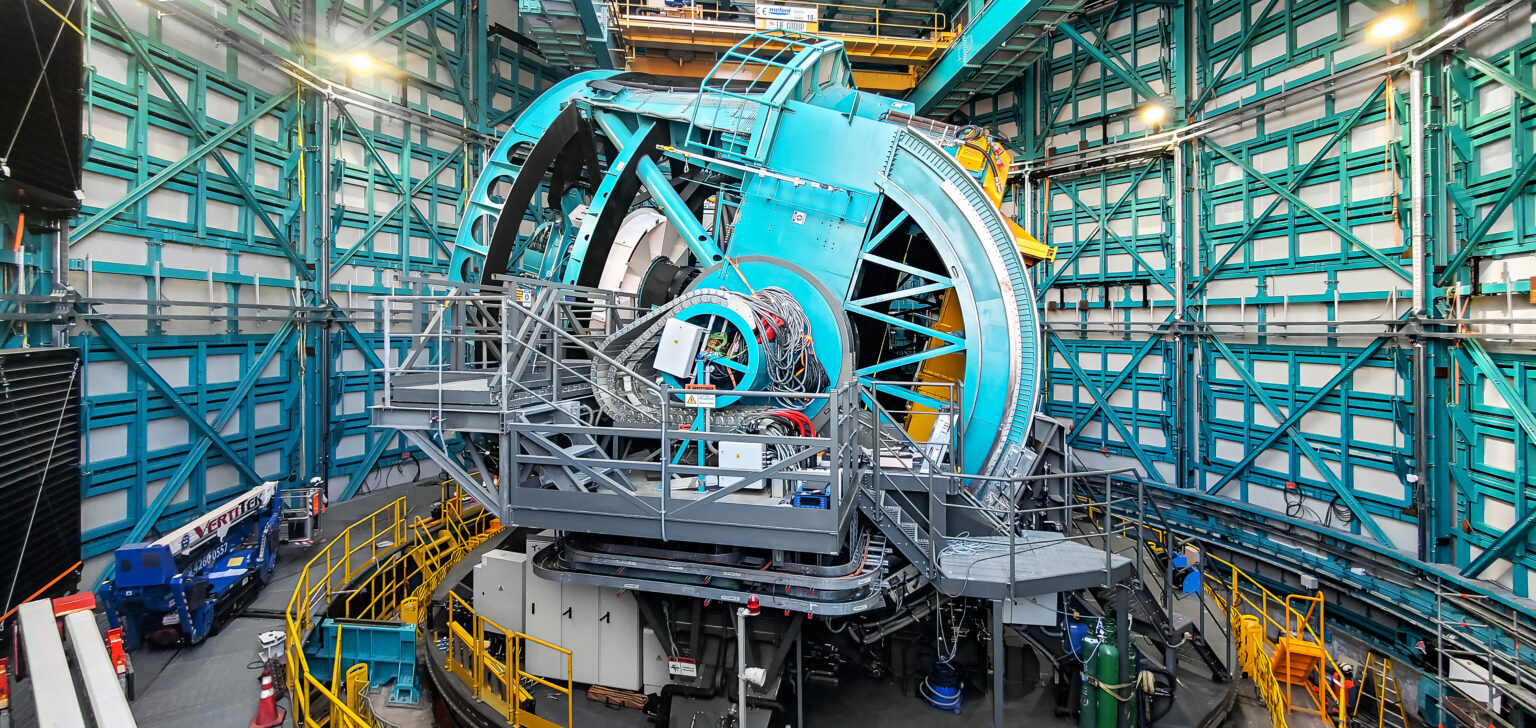
මේ කැමරාව තියෙන්නෙ Vera C. Rubin Observatory එකේ. ළඟදි තඩි පොටෝ එකක් ගහල. ඒක දවස් දෙක තුනකට උඩදි පොටෝ කෑල්ලක් එළියට දාල තියෙනව. පොටෝ කෑල්ලක් කියන්නෙ ක්රොප් කරල ගත්තු එකක්. පොටෝ එක එකවර බලන්න නම් 4k HD TV 400 ක screen එකක් ඕන වෙනවලු. කැප්චර් එකේ පිටසක්වලයො කොච්චරක් නම් ඇත්ද නේ?
Each full image snapped by the observatory’s 8.4-meter Simonyi Survey Telescope and 3,200-megapixel LSST Camera would require 400 4K high-definition television screens to display at its original size, according to the observatory. It should come as no surprise, then, that once up and running the Rubin Observatory will produce on the order of 20 terabytes of data each night as it images the entire southern sky every three to four days during the Legacy Survey of Space and Time (LSST). It will do this for 10 years, building up an ultrawide and ultra-high-definition time-lapse view of the universe we have never before been privy to.
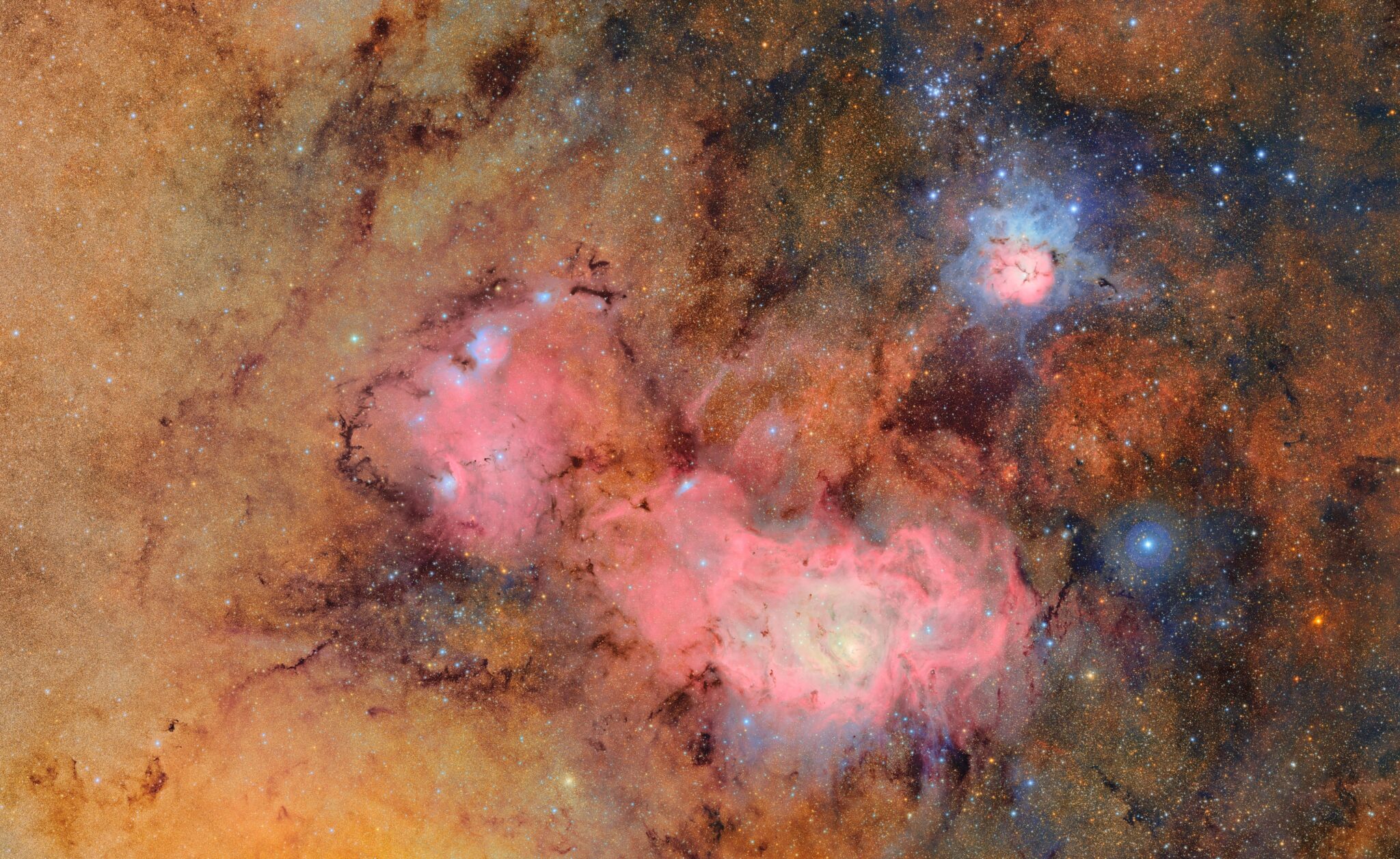
This composite of the Trifid and Lagoon nebulae is one of the first images released by the Vera C. Rubin Observatory. Credit: NSF-DOE Vera C. Rubin Observatory
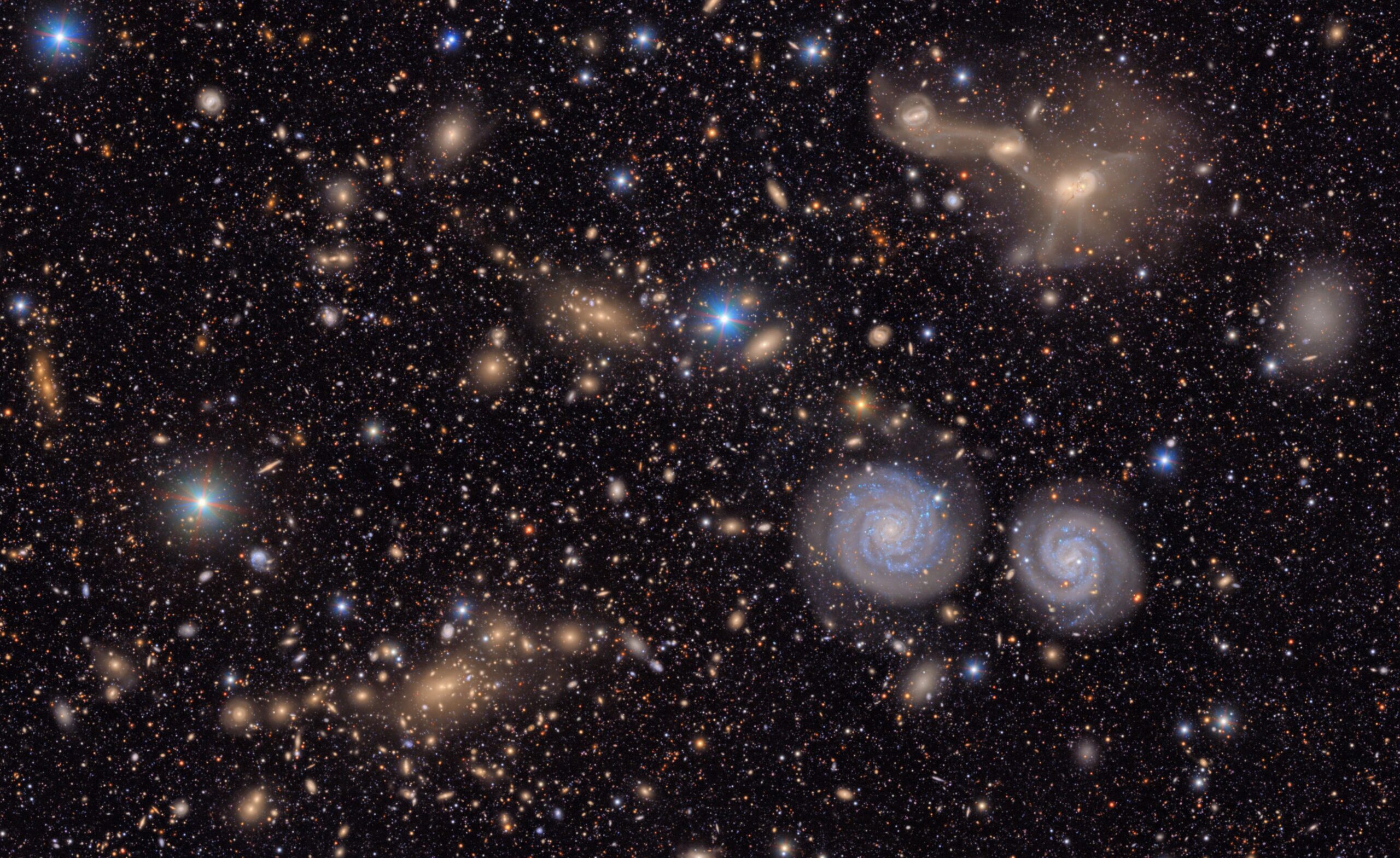
Spirals, interacting galaxies, and much more are visible in this small section of a much larger image taken of the Virgo Cluster by the Vera C. Rubin Observatory. Credit: NSF-DOE Vera C. Rubin Observatory
more references: https://www.astronomy.com/science/first-ever-images-released-by-the-vera-c-rubin-observatory/
https://www.nationalgeographic.com/...images-vera-rubin-observatory-astronomy-space
Each full image snapped by the observatory’s 8.4-meter Simonyi Survey Telescope and 3,200-megapixel LSST Camera would require 400 4K high-definition television screens to display at its original size, according to the observatory. It should come as no surprise, then, that once up and running the Rubin Observatory will produce on the order of 20 terabytes of data each night as it images the entire southern sky every three to four days during the Legacy Survey of Space and Time (LSST). It will do this for 10 years, building up an ultrawide and ultra-high-definition time-lapse view of the universe we have never before been privy to.
This composite of the Trifid and Lagoon nebulae is one of the first images released by the Vera C. Rubin Observatory. Credit: NSF-DOE Vera C. Rubin Observatory
Spirals, interacting galaxies, and much more are visible in this small section of a much larger image taken of the Virgo Cluster by the Vera C. Rubin Observatory. Credit: NSF-DOE Vera C. Rubin Observatory
more references: https://www.astronomy.com/science/first-ever-images-released-by-the-vera-c-rubin-observatory/
https://www.nationalgeographic.com/...images-vera-rubin-observatory-astronomy-space


 ඔව් රත්තරන් පවුම ගාණෙ දුන්නා වගේම තමයි. 200 mp නම් එ්කෙ දිග පළල වැඩි කරාම මිලියන 200 ක් තියෙනවා තියෙනවා මයි. Compression අැති තමයි ඉතින් අනිවාර්යයෙන්ම. එ්කනෙ details අනුව file size වෙනස් වෙන්නෙ. Compression නැත්තම් තනි සුදු හෝ කළු 200mp එකක් වුණත් (8bit නම්) 600MB තියෙන්න ඕන. හැබැයි compress කරාම 12kb.
 Claim 1: "3200 MP is not a huge deal. 200 MP images are already available in flagship phones."
 Claim 2: "3200 MP is just 16x a 200 MP image (4x4), so it's not worth that much hype."
 What's omitted or misunderstood:


