


සොරි මහින්දරා
https://www.carandbike.com/mahindra-cars/kuv100/safety-rating
මෙහෙම වුණාම හදන්න බෑ නේද? Insurance එකෙන් අලුත් එකක් දෙනවා නේද?
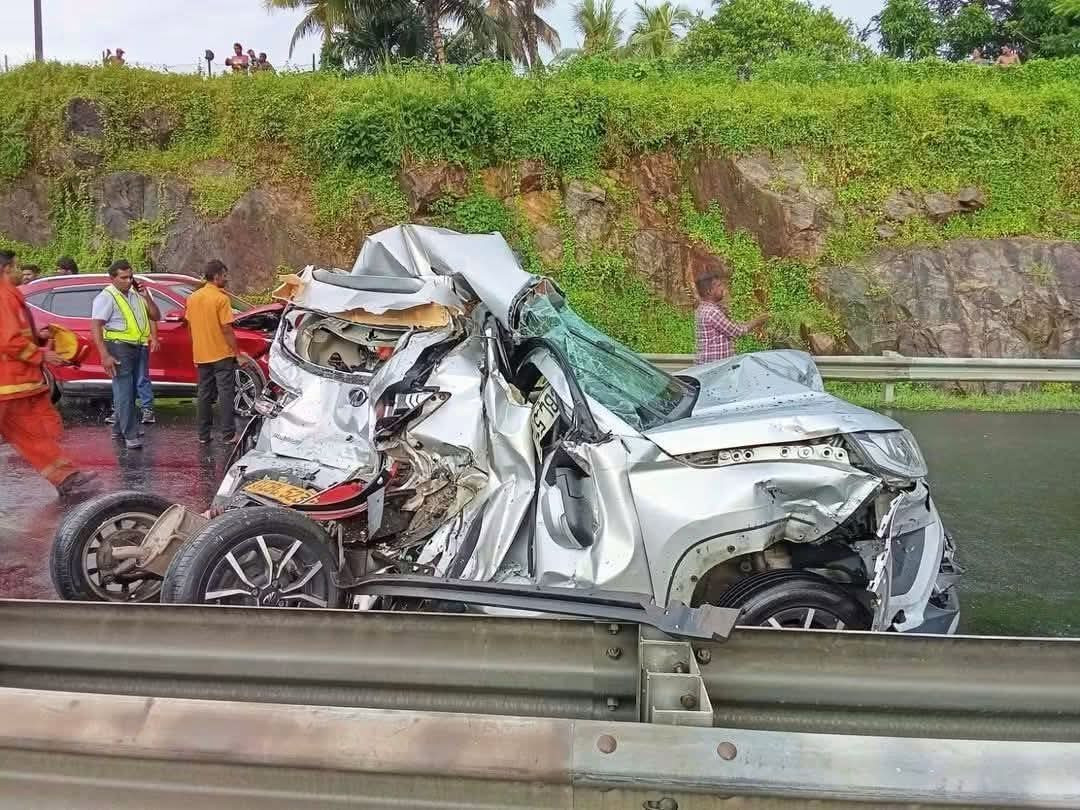
P. S. පිටිපස්සෙ සීට් එකේ හිටපු කටු කෙල්ලෙක් ලොකු තුවාල නැතිව බේරිලාලු. හිර වෙලා ඉඳල එළියට අරගෙන තියෙන්නෙ, හැබැයි අැවිදගෙන යන්න පුළුවන් ගාණට අවුලක් නැතිව ඉඳලා. හිතන්නත් අමාරුයි හැබැයි මේක තියෙන විදිහට.
In a severe rear under-ride collision where a vehicle is wedged beneath a heavy bus and dragged, surviving in the back seat comes down to a few highly specific mechanical phenomena.
1. The Under-Ride Override and Seat Failure
Highway buses have massive, rigid chassis rails set much higher than a passenger car's rear bumper. When the bus struck the KUV100, it likely overrode the car's rear crumple zones, punching straight through the rear hatch and roofline. For a rear passenger to survive this intact, she had to drop below the trajectory of the bus's chassis. In extreme rear impacts, front and rear seatbacks often mechanically fail and collapse backward or flatten. If her seat collapsed backward, or if the initial jolt threw her violently down into the footwell, she would have dropped beneath the "crush plane" of the bus as it drove over the car's rear section.
2. The Physics of the "Drag"
While being pushed and dragged for 100 meters sounds horrific, from a physics standpoint, it is precisely what kept her alive. If the bus had hit the car and pinned it against a stationary object (like a concrete barrier), the deceleration would have been instantaneous, resulting in fatal G-forces that would rupture internal organs. Because the car became wedged and slid for 100 meters, the kinetic energy of the speeding bus was dissipated gradually through friction against the asphalt. The initial hit was violent, but the subsequent 100-meter slide acted as a long, graded braking zone, drastically lowering the G-forces exerted on her body.
3. The Friction Pad Effect
When the bus drove up onto the rear of the KUV100, the immense weight of the bus transferred onto the car's suspension, bottoming it out and driving the car's belly into the road. The car effectively became a giant brake pad for the bus. The catastrophic structural damage seen in the photo is a result of both the top-down crushing from the bus and the bottom-up grinding from the asphalt.
4. The Chaotic Survival Void
In these under-ride scenarios, the metal does not always crush flat like a pancake. The heavy structural pillars (like the C-pillars behind the rear doors) buckle and fold inward. When the bus's chassis ripped into the cabin, it likely bent the KUV100's roof down in a tent-like fashion over the rear seats. As long as she was positioned low enough in that fractured space, the twisted metal of her own car shielded her from the bus's undercarriage above and the grinding asphalt below.
https://www.carandbike.com/mahindra-cars/kuv100/safety-rating
මෙහෙම වුණාම හදන්න බෑ නේද? Insurance එකෙන් අලුත් එකක් දෙනවා නේද?
P. S. පිටිපස්සෙ සීට් එකේ හිටපු කටු කෙල්ලෙක් ලොකු තුවාල නැතිව බේරිලාලු. හිර වෙලා ඉඳල එළියට අරගෙන තියෙන්නෙ, හැබැයි අැවිදගෙන යන්න පුළුවන් ගාණට අවුලක් නැතිව ඉඳලා.
හිතන්නත් අමාරුයි හැබැයි මේක තියෙන විදිහට.In a severe rear under-ride collision where a vehicle is wedged beneath a heavy bus and dragged, surviving in the back seat comes down to a few highly specific mechanical phenomena.
1. The Under-Ride Override and Seat Failure
Highway buses have massive, rigid chassis rails set much higher than a passenger car's rear bumper. When the bus struck the KUV100, it likely overrode the car's rear crumple zones, punching straight through the rear hatch and roofline. For a rear passenger to survive this intact, she had to drop below the trajectory of the bus's chassis. In extreme rear impacts, front and rear seatbacks often mechanically fail and collapse backward or flatten. If her seat collapsed backward, or if the initial jolt threw her violently down into the footwell, she would have dropped beneath the "crush plane" of the bus as it drove over the car's rear section.
2. The Physics of the "Drag"
While being pushed and dragged for 100 meters sounds horrific, from a physics standpoint, it is precisely what kept her alive. If the bus had hit the car and pinned it against a stationary object (like a concrete barrier), the deceleration would have been instantaneous, resulting in fatal G-forces that would rupture internal organs. Because the car became wedged and slid for 100 meters, the kinetic energy of the speeding bus was dissipated gradually through friction against the asphalt. The initial hit was violent, but the subsequent 100-meter slide acted as a long, graded braking zone, drastically lowering the G-forces exerted on her body.
3. The Friction Pad Effect
When the bus drove up onto the rear of the KUV100, the immense weight of the bus transferred onto the car's suspension, bottoming it out and driving the car's belly into the road. The car effectively became a giant brake pad for the bus. The catastrophic structural damage seen in the photo is a result of both the top-down crushing from the bus and the bottom-up grinding from the asphalt.
4. The Chaotic Survival Void
In these under-ride scenarios, the metal does not always crush flat like a pancake. The heavy structural pillars (like the C-pillars behind the rear doors) buckle and fold inward. When the bus's chassis ripped into the cabin, it likely bent the KUV100's roof down in a tent-like fashion over the rear seats. As long as she was positioned low enough in that fractured space, the twisted metal of her own car shielded her from the bus's undercarriage above and the grinding asphalt below.
Last edited:


