


ලංකාවේ තේ නිෂ්පාදනය ගැන සහ නිෂ්පාදන ක්රියාවලිය ගැන දැනගන්න ඕනි කෙනෙක් ට ගිහින් බලන්න පුළුවන් website එකක් ගැන තමයි කියන්න යන්නේ. අලුතෙන් තේ වගා කරන්න හෝ තේ විකුණුම් කරන්න ඉන්න කෙනෙක් ට ගොඩක් වෙදගත් වෙයි.
teamanufacturing.com එකෙන් තවත් විස්තර දැනගන්න පුලුවන්.
Tea was originated in the Chinese began drinking tea in the 6th century. During the 1000AD, tea consumption spread from China to Japan. Then the middle of the 17th century it was migrated to Europe, Portugal, Holland, and England. Around 1680 tea became the most popular beverage among the rich people in England.
In 1834, the British started cultivation tea in their respective colonies of India. The necessary knowledge and labor were obtained from China. But this attempt failed. Because china was afraid that China would lose its monopoly tea market in the world market.
In 1853, Robert Fortune, an English botanist learned all about tea cultivation from China by being four years in China securely. He later returned to India with several Chinese tea experts and 20000. After he was able to start cultivating tea there. The first tea seed batch that came to Sri Lanka was cultivated at the Peradeniya Botanical garden. It happened in December 1839.
James Taylor pioneers the launch first commercial tea plantation in Ceylon. It was started in 1867 on a 19-acre estate at Hewaheta Loolkandura estate. It was started as an alternative to coffee cultivation. At that time the coffee cultivation was being destroyed due to the Coffee Rust Disease. Today, the name “Ceylon Tea” is at the top of the world tea industry. Sri Lanka is the 4th largest producer of tea in the world.
 Tea Field Next to Forest
The successful cultivar has been propagated by vegetative propagation. The yield and productivity per hectare given by those cultivars are very high.
It is possible to increase the productivity by following these methods to select cultivars
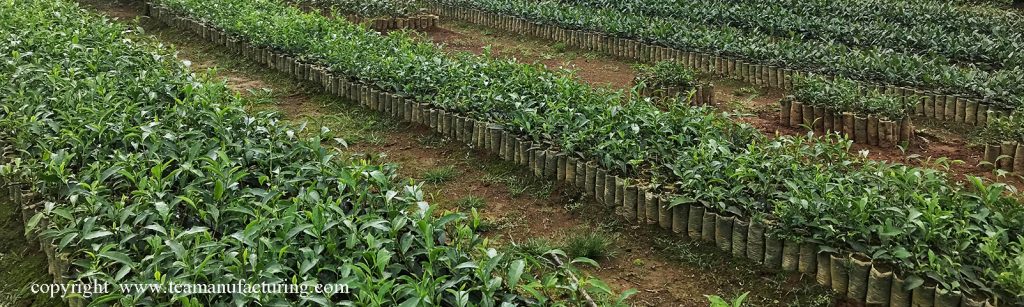 Tea Nursery
Cuttings are placed in soil-filled polythene bags. Before that soil should be lightly wetted and gently pressed. Only one cutting is planting in each bag. Those bags are covered with 300gauge transparent polythene to prevent the scorching of plants by sunlight.
 Tea Double hedge row planting
teamanufacturing.com එකෙන් තවත් විස්තර දැනගන්න පුලුවන්.
Tea Cultivation
History of Tea Cultivation
There are eighty-two species of the tea plants belonging to the genus Cammellia that are widespread in South-east Asian countries. Among them, a species called Cammellia sinensis used as a beverage.Tea was originated in the Chinese began drinking tea in the 6th century. During the 1000AD, tea consumption spread from China to Japan. Then the middle of the 17th century it was migrated to Europe, Portugal, Holland, and England. Around 1680 tea became the most popular beverage among the rich people in England.
In 1834, the British started cultivation tea in their respective colonies of India. The necessary knowledge and labor were obtained from China. But this attempt failed. Because china was afraid that China would lose its monopoly tea market in the world market.
In 1853, Robert Fortune, an English botanist learned all about tea cultivation from China by being four years in China securely. He later returned to India with several Chinese tea experts and 20000. After he was able to start cultivating tea there. The first tea seed batch that came to Sri Lanka was cultivated at the Peradeniya Botanical garden. It happened in December 1839.
James Taylor pioneers the launch first commercial tea plantation in Ceylon. It was started in 1867 on a 19-acre estate at Hewaheta Loolkandura estate. It was started as an alternative to coffee cultivation. At that time the coffee cultivation was being destroyed due to the Coffee Rust Disease. Today, the name “Ceylon Tea” is at the top of the world tea industry. Sri Lanka is the 4th largest producer of tea in the world.

Planting Material for Tea Cultivation
Tea belongs to the family Teaseae. There are three main types of tea grown in 3 different geographical regions, Assam, China, and Indo-China. Although there are several methods of propagation of the tea, the main methods are seed propagation and propagation by cuttings (Vegetative propagation).The successful cultivar has been propagated by vegetative propagation. The yield and productivity per hectare given by those cultivars are very high.
It is possible to increase the productivity by following these methods to select cultivars
- Selecting high-yielding cultivars
- Resistant to certain pests and diseases.
- Resistant to climatic limitations
Nursery Management
Nursery is the first step of the planting program of agriculture production. Tea nursery management is one of the very important operation in tea cultivation because this is the initial stage of establishing quality and vigorous tea plant. It has several objectives.- Obtain healthy, vigorous, uniform plants.
- Minimize causalities
- Properly trained in a short period of time
Propagation
It is more advantageous to do vegetative propagation. Propagation promotes increase yield, uniformity and predictability of tea cultivation. Propagation with single node cutting is most effective in a commercial tea nursery.Time of Propagation
It depends on the time of planting in the field. Required plant size, climate condition, state of cuttings taken. Not propagated in very wet and cold seasons. Because then rooting is delayed.Cuttings are placed in soil-filled polythene bags. Before that soil should be lightly wetted and gently pressed. Only one cutting is planting in each bag. Those bags are covered with 300gauge transparent polythene to prevent the scorching of plants by sunlight.
Aftercare Practices of Tea Nurser
Shading and Watering
Shading is important to prevent mechanical damages by sun scorch and wind and to reduce transpiration. Broken ferns used to provide shade. But be sure not to increase the shade. If that happens the cuttings will boil.Planting
Tea plants are planted in the field in single row planting system or hedgerow planting system. When planting in single row system, the spacing between rows is 4ft and spacing between plants is 2ft. Then it is possible to plant about 13600 plants per one-hectare land. When planting in hedgerow system, plant 150cm60cm60cm or 150cm45cm45cm. Usually, a pit for planting a tea plant is 45cm deep, 30ch in diameter at the top of the pit, and 22.5cm at the bottom
Preparation of Tea Plant as a Bush
Following steps are used to convert tea plant into a bush- Centering (Cut-across)
- Bending and Pegging


