


At least two Sri Lankans have been killed fighting for Russia in Ukraine, and three on the Ukrainian side. But many more are willing to join the war amid desperate economic conditions at home.
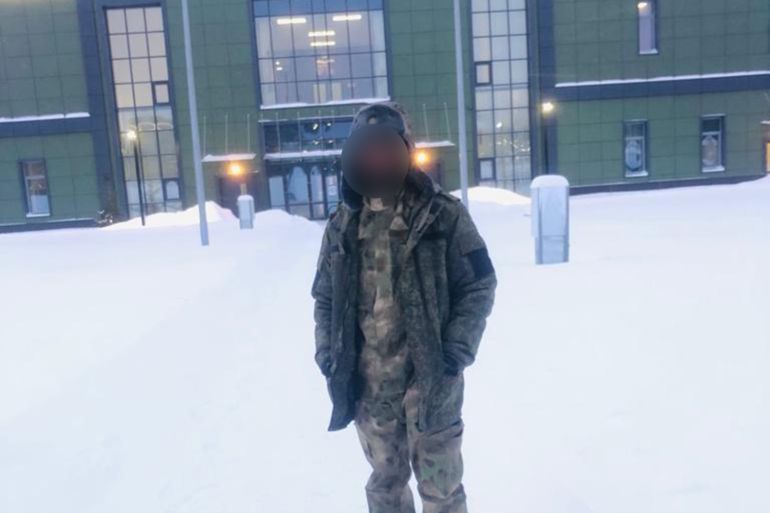
Nipuna Silva, a Sri Lankan soldier who quit his army to fight for Russia in Ukraine because of better pay, is believed to have been killed on the front line in Ukraine [Handout by Silva's family]
Colombo, Sri Lanka – Badly wounded from a Ukrainian attack on a Russian bunker in the Donetsk region, Sri Lankan fighter Senaka Bandara* tried to carry his fellow countryman, Nipuna Silva*, to safety.
Senaka*, 36, was bleeding from his legs and hands. Nipuna’s condition was worse – he had sustained injuries to his chest, hands and legs, according to Senaka.
As the two Sri Lankans retreated under fire, another wave of Ukrainian drones struck their bunker in the occupied Donetsk region where the two served with the Russian military.
“While I was carrying [Nipuna], there was another huge drone attack at the last bunker and Nipuna fell to the ground,” Senaka said earlier this month while being treated for his injuries in a hospital in Donetsk in eastern Ukraine.
Senaka said he had no option but to leave Nipuna behind as the Ukrainian drones rained down death.
“We didn’t know that it would be this dangerous,” Senaka told Al Jazeera, in a series of voice messages sent over WhatsApp. “In Donetsk, we were told to go to ‘bunker duty’,” he said.
“But we weren’t aware that there was an attack under way,” he added, recounting how the pair from Sri Lanka had joined a Russian “auxiliary force” and received two “training courses” before being sent to the front line.
Nipuna – whose body was later identified by other Sri Lankans fighting with Russian forces – was the second recruit from the tropical South Asian island to die in recent months fighting for Russia in the bleak Dontesk battlefield, according to Senaka.
The two reported deaths add to the three Sri Lankans who were killed last year while fighting for Ukraine against Russia’s invasion.
Hundreds of Sri Lankans are now serving with the Russian military in Ukraine, most lured into combat by Russia’s offer of salaries up to $3,000 a month and the prospect of Russian citizenship, several Sri Lankans living in Russia told Al Jazeera.
Many more – mostly retired Sri Lankan soldiers – are also desperately trying to join the Russian army, willing to risk death at the hands of Ukrainian forces in exchange for Moscow’s money amid dire poverty at home in Sri Lanka.

Nipuna Silva in his Sri Lankan army uniform, before he left to fight for Russia in Ukraine [Handout by family]
The decisions that led 27-year-old Nipuna Silva to leave his young family in southern Sri Lanka to fight and die for Russia in Ukraine tell a larger story of contemporary Sri Lanka, where economic collapse and political upheaval in 2022 led to a hunger crisis last year among the island nation’s 22 million people.
Spiralling inflation and unpayable foreign debt saw fuel, medicine and food shortages amid months of protests that eventually removed then-President Gotabaya Rajapakspa, whose government was accused of gross mismanagement of the country’s finances.
Gotabaya and his brother and former president, Mahinda Rajapaksa, as well as their younger brother, former finance minister Basil Rajapaksa, were all found guilty by the country’s Supreme Court in November of causing the financial mismanagement that has hobbled their nation.
Poverty drove Nipuna, a nine-year veteran of the Sri Lankan military, to swear allegiance to Russia.
He could not provide for his own young family after the recent death of his father left him responsible for his widowed mother and younger sister, too, Nipuna’s wife Wasanthi* told Al Jazeera.
Nipuna had borrowed 1.9 million Sri Lanka rupees (about $6,300) to build a house for his family, Wasanthi said, and he was struggling to repay that loan and cover other costs on his effective earnings from the army – 28,000 rupees ($92) per month.
Nipuna retired from the army and approached an employment agency looking for a job in Singapore. The agency charged him 250,000 rupees ($830) but never got him the job. Eventually, he managed to get half the money back and approached another agency which offered him a job in Russia.
To get to Russia and the promise of a better income, Nipuna first had to sink deeper into debt, his wife said. He borrowed 1.2 million rupees ($4,000) to pay the employment agency to secure him work and cover his travel expenses to Russia.
He travelled to Moscow on June 2 last year, and was employed at a farm in a remote village in Russia. There, he worked 14-hour days, often without a single proper meal. He was paid about 160,000 rupees ($530) a month.
Unhappy, Nipuna left the farm and moved to Moscow to work in a restaurant. There he received 150,000 rupees ($500). The conditions were better than at the farm but Nipuna was desperate to settle his debts as quickly as possible. While working in Moscow, he found out about the opportunity to join the military.
“I begged him not to join the war there,” Wasanthi said. “But Nipuna said it was safe as he was not deployed on the front line.”
The family was desperate, she said. On Nipuna’s income, it was impossible to feed the household: Wasanthi, Nipuna, their 18-month-old son Kethuka Yehas, and Nipuna’s mother and sister. “We could never buy new clothes or toys for our son,” she said.
“It is because we were so helpless that he took that decision [to join the Russian army].”
After signing up to serve in Ukraine in January, this year, Nipuna started to call his wife and young son daily on the phone.
The calls stopped suddenly on February 21, just two days after his wife received a first payment from the Russian military of approximately $1,640 for her husband signing a one-year contract to fight in Ukraine.
Then the phone silence was broken by a call from his comrade in arms, Senaka, who told Wasanthi that Nipuna had died in the drone attack.
“He told me that my husband succumbed to injuries in Donetsk,” Wasanthi recounted, the memory still causing her to weep.
“I don’t know what to do or where to go,” she told Al Jazeera.
“My son always grabs my phone, waiting for a call from Daddy.”
Nipuna Silva, a Sri Lankan soldier who quit his army to fight for Russia in Ukraine because of better pay, is believed to have been killed on the front line in Ukraine [Handout by Silva's family]
Colombo, Sri Lanka – Badly wounded from a Ukrainian attack on a Russian bunker in the Donetsk region, Sri Lankan fighter Senaka Bandara* tried to carry his fellow countryman, Nipuna Silva*, to safety.
Senaka*, 36, was bleeding from his legs and hands. Nipuna’s condition was worse – he had sustained injuries to his chest, hands and legs, according to Senaka.
As the two Sri Lankans retreated under fire, another wave of Ukrainian drones struck their bunker in the occupied Donetsk region where the two served with the Russian military.
“While I was carrying [Nipuna], there was another huge drone attack at the last bunker and Nipuna fell to the ground,” Senaka said earlier this month while being treated for his injuries in a hospital in Donetsk in eastern Ukraine.
Senaka said he had no option but to leave Nipuna behind as the Ukrainian drones rained down death.
“We didn’t know that it would be this dangerous,” Senaka told Al Jazeera, in a series of voice messages sent over WhatsApp. “In Donetsk, we were told to go to ‘bunker duty’,” he said.
“But we weren’t aware that there was an attack under way,” he added, recounting how the pair from Sri Lanka had joined a Russian “auxiliary force” and received two “training courses” before being sent to the front line.
Nipuna – whose body was later identified by other Sri Lankans fighting with Russian forces – was the second recruit from the tropical South Asian island to die in recent months fighting for Russia in the bleak Dontesk battlefield, according to Senaka.
The two reported deaths add to the three Sri Lankans who were killed last year while fighting for Ukraine against Russia’s invasion.
Hundreds of Sri Lankans are now serving with the Russian military in Ukraine, most lured into combat by Russia’s offer of salaries up to $3,000 a month and the prospect of Russian citizenship, several Sri Lankans living in Russia told Al Jazeera.
Many more – mostly retired Sri Lankan soldiers – are also desperately trying to join the Russian army, willing to risk death at the hands of Ukrainian forces in exchange for Moscow’s money amid dire poverty at home in Sri Lanka.

Nipuna Silva in his Sri Lankan army uniform, before he left to fight for Russia in Ukraine [Handout by family]
The decisions that led 27-year-old Nipuna Silva to leave his young family in southern Sri Lanka to fight and die for Russia in Ukraine tell a larger story of contemporary Sri Lanka, where economic collapse and political upheaval in 2022 led to a hunger crisis last year among the island nation’s 22 million people.
Spiralling inflation and unpayable foreign debt saw fuel, medicine and food shortages amid months of protests that eventually removed then-President Gotabaya Rajapakspa, whose government was accused of gross mismanagement of the country’s finances.
Gotabaya and his brother and former president, Mahinda Rajapaksa, as well as their younger brother, former finance minister Basil Rajapaksa, were all found guilty by the country’s Supreme Court in November of causing the financial mismanagement that has hobbled their nation.
Poverty drove Nipuna, a nine-year veteran of the Sri Lankan military, to swear allegiance to Russia.
He could not provide for his own young family after the recent death of his father left him responsible for his widowed mother and younger sister, too, Nipuna’s wife Wasanthi* told Al Jazeera.
Nipuna had borrowed 1.9 million Sri Lanka rupees (about $6,300) to build a house for his family, Wasanthi said, and he was struggling to repay that loan and cover other costs on his effective earnings from the army – 28,000 rupees ($92) per month.
Nipuna retired from the army and approached an employment agency looking for a job in Singapore. The agency charged him 250,000 rupees ($830) but never got him the job. Eventually, he managed to get half the money back and approached another agency which offered him a job in Russia.
To get to Russia and the promise of a better income, Nipuna first had to sink deeper into debt, his wife said. He borrowed 1.2 million rupees ($4,000) to pay the employment agency to secure him work and cover his travel expenses to Russia.
He travelled to Moscow on June 2 last year, and was employed at a farm in a remote village in Russia. There, he worked 14-hour days, often without a single proper meal. He was paid about 160,000 rupees ($530) a month.
Unhappy, Nipuna left the farm and moved to Moscow to work in a restaurant. There he received 150,000 rupees ($500). The conditions were better than at the farm but Nipuna was desperate to settle his debts as quickly as possible. While working in Moscow, he found out about the opportunity to join the military.
“I begged him not to join the war there,” Wasanthi said. “But Nipuna said it was safe as he was not deployed on the front line.”
The family was desperate, she said. On Nipuna’s income, it was impossible to feed the household: Wasanthi, Nipuna, their 18-month-old son Kethuka Yehas, and Nipuna’s mother and sister. “We could never buy new clothes or toys for our son,” she said.
“It is because we were so helpless that he took that decision [to join the Russian army].”
After signing up to serve in Ukraine in January, this year, Nipuna started to call his wife and young son daily on the phone.
The calls stopped suddenly on February 21, just two days after his wife received a first payment from the Russian military of approximately $1,640 for her husband signing a one-year contract to fight in Ukraine.
Then the phone silence was broken by a call from his comrade in arms, Senaka, who told Wasanthi that Nipuna had died in the drone attack.
“He told me that my husband succumbed to injuries in Donetsk,” Wasanthi recounted, the memory still causing her to weep.
“I don’t know what to do or where to go,” she told Al Jazeera.
“My son always grabs my phone, waiting for a call from Daddy.”


