


1. Quadrantid meteor shower: January 3/4, 2022

The Quadrantids are a meteor shower that peaks in early January and whose radiant lies in the constellation Boötes.
2. Venus and Jupiter’s celestial ‘kiss’: May 1, 2022

As the month of April progresses, stargazers can watch the bright planet, Jupiter, slowly rise higher and higher in the southeastern sky each day just before dawn. The giant planet will steadily approach the brilliantly bright planet Venus, and before dawn on April 30, the two worlds will be so close that they will almost appear to merge. The pair will be visible at the same time through binoculars and some backyard telescopes. As an added bonus, Mars and Saturn will be visible in the sky to the upper right.
3. Eta Aquarids meteor shower: May 6/7, 2022

The Eta Aquariids are a meteor shower associated with Halley's Comet. The shower is visible from about April 19 to about May 28 each year with peak activity on or around May 5.
4.A ‘Blood Flower Moon’ Eclipse: May 16, 2022
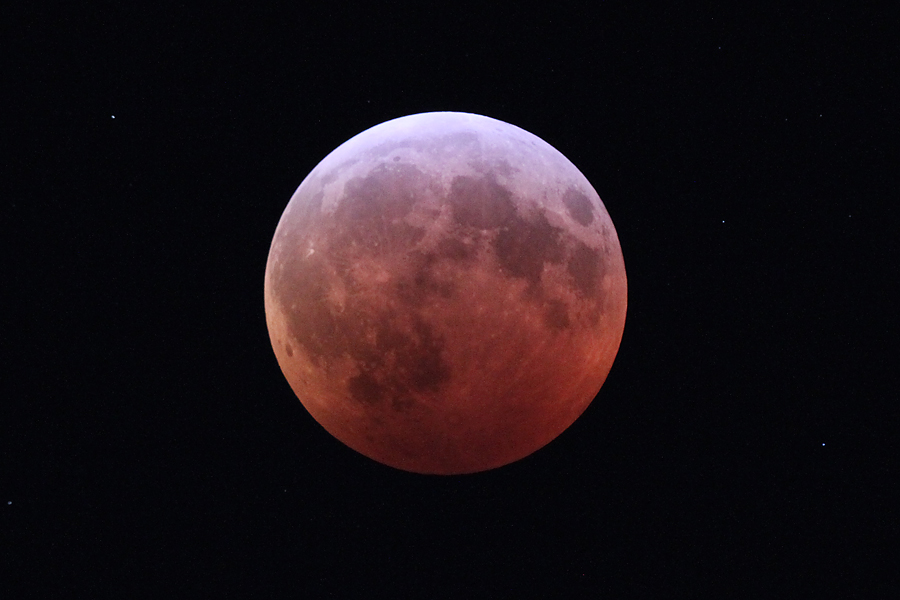
The first of two total lunar eclipses of 2022 will occur on May 15 or 16, depending on where you are. Lunar eclipses occur when the sun, Earth, and Moon align such that the moon crosses through Earth's shadow, darkening and reddening its silvery disk in our skies.
5. The biggest full Moon of the year: June 14, 2022

New moon supermoons of 2022 will be the new moons of January, February, and December. The supermoon of July 13, 2022, is the closest and brightest full supermoon of the year.
6. A crescent Moon cradles Venus: June 26, 2022

It means getting up early, but your reward will be the sight of a bright Venus next to a beautifully slim crescent Moon. It sounds simple yet it’s set to be one of the most beautiful sights in 2022.
7. Three planets at their brightest and best: August 14, September 26, and December 1, 2022

Most planets come to “opposition”—when Earth is precisely between a planet and the Sun—once per year. For Saturn that’s August 14, for Jupiter it’s September 26 and for Mars, it’s December 1.
8. A crescent Sun for Eurasia: October 25, 2022

Although there are no total solar eclipses in 2022 there is a big partial solar eclipse for Eurasia. From the UK about 15% of the Sun will be blocked by the Moon while in Russia it will be more like 80%.
9. A ‘Frosty Blood Moon’ Eclipse: November 8, 2022

The second total lunar eclipse in 2022 will occur on November 8, with North and South America once again having good views. Totality will last 84 minutes, just as in May 2022, in what will be the final such event for three years.
10. A full ‘Cold Moon’ blocks as super-bright Mars: December 8, 2022


