


Meanwhile in sri lanka it's a different story.
There were 2,655,782 coronavirus cases reported in the most recent week, the lowest since about mid-February.
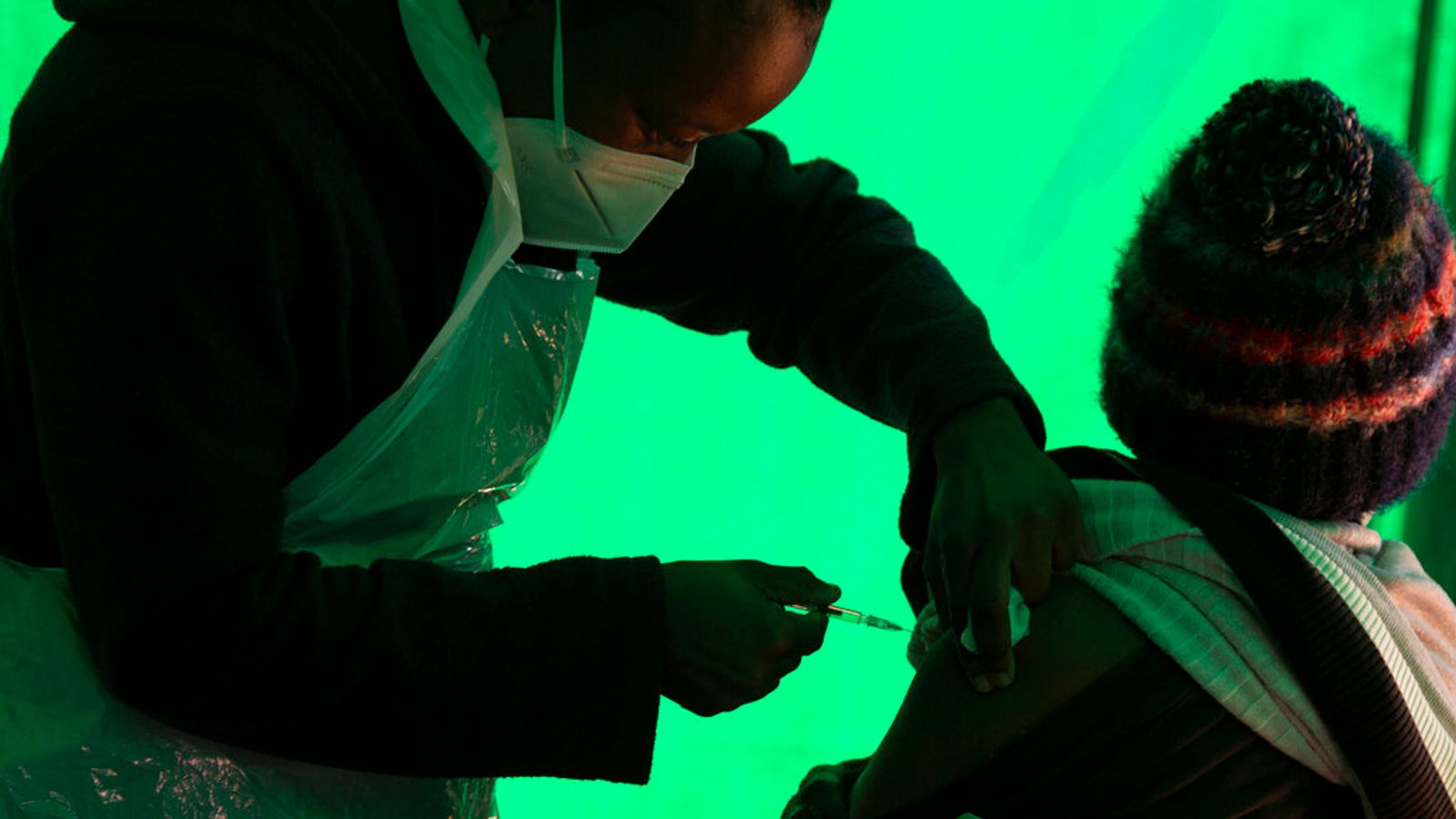
Image:Cases are falling but the vaccination programme in poorer countries is lagging way behind the US and Europe. Pic: AP
The number of new coronavirus cases has dropped for seven weeks in a row - the longest decline since the start of the pandemic, according to the head of the World Health Organization (WHO).However, Tedros Ghebreyesus cautioned that COVID deaths were not dropping as quickly - still registering at around 10,000 per day - and that unequal access to vaccines was holding back progress."The virus is moving faster than the global [vaccine] distribution," he told reporters on Monday.
Dr Tedros welcomed the 870 million doses pledged at the weekend by G7 leaders to the Covax initiative - which aims to provide jab access to poorer countries - but said 11 billion doses were needed."This is a big help, but we need more, and we need them faster," he said.
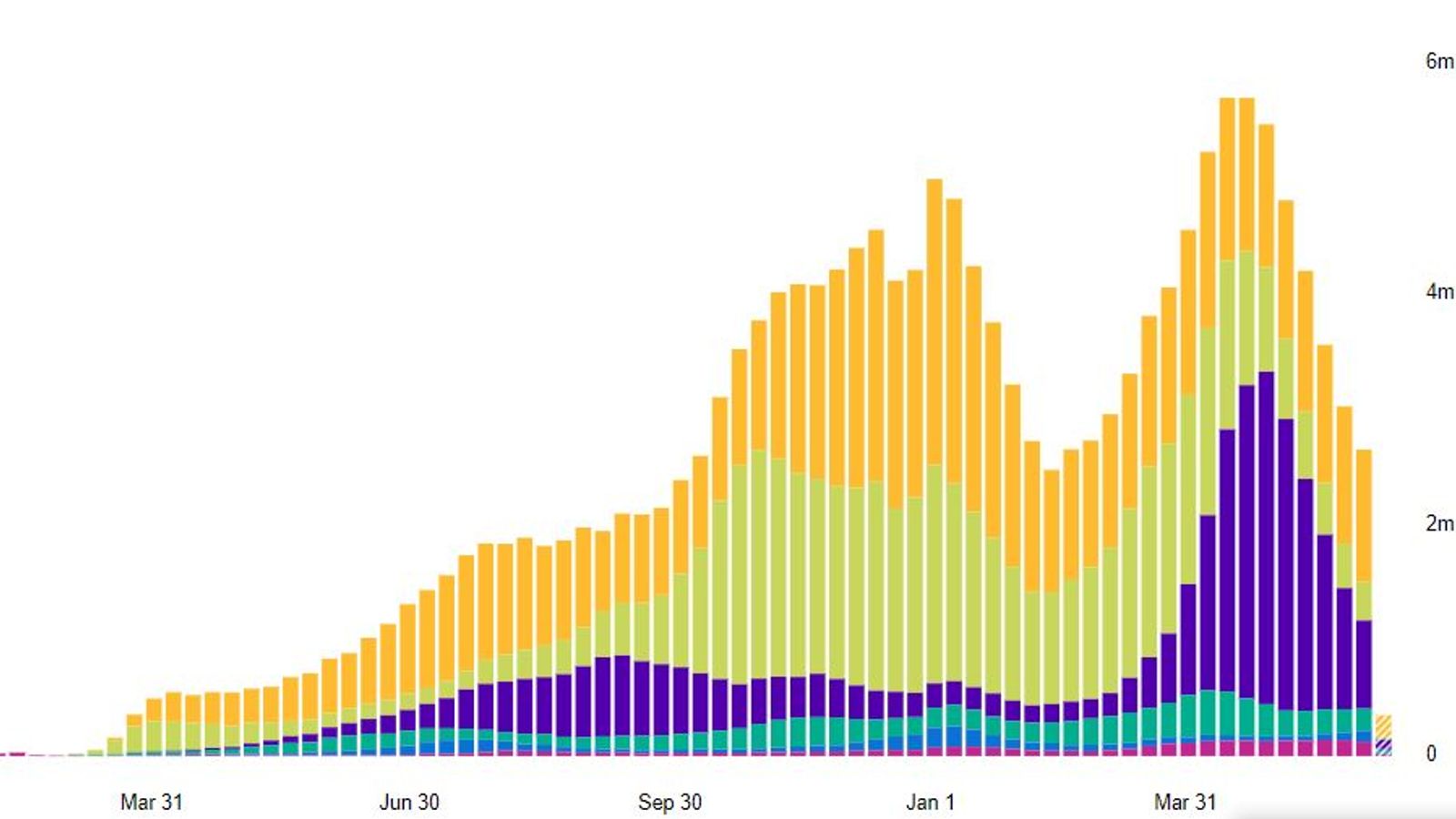
There were 2,655,782 coronavirus cases reported in the most recent week, according to the WHO, the lowest since about mid-February.There have been 175.7 million cases and more than 3.8 million deaths since the start of the pandemic."There are enough doses of vaccine to drive down transmission and save many lives if they're used in the right places for the right people," said Dr Tedros.He has previously asked rich countries to forgo vaccinating teenagers and children and donate jabs to developing nations instead.The G7 leaders pledged at their recent meeting in the UK to provide an additional 870 million vaccine doses in 2021 and 2022 - with an aim to provide half this year.
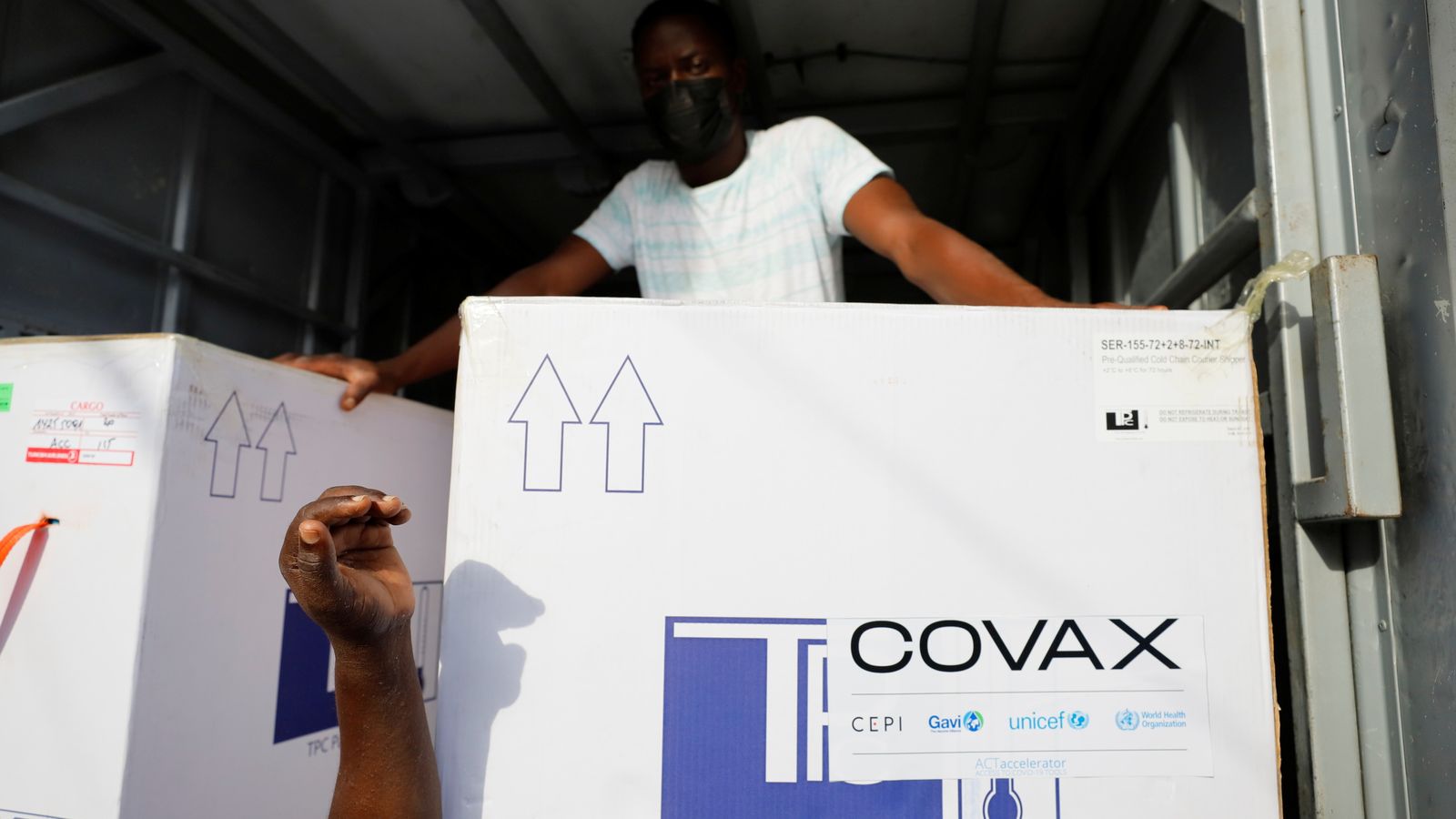
Image:Covax is helping distribute jabs to poorer countries but the WHO says far more are needed
One billion doses have now been pledged in total by the G7 since February, but it's still far short of what is needed.Only 2% of Africa's population have received at least one dose of a vaccine, while globally it's 24%, says the WHO.In the UK, the figure is about 60%, and around 50% in America.
Source: news.sky.com
There were 2,655,782 coronavirus cases reported in the most recent week, the lowest since about mid-February.
Image:Cases are falling but the vaccination programme in poorer countries is lagging way behind the US and Europe. Pic: AP
The number of new coronavirus cases has dropped for seven weeks in a row - the longest decline since the start of the pandemic, according to the head of the World Health Organization (WHO).However, Tedros Ghebreyesus cautioned that COVID deaths were not dropping as quickly - still registering at around 10,000 per day - and that unequal access to vaccines was holding back progress."The virus is moving faster than the global [vaccine] distribution," he told reporters on Monday.
Dr Tedros welcomed the 870 million doses pledged at the weekend by G7 leaders to the Covax initiative - which aims to provide jab access to poorer countries - but said 11 billion doses were needed."This is a big help, but we need more, and we need them faster," he said.
There were 2,655,782 coronavirus cases reported in the most recent week, according to the WHO, the lowest since about mid-February.There have been 175.7 million cases and more than 3.8 million deaths since the start of the pandemic."There are enough doses of vaccine to drive down transmission and save many lives if they're used in the right places for the right people," said Dr Tedros.He has previously asked rich countries to forgo vaccinating teenagers and children and donate jabs to developing nations instead.The G7 leaders pledged at their recent meeting in the UK to provide an additional 870 million vaccine doses in 2021 and 2022 - with an aim to provide half this year.
Image:Covax is helping distribute jabs to poorer countries but the WHO says far more are needed
One billion doses have now been pledged in total by the G7 since February, but it's still far short of what is needed.Only 2% of Africa's population have received at least one dose of a vaccine, while globally it's 24%, says the WHO.In the UK, the figure is about 60%, and around 50% in America.
Source: news.sky.com


