-: All About Bikes.............[Daily update] :-

dj gamaya

Well-known member
  • Nov 30, 2007
    69,352
    5,766
    113
    Hell & Heaven (Kiribathgoda)
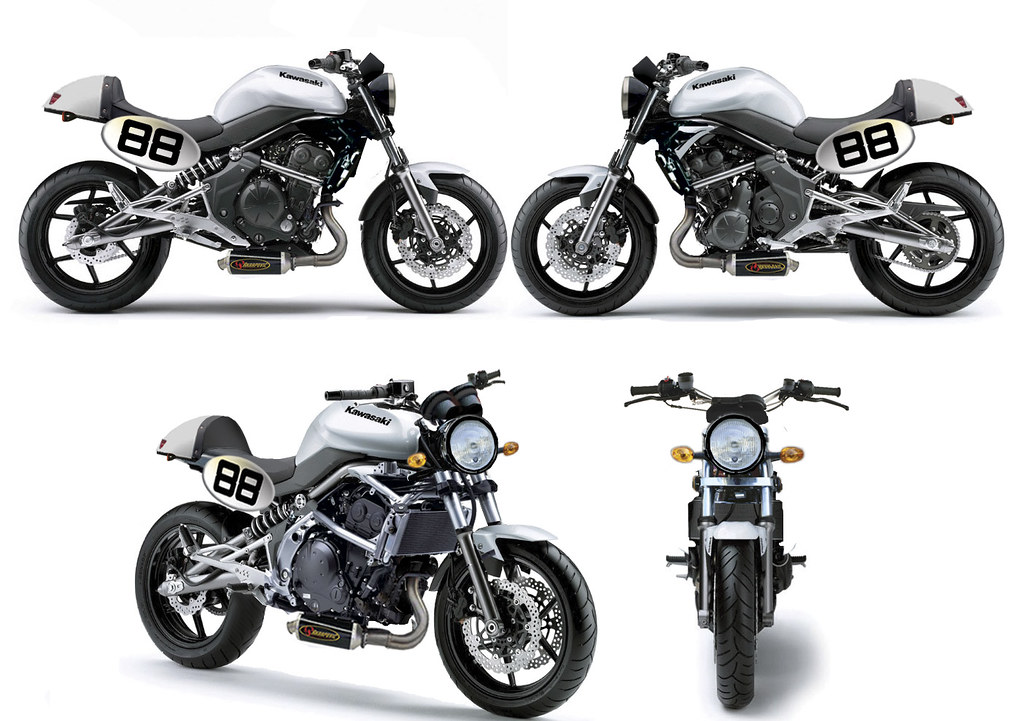
    ER6n Cafe Racer conversion


    4583635254_4c83c946cf_b.jpg


    This is Pravin Menon's interpretation of an ER6-n done up in the cafe racer style. What do you guys think? The only trade-off I can think of is that with the plastic headlight shroud removed, there will be a lot more wind blast hitting the rider. With that single seat cover in place, luggage carrying will also be compromised, although you could always strap a magnetic tank bag up front. But maybe the slightly reduced functionality is a worthy trade off to gain some retro style.
     

    dj gamaya

    Well-known member
  • Nov 30, 2007
    69,352
    5,766
    113
    Hell & Heaven (Kiribathgoda)
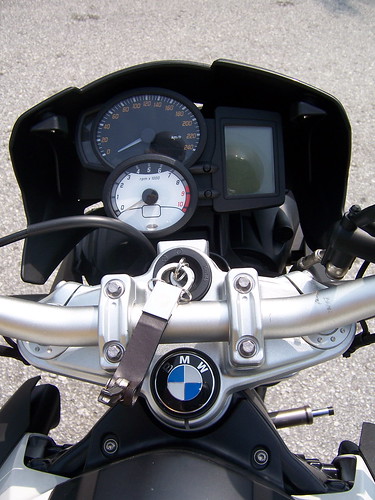
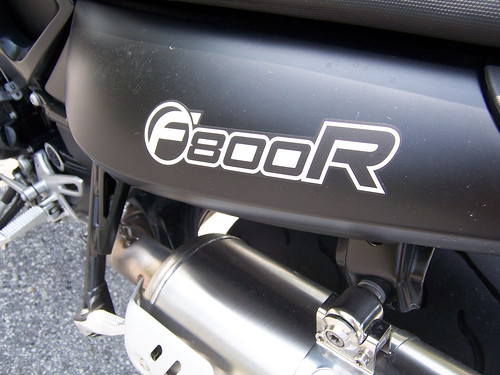
    BMW F800R Review


    4564724945_ff507eca76.jpg


    The moment you look at the F800R, you will immediately recognise it's resemblence with the much bigger K1300R.
    Both bikes carry the latest mutation of BMW's evolving DNA strain. But while the resemblences are uncanny, underneath the skin, both species of naked bikes diverge drastically. The F800R is powered by a parallel-twin which is tuned to feel like a boxer, and displaces as it's name suggests - 800cc.
    The K1300R on the other hand is powered by a phenomenally powerful in-line four with 1300cc.
    While the F800R is a lot less powerful, it is by no means any less fun.

    4565358116_cfa0c6b4b1.jpg


    For starters, it has sweet, light handling. Although it's 800cc, it feels nimble - almost like Kawasaki's Er-6n.
    With a dry weight of 184kg, it is just a few kilos heavier than the Kawasaki.
    Looking at the bike, you can see that BMW did make a few exceptions to keep the bike's cost down. For example, the front end is a conventional fork. The equipment level is basic, but the brakes and suspension are of brilliant quality.
    Despite a totally different layout compared to the boxer engined bikes, the bike imititates it's sound at idle and low revs.


    4565360714_7ce29379db.jpg


    Rev the engine higher though, and the engine spools up eagerly with a growl. The engine provides loads of useful torque at medium revs. The abundance of torque means you don't have to work the gears so frequently, making the bike a joy to ride.
    In town the bike is light enough to weave through traffic like a kapcai. Out on the highway, it is powerful enough to cruise with the big boys. Therein lies the attraction of the F800r. Just like the F800 GS, it is a well balanced machine, powerful enough for long distance trips, but at the same time - not too heavy and cumbersome.


    4564729063_fcdcfce3ac.jpg


    All out speed is not the F800Rs strong point, but if you gun the engine to the redline in sixth gear, you still get more than 200kmh on the clock.
    The bike was in it's element when I rode it to Kuala Selangor. Exiting the North-South Highway, I proceeded to make short work of the twisty trunk roads.
    The bike I was riding on was in Alpine White, but it still attracted a lot of admiring glances from motorists as well as the locals.
    The bike also comes in a radical shade of orange known as Flame Orange.


    4565359148_9bb01b7056.jpg


    There is also another option known as White Aluminum Metallic.
    If you are used to riding BMW bikes, you will also notice that the F800R no longer uses the right-turn-switch on right handlebar and left-turn-switch on left handlebar layout.
    Instead the bike has conventional switchgear - which is a shame really. I always thought BMW had better common sense when they were the only ones to use these signal switches. They were really much easier to operate when wearing thick leather gloves.


    :cool::cool:
     

    dj gamaya

    Well-known member
  • Nov 30, 2007
    69,352
    5,766
    113
    Hell & Heaven (Kiribathgoda)
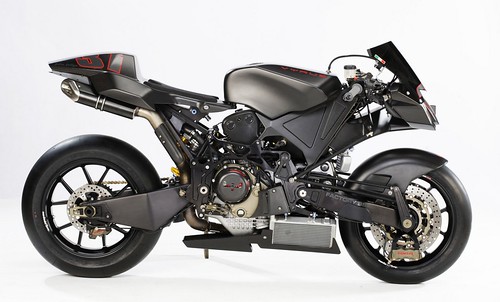
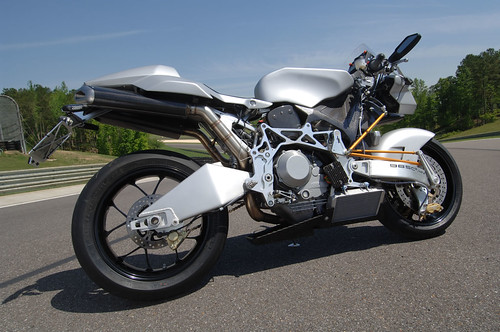
    The fastest production bike in the world

    4351814506_47ced923a6.jpg


    It is now the most powerful production motorcycle in the world - more powerful than Ducati’s Desmosedici RR, Suzuki’s Hayabusa or even Kawasaki’s ZZR1400.
    Manufactured by the small Rimini-based Italian company Vyrus - which is best known for producing the Bimota Tesi 2D, the new bike - known as the Vyrus 987 C3 4VV is powered by a 211 bhp supercharged Ducati engine.
    It weighs just 158 kg - just 10 kg heavier than an average Moto GP bike from the last season and costs a staggering EUR 65,000 .
    Production is limited and highly exclusive. The bike will be sold in four variants.
    The 4VV is the lightest and most powerful of them all, and the holder of the fastest production bike title.

    4348392858_c3c36f86d1.jpg


    The base model 984 C3 2V comes with a 100 bhp two valve 1000DS air-cooled Ducati engine, and weighs in at 150 kg.
     

    dj gamaya

    Well-known member
  • Nov 30, 2007
    69,352
    5,766
    113
    Hell & Heaven (Kiribathgoda)
    BMW Concept 6

    4311127545_e2c99c620b.jpg


    In the early 1970s, when Honda released the CB750 - the in-line four became the standard for high performance motorcycling. Perhaps the most common sports bikes configuration today is the in-line four. But the 1970s saw some interesting footnotes to history when a number of manufacturers made in-line six bikes. They include the Honda CBX1000 introduced in 1978. Kawasaki also introduced the KZ1300 in 1979.

    4311127537_8bb97b3d6e.jpg


    The Italians also had their own in-line sixes. Benelli made the 750 Sei in 1976, which was later enlarged to 900 cc.
    These massive bikes were often no more powerful than their in-line four counterparts. But in terms of sheer extravagance, these bikes had no challengers. Forward a couple of decades, and now BMW is experimenting with an in-line six concept.


    4310636419_fc2d069a59.jpg


    They claim that their new concept - aptly named the Concept 6 offers "a truly emotional driving – or, in this case, riding – experience" which can only be experienced from an in-line six engine. BMW has been making in-line sixes since 1933 for their cars, and now should probably be really good at it. The engine is relatively compact.

    4310636355_4a4ae54e74.jpg


    BMW claims that the engine is approximately 100 mm or 4" slimmer than all former straight-six production engines and only a bit wider than a large-capacity straight-four with conventional technology.
    According to the engineers, this is achieved by the slightly over-square bore: stroke ratio with a relatively long stroke and smaller small gaps between cylinders.


    4310636473_c996359e88.jpg


    The engine layout follows the straight-four in the K 1300 model series with cylinders tilted to the front by 55 degrees.
    The suspension features Duolever and lightweight Paralever arms holding and guiding the wheels front and rear.
    The new Concept 6, like many of BMWs new bikes has a fresh new minimalist design philosophy.
    At the same time, many of the design cues are bold and innovative, and have never been on any bike recently.


    4311127527_5215027a2d.jpg


    There is a six-chamber exhaust system which looks fantastic, and a stacked LED headlamp which simply looks cool. Here's hoping the Concept 6 will become a reality.

    :cool::cool:
     

    dj gamaya

    Well-known member
  • Nov 30, 2007
    69,352
    5,766
    113
    Hell & Heaven (Kiribathgoda)
    2010 Aprilia RSV4R Comparison Street

    2010 Aprilia RSV4R Comparison Street


    This year our Superbike Smackdown comparison sees another entry from Italy in the form of Aprilia’s all-new RSV4R. Based off the premium $20,999 RSV4 Factory, a motorcycle engineered specifically for the rigors of World Superbike racing, the RSV4R is a Superbike made for us common folk. It achieves its favorable $15,999 price tag via a number of significant changes to the chassis and one single but nonetheless important modification to the engine.

    2010-aprilia-rsv4r-7.jpg


    Before we rolled the bike out of the garage the Aprilia was already the one machine that absolutely everyone wanted to ride first. And who can blame them? It’s absolutely stunning—especially in its Glam White colorway. Visually it’s on par with the fabulous looking KTM and Ducati. Not only does it look awesome but the soulful character delivered from its exclusive V-Four engine simply has to be heard and felt to be believed.

    :cool::cool:
     

    dj gamaya

    Well-known member
  • Nov 30, 2007
    69,352
    5,766
    113
    Hell & Heaven (Kiribathgoda)
    ENGINE

    In a sea of standard-issue Inline Four and V-Twin engine configurations, the RSV4 differentiates itself by using an ultra-compact 65-degree, liquid-cooled, 999cc V-Four. Double overhead camshafts drive each of the 8-valve cylinder heads and the 78.0 x 52.3mm bore/stroke measurements is the most oversquare among the four cylinder-powered motorcycles with exception of the BMW. Each piston squeezes fuel received from the dual-stage fuel injection system to a ratio of 13:1, which is identical to the S1000RR, signifying the potential for some serious engine performance on tap.

    From the moment you press the starter button the Aprilia delivers an exotic riding experience that the others simply can’t match. The howl that emits from the engine is absolutely intoxicating and it’s so thunderous that I’m amazed that it’s legal.

    The reason it can get away with this is due to the clever use of a flapper valve inside the trapezoid-shaped muffler. When the bike is in neutral the valve is closed keeping noise to a reasonable 88-decibel level. Drop the bike into gear and the valve instantly opens and belts out the V-Four’s fully unedited soundtrack to the tune of 93 decibels. It sounds even more awesome at speed with a measurement of 112 decibels at 6800 rpm (half of maximum engine speed), tying the Ducati for the award of the loudest motorcycles in the test. It’s amazing considering that the 1198S Corse we tested came with a set of aftermarket Termignoni mufflers.

    2010-aprilia-rsv4r-smackdown-street.jpg
     

    dj gamaya

    Well-known member
  • Nov 30, 2007
    69,352
    5,766
    113
    Hell & Heaven (Kiribathgoda)
    Power wise the RSV4R’s powerband feels like a hybrid of the low-end grunt offered by the Ducati and KTM and the high-rpm power afforded by the Inline Fours. However, looking at the dyno graph clearly shows it’s alignment with the latter. The torque curve is toward the middle of the four cylinders eventually peaking at 9700 rpm with 76.81 lb-ft. This puts it back into sixth position in terms of peak torque production. Keep the throttle pinned and the engine spools up quickly but with less voracity than the ZX-10R or BMW. Initially you can feel some vibration with each power pulse at low rpm, however it fades as the revs increase.

    Power down low is respectable as is mid-range but when the engine hits about 10,000 revs it feels like it stalls out for a moment before coming back online in a major way. One thousand rpms later you’re back in business with motor doling out upwards of 155 horsepower until its 159.77 peak at 12,600 revs. The engine maintains peak power for another few hundred rpm before dramatically falling off right before its 13,600 redline.

    2010-aprilia-rsv4r-smackdown-street-2.jpg
     

    dj gamaya

    Well-known member
  • Nov 30, 2007
    69,352
    5,766
    113
    Hell & Heaven (Kiribathgoda)
    “I really love the character of the Aprilia’s motor. It delivers a similar level of exoticness ala Ducati’s Desmosedici MotoGP replica only it costs four times less,” said Executive Editor Steve Atlas. “Though I wish it revved up a bit faster and didn’t have that weird flat spot at 10-grand; other than that I’m pretty impressed.”

    All the adrenaline-pumping fun and excitement generated by the Aprilia takes a heavy toll on fuel supply. The 4.49-gallon tank empties faster than all but the Ducati with an average MPG of 28.2, netting a range of roughly 125 miles between fuel stops depending on how aggressive your right wrist feels.

    2010-aprilia-rsv4r-6.jpg
     

    dj gamaya

    Well-known member
  • Nov 30, 2007
    69,352
    5,766
    113
    Hell & Heaven (Kiribathgoda)
    DRIVETRAIN

    A cassette-style 6-speed transmission and cable-actuated slipper clutch complement the engine and shift power through 16/42 final drive gearing. Like the rest of the bikes first gear is tall, meaning that a little more clutch slippage is required to get off the line cleanly. Thankfully clutch lever pull is wispy and offers an elevated level of feel. The Aprilia’s decent bottom end engine performance further assists in getting it moving.

    In the quarter-mile acceleration test the RSV4R netted a time of 10.06 seconds at 142.7 mph. This put it toward the back of the pack in this close performing group. However, do keep in mind that it was less than four-tenths of a second off the class-leading pace set by the BMW.

    Overall we were pleased with the way the gearbox felt. Second through top gear are stacked closely together and the lower final drive gearing helps maximize acceleration. While the gearbox didn’t feel quite as tight as the Japanese bikes it was definitely close and significantly better than the loose feeling ‘box used in the 1198. Equally impressive was the performance of the slipper clutch, with it providing a perfect happy medium between engine braking and freewheeling effect on the road.
     

    dj gamaya

    Well-known member
  • Nov 30, 2007
    69,352
    5,766
    113
    Hell & Heaven (Kiribathgoda)
    ERGONOMICS / COMFORT


    From the moment you hop into the seat it’s not hard to notice that the RSV4R was built with one purpose in mind—racing. Of all the bikes tested, the Aprilia features the most diminutive cockpit. It feels no wider than a Yamaha R6 and much shorter front-to-back than all of the motorcycles, including the petite Honda, which shows one of the benefits of its compact engine configuration.

    This makes it more difficult to get comfortable on if you are over 5-foot 10-inches tall, however short riders didn’t have much to complain about other than seat height, which measures 33.3 inches off the ground, giving the RSV4 the honor of having the tallest seat. Fortunately the narrowness of the chassis and fuel tank negates the effect and makes it easy to touch the ground.

    Reach forward to the handlebars and like the Ducati and Kawasaki you’ll instantly feel a good deal of pressure placed on your hands and wrists. We do however appreciate the angle in which the handlebars are positioned as well as how wide they are apart.

    Next to the Ducati, the Aprilia has the honor of having the most uncomfortable seat. Not only is it thin, the tiny and the high location of the non-adjustable footpegs multiply the level of discomfort with every passing mile. The RSV4R’s narrow front fairing and short windscreen provides the most minimal amount of wind protection. The rear view mirrors are also too small and shake excessively making them useless just like those on the KTM and Ducati.


    2010-aprilia-rsv4r-8.jpg
     

    dj gamaya

    Well-known member
  • Nov 30, 2007
    69,352
    5,766
    113
    Hell & Heaven (Kiribathgoda)
    HANDLING / SUSPENSION


    With a full tank of premium fuel we were shocked to discover that the Aprilia weighs just one pound less than the porky Yamaha—a big surprise considering how tiny the bike appears dimensionally. Other than rolling the bike around in the garage you’d be hard pressed to feel the bikes 473-lb curb weight on the road as engineers spent a good time perfecting its center of gravity.

    Similar to the Kawasaki and the Ducati, the rear end feels a bit high in the air which helps with initial turn-in. Once on the side of the tire the bike felt the least planted as compared with the other bikes. But traction afforded by the OE-fitted Pirelli Diablo Supercorsa SP tires is phenomenal and more than enough to obtain knee-dragging speeds around corners. Conversely, on corner exit we were surprised by just how stable the bike was with it resisting the urge to headshake even on rough pavement. We also noticed how resistant the Aprilia was to quick side-to-side direction changes.

    Even with its lesser grade suspension components we were still pleased with the way the suspension functioned. Both ends absorbed bumps well and generally delivered a fairly forgiving ride. In fact the only real weak spot in terms of comfort is its small, rock-hard seat and tight ergonomics layout.

    2010-aprilia-rsv4r-4.jpg
     

    dj gamaya

    Well-known member
  • Nov 30, 2007
    69,352
    5,766
    113
    Hell & Heaven (Kiribathgoda)
    2010-aprilia-rsv4r-smackdown-street-1.jpg


    BRAKING


    While the Aprilia makes use of premium Brembo components fore and aft we weren’t impressed with the overall performance of the brakes. In our braking test the Aprilia was toward the back of the field recording a stopping distance of 131 feet from 60 mph.

    This is surprising considering the RSV employs Brembo radial-mount monobloc calipers up front that grip down on large 320mm diameter discs just like the Ducati and KTM. Out back a single 220mm disc and Brembo twin-piston caliper keep rear wheel speed in check. Both brakes also benefit from stainless-steel brake lines.

    The problem can most likely be attributed to lack of front brake feel. While outright stopping force is at a high level it’s hard to achieve because the brakes simply don’t deliver enough feedback through the lever to really allow a rider to comfortably use them near the limit of lock-up.


    :rofl::rofl:
     

    dj gamaya

    Well-known member
  • Nov 30, 2007
    69,352
    5,766
    113
    Hell & Heaven (Kiribathgoda)
    INSTRUMENTATION / ELECTRONICS


    Instrumentation is comprised of Aprilia’s signature orange-backlit mixed digital/analog instrument panel. A round swept tachometer is bordered by a LCD screen that provides everything you need to know. While the instruments are easy to read they don’t look as cool as the Ducati’s and the menu system is more complex to navigate through in comparison to the

    In the electronics department a handlebar switch allows the rider to choose from one of three engine maps: Track, Sport and Rain. Each map has a corresponding change in engine power and throttle response. Overall we preferred the Sport setting as it made the throttle feel far less touchy than Track mode without sacrificing power output.

    2010-aprilia-rsv4r-2.jpg


    :cool::cool::cool::cool:
     

    dj gamaya

    Well-known member
  • Nov 30, 2007
    69,352
    5,766
    113
    Hell & Heaven (Kiribathgoda)
    2010 Aprilia SXV 5.5 Specs

    2010 Aprilia SXV 5.5 Specs

    09_aprl_motard-025.jpg


    Engine: 549cc liquid-cooled V-Twin, 8-valve SOHC

    Bore and Stroke: 80 x 55mm

    Compression Ratio: 12.1:1

    Fuel Delivery: Fuel-injection

    Horsepower: 61.6 hp @ 11,100 rpm

    Torque: 34.8 ft-lb @ 9000 rpm

    Clutch: Wet multi-plate, cable actuation

    Transmission: 5-speed; chain final drive

    Final Drive Gearing: 16F/46R

    Frame: Hybrid steel-trellis/pressed aluminum

    Front Suspension: 48mm Marzocchi inverted fork; 2-way
    adjustable for compression and rebound damping; 10.8 in. travel

    Rear Suspension: Sachs hydraulic shock absorber; 4-way adjustable for high/low-speed compression, rebound and spring preload; 9.9 in. travel

    Front Brake: 320mm disc with 4-piston FTE radial-mount caliper

    Rear Brake: 240mm disc with single piston caliper

    Front Wheel: 3.5 x 17-in.

    Rear Wheel: 5.5 x 17-in.

    Tires: Dunlop Sportmax Qualifer 120/70-17, 180/55-17

    Curb Weight: 313 lbs.

    Wheelbase: 58.6 in.

    Length: 87.5 in.

    Seat Height: 36.1 in.

    Ground Clearance: 12.5 in.

    Fuel Capacity: 2.1 gallon MPG: 38

    MSRP: $9499

    Colors: Black Off


    :cool::cool::cool::cool: