-AMD Radeon R9 Fury X-

AMD has revealed its new top-tier performance graphics line - Radeon Fury. Three different cards based on its new silicon, codenamed Fiji, have been revealed - led by the ultra high-end watercooled Fury X, due for release before the end of the month. Later on in the summer we can look forward to a slower, cheaper, air-cooled Fury along with Fury Nano - a small form factor iteration.
AMD's Fiji processor is effectively a much, much larger version of its existing 'Tonga' technology, as found in the Radeon R9 285 and the 5K iMac. It sports a mammoth 4,096 shader cores (a 45 per cent increase over its prior flagship, the Radeon R9 290X), along with 4GB of HBM - AMD's revolutionary, high bandwidth memory that sits alongside the GPU core, offering enormous improvements in latency as well as throughput.

Closely integrating memory with the graphics engine offers many advantages. In theory, memory bandwidth should be removed as a limitation (AMD tells us that there is no point attempting to overclock HBM for additional performance, indeed the option may be removed entirely) while the physical form factor of the board itself is significantly reduced, allowing for Fiji-based products like the upcoming Nano to fit into much smaller PCs.
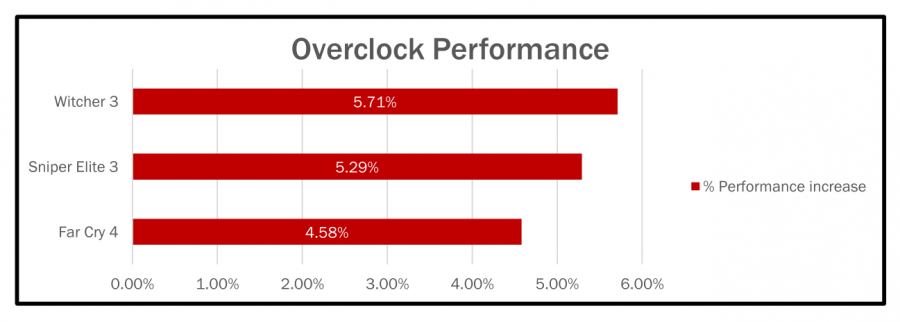
Fury X - the fastest card in the Fiji-based line-up - is first out of the gate, featuring a very small 7.5-inch board (30 per cent shorter than the Radeon R9 290X's 11.5-incher) paired with an all-in-one liquid cooler, similar to that found in the mammoth Radeon R9 295x2. AMD says that even with the card under full load, Fury X runs at temperatures of just 50 degrees Celsius, for cool and quiet operation. The firm also reckons that the addition of the cooler should open the door to some overclocking potential - which would clearly be much more of a problem with the more standard heat sink and fan approach to cooling.
AMD has targeted 275W as a typical level of power consumption under load, but electrically, the 2x eight-pin power inputs should allow for spikes of up to 375W. GPU load can be measured via to a certain extent via a series of LEDs built into the board.


In terms of other distinguishing features, Fury X features three DisplayPort 1.2 interfaces along with standard HDMI 1.4a. The latter point is something of a disappointment as it precludes Fury X as an option for 4K UHD TVs that utilise the new HDMI 2.0 standard. AMD reckons that the vast majority of 4K gaming is carried out using the DisplayPort interface, but in terms of price vs real estate, the new wave of HDMI 2.0-equipped TVs are going to be difficult to ignore (and Nvidia's alternative does support the system). Without HDMI 2.0, the Fury X can only transmit a 30Hz signal to 4K TVs.
Price-wise, Fury X's $650 price-point gives parity with Nvidia's GTX 980 Ti, while apparently offering some kind of performance advantage over its rival - the extent of which is currently not clear. Meanwhile, Nvidia will point to the fact that its card has 6GB of VRAM - 50 per cent more than the Fury X.
Challenged about the memory deficit versus its rival, AMD claimed that faster, lower latency RAM can be just as advantageous as more of it - something worthy of more in-depth investigation (typically, maxing out VRAM causes bad stutter as the driver 'pages out' to system RAM. We're not sure how HBM changes that in the way AMD suggests). The question of whether 4GB is enough VRAM for a top-end flagship is fiercely contested right now, and if AMD is suggesting that it is enough, it makes the decision to equip the Radeon R9 390 and 390X with 8GB of GDDR5 a definite case of mixed messaging.
Details on the other Fury cards are thin on the ground at the moment. AMD isn't providing details on the air-cooled Fury, and to what extent core speeds and shader count may be reduced. The $550 price-point suggests that the company is confident that it can significantly out-perform the GTX 980, which Nvidia sells at $499. Meanwhile, even less is known about the ultra-compact Fury Nano, except that the board is even smaller than Fury X at six inches, and that it only requires a single eight-pin power input, meaning a 175W power envelope.

(What's exciting about the new Fiji chip isn't just the raw power, but rather its application in a wide range of form factors. The Fury Nano is absolutely tiny at just six inches long (even smaller than the Fury X's board), and even with the inevitable clock-speed drop, it should still be highly capable.)
In addition to the trio of Fury products, AMD has also revealed plans for a spiritual successor to the dual-GPU Radeon R9 295x2. Two Fiji processors with HBM are set to be integrated onto a single board, offering an unprecedented level of graphics power. In theory, the level of power offered by such a product should finally allow for compromise-free 4K gaming on the latest games, and there are potential applications for VR too, with one Fiji processor allocated to each eye for stereoscopic rendering. This dual Fiji board has already been integrated into AMD's small form-factor concept - Project Quantum, as seen in Tuesday's E3 presentation.
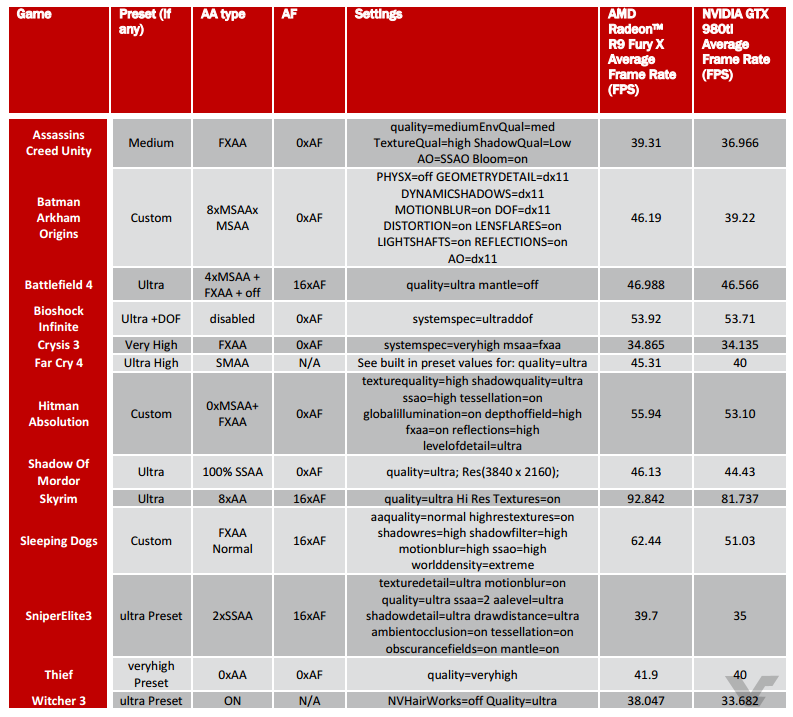
We spent a couple of days this week with AMD at a press event in Munich where we got to learn more about Radeon Fury, and while AMD claimed that Fury X is the world's fastest single-chip graphics card, performance numbers were thin on the ground - we can't help but get the feeling that it's going to be an extremely close battle with GTX 980 Ti. There's a sense here that the GPU giants have adopted very different strategies to bring us that next level in performance - Nvidia doubling down on power efficiency and performance per watt with all the overclocking advantages that may entail, while AMD combines its revolutionary HBM memory tech with an upscaled, brute force approach to its graphics engine.
If the performance numbers between the products are within a few percentage points, potential buyers may well find themselves looking beyond the numbers in choosing which GPU to purchase - do they go for the higher level of VRAM with Nvidia and its lower power consumption, or do they opt for the smaller form factor and quiet liquid cooling of the Radeon Fury? One thing's for sure, there's a fascinating face-off between the green and red teams coming up, and the fact that there absolutely is competition at the top level of GPU performance can only be a good thing for the market.

AMD has revealed its new top-tier performance graphics line - Radeon Fury. Three different cards based on its new silicon, codenamed Fiji, have been revealed - led by the ultra high-end watercooled Fury X, due for release before the end of the month. Later on in the summer we can look forward to a slower, cheaper, air-cooled Fury along with Fury Nano - a small form factor iteration.
AMD's Fiji processor is effectively a much, much larger version of its existing 'Tonga' technology, as found in the Radeon R9 285 and the 5K iMac. It sports a mammoth 4,096 shader cores (a 45 per cent increase over its prior flagship, the Radeon R9 290X), along with 4GB of HBM - AMD's revolutionary, high bandwidth memory that sits alongside the GPU core, offering enormous improvements in latency as well as throughput.

Closely integrating memory with the graphics engine offers many advantages. In theory, memory bandwidth should be removed as a limitation (AMD tells us that there is no point attempting to overclock HBM for additional performance, indeed the option may be removed entirely) while the physical form factor of the board itself is significantly reduced, allowing for Fiji-based products like the upcoming Nano to fit into much smaller PCs.
Fury X - the fastest card in the Fiji-based line-up - is first out of the gate, featuring a very small 7.5-inch board (30 per cent shorter than the Radeon R9 290X's 11.5-incher) paired with an all-in-one liquid cooler, similar to that found in the mammoth Radeon R9 295x2. AMD says that even with the card under full load, Fury X runs at temperatures of just 50 degrees Celsius, for cool and quiet operation. The firm also reckons that the addition of the cooler should open the door to some overclocking potential - which would clearly be much more of a problem with the more standard heat sink and fan approach to cooling.
AMD has targeted 275W as a typical level of power consumption under load, but electrically, the 2x eight-pin power inputs should allow for spikes of up to 375W. GPU load can be measured via to a certain extent via a series of LEDs built into the board.


In terms of other distinguishing features, Fury X features three DisplayPort 1.2 interfaces along with standard HDMI 1.4a. The latter point is something of a disappointment as it precludes Fury X as an option for 4K UHD TVs that utilise the new HDMI 2.0 standard. AMD reckons that the vast majority of 4K gaming is carried out using the DisplayPort interface, but in terms of price vs real estate, the new wave of HDMI 2.0-equipped TVs are going to be difficult to ignore (and Nvidia's alternative does support the system). Without HDMI 2.0, the Fury X can only transmit a 30Hz signal to 4K TVs.
Price-wise, Fury X's $650 price-point gives parity with Nvidia's GTX 980 Ti, while apparently offering some kind of performance advantage over its rival - the extent of which is currently not clear. Meanwhile, Nvidia will point to the fact that its card has 6GB of VRAM - 50 per cent more than the Fury X.
Challenged about the memory deficit versus its rival, AMD claimed that faster, lower latency RAM can be just as advantageous as more of it - something worthy of more in-depth investigation (typically, maxing out VRAM causes bad stutter as the driver 'pages out' to system RAM. We're not sure how HBM changes that in the way AMD suggests). The question of whether 4GB is enough VRAM for a top-end flagship is fiercely contested right now, and if AMD is suggesting that it is enough, it makes the decision to equip the Radeon R9 390 and 390X with 8GB of GDDR5 a definite case of mixed messaging.
Details on the other Fury cards are thin on the ground at the moment. AMD isn't providing details on the air-cooled Fury, and to what extent core speeds and shader count may be reduced. The $550 price-point suggests that the company is confident that it can significantly out-perform the GTX 980, which Nvidia sells at $499. Meanwhile, even less is known about the ultra-compact Fury Nano, except that the board is even smaller than Fury X at six inches, and that it only requires a single eight-pin power input, meaning a 175W power envelope.

(What's exciting about the new Fiji chip isn't just the raw power, but rather its application in a wide range of form factors. The Fury Nano is absolutely tiny at just six inches long (even smaller than the Fury X's board), and even with the inevitable clock-speed drop, it should still be highly capable.)
In addition to the trio of Fury products, AMD has also revealed plans for a spiritual successor to the dual-GPU Radeon R9 295x2. Two Fiji processors with HBM are set to be integrated onto a single board, offering an unprecedented level of graphics power. In theory, the level of power offered by such a product should finally allow for compromise-free 4K gaming on the latest games, and there are potential applications for VR too, with one Fiji processor allocated to each eye for stereoscopic rendering. This dual Fiji board has already been integrated into AMD's small form-factor concept - Project Quantum, as seen in Tuesday's E3 presentation.
We spent a couple of days this week with AMD at a press event in Munich where we got to learn more about Radeon Fury, and while AMD claimed that Fury X is the world's fastest single-chip graphics card, performance numbers were thin on the ground - we can't help but get the feeling that it's going to be an extremely close battle with GTX 980 Ti. There's a sense here that the GPU giants have adopted very different strategies to bring us that next level in performance - Nvidia doubling down on power efficiency and performance per watt with all the overclocking advantages that may entail, while AMD combines its revolutionary HBM memory tech with an upscaled, brute force approach to its graphics engine.
If the performance numbers between the products are within a few percentage points, potential buyers may well find themselves looking beyond the numbers in choosing which GPU to purchase - do they go for the higher level of VRAM with Nvidia and its lower power consumption, or do they opt for the smaller form factor and quiet liquid cooling of the Radeon Fury? One thing's for sure, there's a fascinating face-off between the green and red teams coming up, and the fact that there absolutely is competition at the top level of GPU performance can only be a good thing for the market.