


Buddhism in Ukraine has existed since the 19th and 20th century, after immigration from countries with Buddhist populations, mainly North Vietnam and Korea under Communist period. Although sources are not readily available, Buddhists are believed to constitute 0.1% of the total population in Ukraine.
t is estimated that in the Middle East around 900,000 people, perhaps more, profess Buddhism as their religion. Buddhist adherents make up just over 0.3% of the total population of the Middle East. Many of these Buddhists are workers who have migrated from Asia to the Middle East in the last 20 years, many from countries that have large Buddhist populations, such as China, Vietnam, Thailand, Sri Lanka, Nepal and Bhutan. A small number of engineers, company directors, and managers from Japan, Taiwan, Hong Kong, Singapore, and South Korea have also moved to the Middle East.
Buddhism in Switzerland
According to the 2000 census of Switzerland, 21,305 Swiss residents (0.29% of the total population) self-identified as Buddhists. About a third of them were born in Thailand.
Buddhism in Sweden
From Wikipedia, the free encyclopedia
Jump to:navigation, search
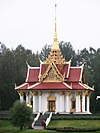

The Thai pavilion in Jämtland
Buddhism is a relatively small religion in Sweden. Most of the practicing Buddhists have various Asian (mostly Thai, Chinese and Vietnamese) heritage. There are current plans of constructing a Buddhist Temple in Fredrika, a small town in the north part of Sweden. This Thai-style temple will be the biggest Buddhist temple in Europe when finished. In addition to this there is a Thai pavilion in Jämtland, a region in central Sweden.
Buddhism in Slovakia
From Wikipedia, the free encyclopedia
Jump to:navigation, search
Buddhism is not officially recognized as a religion in Slovakia. The 2001 census findings included Buddhism under "other religions, " so the total number of Buddhists is not known.
Various Buddhist schools, including all three traditional vehicles (Theravada, Mahayana and Vajrayana), are active as either informal groups or civil associations. Theravada is represented by groups of vipassana practitioners. Several Zen schools, including disciples of Roshi Kaizen and the Korean Kwan Um School, represent the Mahayana. Vajrayana schools include Nyingma practitioners following Namkai Norbu Rinpoche. The Diamond Way organisation founded and directed by Ole Nydahl is also active in Slovakia.
Buddhism in Russia
From Wikipedia, the free encyclopedia
Jump to:navigation, search

Ivolga monastery.
Historically, Buddhism was incorporated into Russian lands as early as the late 15th century, when Russian explorers travelled to and settled in Siberia and what is now the Russian Far East. It is also believed that Indian King Ashoka had sent monks to spread Buddhism all over the world including Siberia.
Buddhism in Poland
From Wikipedia, the free encyclopedia
Jump to:navigation, search

This article does not cite any references or sources.
Please help improve this article by adding citations to reliable sources. Unsourced material may be challenged and removed. (September 2008)
Stupa in Kuchary
The roots of Buddhism in Poland can be found in the early 20th century in the nation's connections to the origin countries of the religion, like China, Vietnam, Japan, and Korea. After World War II, primarily expatriate Poles joined various Buddhist groups and organizations. Since the breakdown of the Eastern Bloc, Buddhism has been able to develop further in the more tolerant atmosphere.
Today all of the principal schools of Buddhism, including Mahayana (Zen and Jodo Shinshu), and Tibetan Buddhism can be found in Poland[citation needed]. Movements like the Friends of the Western Buddhist Order are also active in the country[citation needed]. Umbrella organizations like the Buddhist mission (Misja Buddyjska) and the Buddhist Union of Poland unite more than two dozen groups of Buddhists. The Diamond Way centres founded and directed by of Ole Nydahl are also active in Poland.
In May 2000, the XIV. Dalai Lama Tenzin Gyatso opened a Buddhist department in the Pomeranian Library in Szczecin[citation needed].
Buddhism in Norway
From Wikipedia, the free encyclopedia
Jump to:navigation, search

The Vietnamese "Khuông Việt" pagoda at Løvenstad near Oslo, the only of its kind in Norway.
Buddhism in Norway has existed since the beginning of the 1970s, after immigration from countries with Buddhist populations, mainly Vietnam. Buddhistforbundet (The Buddhist Federation) in Norway was established as a religious society in 1979 by two Buddhist groups (Rinzai Zen Senter and Karma Tashi Ling buddhistsenter) who wanted to create a common organization to preserve issues of common interest. Today, there are 20 thousand (over 0.4% of the total population) registered Buddhists in Norway.[1]
Buddhism in the Netherlands
From Wikipedia, the free encyclopedia
Jump to:navigation, search
Buddhism is a small minority religion in The Netherlands, but it has shown rapid growth in recent years. As of the 2009 estimate, 250,000 [1] Dutch people identified their religion as Buddhist (about 1.56% [2] of the total population).
Buddhism in Lithuania
From Wikipedia, the free encyclopedia
Jump to:navigation, search
The roots of Buddhism in Lithuania can be found in the 20th century, although the time of its first introduction there remains unknown. Zen Buddhism practiced in Lithuania today originates in Korea. There are a few active communities across the country including ones in Vilnius, Kaunas, Klaipėda, Šiauliai, Panevėžys and Šakiai.
t is estimated that in the Middle East around 900,000 people, perhaps more, profess Buddhism as their religion. Buddhist adherents make up just over 0.3% of the total population of the Middle East. Many of these Buddhists are workers who have migrated from Asia to the Middle East in the last 20 years, many from countries that have large Buddhist populations, such as China, Vietnam, Thailand, Sri Lanka, Nepal and Bhutan. A small number of engineers, company directors, and managers from Japan, Taiwan, Hong Kong, Singapore, and South Korea have also moved to the Middle East.
Buddhism in Switzerland
According to the 2000 census of Switzerland, 21,305 Swiss residents (0.29% of the total population) self-identified as Buddhists. About a third of them were born in Thailand.
Buddhism in Sweden
From Wikipedia, the free encyclopedia
Jump to:navigation, search

The Thai pavilion in Jämtland
Buddhism is a relatively small religion in Sweden. Most of the practicing Buddhists have various Asian (mostly Thai, Chinese and Vietnamese) heritage. There are current plans of constructing a Buddhist Temple in Fredrika, a small town in the north part of Sweden. This Thai-style temple will be the biggest Buddhist temple in Europe when finished. In addition to this there is a Thai pavilion in Jämtland, a region in central Sweden.
Buddhism in Slovakia
From Wikipedia, the free encyclopedia
Jump to:navigation, search
Buddhism is not officially recognized as a religion in Slovakia. The 2001 census findings included Buddhism under "other religions, " so the total number of Buddhists is not known.
Various Buddhist schools, including all three traditional vehicles (Theravada, Mahayana and Vajrayana), are active as either informal groups or civil associations. Theravada is represented by groups of vipassana practitioners. Several Zen schools, including disciples of Roshi Kaizen and the Korean Kwan Um School, represent the Mahayana. Vajrayana schools include Nyingma practitioners following Namkai Norbu Rinpoche. The Diamond Way organisation founded and directed by Ole Nydahl is also active in Slovakia.
Buddhism in Russia
From Wikipedia, the free encyclopedia
Jump to:navigation, search

Ivolga monastery.
Historically, Buddhism was incorporated into Russian lands as early as the late 15th century, when Russian explorers travelled to and settled in Siberia and what is now the Russian Far East. It is also believed that Indian King Ashoka had sent monks to spread Buddhism all over the world including Siberia.
Buddhism in Poland
From Wikipedia, the free encyclopedia
Jump to:navigation, search

This article does not cite any references or sources.
Please help improve this article by adding citations to reliable sources. Unsourced material may be challenged and removed. (September 2008)

Stupa in Kuchary
The roots of Buddhism in Poland can be found in the early 20th century in the nation's connections to the origin countries of the religion, like China, Vietnam, Japan, and Korea. After World War II, primarily expatriate Poles joined various Buddhist groups and organizations. Since the breakdown of the Eastern Bloc, Buddhism has been able to develop further in the more tolerant atmosphere.
Today all of the principal schools of Buddhism, including Mahayana (Zen and Jodo Shinshu), and Tibetan Buddhism can be found in Poland[citation needed]. Movements like the Friends of the Western Buddhist Order are also active in the country[citation needed]. Umbrella organizations like the Buddhist mission (Misja Buddyjska) and the Buddhist Union of Poland unite more than two dozen groups of Buddhists. The Diamond Way centres founded and directed by of Ole Nydahl are also active in Poland.
In May 2000, the XIV. Dalai Lama Tenzin Gyatso opened a Buddhist department in the Pomeranian Library in Szczecin[citation needed].
Buddhism in Norway
From Wikipedia, the free encyclopedia
Jump to:navigation, search

The Vietnamese "Khuông Việt" pagoda at Løvenstad near Oslo, the only of its kind in Norway.
Buddhism in Norway has existed since the beginning of the 1970s, after immigration from countries with Buddhist populations, mainly Vietnam. Buddhistforbundet (The Buddhist Federation) in Norway was established as a religious society in 1979 by two Buddhist groups (Rinzai Zen Senter and Karma Tashi Ling buddhistsenter) who wanted to create a common organization to preserve issues of common interest. Today, there are 20 thousand (over 0.4% of the total population) registered Buddhists in Norway.[1]
Buddhism in the Netherlands
From Wikipedia, the free encyclopedia
Jump to:navigation, search
Buddhism is a small minority religion in The Netherlands, but it has shown rapid growth in recent years. As of the 2009 estimate, 250,000 [1] Dutch people identified their religion as Buddhist (about 1.56% [2] of the total population).
Buddhism in Lithuania
From Wikipedia, the free encyclopedia
Jump to:navigation, search
The roots of Buddhism in Lithuania can be found in the 20th century, although the time of its first introduction there remains unknown. Zen Buddhism practiced in Lithuania today originates in Korea. There are a few active communities across the country including ones in Vilnius, Kaunas, Klaipėda, Šiauliai, Panevėžys and Šakiai.


