Dear friends,
Thought to post this because of a query a friend made about the Dhamma Chakka symbols in my profile picture; signature, etc.
[My profile picture was excerpted from an image on: http://www.gautamabuddha.org]
Although it's not fully relevant to Dhamma; I hope posting this would make us think more about it... Please note this is a personal view I have; and its wrong by common acceptance. Please do not consider this as a Dhamma discussion...
How blindly we have started to use a Dhamma chakka that cannot be rolled? I too was blind to this fact until few months ago...
We know the part in Dhammacakkappavattana sutta
“Etam Bhagavatā Bārānasiyam Isipatane Migadāye anuttaram Dhammacakkam pavattitam, appativattiyam samanena vā brāhmanena vā devena vā mārena vā brahmunā vā kenaci vā lokasmin'ti” - "The incomparable wheel of Dhamma has been set to roll by the Blessed One… in a way that it cannot be turned back by any recluse, Brahmin, Deva, Mara, Brahma, or anyone in the world."
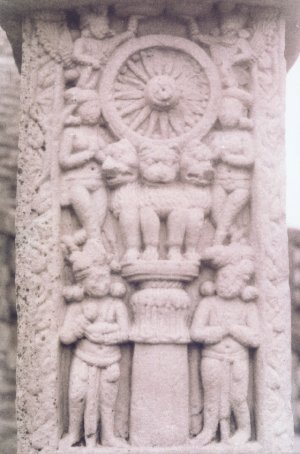
So a Chakka that symbolizes Dhamma should be a "wheel" which can be rolled..
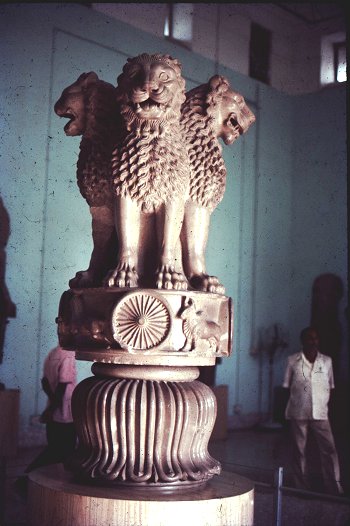
See how it is represented in the Ashoka pillars erected at a time Rahathan wahanses were there to advise the Emperor Ashoka (he was a Buddhist at the time; so it's not reasonable to assume that the symbol is related to Hinduism or any other faith).

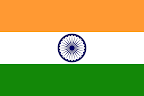
See how our "neighbor" has it adopted (thanks to the True Buddhist leader Bhimrao Ramji Ambedkar) giving it the highest honor...
But unfortunately something different is treated as Dhamma Chakka by acceptance and the one on Ashoka Pillars is called "Asoka Chakra" by acceptance...
Accepted shape has interpretations too.. all given at latter times...
Please compare it with what I quoted from Dhammachakkappawattana sutta... The phrase "Dhamma Chakka" was not used in Dhamma with the meaning in the following excepted text...
======================================================
Excerpted from Wikipidea (so this might be wrong...)
The eight spokes represent the Noble Eightfold Path of Buddhism. They are said to have sharp edges to cut through ignorance.
Other symbolism in the eight-spoked Dharmacakra in Buddhism:

======================================================
More information can be found in:
http://en.wikipedia.org/wiki/Dharmacakra
http://en.wikipedia.org/wiki/Ashoka_Chakra
To me its like carrying on a historical mistakes without inquiring much...
See how competent we are to add various interpretations... There may be other interpretations too..
Anyway it does not matter what Dhamma chakka symbols we use as long as we follow the Path...
There is no need to get disturbed by this post... I know what I say is wrong by common acceptance...
But I want to highlight another important thing:
how impermanent (Anithya) even what we accept, interpretations we give in the society are...
It's amazing: to see the Teachings of Buddha (Dhamma) that talks about Anithya is still there in its pure form after 2552 years from Sambuddha Prinibbana.
Theruwan saranai!
Thought to post this because of a query a friend made about the Dhamma Chakka symbols in my profile picture; signature, etc.
[My profile picture was excerpted from an image on: http://www.gautamabuddha.org]
Although it's not fully relevant to Dhamma; I hope posting this would make us think more about it... Please note this is a personal view I have; and its wrong by common acceptance. Please do not consider this as a Dhamma discussion...
How blindly we have started to use a Dhamma chakka that cannot be rolled? I too was blind to this fact until few months ago...
We know the part in Dhammacakkappavattana sutta
“Etam Bhagavatā Bārānasiyam Isipatane Migadāye anuttaram Dhammacakkam pavattitam, appativattiyam samanena vā brāhmanena vā devena vā mārena vā brahmunā vā kenaci vā lokasmin'ti” - "The incomparable wheel of Dhamma has been set to roll by the Blessed One… in a way that it cannot be turned back by any recluse, Brahmin, Deva, Mara, Brahma, or anyone in the world."
So a Chakka that symbolizes Dhamma should be a "wheel" which can be rolled..
See how it is represented in the Ashoka pillars erected at a time Rahathan wahanses were there to advise the Emperor Ashoka (he was a Buddhist at the time; so it's not reasonable to assume that the symbol is related to Hinduism or any other faith).

See how our "neighbor" has it adopted (thanks to the True Buddhist leader Bhimrao Ramji Ambedkar) giving it the highest honor...
But unfortunately something different is treated as Dhamma Chakka by acceptance
and the one on Ashoka Pillars is called "Asoka Chakra" by acceptance...Accepted shape has interpretations too.. all given at latter times...
Please compare it with what I quoted from Dhammachakkappawattana sutta... The phrase "Dhamma Chakka" was not used in Dhamma with the meaning in the following excepted text...
======================================================
Excerpted from Wikipidea (so this might be wrong...)
The eight spokes represent the Noble Eightfold Path of Buddhism. They are said to have sharp edges to cut through ignorance.
Other symbolism in the eight-spoked Dharmacakra in Buddhism:
- Its overall shape is that of a circle (cakra), representing the perfection of the dharma teaching
- The hub stands for discipline, which is the essential core of meditation practice
- The rim, which holds the spokes, refers to mindfulness or samadhi which holds everything together

======================================================
More information can be found in:
http://en.wikipedia.org/wiki/Dharmacakra
http://en.wikipedia.org/wiki/Ashoka_Chakra
To me its like carrying on a historical mistakes without inquiring much...
See how competent we are to add various interpretations... There may be other interpretations too..
Anyway it does not matter what Dhamma chakka symbols we use as long as we follow the Path...
There is no need to get disturbed by this post... I know what I say is wrong by common acceptance...
But I want to highlight another important thing:
how impermanent (Anithya) even what we accept, interpretations we give in the society are...
It's amazing: to see the Teachings of Buddha (Dhamma) that talks about Anithya is still there in its pure form after 2552 years from Sambuddha Prinibbana.
Theruwan saranai!
Last edited: