


A tumultuous week saw uncertainties becoming realities one after another. A raise in power tariffs, now effective, will add to the woes of Sri Lankans. It became clear this week that the increase was the last of the 15 conditions to be met for the International Monetary Fund’s (IMF) Extended Fund Facility of US$ 2.9 billion.
Professor Shantha Devarajan, one of the advisors to the government on matters related to the IMF told the Sunday Times, “If they (the IMF) receive financing assurance from China, as they have already from India and the Paris Club creditors, then the IMF management will likely present the Extended Fund Facility (EFF) programme to the IMF Board of Directors. If they don’t receive financing assurance from China, it may still be possible, under the IMF’s Lending into Official Arrears (LIOA) policy, to present the programme to the Board because the LIOA requires that 50 percent of the official creditors should give financing assurance, which is the case now, since China constitutes less than 50 percent and is the only creditor that has not yet given financing assurance.” A Q & A with Prof. Devarajan appears in a box story on this page.
“I think the prospects are good,” declared Professor Devarajan to a question of whether the EFF is now confirmed to be received by Sri Lanka from the IMF. He said, “The two-year moratorium from China is of course welcome but Sri Lanka will need more than that in order to reduce its debt burden.”
The IMF, on the other hand, has been saying since reaching the staff-level agreement in September that debt restructuring or debt sustainability has to be achieved prior to any board approval for EFF, he pointed out.
Expert says if IMF deal is worked out, Lanka may receive aid from WB, ADB also
Shanta Devarajan is a Professor of the Practice of International Development at the Edmund A. Walsh School of Foreign Service of the Georgetown University.He is one of the advisors to the Government of Sri Lanka on matters relating to the dialogue with the International Monetary Fund. In a Q & A with the Sunday Times, he commented on the prospects of the much-awaited Extended Fund Facility (EFF) and other connected issues. Here are edited highlights:
ON THE PROPOSED IMF BOARD OF DIRECTORS MEETING TO DECIDE ON THE EFF FOR SRI LANKA:If they receive financing assurance from China, as they have already from India and the Paris Club creditors, then the IMF management will likely present the Extended Fund Facility (EFF) programme to the IMF Board of Directors. If they don’t receive financing assurance from China, it may still be possible, under the IMF’s Lending into Official Arrears (LIOA) policy, to present the programme to the Board because the LIOA requires that 50 percent of the official creditors should give financing assurance, which is the case now, since China constitutes less than 50 percent and is the only creditor that has not yet given financing assurance. However, given the risks associated with going ahead without China’s financing assurance, there is no guarantee that the IMF’s Board will vote to approve the programme in this case.
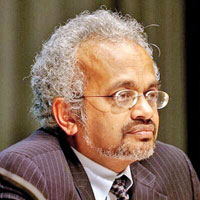
Prof. Shantha Devarajan
WHAT HAS BEEN GOING ON BETWEEN THE GOVERNMENT OF SRI LANKA AND THE IMF SO FAR: In April 2022, Sri Lanka sought an IMF programme (the EFF) and a debt restructuring. They reached a staff-level agreement on the policies to obtain an EFF in September 2022. All the prior actions contained in the staff-level agreement have now been achieved. To submit the EFF to the Board of the IMF, not only does Sri Lanka have to have completed the prior actions but it should also have received financing assurance from the official creditors so that they can begin negotiating the debt restructuring after the EFF has been approved by the Board. They (the government) have received financing assurance from all major official creditors except China. If they receive that financing assurance from China, then the IMF management will submit the programme to the Board which, if approved, will provide $2.9 billion to Sri Lanka from the IMF. It will also likely open up about $5 billion from the World Bank and the Asian Development Bank. Most importantly, Sri Lanka can then begin restructuring its official and private external debt, which would help put the country on a sustainable debt path.
WHETHER THE PROSPECTS OF SRI LANKA RECEIVING THE EFF IS NOW CONFIRMED: I think the prospects are good, since almost all the prior conditions have been met. The IMF loan will bring in much-needed foreign exchange to the economy, enabling Sri Lanka to purchase imports and relieve some of the shortages that people have been experiencing over the last year. However, to resume economic growth, the country will need to restructure its debt, so that foreign investments can start coming back in.
CHINA’S ROLE AND THEIR DECLARATION OF A TWO-YEAR MORATORIUM: The two-year moratorium is of course welcome but Sri Lanka will need more than that in order to reduce its debt burden. [The moratorium does not reduce the stock of debt; it postpones the date at which you must pay it back].
THE ROLE OF UNITED STATES – IS IT GOING OUT OF ITS WAY TO HELP: The United States is trying help Sri Lanka. Since it is not one of the creditors, it can be most helpful in supporting Sri Lanka at the IMF Board, where it has the largest vote share.
THERE IS A NOTION AMONG SECTIONS IN COLOMBO THAT THE US MAY BE EXPECTING A QUID PRO QUO FOR ALL THE HELP IT IS OFFERING: No comment.
ON THE ECONOMY RETURNING TO ‘NORMALCY’ IN AN YEAR: It will depend on what you define as “normal”. I think in a year’s time, you will see the shortages relaxed and some modest growth returning. However, it will take longer for the economy to resume the high levels of growth that Sri Lanka has seen in the past.
ON BRIBERY AND CORRUPTION AT ALL LEVELS: As part of the EFF programme, the IMF is conducting a corruption diagnostic of the country. In addition, one of the structural reforms of the programme is that Sri Lanka brings its anti-corruption regulations to the levels required by the United Nations Convention.
THE IMMEDIATE OUTCOME OF THE EFF APPROVAL: A relaxation of the import restrictions which, in turn, will enable exports to start growing (or at least stop contracting) and a modest uptick in growth.
HOW THE COUNTRY’S ECONOMY HAS PERFORMED: The economy has performed as you would expect an economy that has defaulted on its foreign debt and run out of foreign exchange reserves.
CONDITIONS AND RESTRICTIONS BY THE IMF AND DIFFICULTIES IMPOSED ON INCOME EARNING CLASS: First, these are not “restrictions placed by the IMF.” They are policies agreed upon by the Sri Lankan authorities with the IMF to bring the fiscal deficit down to a level where the debt will be sustainable. The only thing that is required for the IMF programme is that the fiscal deficit is reduced. How to achieve this target is something the Sri Lankan government can decide upon, provided it is a credible set of policies. That is what the staff-level agreement is about: it is a set of policies, including tax increases and subsidy cuts that both the IMF and Sri Lankan authorities, at the staff level, agree will reach the targets. Secondly, taxes are being increased to the levels before the 2019 tax cuts by the Gotabaya Rajapaksa government. Recall that it was these tax cuts that caused the fiscal deficit to balloon to 13 percent of GDP, resulting in Sri Lanka being cut off from capital markets and inflation reaching 70 percent. So, it follows that to stabilise the economy and restore debt sustainability, you need to reverse the policies that de-stabilised the economy and rendered the debt unsustainable. Third, all these reforms are aimed at protecting the poor and vulnerable, who have been suffering enormously. If we are to protect the poor and still restore macroeconomic stability, then the austerity will fall disproportionately on the middle and upper middle classes.
WHETHER THE IMF LAYS DOWN CONDITIONS OVER ELECTIONS: No. The IMF does not have any conditions on the politics of a country.
WHETHER THE GRANTING OF THE EFF PRECEDES ANOTHER AGREEMENT: The granting of the EFF will then lead to negotiations between Sri Lanka and its creditors—both official and private—about restructuring the debt. It will also likely lead to financing from the World Bank and the Asian Development Bank. The EFF is a four-year agreement and will be the main agreement with the IMF for those four years.
- https://www.sundaytimes.lk/230226/c...-prospects-good-for-eff-programme-513015.html
Professor Shantha Devarajan, one of the advisors to the government on matters related to the IMF told the Sunday Times, “If they (the IMF) receive financing assurance from China, as they have already from India and the Paris Club creditors, then the IMF management will likely present the Extended Fund Facility (EFF) programme to the IMF Board of Directors. If they don’t receive financing assurance from China, it may still be possible, under the IMF’s Lending into Official Arrears (LIOA) policy, to present the programme to the Board because the LIOA requires that 50 percent of the official creditors should give financing assurance, which is the case now, since China constitutes less than 50 percent and is the only creditor that has not yet given financing assurance.” A Q & A with Prof. Devarajan appears in a box story on this page.
“I think the prospects are good,” declared Professor Devarajan to a question of whether the EFF is now confirmed to be received by Sri Lanka from the IMF. He said, “The two-year moratorium from China is of course welcome but Sri Lanka will need more than that in order to reduce its debt burden.”
The IMF, on the other hand, has been saying since reaching the staff-level agreement in September that debt restructuring or debt sustainability has to be achieved prior to any board approval for EFF, he pointed out.
Expert says if IMF deal is worked out, Lanka may receive aid from WB, ADB also
Shanta Devarajan is a Professor of the Practice of International Development at the Edmund A. Walsh School of Foreign Service of the Georgetown University.He is one of the advisors to the Government of Sri Lanka on matters relating to the dialogue with the International Monetary Fund. In a Q & A with the Sunday Times, he commented on the prospects of the much-awaited Extended Fund Facility (EFF) and other connected issues. Here are edited highlights:
ON THE PROPOSED IMF BOARD OF DIRECTORS MEETING TO DECIDE ON THE EFF FOR SRI LANKA:If they receive financing assurance from China, as they have already from India and the Paris Club creditors, then the IMF management will likely present the Extended Fund Facility (EFF) programme to the IMF Board of Directors. If they don’t receive financing assurance from China, it may still be possible, under the IMF’s Lending into Official Arrears (LIOA) policy, to present the programme to the Board because the LIOA requires that 50 percent of the official creditors should give financing assurance, which is the case now, since China constitutes less than 50 percent and is the only creditor that has not yet given financing assurance. However, given the risks associated with going ahead without China’s financing assurance, there is no guarantee that the IMF’s Board will vote to approve the programme in this case.
Prof. Shantha Devarajan
WHAT HAS BEEN GOING ON BETWEEN THE GOVERNMENT OF SRI LANKA AND THE IMF SO FAR: In April 2022, Sri Lanka sought an IMF programme (the EFF) and a debt restructuring. They reached a staff-level agreement on the policies to obtain an EFF in September 2022. All the prior actions contained in the staff-level agreement have now been achieved. To submit the EFF to the Board of the IMF, not only does Sri Lanka have to have completed the prior actions but it should also have received financing assurance from the official creditors so that they can begin negotiating the debt restructuring after the EFF has been approved by the Board. They (the government) have received financing assurance from all major official creditors except China. If they receive that financing assurance from China, then the IMF management will submit the programme to the Board which, if approved, will provide $2.9 billion to Sri Lanka from the IMF. It will also likely open up about $5 billion from the World Bank and the Asian Development Bank. Most importantly, Sri Lanka can then begin restructuring its official and private external debt, which would help put the country on a sustainable debt path.
WHETHER THE PROSPECTS OF SRI LANKA RECEIVING THE EFF IS NOW CONFIRMED: I think the prospects are good, since almost all the prior conditions have been met. The IMF loan will bring in much-needed foreign exchange to the economy, enabling Sri Lanka to purchase imports and relieve some of the shortages that people have been experiencing over the last year. However, to resume economic growth, the country will need to restructure its debt, so that foreign investments can start coming back in.
CHINA’S ROLE AND THEIR DECLARATION OF A TWO-YEAR MORATORIUM: The two-year moratorium is of course welcome but Sri Lanka will need more than that in order to reduce its debt burden. [The moratorium does not reduce the stock of debt; it postpones the date at which you must pay it back].
THE ROLE OF UNITED STATES – IS IT GOING OUT OF ITS WAY TO HELP: The United States is trying help Sri Lanka. Since it is not one of the creditors, it can be most helpful in supporting Sri Lanka at the IMF Board, where it has the largest vote share.
THERE IS A NOTION AMONG SECTIONS IN COLOMBO THAT THE US MAY BE EXPECTING A QUID PRO QUO FOR ALL THE HELP IT IS OFFERING: No comment.
ON THE ECONOMY RETURNING TO ‘NORMALCY’ IN AN YEAR: It will depend on what you define as “normal”. I think in a year’s time, you will see the shortages relaxed and some modest growth returning. However, it will take longer for the economy to resume the high levels of growth that Sri Lanka has seen in the past.
ON BRIBERY AND CORRUPTION AT ALL LEVELS: As part of the EFF programme, the IMF is conducting a corruption diagnostic of the country. In addition, one of the structural reforms of the programme is that Sri Lanka brings its anti-corruption regulations to the levels required by the United Nations Convention.
THE IMMEDIATE OUTCOME OF THE EFF APPROVAL: A relaxation of the import restrictions which, in turn, will enable exports to start growing (or at least stop contracting) and a modest uptick in growth.
HOW THE COUNTRY’S ECONOMY HAS PERFORMED: The economy has performed as you would expect an economy that has defaulted on its foreign debt and run out of foreign exchange reserves.
CONDITIONS AND RESTRICTIONS BY THE IMF AND DIFFICULTIES IMPOSED ON INCOME EARNING CLASS: First, these are not “restrictions placed by the IMF.” They are policies agreed upon by the Sri Lankan authorities with the IMF to bring the fiscal deficit down to a level where the debt will be sustainable. The only thing that is required for the IMF programme is that the fiscal deficit is reduced. How to achieve this target is something the Sri Lankan government can decide upon, provided it is a credible set of policies. That is what the staff-level agreement is about: it is a set of policies, including tax increases and subsidy cuts that both the IMF and Sri Lankan authorities, at the staff level, agree will reach the targets. Secondly, taxes are being increased to the levels before the 2019 tax cuts by the Gotabaya Rajapaksa government. Recall that it was these tax cuts that caused the fiscal deficit to balloon to 13 percent of GDP, resulting in Sri Lanka being cut off from capital markets and inflation reaching 70 percent. So, it follows that to stabilise the economy and restore debt sustainability, you need to reverse the policies that de-stabilised the economy and rendered the debt unsustainable. Third, all these reforms are aimed at protecting the poor and vulnerable, who have been suffering enormously. If we are to protect the poor and still restore macroeconomic stability, then the austerity will fall disproportionately on the middle and upper middle classes.
WHETHER THE IMF LAYS DOWN CONDITIONS OVER ELECTIONS: No. The IMF does not have any conditions on the politics of a country.
WHETHER THE GRANTING OF THE EFF PRECEDES ANOTHER AGREEMENT: The granting of the EFF will then lead to negotiations between Sri Lanka and its creditors—both official and private—about restructuring the debt. It will also likely lead to financing from the World Bank and the Asian Development Bank. The EFF is a four-year agreement and will be the main agreement with the IMF for those four years.
- https://www.sundaytimes.lk/230226/c...-prospects-good-for-eff-programme-513015.html


