


The old Dutch church in Galle, Ceylon 1903
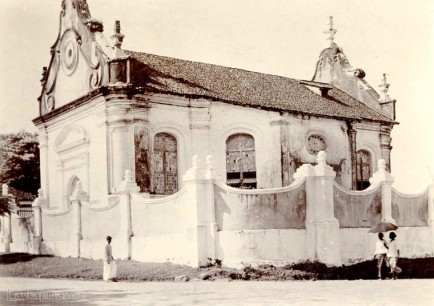
The old Dutch church in Galle, Sri Lanka.
Date: 1903
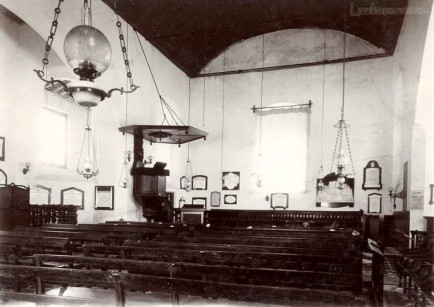
The Dutch Reform church was built in 1640. It’s floor is paved with the grave stones of the old Dutch cemetery & the organ which dates back to 1760 is still in display.
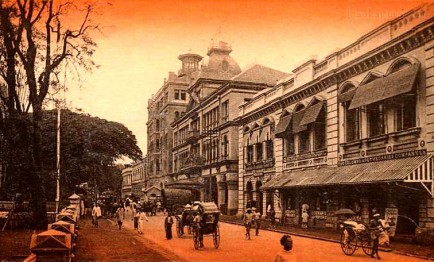
Princes street, Colombo Ceylon early 1900s
The General Post Office, Colombo 1890′s
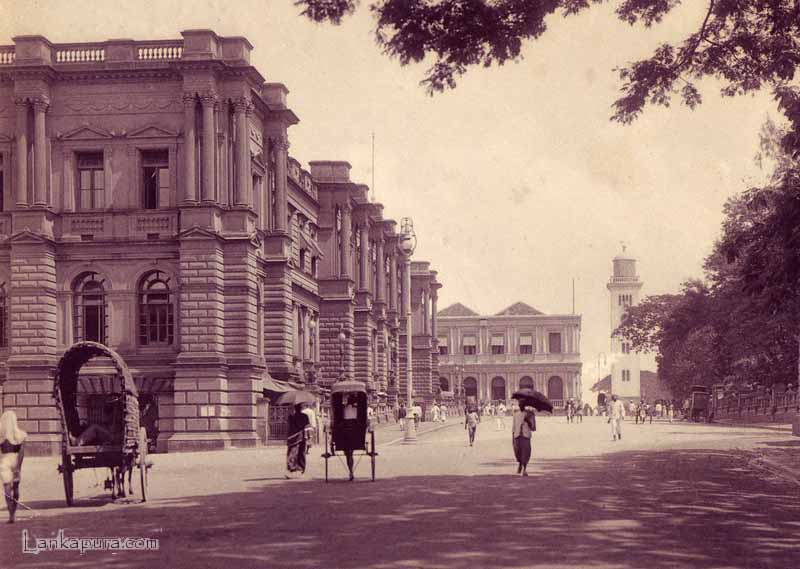
Present day Janadipathi Mawatha (President’s Street), Sri Lanka.
Photography/Publisher: Plate & Co.
Date: 1890′s
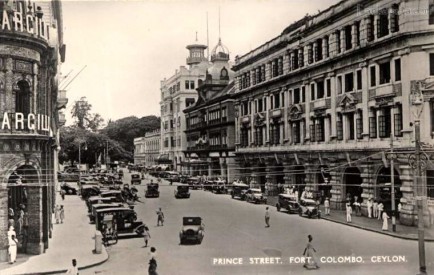
Prince Street Fort, Colombo, Ceylon 1930s
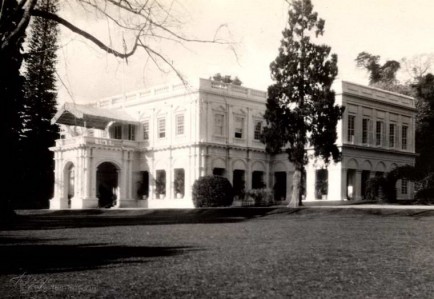
The King’s Pavillion at Kandy, Ceylon 1927
The General Post Office (G.P.O) Colombo
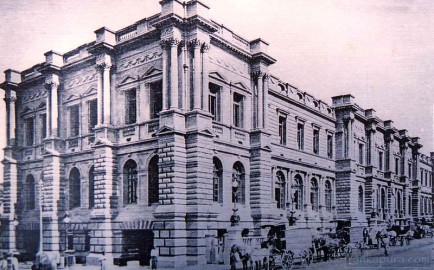
In the year 1796 the British Colonial government took over postal services from the Dutch. After British conquered the whole country (Year 1815) they appointed a postmaster Captain Kennedy who later on became the First Postmaster General of Sri Lanka. Ceylon took the lead among Asian countries in using horse drawn carriages to transport mail, when the first mail coach service was started between Colombo and Kandy on February 1, 1832.
Year 1895 – 2000
old general post office
Janadhipathi Mawatha, Colombo
The General Post Office (G.P.O) was designed and built by Mr. Herbert Frederick Tomalin of the Public Works Department and was assisted by Mr. Tunstall.
From the time the work start on G.P.O. building commenced on October 1891, Mr. Thomalin’s devotion to the building was almost a case of structure worship It was in 1893 the roof principals and iron work were fixed. The contract for casting the heavy columns was let to M/s. Walker, Cons and Co. in May, and the work, which was one requiring considerable care and skills,
The heavy iron trusses were made in the Government Factory, the Workmanship being excellent; the framing and fitting of the iron work for floors and etc., was also performed in the Government Factory, besides The stone flying stair cases were completed during the same year. The very large stones required were quarried at Panadura and transported to Colombo. A large quantity of cut stones for staircases was roughly dressed at Ruwanwella and Ratnapura and transported by boat to the Colombo Beria Lake and moved thence to the site, the method being found cheaper than obtaining the stones nearer at hand and transporting by road.
The G.P.O. made fair progress, and part of it was occupied early in January 1895.
Trams & Bullock carts on Chatham Street Junction
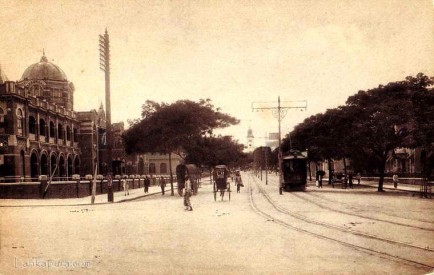
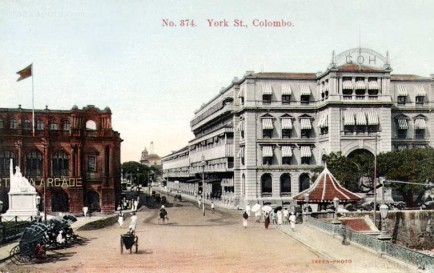
GOH & Victoria Arcade Colombo, Ceylon c.1910s
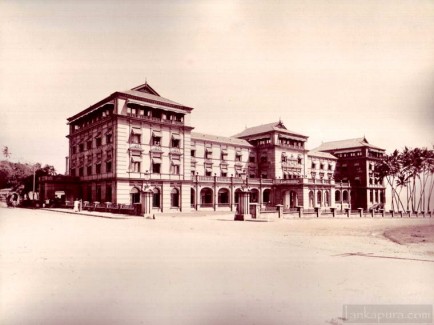
Galle Face Hotel Colombo, Late 1800s
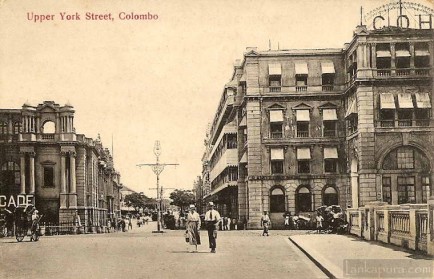
Upper York street, Colombo, Early 1900s
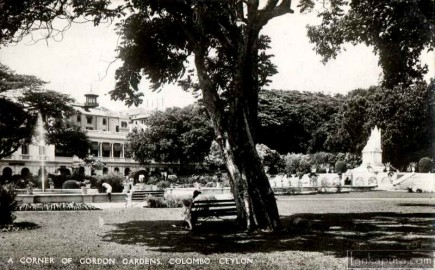
Gordon Gardens Colombo Sri Lanka c.1924
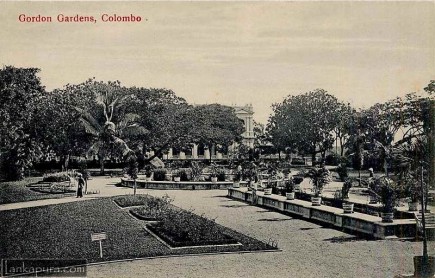
On February 1, 1804, the British Government took over the private house of the last Dutch Governor in Ceylon, Johan Gerard van Angelbeek in the heart of Colombo Fort. This is the house that became the official residence of the British Governor and was referred to as Queen’s House – so named because the British monarch at the time was Queen Victoria.
Queen’s House Set in about 4 acres of land, the residence gained further attraction when Governor Sir Arthur Hamilton Gordon (1883-90) laid out the Gordon Gardens at his own expense in honour of Queen Victoria’s golden jubilee celebrations in 1887. The Gardens boast of an amazing variety of trees and a marble statue of Queen Victoria which was removed from the gardens in 2006. Gordon Gardens was a public park opened to the public until 1980 when it was made part of the President’s House and today off limits to the public.
Photography/Publisher: M.B. Uduman
Date/Year: c.1924
Gordon Gardens Colombo Ceylon 1920-1930s
Entrance to Queens House, Colombo, Sri Lanka
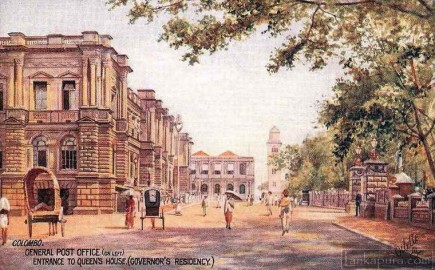
Colombo General Post Office (On Left) and Entrance to Queen’s House (Governor’s Residency)
Queens street, which runs parallel to York street, on the left-hand side coming from the jetty, contains the chief buildings of the Governmental establishment. Proceeding up this street the wharves, the Gordon Gardens lie to the right, and next adjoining is Queen’s house, the stately and commodious Colombo residence of the Governor, the erection of which was completed in 1856. The house and grounds occupy some four acres.
The old Dutch church in Galle, Sri Lanka.
Date: 1903
The Dutch Reform church was built in 1640. It’s floor is paved with the grave stones of the old Dutch cemetery & the organ which dates back to 1760 is still in display.
Princes street, Colombo Ceylon early 1900s
The General Post Office, Colombo 1890′s
Present day Janadipathi Mawatha (President’s Street), Sri Lanka.
Photography/Publisher: Plate & Co.
Date: 1890′s
Prince Street Fort, Colombo, Ceylon 1930s
The King’s Pavillion at Kandy, Ceylon 1927
The General Post Office (G.P.O) Colombo
In the year 1796 the British Colonial government took over postal services from the Dutch. After British conquered the whole country (Year 1815) they appointed a postmaster Captain Kennedy who later on became the First Postmaster General of Sri Lanka. Ceylon took the lead among Asian countries in using horse drawn carriages to transport mail, when the first mail coach service was started between Colombo and Kandy on February 1, 1832.
Year 1895 – 2000
old general post office
Janadhipathi Mawatha, Colombo
The General Post Office (G.P.O) was designed and built by Mr. Herbert Frederick Tomalin of the Public Works Department and was assisted by Mr. Tunstall.
From the time the work start on G.P.O. building commenced on October 1891, Mr. Thomalin’s devotion to the building was almost a case of structure worship It was in 1893 the roof principals and iron work were fixed. The contract for casting the heavy columns was let to M/s. Walker, Cons and Co. in May, and the work, which was one requiring considerable care and skills,
The heavy iron trusses were made in the Government Factory, the Workmanship being excellent; the framing and fitting of the iron work for floors and etc., was also performed in the Government Factory, besides The stone flying stair cases were completed during the same year. The very large stones required were quarried at Panadura and transported to Colombo. A large quantity of cut stones for staircases was roughly dressed at Ruwanwella and Ratnapura and transported by boat to the Colombo Beria Lake and moved thence to the site, the method being found cheaper than obtaining the stones nearer at hand and transporting by road.
The G.P.O. made fair progress, and part of it was occupied early in January 1895.
Trams & Bullock carts on Chatham Street Junction
GOH & Victoria Arcade Colombo, Ceylon c.1910s
Galle Face Hotel Colombo, Late 1800s
Upper York street, Colombo, Early 1900s
Gordon Gardens Colombo Sri Lanka c.1924
On February 1, 1804, the British Government took over the private house of the last Dutch Governor in Ceylon, Johan Gerard van Angelbeek in the heart of Colombo Fort. This is the house that became the official residence of the British Governor and was referred to as Queen’s House – so named because the British monarch at the time was Queen Victoria.
Queen’s House Set in about 4 acres of land, the residence gained further attraction when Governor Sir Arthur Hamilton Gordon (1883-90) laid out the Gordon Gardens at his own expense in honour of Queen Victoria’s golden jubilee celebrations in 1887. The Gardens boast of an amazing variety of trees and a marble statue of Queen Victoria which was removed from the gardens in 2006. Gordon Gardens was a public park opened to the public until 1980 when it was made part of the President’s House and today off limits to the public.
Photography/Publisher: M.B. Uduman
Date/Year: c.1924
Gordon Gardens Colombo Ceylon 1920-1930s
Entrance to Queens House, Colombo, Sri Lanka
Colombo General Post Office (On Left) and Entrance to Queen’s House (Governor’s Residency)
Queens street, which runs parallel to York street, on the left-hand side coming from the jetty, contains the chief buildings of the Governmental establishment. Proceeding up this street the wharves, the Gordon Gardens lie to the right, and next adjoining is Queen’s house, the stately and commodious Colombo residence of the Governor, the erection of which was completed in 1856. The house and grounds occupy some four acres.


