


What is Easter?
Easter is the time for holidays, festivals and a time for giving chocolate Easter eggs. But Easter means much more....
Easter is the oldest and the most important Christian Festival, the celebration of the death and coming to life again of Jesus Christ. For Christians, the dawn of Easter Sunday with its message of new life is the high point of the Christian year.
The story Behind
Easter is the story of Jesus' last days in Jerusalem before his death.The Easter story includes Maundy Thursday (the Last supper leading to the Eucharist), Good Friday (the day on which Jesus was crucified) and Easter Day (the day on which Jesus came back to life).
It is a sad story (that's why people wear black when they attend the Good friday service) because Jesus was killed. But the story has a very happy ending(well you all know what this means ), because Jesus came back to life and visited his friends and followers once more. He did not die at all, but went back up to Heaven to be with God, his father.
Why they call it "Easter" ?
Pagan traditions give us the English word "Easter" which comes from the word "Eostre". The Anglo-Saxon word for April was "Eostre-monath" (the month of openings). However, it should be remembered that Christians celebrated the resurrection of Christ long before the word "Easter" was used, and the word they used for the celebration was "Pascha", which is derived from and linked to the Jewish festival of Passover.
According to Bede, the English monastic historian, the English word Easter comes from the Anglo-Saxon name for the month of April, which was known as "Eostremonath" in the AngloSaxon tongue and since Pascha was most often celebrated in Eostremonath, the English Christians began calling it "Easter". Bede also notes that the month was named after the Anglo-Saxon goddess Esostre.
Rituals related to the goddess Eostre focus on new beginnings, symbolized by the Easter egg, and fertility, which is symbolized by the hare (or Easter bunny).
When is Easter?
Easter usually comes in the month of April. However, Easter can fall as early as March 22 or as late as April 25. Easter Day in 2010 falls on Sunday 4 April.
What happened on Easter Sunday?
It was on Easter Sunday that Jesus rose from death. Jesus had told his disciples before he was arrested that he would be crucified and on the third day he would rise from the dead. Sunday was the third day from Good Friday (Good Friday, Holy Saturday, Easter Day). The second day after Good Friday.
What has Passover(Jewish festival) got to do with Easter?
Easter and Passover always fall close to each other but they are not always at exactly the same time.
For many centuries before Jesus' birth, the Jewish people had their own special spring festival, called Passover (Pesach).
Passover commemorates the time when God rescued the people of Israel from slavery and Moses led them out of Egypt. It is the Israelite's liberation from Egypt that led to the beginning of Judaism.
Jesus, a Jew, was crucified during Passover time and it is said that the Last Supper was a Passover seder (a ritual meal that commemorates the Biblical accounting of the Jews escape from Egyptian slavery). It is Jesus' crucifixion and resurrection that led to the start of Christianity.
Both Easter and Passover revolve around the idea of rebirth. Jesus is resurrected, or born again, and the slaves are reborn into freedom. Both festivals draw in the idea of birth or rebirth with Easter eggs and the hard-boiled eggs served on Passover.
What is Lent and what we do during Lent?
Lent is a Christian Festival. In the past it was a long, strict religious fast when people gave up all rich food. The day before Lent starts is known as Shrove Tuesday.The Christian church no longer imposes a strict fast. Lent is a time when some Christians try to overcome their own faults because they believe that it was man's sin which led Jesus to be crucified.
Some Christians try to follow the example of Jesus in the desert by giving up luxuries and practising self-discipline. And they try to put aside more time to prayer and religious acts so that they can really let God into their lives.
Lent begins with Ash Wednesday and lasts for six and a half weeks.
Traditional foods
Now for the best part mmmmmmmm.
Hot cross buns

A hot cross bun, or cross-bun,[1] is a type of sweet spiced bun made with currants or raisins and leavened with yeast. It has a cross marked on the top which might be effected in one of a variety of ways including: pastry, flour and water mixture, rice paper, icing, or intersecting cuts.
Babka
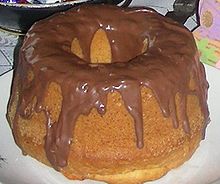
It is a spongy yeast cake that is traditionally baked for Easter Sunday in Poland, Lithuania, Slovakia, Belarus, Ukraine and Western Russia. Darra Goldstein, professor of Russian at Williams College says "babka comes from baba, a very tall, delicate yet rich yeast-risen cake eaten in Western Russia and Eastern Poland."[1] Traditional babka has some type of fruit filling, especially raisins, and is glazed with a fruit-flavored icing, sometimes with rum added. Modern babka may be chocolate or have a cheese filling.
Jelly bean

Jelly beans are a type of confectionery that comes in many different (primarily fruit) flavors. They are small (the size of a red kidney bean or smaller) and generally have a hard candy shell and gummy interior. The confection is primarily made of sugar.
Simnel cake
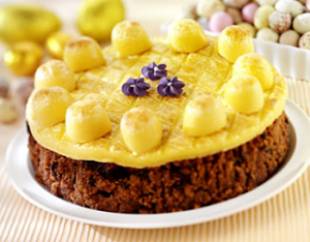
Simnel cake is a light fruit cake, similar to a Christmas cake, covered in marzipan, and eaten during Lent or at Easter in Great Britain, Ireland and some other countries. A layer of marzipan or almond paste is also baked into the middle of the cake. On the top of the cake, around the edge, are eleven marzipan balls to represent the true disciples of Jesus; Judas is omitted. In some variations Christ is also represented, by a ball placed at the centre.
Pizzelle

Pizzelle (pronounced with ts sound, like "pizza") (singular pizzella) are traditional Italian waffle cookies made from flour, eggs, sugar, butter or vegetable oil, and flavoring (often vanilla, anise, or lemon zest). Pizzelle can be hard and crisp or soft and chewy depending on the ingredients and method of preparation.
A Word to the people who don't believe in Easter. Don't waste your breath arguing over this. This post is strictly to people who admires other cultures/religions and thier traditions.
Happy Easter to you all!
Easter is the time for holidays, festivals and a time for giving chocolate Easter eggs. But Easter means much more....
Easter is the oldest and the most important Christian Festival, the celebration of the death and coming to life again of Jesus Christ. For Christians, the dawn of Easter Sunday with its message of new life is the high point of the Christian year.
The story Behind
Easter is the story of Jesus' last days in Jerusalem before his death.The Easter story includes Maundy Thursday (the Last supper leading to the Eucharist), Good Friday (the day on which Jesus was crucified) and Easter Day (the day on which Jesus came back to life).
It is a sad story (that's why people wear black when they attend the Good friday service) because Jesus was killed. But the story has a very happy ending(well you all know what this means
), because Jesus came back to life and visited his friends and followers once more. He did not die at all, but went back up to Heaven to be with God, his father.Why they call it "Easter" ?
Pagan traditions give us the English word "Easter" which comes from the word "Eostre". The Anglo-Saxon word for April was "Eostre-monath" (the month of openings). However, it should be remembered that Christians celebrated the resurrection of Christ long before the word "Easter" was used, and the word they used for the celebration was "Pascha", which is derived from and linked to the Jewish festival of Passover.
According to Bede, the English monastic historian, the English word Easter comes from the Anglo-Saxon name for the month of April, which was known as "Eostremonath" in the AngloSaxon tongue and since Pascha was most often celebrated in Eostremonath, the English Christians began calling it "Easter". Bede also notes that the month was named after the Anglo-Saxon goddess Esostre.
Rituals related to the goddess Eostre focus on new beginnings, symbolized by the Easter egg, and fertility, which is symbolized by the hare (or Easter bunny).
When is Easter?
Easter usually comes in the month of April. However, Easter can fall as early as March 22 or as late as April 25. Easter Day in 2010 falls on Sunday 4 April.
What happened on Easter Sunday?
It was on Easter Sunday that Jesus rose from death. Jesus had told his disciples before he was arrested that he would be crucified and on the third day he would rise from the dead. Sunday was the third day from Good Friday (Good Friday, Holy Saturday, Easter Day). The second day after Good Friday.
What has Passover(Jewish festival) got to do with Easter?
Easter and Passover always fall close to each other but they are not always at exactly the same time.
For many centuries before Jesus' birth, the Jewish people had their own special spring festival, called Passover (Pesach).
Passover commemorates the time when God rescued the people of Israel from slavery and Moses led them out of Egypt. It is the Israelite's liberation from Egypt that led to the beginning of Judaism.
Jesus, a Jew, was crucified during Passover time and it is said that the Last Supper was a Passover seder (a ritual meal that commemorates the Biblical accounting of the Jews escape from Egyptian slavery). It is Jesus' crucifixion and resurrection that led to the start of Christianity.
Both Easter and Passover revolve around the idea of rebirth. Jesus is resurrected, or born again, and the slaves are reborn into freedom. Both festivals draw in the idea of birth or rebirth with Easter eggs and the hard-boiled eggs served on Passover.
What is Lent and what we do during Lent?
Lent is a Christian Festival. In the past it was a long, strict religious fast when people gave up all rich food. The day before Lent starts is known as Shrove Tuesday.The Christian church no longer imposes a strict fast. Lent is a time when some Christians try to overcome their own faults because they believe that it was man's sin which led Jesus to be crucified.
Some Christians try to follow the example of Jesus in the desert by giving up luxuries and practising self-discipline. And they try to put aside more time to prayer and religious acts so that they can really let God into their lives.
Lent begins with Ash Wednesday and lasts for six and a half weeks.
Traditional foods
Now for the best part mmmmmmmm.
Hot cross buns

A hot cross bun, or cross-bun,[1] is a type of sweet spiced bun made with currants or raisins and leavened with yeast. It has a cross marked on the top which might be effected in one of a variety of ways including: pastry, flour and water mixture, rice paper, icing, or intersecting cuts.
Babka
It is a spongy yeast cake that is traditionally baked for Easter Sunday in Poland, Lithuania, Slovakia, Belarus, Ukraine and Western Russia. Darra Goldstein, professor of Russian at Williams College says "babka comes from baba, a very tall, delicate yet rich yeast-risen cake eaten in Western Russia and Eastern Poland."[1] Traditional babka has some type of fruit filling, especially raisins, and is glazed with a fruit-flavored icing, sometimes with rum added. Modern babka may be chocolate or have a cheese filling.
Jelly bean

Jelly beans are a type of confectionery that comes in many different (primarily fruit) flavors. They are small (the size of a red kidney bean or smaller) and generally have a hard candy shell and gummy interior. The confection is primarily made of sugar.
Simnel cake
Simnel cake is a light fruit cake, similar to a Christmas cake, covered in marzipan, and eaten during Lent or at Easter in Great Britain, Ireland and some other countries. A layer of marzipan or almond paste is also baked into the middle of the cake. On the top of the cake, around the edge, are eleven marzipan balls to represent the true disciples of Jesus; Judas is omitted. In some variations Christ is also represented, by a ball placed at the centre.
Pizzelle

Pizzelle (pronounced with ts sound, like "pizza") (singular pizzella) are traditional Italian waffle cookies made from flour, eggs, sugar, butter or vegetable oil, and flavoring (often vanilla, anise, or lemon zest). Pizzelle can be hard and crisp or soft and chewy depending on the ingredients and method of preparation.
A Word to the people who don't believe in Easter. Don't waste your breath arguing over this. This post is strictly to people who admires other cultures/religions and thier traditions.
Happy Easter to you all!


 thankx bro


