

Latest ads
-
BlackWall V2ray servers
- hu KANNA
- Updated:
-
 Peppa Pig Family Plush Toy Set – 5 Characters
- anil1961
- Updated:
-
Express VPN PC - 1 Year Rs. 600.00
- Sanathbh
- Updated:
-
Capcut Pro 7 Days Team Plan - Rs. 3️⃣0️⃣0️⃣
- Sanathbh
- Updated:
-
 Singapore V2ray VPN for Tunneling
- hu KANNA
- Updated:
You are using an out of date browser. It may not display this or other websites correctly.
You should upgrade or use an alternative browser.
You should upgrade or use an alternative browser.
ya Chevele cums under indie ne...Samdpth said:machan INDIE Rock me list eke neda?
max list 1k machan thanx.


unknown said:Yup.. machan, me too..faced this problem..but i got this from a site.. an da thing is this s old chart..also i have seen Cradle several times in documentaries under Norwegian Black Metal...
N Viking /pagan Metal... trust me i haven't heard f..gimme some examples if u can.
Viking Metal is Metal Music based on Pagan Religions & the way of life led by Vikings before the introduction of Christianity in countries like Sweden, Denmark, Finland & Norway. If U've read the Davinchi Code u may know what characteristics these pagan religions had... u know like..more in harmony with nature & stuff..The catholic church completely destroyed these religions and burned anyone who believed in them when they were trying to establish Christianity (Ex- burning Witches, calling the pentagon (Star) symbol which is a paganism symbol, the sign of the devil, ect...)..this is also why the Scandinavian countries r producing the real deal when it comes to unti-church/Christian metal I think...
Remember the lovely music u heard in Robin hood ? (The TV series way back.)..well imagine the same soothing music incorporated with Metal...& songs talking about days gone past & pagan beliefs, ect. ...combine all this elements & u get Pagan/Viking Metal
These 2 are my fav bands of this genre -
Ensiferum

Enslaved
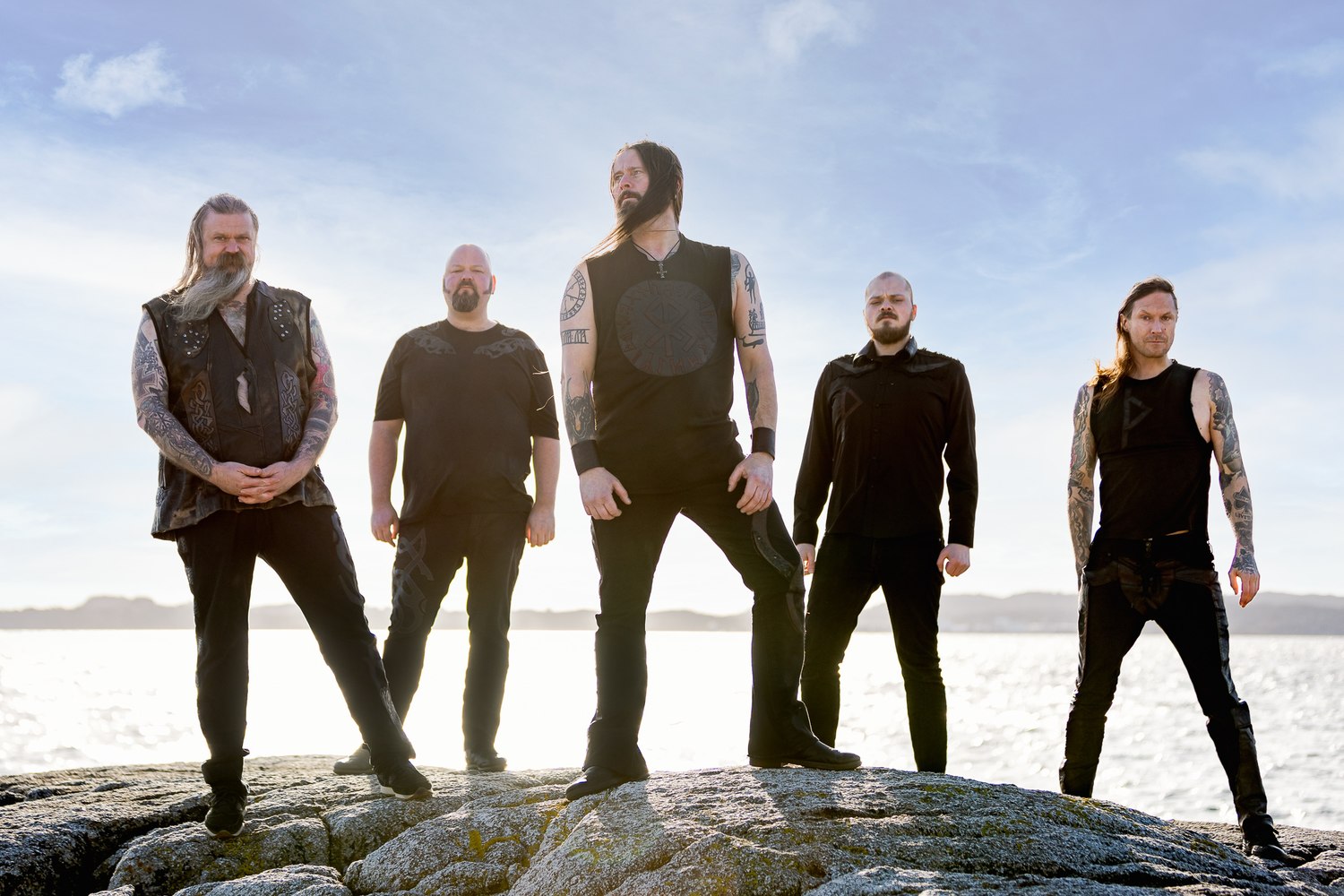
more in to progressive metal nw though..
Last edited:
DJ.Parker said:@ earthling:
as far as i know theres no such thing as viking metal
pagon metal ur mentioning is abt power metal I guess
DJ.Parker>> Nope.. I've been listening to this genre for some time now. Started with Ensiferum & then moved to the rest...Checkout the above mentioned bands to get a feel of this awsome genre..also if u wanna listen to something different checkout 'Dark Forest'..they are in a sub-genere called Heathen Metal..think its just another name for Pagan MEtal I guess...

Anyway checkout these bands...specially Ensiferum..Maxaaaaaaaa


God Bless To All
 When u talk to some one make sure he or she talks to u for good perpose.. then only that wil some day tend to a close relationship
by samith meehallege
When u talk to some one make sure he or she talks to u for good perpose.. then only that wil some day tend to a close relationshipby samith meehallege
moonlight said:thnx a lot
when u say "u r welcome" makes no sence if u say "my plesure" that'll tend to a very good accnowlagement

earthling said:DJ.Parker>> Nope.. I've been listening to this genre for some time now. Started with Ensiferum & then moved to the rest...Checkout the above mentioned bands to get a feel of this awsome genre..also if u wanna listen to something different checkout 'Dark Forest'..they are in a sub-genere called Heathen Metal..think its just another name for Pagan MEtal I guess...
Anyway checkout these bands...specially Ensiferum..Maxaaaaaaaa
I checked out Ensiferum...
they r more like folk metal but I like them since it sounds great when metal fusions with folk music
The pentacle represents the integration of body and spirit, and the spiritual mastery of the four elements.....any idea why anti christ bands use it with inverted cross?earthling said:Viking Metal is Metal Music based on Pagan Religions & the way of life led by Vikings before the introduction of Christianity in countries like Sweden, Denmark, Finland & Norway. If U've read the Davinchi Code u may know what characteristics these pagan religions had... u know like..more in harmony with nature & stuff..The catholic church completely destroyed these religions and burned anyone who believed in them when they were trying to establish Christianity (Ex- burning Witches, calling the pentagon (Star) symbol which is a paganism symbol, the sign of the devil, ect...)..this is also why the Scandinavian countries r producing the real deal when it comes to unti-church/Christian metal I think...
Last edited:
DJ.Parker said:The pentacle represents the integration of body and spirit, and the spiritual mastery of the four elements.....any idea why anti christ bands use it with inverted cross?
As far as I know The Pagans used it to represent the 5 elements. Earth, Air, Fire, Water, and Spirit. The circling ring is to signify the connection we all have, or in short That all these elements are tied together. (Makes sense I think)
I think it does not signify Satan in anyway. I've read that even the image of devil..The dude with the 2 Horns was actually a pagan God, which the church took & tired to show as the image of evil in its crushing pagan religions campaigns.
To Answer your question I have 2 views.. one is that Because the true Black metal bands knows about the history of the pentacle & how it was tarnished by the church, uses it with an inverted cross to signify How one symbol/Faith was destroyed & twisted so that another faith could be forced upon people (remember that the Pentacle is probably the most important symbol in paganism religions signifying their beliefs).. and the inverted Cross symbolizes that Christianity's past Evil deeds ???????

Also have heard that the Pentacle is also used to represent the 5 wounds of Christ (Stigmata). So an inverted cross & a pentacle represents the unti-Christ ???

But my 2nd view may be the most probable..as most (Think Hollywood made this official in almost all their movies) every one thinks that pentacle represents saten..So an inverted cross & a pentacle means the buggers are trying to show they are a kick as Satanist Band..
Last edited:
I found this awesome article about the Pentacle Symbol..Hope this helps to anyone who iis interested in these things... and clear up any misconceptions.. a bit long but written in such a way that anyone could understand..
The pentacle: Clearing up misconceptions about the Pentacle & Paganism
Many people confuse the Pentacle with Satanism; nothing could be further from the truth.
The numerous Pagan faiths and Satanism do use the Pentacle as a symbol, however Satanism inverses the position of the symbol. This may not seem significant to a Christian; however, consider what the Nazi adoption of the Hindu Swastika did for the perception of that symbol.
More to the point, the Satanic adoption of the Pentacle is the fault of the Christians. You see, the Pentacle also was once a Christian symbol.
In the early era of Christianity, it was common practice for the Church to adopt (or 'baptize') Pagan symbols, so that new converts might be allowed to keep their totems, holidays, and practices as members of the new religion. For example, the Christmas Tree (were there pines in Bethlehem?), May Day, and even Christmas Day itself (the Bible tells us that Jesus was born in the Spring, but late December celebrates the return of the Sun/Son). So too was it with the Pentacle. It was decreed by the Church that it should come to represent the five wounds of Christ.
Later, in the middle ages, many Popes began to break from the old ways, considering some certain items of Pagan origin to be unclean (S'atan - Arabic for enemy of God. Arabic itself was considered an 'unclean' language, so was used to describe items and practices affiliated with what the Popes believed to be artifacts of anti-Christian sentiment). Thus 'Satanic', in this sense, means 'banned from the Church'.
In this way, the Church literally handed the Pentacle off to the Satanists. So, to put things in perspective, it is Satanism that has its roots in the ancient Pagan faiths, not the other way around.
People, and their symbols, beliefs, and ways of worship, were assimilated into the growing Christian faith, then cut loose a few centuries later. Satanism began, among other reasons, because of this early schism. Certain ideas were cast out of the faith, and their adherents along with them. Pagan -> Christian -> Satanic.
However, it should be noted, in all fairness, that the chief difference between Satanism and Christianity today (for the most part) is that Christians believe Jesus should be worshiped, while Satanists believe that Jesus should be followed ('You cannot walk along beside Me if you won't rise up from your knees'). In this, the primary respect, Satanists are more Christian than the Christians. They exhibit the traits of tolerance, forgiveness, and love for mankind - all of Jesus's core messages. The Church, on the other hand, is the opposite, full of 'unforgivable sin' and damnation for independent thought.
Satanism is largely a return to Paganism, but filtered through the Church. Neo-Paganism, the modern Pagan movement, seeks to reclaim that which came before the Church started the whole mess to begin with.
Wicca, as a specific branch of Paganism, draws its roots from the Celtic faith. Wicca, as many know, means 'Wise One' in the ancient tongue, and has nothing to do with other European beliefs any more than the followers of Thor could be considered Islamic.
Wicca's origins come from the era just after the arrival of the Christian 'Missionaries', who slaughtered the Celtic Druids (some say the massacre was because the Christians couldn't win a civilized debate against them). Left without their spiritual guides, the Celts turned to the next best resource; the tribe Wise Ones, who understood many of the Druidic ways, and served as best they could. This coincides with the modern divide in Wicca: not all Wise Ones agreed on the methods and reasons for various ceremonies and holidays, which evolved into a divide in the root belief behind those things.
So, in the end, Wicca and Satanism share one item above all in common: they are both a result of sinful acts of the Christian Church, in its refusal to embrace the Word of the one they call 'Savior', and exhibit the love of all mankind he was best known for. It was this ignorant intolerance that directly led to the formation of both faiths, who, in the ultimate irony, now embrace those very qualities that Jesus preached, and his own Church lacks.
In the end, there is one thing that they really do have in common, which is absolutely banned from the Christian Church: these faiths actually follow in Christ's footsteps.
By Bryan Belrad
The pentacle: Clearing up misconceptions about the Pentacle & Paganism
Many people confuse the Pentacle with Satanism; nothing could be further from the truth.
The numerous Pagan faiths and Satanism do use the Pentacle as a symbol, however Satanism inverses the position of the symbol. This may not seem significant to a Christian; however, consider what the Nazi adoption of the Hindu Swastika did for the perception of that symbol.
More to the point, the Satanic adoption of the Pentacle is the fault of the Christians. You see, the Pentacle also was once a Christian symbol.
In the early era of Christianity, it was common practice for the Church to adopt (or 'baptize') Pagan symbols, so that new converts might be allowed to keep their totems, holidays, and practices as members of the new religion. For example, the Christmas Tree (were there pines in Bethlehem?), May Day, and even Christmas Day itself (the Bible tells us that Jesus was born in the Spring, but late December celebrates the return of the Sun/Son). So too was it with the Pentacle. It was decreed by the Church that it should come to represent the five wounds of Christ.
Later, in the middle ages, many Popes began to break from the old ways, considering some certain items of Pagan origin to be unclean (S'atan - Arabic for enemy of God. Arabic itself was considered an 'unclean' language, so was used to describe items and practices affiliated with what the Popes believed to be artifacts of anti-Christian sentiment). Thus 'Satanic', in this sense, means 'banned from the Church'.
In this way, the Church literally handed the Pentacle off to the Satanists. So, to put things in perspective, it is Satanism that has its roots in the ancient Pagan faiths, not the other way around.
People, and their symbols, beliefs, and ways of worship, were assimilated into the growing Christian faith, then cut loose a few centuries later. Satanism began, among other reasons, because of this early schism. Certain ideas were cast out of the faith, and their adherents along with them. Pagan -> Christian -> Satanic.
However, it should be noted, in all fairness, that the chief difference between Satanism and Christianity today (for the most part) is that Christians believe Jesus should be worshiped, while Satanists believe that Jesus should be followed ('You cannot walk along beside Me if you won't rise up from your knees'). In this, the primary respect, Satanists are more Christian than the Christians. They exhibit the traits of tolerance, forgiveness, and love for mankind - all of Jesus's core messages. The Church, on the other hand, is the opposite, full of 'unforgivable sin' and damnation for independent thought.
Satanism is largely a return to Paganism, but filtered through the Church. Neo-Paganism, the modern Pagan movement, seeks to reclaim that which came before the Church started the whole mess to begin with.
Wicca, as a specific branch of Paganism, draws its roots from the Celtic faith. Wicca, as many know, means 'Wise One' in the ancient tongue, and has nothing to do with other European beliefs any more than the followers of Thor could be considered Islamic.
Wicca's origins come from the era just after the arrival of the Christian 'Missionaries', who slaughtered the Celtic Druids (some say the massacre was because the Christians couldn't win a civilized debate against them). Left without their spiritual guides, the Celts turned to the next best resource; the tribe Wise Ones, who understood many of the Druidic ways, and served as best they could. This coincides with the modern divide in Wicca: not all Wise Ones agreed on the methods and reasons for various ceremonies and holidays, which evolved into a divide in the root belief behind those things.
So, in the end, Wicca and Satanism share one item above all in common: they are both a result of sinful acts of the Christian Church, in its refusal to embrace the Word of the one they call 'Savior', and exhibit the love of all mankind he was best known for. It was this ignorant intolerance that directly led to the formation of both faiths, who, in the ultimate irony, now embrace those very qualities that Jesus preached, and his own Church lacks.
In the end, there is one thing that they really do have in common, which is absolutely banned from the Christian Church: these faiths actually follow in Christ's footsteps.
By Bryan Belrad
Last edited:


