


Tea, tuk-tuks and homestays: How this 300 km walking trail is empowering the women of Sri Lanka

By Hannah Brown
Published on 08/08/2023 - 07:00•Updated 10/10/2023 - 10:01
The first of the Pekoe Trail’s 22 segments was opened in 2021, shining a light on life in Sri Lanka’s tea estates.
Most countries have their own iconic, national walking trail. But for a long time, despite its stunning nature and plethora of tourist offerings, Sri Lanka didn’t.
Adventurer and travel specialist Miguel Cunat decided to change that by creating the Pekoe Trail.
The route takes walkers through the country’s tea plantations and hillside communities. Though the paths themselves have been used for years by locals, the creation of the trail has now mapped, signposted and maintained them.
The Pekoe trail is an incredible new tourist offering but it’s also helping to change the lives of locals.
What is the Pekoe Trail?
The Pekoe trail is a 300 km walking route through the island of Sri Lanka. It was developed through the Tourism Resilience Project with funding from the European Union and the U.S. Agency for International Development.The trail is broken up into 22 sections, averaging around 12 km each, so whether you’re looking for a day hike or a multi-day expedition, there’s something to suit everyone.
“The beauty of it is that within the same trail, everything changes so much because you're going through tea plantations, pine forests and eucalyptus forests,” Thushni de Silva, experience manager at Experience Travel Group tells Euronews Travel.
“We go through main attractions like Ella Rock or the Nine Arch Bridge and you cross paddy fields, which you don't really expect when you're in tea country.
“You've got so much going on that you don't expect when you're exploring these areas.”
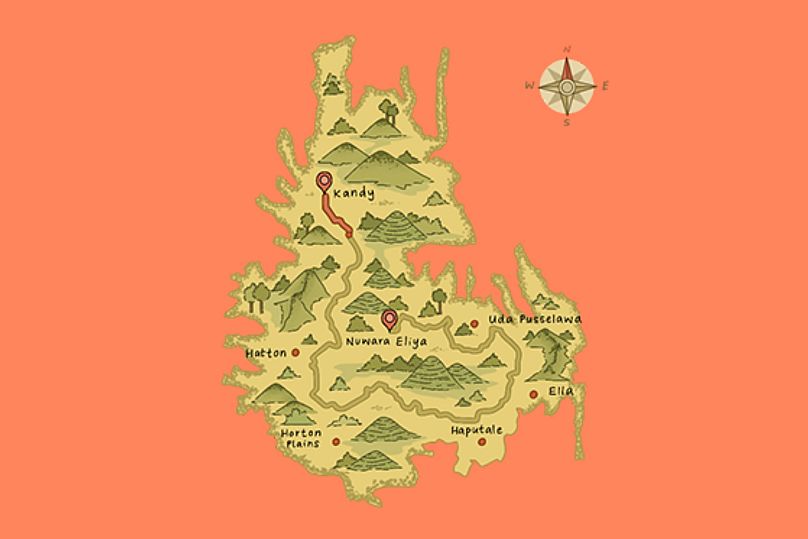
The trail starts in the famous city of Kandy and heads south towards Hatton and Horton Plains National Park. It then heads east through Haputale and Ella before looping around and finishing in the beautiful city of Nuwara Eliya.
- Scenic trails and cheap travel: This eastern European mountain town is a budget hiker’s paradise
- This Sri Lankan eco-hotel is helping to protect the country's endangered wildlife
Who is the Pekoe Trail suitable for?
There are sections of the Pekoe Trail that are suitable for all ages and abilities.“Some people think I'm really fit because I do it, but actually I do it despite the fact that I'm not fit,” laughs Thushni.
“Three years ago, I was genuinely bedridden, unable to walk and now I'm here doing these trails and having done most of them. It's just about knowing which ones suit which person best.”

Some trails follow the path of an old cartway or along a railway line meaning they’re usually easy, flat terrain. Other routes which may be a steep uphill climb, can always be reversed into a downhill walk if you’re not confident in your fitness.
But it’s not just about fitness. When choosing which trails you’re going to do, you might also need to consider how comfortable you are with walking next to steep drops.
There’s one trail in particular which springs to Thushni’s mind. Popular with train enthusiasts, this route is a really easy path which goes along a railway track and through a tunnel before climbing up a hill to walk parallel with the line.
“It's one of the easiest but we can't sell it to everyone because when you're climbing up parallel, you're at the edge of it, and then it goes down to the railway line, straight down. It's a narrow pathway that goes right along the edge,” she explains.
- Explore ‘the most spectacular landscape on the continent’: Romania’s answer to El Camino de Santiago
What is the best way to explore the Pekoe Trail?
In short, with a guide. While the route is fairly new and its peaceful atmosphere is a real selling point, it does mean that sometimes you can go for hours without seeing another person.“God forbid if someone falls and sprains their ankle and you're alone, someone needs to backtrack and you need a lot of local knowledge,” explains Thushni.
“It could be a really dry day on that date. But if it rained for a week before that, some of those paths would not be accessible and you need someone who knows.”
Not only will you be keeping yourself safe but by walking with a local guide, you’re also helping to support the area and bring money to small communities.
Thushni says that the creation of the Pekoe trail has allowed local people to create businesses where there were none before - guiding, shops, homestays and tuk-tuk drivers.
“No one ever bothered to come that way before so there was no need for a shop. But now there are people,” she adds.


