


In social anthropology, polygamy is the practice of a person's making him/herself available for two or more spouses to mate with. Polygamy can be practiced as polygyny (one man having more than one wife), or as polyandry (one woman having more than one husband), or, less commonly as group marriage (a marriage which includes multiple husbands and wives). (See "Forms of Polygamy" below.) In contrast, monogamy is a marriage consisting of only two parties. Like monogamy, the term is often used in a de facto sense, applying regardless of whether the relationships are recognized by the state (see marriage for a discussion on the extent to which states can and do recognize potentially and actually polygamous forms as valid). In sociobiology, polygamy is used in a broad sense to mean any form of multiple mating. In a narrower sense, used by zoologists, polygamy includes a pair bond, perhaps temporary. In popular speech, polygamy is often mistakenly assumed to refer to polygyny alone rather than including the other forms, as more polygamous relationships in human history have been polygynous
AND Buddhism
In Buddhism, marriage is not a sacrament. It is purely a secular affair and the monks do not participate in it. Hence it receives no religious sanction.[9] Forms of marriage consequently vary from country to country. It is said in the Parabhava Sutta that "a man who is not satisfied with one woman and seeks out other women is on the path to decline". Other fragments in the Buddhist scripture can be found that seem to treat polygamy unfavorably, leading some authors to conclude that Buddhism generally does not approve of it[10] or alternatively that it is a tolerated, but subordinate marital model.[11]
Until 1935 polygyny was legally recognized in Thailand. In Burma, polygyny was also frequent. It is still legally recognized but very rarely practiced in modern day and socially less acceptable.[citation needed] In Sri Lanka, polyandry was practiced (though not widespread) till recent times.[9] When the Buddhist texts were translated into Chinese, the concubines of others were added to the list of inappropriate partners. Polyandry in Tibet as well was common traditionally, as was polygyny, and having several wives or husbands was never regarded as having sex with inappropriate partners.[12] Tibet is home to the largest and most flourishing polyandrous community in the world today. Most typically, fraternal polyandry is practiced, but sometimes father and son have a common wife, which is a unique family structure in the world. Other forms of marriage are also present, like group marriage and monogamous marriage.[13] Polyandry (especially fraternal polyandry) is also common among Buddhists in Bhutan, Ladakh, and other parts of the Indian subcontinent.
The 2008 BBC documentary series "A Year in Tibet", recorded three distinct cases of polyandry in and around the city of Gyantse alone (the pregnant farmer's wife in episode 1, "The Visit"; Yangdron in episode 2, "Three Husbands and a Wedding"; and the young monk, Tsephun's, mother in episode 5, "A Tale of Three Monks"). In "Three Husbands and a Wedding", a 17-year-old girl is also shown being forced into a marriage that would have been polyandrous, except that the younger, 12-year-old, brother had to attend school on the wedding day (his parents hint that he will marry his older brother's new wife at a later date). The programs include statements from the women involved that indicate they did not enter the polyandrous marriages willingly, and commentary that indicates young women in Tibet are routinely forced by their families into polyandrous marriages with two or more brothers.
In Srilanka
While polygamy is illegal in Sri Lanka, similar to the situation in India, Muslim men to take up to four wives, as Islam allows for such. Despite such exceptions, it has been reported that very few Muslim Sri Lankans, who make up 7% of the mostly-Buddhist country (at 70%), have taken multiple wives. Like most countries that allow for polygamous unions or the contraction to some degree, the husband must notify his first wife prior to taking a second, third, or fourth.
Polygamy Map
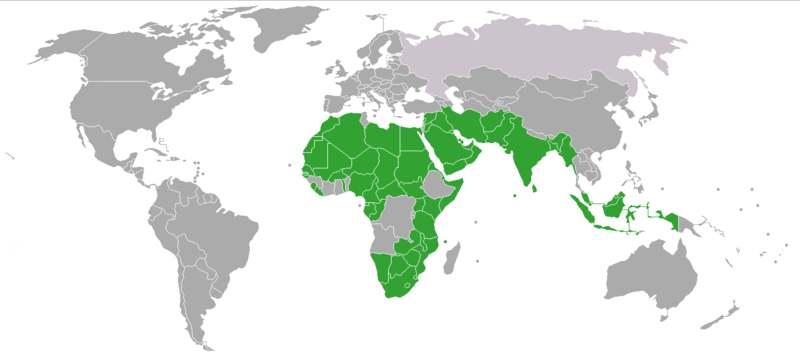
Please Note that US part was removed by author
but actually there used to be in Mormon religion


Mormon and Polygamy
Polygamy (called plural marriage or the Principle within Mormonism) was a defining characteristic of early Mormonism, and continues to be the defining characteristic of Mormon fundamentalism. The practice of polygamy was instituted in the 1830s by founder Joseph Smith, Jr., and was a contributing factor leading to his 1844 assassination. It was also a factor in the 1857 invasion of Utah by the United States Army, and was the cause of an intense legal conflict during the late 1800s, culminating in the temporary legal dissolution of The Church of Jesus Christ of Latter-day Saints (LDS Church) and its institutions. The LDS Church officially abandoned the practice in 1890. That year the president of the United States declared polygamy illegal.[citation needed] Since 1890, members of the LDS Church who are found practicing or promoting polygamy are excommunicated.
Today, the practice of plural marriage continues among tens of thousands of Mormon fundamentalists, mostly in the western United States, Canada, and Mexico, where it is generally illegal. However,
practitioners are almost never prosecuted unless there is evidence of abuse, statutory rape, welfare fraud, or tax evasion. Mormon fundamentalists believe that plural marriage where a man has more than one wife is a requirement for obtaining the Celestial kingdom.[citation needed]
What is Mormon (Latter Day Saint movement)
Mormonism comprises the religious, institutional, and cultural elements of the most populous branch of the Latter Day Saint movement. This movement was founded by Joseph Smith, Jr. in the 1830s and 1840s, and Mormonism represents the branch of that movement led by Brigham Young after Smith's death. This is sometimes called the "Brighamite" branch of the faith. Mormonism is most closely associated with The Church of Jesus Christ of Latter-day Saints (LDS Church), which is by far the largest denomination of the Latter Day Saint movement. Mormonism also includes Mormon fundamentalism, a tradition that continued to practice plural marriage after the LDS Church discontinued the practice around the turn of the 20th century.[1] Mormonism further includes a few small sects that broke from the LDS Church in order to pursue a more liberal religious path. Non-"Brighamite" traditions within the Latter Day Saint movement, such as the Community of Christ, generally disavow the term Mormonism.
The term Mormonism derived from the Book of Mormon, the faith's earliest religious text in addition to the Bible. Based on the name of that book, early followers of founder Joseph Smith, Jr. were called Mormons, and their faith was called Mormonism. The term was initially considered pejorative,[2] but is no longer considered so by Mormons.
Mormon theology is a form of restorationism that shares a common set of beliefs with the rest of the Latter Day Saint movement, including use of the Bible, as well as other religious texts including the Book of Mormon and Doctrine and Covenants. It differs from other Latter Day Saint movement traditions in that it also accepts the Pearl of Great Price as part of its canon, and it has a history of teaching plural marriage (although the Church of Jesus Christ of Latter-day Saints had abandoned the practice by the early 20th century), eternal marriage, and eternal progression. Cultural Mormonism includes a lifestyle promoted by the Mormon institutions, and includes cultural Mormons who identify with the culture, but not necessarily the theology.
List of the wives of Joseph Smith, Jr.
(the Creator of Mormon Religion)

Most historians agree that Joseph Smith, Jr., the founder of the Latter Day Saint movement, taught and practiced polygamy during his ministry, and married several dozen women during his lifetime, even though Smith, and the leading quorums of his church, publicly denied he taught or practiced it

Joseph F. Smith family
Notice A LARGE Family
AND Buddhism
In Buddhism, marriage is not a sacrament. It is purely a secular affair and the monks do not participate in it. Hence it receives no religious sanction.[9] Forms of marriage consequently vary from country to country. It is said in the Parabhava Sutta that "a man who is not satisfied with one woman and seeks out other women is on the path to decline". Other fragments in the Buddhist scripture can be found that seem to treat polygamy unfavorably, leading some authors to conclude that Buddhism generally does not approve of it[10] or alternatively that it is a tolerated, but subordinate marital model.[11]
Until 1935 polygyny was legally recognized in Thailand. In Burma, polygyny was also frequent. It is still legally recognized but very rarely practiced in modern day and socially less acceptable.[citation needed] In Sri Lanka, polyandry was practiced (though not widespread) till recent times.[9] When the Buddhist texts were translated into Chinese, the concubines of others were added to the list of inappropriate partners. Polyandry in Tibet as well was common traditionally, as was polygyny, and having several wives or husbands was never regarded as having sex with inappropriate partners.[12] Tibet is home to the largest and most flourishing polyandrous community in the world today. Most typically, fraternal polyandry is practiced, but sometimes father and son have a common wife, which is a unique family structure in the world. Other forms of marriage are also present, like group marriage and monogamous marriage.[13] Polyandry (especially fraternal polyandry) is also common among Buddhists in Bhutan, Ladakh, and other parts of the Indian subcontinent.
The 2008 BBC documentary series "A Year in Tibet", recorded three distinct cases of polyandry in and around the city of Gyantse alone (the pregnant farmer's wife in episode 1, "The Visit"; Yangdron in episode 2, "Three Husbands and a Wedding"; and the young monk, Tsephun's, mother in episode 5, "A Tale of Three Monks"). In "Three Husbands and a Wedding", a 17-year-old girl is also shown being forced into a marriage that would have been polyandrous, except that the younger, 12-year-old, brother had to attend school on the wedding day (his parents hint that he will marry his older brother's new wife at a later date). The programs include statements from the women involved that indicate they did not enter the polyandrous marriages willingly, and commentary that indicates young women in Tibet are routinely forced by their families into polyandrous marriages with two or more brothers.
In Srilanka
While polygamy is illegal in Sri Lanka, similar to the situation in India, Muslim men to take up to four wives, as Islam allows for such. Despite such exceptions, it has been reported that very few Muslim Sri Lankans, who make up 7% of the mostly-Buddhist country (at 70%), have taken multiple wives. Like most countries that allow for polygamous unions or the contraction to some degree, the husband must notify his first wife prior to taking a second, third, or fourth.
Polygamy Map
Please Note that US part was removed by author
but actually there used to be in Mormon religion


Mormon and Polygamy
Polygamy (called plural marriage or the Principle within Mormonism) was a defining characteristic of early Mormonism, and continues to be the defining characteristic of Mormon fundamentalism. The practice of polygamy was instituted in the 1830s by founder Joseph Smith, Jr., and was a contributing factor leading to his 1844 assassination. It was also a factor in the 1857 invasion of Utah by the United States Army, and was the cause of an intense legal conflict during the late 1800s, culminating in the temporary legal dissolution of The Church of Jesus Christ of Latter-day Saints (LDS Church) and its institutions. The LDS Church officially abandoned the practice in 1890. That year the president of the United States declared polygamy illegal.[citation needed] Since 1890, members of the LDS Church who are found practicing or promoting polygamy are excommunicated.
Today, the practice of plural marriage continues among tens of thousands of Mormon fundamentalists, mostly in the western United States, Canada, and Mexico, where it is generally illegal. However,
practitioners are almost never prosecuted unless there is evidence of abuse, statutory rape, welfare fraud, or tax evasion. Mormon fundamentalists believe that plural marriage where a man has more than one wife is a requirement for obtaining the Celestial kingdom.[citation needed]
What is Mormon (Latter Day Saint movement)
Mormonism comprises the religious, institutional, and cultural elements of the most populous branch of the Latter Day Saint movement. This movement was founded by Joseph Smith, Jr. in the 1830s and 1840s, and Mormonism represents the branch of that movement led by Brigham Young after Smith's death. This is sometimes called the "Brighamite" branch of the faith. Mormonism is most closely associated with The Church of Jesus Christ of Latter-day Saints (LDS Church), which is by far the largest denomination of the Latter Day Saint movement. Mormonism also includes Mormon fundamentalism, a tradition that continued to practice plural marriage after the LDS Church discontinued the practice around the turn of the 20th century.[1] Mormonism further includes a few small sects that broke from the LDS Church in order to pursue a more liberal religious path. Non-"Brighamite" traditions within the Latter Day Saint movement, such as the Community of Christ, generally disavow the term Mormonism.
The term Mormonism derived from the Book of Mormon, the faith's earliest religious text in addition to the Bible. Based on the name of that book, early followers of founder Joseph Smith, Jr. were called Mormons, and their faith was called Mormonism. The term was initially considered pejorative,[2] but is no longer considered so by Mormons.
Mormon theology is a form of restorationism that shares a common set of beliefs with the rest of the Latter Day Saint movement, including use of the Bible, as well as other religious texts including the Book of Mormon and Doctrine and Covenants. It differs from other Latter Day Saint movement traditions in that it also accepts the Pearl of Great Price as part of its canon, and it has a history of teaching plural marriage (although the Church of Jesus Christ of Latter-day Saints had abandoned the practice by the early 20th century), eternal marriage, and eternal progression. Cultural Mormonism includes a lifestyle promoted by the Mormon institutions, and includes cultural Mormons who identify with the culture, but not necessarily the theology.
List of the wives of Joseph Smith, Jr.
(the Creator of Mormon Religion)

Most historians agree that Joseph Smith, Jr., the founder of the Latter Day Saint movement, taught and practiced polygamy during his ministry, and married several dozen women during his lifetime, even though Smith, and the leading quorums of his church, publicly denied he taught or practiced it

Joseph F. Smith family
Notice A LARGE Family


