

Latest ads
-
 House Plan
- lenura
- Updated:
-
 iphone x used
- AssassiN1
- Updated:
-
 කිතුල් තලප
- Manoj Suranga Bandara
- Updated:
-
 AWS Certified Solutions Architect-Associate + AWS Certified Cloud Practitioner
- Sanjeewani95
- Updated:
St. Francis Xavier or Thotagamuwe Sri Rahula Thero
- Thread starter rapa
- Start date
You are using an out of date browser. It may not display this or other websites correctly.
You should upgrade or use an alternative browser.
You should upgrade or use an alternative browser.

Novindu said:yakuneeee megana kathakarapallaaa.......... me ape hamuduruwoooo
ekane ko me ape DJ.Parker ?
Novindu said:ai bun kauruth mokuth kiyanne naththe? ubalata kakkumak nadda bola?
eka nee nam sihalune negitiv ya koooooooooooooooooo

ohoma bakan nilagena inna epooooooooooo


balapan ekekwath mukuthma kiyanne nahane......munta jathiya agama gana thiyana kakkuma thama ithn penneee.....rapa said:eka nee nam sihalune negitiv ya koooooooooooooooooo
ohoma bakan nilagena inna epooooooooooo
Novindu said:balapan ekekwath mukuthma kiyanne nahane......munta jathiya agama gana thiyana kakkuma thama ithn penneee.....
Hmmm.......

got this from the web...
Body eka lankawen genichcha kiyala tiyenawada? Couldnt find information on that...
St. Francis Xavier
tt=23
Born in the Castle of Xavier near Sanguesa, in Navarre, 7 April, 1506; died on the Island of Sancian near the coast of China, 2 December, 1552. In 1525, having completed a preliminary course of studies in his own country, Francis Xavier went to Paris, where he entered the collège de Sainte-Barbe. Here he met the Savoyard, Pierre Favre, and a warm personal friendship sprang up between them. It was at this same college that St. Ignatius Loyola, who was already planning the foundation of the Society of Jesus, resided for a time as a guest in 1529. He soon won the confidence of the two young men; first Favre and later Xavier offered themselves with him in the formation of the Society. Four others, Lainez, Salmerón, Rodríguez, and Bobadilla, having joined them, the seven made the famous vow of Montmartre, 15 Aug., 1534.
After completing his studies in Paris and filling the post of teacher there for some time, Xavier left the city with his companions 15 November, 1536, and turned his steps to Venice, where he displayed zeal and charity in attending the sick in the hospitals. On 24 June, 1537, he received Holy orders with St. Ignatius. The following year he went to Rome, and after doing apostolic work there for some months, during the spring of 1539 he took part in the conferences which St. Ignatius held with his companions to prepare for the definitive foundation of the Society of Jesus. The order was approved verbally 3 September, and before the written approbation was secured, which was not until a year later, Xavier was appointed, at the earnest solicitation of the John III, King of Portugal, to evangelize the people of the East Indies. He left Rome 16 March, 1540, and reached Lisbon about June. Here he remained nine months, giving many admirable examples of apostolic zeal.
On 7 April, 1541, he embarked in a sailing vessel for India, and after a tedious and dangerous voyage landed at Goa, 6 May, 1542. The first five months he spent in preaching and ministering to the sick in the hospitals. He would go through the streets ringing a little bell and inviting the children to hear the word of God. When he had gathered a number, he would take them to a certain church and would there explain the catechism to them. About October, 1542, he started for the pearl fisheries of the extreme southern coast of the peninsula, desirous of restoring Christanity which, although introduced years before, had almost disappeared on account of the lack of priests. He devoted almost three years to the work of preaching to the people of Western India, converting many, and reaching in his journeys even the Island of Ceylon. Many were the difficulties and hardships which Xavier had to encounter at this time, sometimes on account of the cruel persecutions which some of the petty kings of the country carried on against the neophytes, and again because the Portuguese soldiers, far from seconding the work of the saint, retarded it by their bad example and vicious habits.
In the spring of 1545 Xavier started for Malacca. He laboured there for the last months of that year, and although he reaped an abundant spiritual harvest, he was not able to root out certain abuses, and was conscious that many sinners had resisted his efforts to bring them back to God. About January, 1546, Xavier left Malacca and went to Molucca Islands, where the Portuguese had some settlements, and for a year and a half he preached the Gospel to the inhabitants of Amboyna, Ternate, Baranura, and other lesser islands which it has been difficult to identify. It is claimed by some that during this expedition he landed on the island of Mindanao, and for this reason St. Francis Xavier has been called the first Apostle of the Philippines. But although this statement is made by some writers of the seventeenth century, and in the Bull of canonization issued in 1623, it is said that he preached the Gospel in Mindanao, up to the present time it has not been proved absolutely that St. Francis Xavier ever landed in the Philippines.
By July, 1547, he was again in Malacca. Here he met a Japanese called Anger (Han-Sir), from whom he obtained much information about Japan. His zeal was at once aroused by the idea of introducing Christanity into Japan, but for the time being the affairs of the Society demanded his presence at Goa, whither he went, taking Anger with him. During the six years that Xavier had been working among the infidels, other Jesuit missionaries had arrived at Goa, sent from Europe by St. Ignatius; moreover some who had been born in the country had been received into the Society. In 1548 Xavier sent these missionaries to the principal centres of India, where he had established missions, so that the work might be preserved and continued. He also established a novitiate and house of studies, and having received into the Society Father Cosme de Torres, a spanish priest whom he had met in the Maluccas, he started with him and Brother Juan Fernández for Japan towards the end of June, 1549. The Japanese Anger, who had been baptized at Goa and given the name of Pablo de Santa Fe, accompanied them.
They landed at the city of Kagoshima in Japan, 15 Aug., 1549. The entire first year was devoted to learning the Japanese language and translating into Japanese, with the help of Pablo de Santa Fe, the principal articles of faith and short treatises which were to be employed in preaching and catechizing. When he was able to express himself, Xavier began preaching and made some converts, but these aroused the ill will of the bonzes, who had him banished from the city. Leaving Kagoshima about August, 1550, he penetrated to the centre of Japan, and preached the Gospel in some of the cities of southern Japan. Towards the end of that year he reached Meaco, then the principal city of Japan, but he was unable to make any headway here because of the dissensions the rending the country. He retraced his steps to the centre of Japan, and during 1551 preached in some important cities, forming the nucleus of several Christian communities, which in time increased with extraordinary rapidity.
After working about two years and a half in Japan he left this mission in charge of Father Cosme de Torres and Brother Juan Fernández, and returned to Goa, arriving there at the beginning of 1552. Here domestic troubles awaited him. Certain disagreements between the superior who had been left in charge of the missions, and the rector of the college, had to be adjusted. This, however, being arranged, Xavier turned his thoughts to China, and began to plan an expedition there. During his stay in Japan he had heard much of the Celestial Empire, and though he probably had not formed a proper estimate of his extent and greatness, he nevertheless understood how wide a field it afforded for the spread of the light of the Gospel. With the help of friends he arranged a commission or embassy the Sovereign of China, obtained from the Viceroy of India the appointment of ambassador, and in April, 1552, he left Goa. At Malacca the party encountered difficulties because the influential Portuguese disapproved of the expedition, but Xavier knew how to overcome this opposition, and in the autumn he arrived in a Portuguese vessel at the small island of Sancian near the coast of China. While planning the best means for reaching the mainland, he was taken ill, and as the movement of the vessel seemed to aggravate his condition, he was removed to the land, where a rude hut had been built to shelter him. In these wretched surroundings he breathed his last.
It is truly a matter of wonder that one man in the short space of ten years (6 May, 1542 - 2 December, 1552) could have visited so many countries, traversed so many seas, preached the Gospel to so many nations, and converted so many infidels. The incomparable apostolic zeal which animated him, and the stupendous miracles which God wrought through him, explain this marvel, which has no equal elsewhere. The list of the principal miracles may be found in the Bull of canonization. St. Francis Xavier is considered the greatest missionary since the time of the Apostles, and the zeal he displayed, the wonderful miracles he performed, and the great number of souls he brought to the light of true Faith, entitle him to this distinction. He was canonized with St. Ignatius in 1622, although on account of the death of Gregory XV, the Bull of canonization was not published until the following year. The body of the saint is still enshrined at Goa in the church which formerly belonged to the Society. In 1614 by order of Claudius Acquaviva, General of the Society of Jesus, the right arm was severed at the elbow and conveyed to Rome, where the present altar was erected to receive it in the church of the Gesu.
Body eka lankawen genichcha kiyala tiyenawada? Couldnt find information on that...
St. Francis Xavier
tt=23
Born in the Castle of Xavier near Sanguesa, in Navarre, 7 April, 1506; died on the Island of Sancian near the coast of China, 2 December, 1552. In 1525, having completed a preliminary course of studies in his own country, Francis Xavier went to Paris, where he entered the collège de Sainte-Barbe. Here he met the Savoyard, Pierre Favre, and a warm personal friendship sprang up between them. It was at this same college that St. Ignatius Loyola, who was already planning the foundation of the Society of Jesus, resided for a time as a guest in 1529. He soon won the confidence of the two young men; first Favre and later Xavier offered themselves with him in the formation of the Society. Four others, Lainez, Salmerón, Rodríguez, and Bobadilla, having joined them, the seven made the famous vow of Montmartre, 15 Aug., 1534.
After completing his studies in Paris and filling the post of teacher there for some time, Xavier left the city with his companions 15 November, 1536, and turned his steps to Venice, where he displayed zeal and charity in attending the sick in the hospitals. On 24 June, 1537, he received Holy orders with St. Ignatius. The following year he went to Rome, and after doing apostolic work there for some months, during the spring of 1539 he took part in the conferences which St. Ignatius held with his companions to prepare for the definitive foundation of the Society of Jesus. The order was approved verbally 3 September, and before the written approbation was secured, which was not until a year later, Xavier was appointed, at the earnest solicitation of the John III, King of Portugal, to evangelize the people of the East Indies. He left Rome 16 March, 1540, and reached Lisbon about June. Here he remained nine months, giving many admirable examples of apostolic zeal.
On 7 April, 1541, he embarked in a sailing vessel for India, and after a tedious and dangerous voyage landed at Goa, 6 May, 1542. The first five months he spent in preaching and ministering to the sick in the hospitals. He would go through the streets ringing a little bell and inviting the children to hear the word of God. When he had gathered a number, he would take them to a certain church and would there explain the catechism to them. About October, 1542, he started for the pearl fisheries of the extreme southern coast of the peninsula, desirous of restoring Christanity which, although introduced years before, had almost disappeared on account of the lack of priests. He devoted almost three years to the work of preaching to the people of Western India, converting many, and reaching in his journeys even the Island of Ceylon. Many were the difficulties and hardships which Xavier had to encounter at this time, sometimes on account of the cruel persecutions which some of the petty kings of the country carried on against the neophytes, and again because the Portuguese soldiers, far from seconding the work of the saint, retarded it by their bad example and vicious habits.
In the spring of 1545 Xavier started for Malacca. He laboured there for the last months of that year, and although he reaped an abundant spiritual harvest, he was not able to root out certain abuses, and was conscious that many sinners had resisted his efforts to bring them back to God. About January, 1546, Xavier left Malacca and went to Molucca Islands, where the Portuguese had some settlements, and for a year and a half he preached the Gospel to the inhabitants of Amboyna, Ternate, Baranura, and other lesser islands which it has been difficult to identify. It is claimed by some that during this expedition he landed on the island of Mindanao, and for this reason St. Francis Xavier has been called the first Apostle of the Philippines. But although this statement is made by some writers of the seventeenth century, and in the Bull of canonization issued in 1623, it is said that he preached the Gospel in Mindanao, up to the present time it has not been proved absolutely that St. Francis Xavier ever landed in the Philippines.
By July, 1547, he was again in Malacca. Here he met a Japanese called Anger (Han-Sir), from whom he obtained much information about Japan. His zeal was at once aroused by the idea of introducing Christanity into Japan, but for the time being the affairs of the Society demanded his presence at Goa, whither he went, taking Anger with him. During the six years that Xavier had been working among the infidels, other Jesuit missionaries had arrived at Goa, sent from Europe by St. Ignatius; moreover some who had been born in the country had been received into the Society. In 1548 Xavier sent these missionaries to the principal centres of India, where he had established missions, so that the work might be preserved and continued. He also established a novitiate and house of studies, and having received into the Society Father Cosme de Torres, a spanish priest whom he had met in the Maluccas, he started with him and Brother Juan Fernández for Japan towards the end of June, 1549. The Japanese Anger, who had been baptized at Goa and given the name of Pablo de Santa Fe, accompanied them.
They landed at the city of Kagoshima in Japan, 15 Aug., 1549. The entire first year was devoted to learning the Japanese language and translating into Japanese, with the help of Pablo de Santa Fe, the principal articles of faith and short treatises which were to be employed in preaching and catechizing. When he was able to express himself, Xavier began preaching and made some converts, but these aroused the ill will of the bonzes, who had him banished from the city. Leaving Kagoshima about August, 1550, he penetrated to the centre of Japan, and preached the Gospel in some of the cities of southern Japan. Towards the end of that year he reached Meaco, then the principal city of Japan, but he was unable to make any headway here because of the dissensions the rending the country. He retraced his steps to the centre of Japan, and during 1551 preached in some important cities, forming the nucleus of several Christian communities, which in time increased with extraordinary rapidity.
After working about two years and a half in Japan he left this mission in charge of Father Cosme de Torres and Brother Juan Fernández, and returned to Goa, arriving there at the beginning of 1552. Here domestic troubles awaited him. Certain disagreements between the superior who had been left in charge of the missions, and the rector of the college, had to be adjusted. This, however, being arranged, Xavier turned his thoughts to China, and began to plan an expedition there. During his stay in Japan he had heard much of the Celestial Empire, and though he probably had not formed a proper estimate of his extent and greatness, he nevertheless understood how wide a field it afforded for the spread of the light of the Gospel. With the help of friends he arranged a commission or embassy the Sovereign of China, obtained from the Viceroy of India the appointment of ambassador, and in April, 1552, he left Goa. At Malacca the party encountered difficulties because the influential Portuguese disapproved of the expedition, but Xavier knew how to overcome this opposition, and in the autumn he arrived in a Portuguese vessel at the small island of Sancian near the coast of China. While planning the best means for reaching the mainland, he was taken ill, and as the movement of the vessel seemed to aggravate his condition, he was removed to the land, where a rude hut had been built to shelter him. In these wretched surroundings he breathed his last.
It is truly a matter of wonder that one man in the short space of ten years (6 May, 1542 - 2 December, 1552) could have visited so many countries, traversed so many seas, preached the Gospel to so many nations, and converted so many infidels. The incomparable apostolic zeal which animated him, and the stupendous miracles which God wrought through him, explain this marvel, which has no equal elsewhere. The list of the principal miracles may be found in the Bull of canonization. St. Francis Xavier is considered the greatest missionary since the time of the Apostles, and the zeal he displayed, the wonderful miracles he performed, and the great number of souls he brought to the light of true Faith, entitle him to this distinction. He was canonized with St. Ignatius in 1622, although on account of the death of Gregory XV, the Bull of canonization was not published until the following year. The body of the saint is still enshrined at Goa in the church which formerly belonged to the Society. In 1614 by order of Claudius Acquaviva, General of the Society of Jesus, the right arm was severed at the elbow and conveyed to Rome, where the present altar was erected to receive it in the church of the Gesu.
Last edited:
Check this too...
Saint Francis Xavier (1506-1552), Spanish Jesuit missionary, called the Apostle of the Indies. Born near Pamplona, on April 7, 1506, Xavier was educated at the University of Paris. In 1529, while in Paris, he met the Spanish ascetic Ignatius of Loyola. Xavier was one of the group that joined Ignatius to found the Order of Jesus. In 1537 Xavier became the first secretary of the Order.
In 1542 Xavier began his work in Portuguese India. After preaching with great success in Goa for five months, he extended his labors to southern India and Ceylon (Sri Lanka).He then led missionary work in Malacca, where he founded many Christian communities, in Japan, where he also succeeded and left behind a vigorous Christian community. In 1552 he returned to Goa with a plan to introduce Christianity into China.
To gain entrance to that country, which was then closed to foreigners, he persuaded the Portuguese authorities to send an embassy, of which he would be a member, to the Chinese emperor. The embassy departed from Goa in the spring of 1552; it went no farther than Malacca, but Xavier continued the journey alone, arriving at a small island near Macau in August 1552. He died there December 3, 1522, after repeated vain attempts to reach the mainland. His body is enshrined in Goa, in the Church of the Good Jesus.
A man of remarkable energy and organizational ability, Xavier ranks among the greatest missionaries of all times. Canonized in 1622. The list of his principal miracles may be found in the Bull of canonization. He was declared patron of the Orient in 1748, patron of the Faith in 1904, and with the French nun St. Teresa of Lisieux, patron of all missions in 1927. He is also the patron saint of sailors. His feast day is December 3.
Saint Francis Xavier (1506-1552), Spanish Jesuit missionary, called the Apostle of the Indies. Born near Pamplona, on April 7, 1506, Xavier was educated at the University of Paris. In 1529, while in Paris, he met the Spanish ascetic Ignatius of Loyola. Xavier was one of the group that joined Ignatius to found the Order of Jesus. In 1537 Xavier became the first secretary of the Order.
In 1542 Xavier began his work in Portuguese India. After preaching with great success in Goa for five months, he extended his labors to southern India and Ceylon (Sri Lanka).He then led missionary work in Malacca, where he founded many Christian communities, in Japan, where he also succeeded and left behind a vigorous Christian community. In 1552 he returned to Goa with a plan to introduce Christianity into China.
To gain entrance to that country, which was then closed to foreigners, he persuaded the Portuguese authorities to send an embassy, of which he would be a member, to the Chinese emperor. The embassy departed from Goa in the spring of 1552; it went no farther than Malacca, but Xavier continued the journey alone, arriving at a small island near Macau in August 1552. He died there December 3, 1522, after repeated vain attempts to reach the mainland. His body is enshrined in Goa, in the Church of the Good Jesus.
A man of remarkable energy and organizational ability, Xavier ranks among the greatest missionaries of all times. Canonized in 1622. The list of his principal miracles may be found in the Bull of canonization. He was declared patron of the Orient in 1748, patron of the Faith in 1904, and with the French nun St. Teresa of Lisieux, patron of all missions in 1927. He is also the patron saint of sailors. His feast day is December 3.

http://www.elakiri.com/forum/showthread.php?t=44855CjRox said:ko adahas..... ko dan ke gehuwa aya.....?
at least we can try to solve this out...
mokadda eththa kiyala hoyala balanna puluwan ne...
koheda tibbe body eka lankawen genichcha kiyala...?

St. Francis Xavier
http://query.nytimes.com/gst/fullpage.html?res=9C0CE0DB163BF936A15752C0A96E958260&sec=&spon=
Published: January 25, 1998
To the Editor: I would add a fact to Martha Stevenson Olson's very fine article about Goa and its Catholic history (''Beaches for Saints and Sinners,'' Nov. 30). While most of St. Francis Xavier's body is indeed on view in Goa, his right arm, used to bless and baptize countless thousands, was removed and sent to Rome. St. Francis's arm can be seen in a silver reliquary above a side altar in the Church of the Gesu on the Via del Plebiscito.
The Gesu is the primary church of the Society of Jesus, or Jesuits, in Rome. The remains of the founder of the Jesuits, St. Ignatius of Loyola, are in a coffin above another side altar. His remains, however, cannot be seen through the coffin.
http://query.nytimes.com/gst/fullpage.html?res=9C0CE0DB163BF936A15752C0A96E958260&sec=&spon=
Published: January 25, 1998
To the Editor: I would add a fact to Martha Stevenson Olson's very fine article about Goa and its Catholic history (''Beaches for Saints and Sinners,'' Nov. 30). While most of St. Francis Xavier's body is indeed on view in Goa, his right arm, used to bless and baptize countless thousands, was removed and sent to Rome. St. Francis's arm can be seen in a silver reliquary above a side altar in the Church of the Gesu on the Via del Plebiscito.
The Gesu is the primary church of the Society of Jesus, or Jesuits, in Rome. The remains of the founder of the Jesuits, St. Ignatius of Loyola, are in a coffin above another side altar. His remains, however, cannot be seen through the coffin.

204
A RELIC OF ST. FRANCIS XAVIER
P. BRUCE
In a small cool church in Macau, separated by a few
hundred yards of muddy water from China, rests a unique relic of
St Francis Xavier.*
Almost 20 years ago 100,000 people in 15 days filed past
the small piece of bone housed in an ornate silver monstrance
when it was taken to America from its usual resting place in
Macau. Now the relic is back in a tiny church on Coloane
Island. Ten years ago the building was in a run-down condition,
having been used as a chapel for soldiers from Mozambique
serving in the Portugese Army. Then Father Mario C.
Acquistapace arrived on the scene. A sprightly figure now
probably in his seventies he had the church restored. Today its
exterior is washed in pale yellow with windows and woodwork
picked out in light blue. He has an outgoing personality that
runs to a hug when he finds a visitor is a Christian.
Macau, the first permanent Western settlement on the coast
of China, across the silt-laden waters of the Pearl River estuary
from Hong Kong despite wars, upheavals and revolutions, remains
curiously Mediterranean. The Portuguese built their first houses
there in 1557 having camped briefly at Liampo and Sanchuang
(St John's) Islands.
Francisco de Xaxier, called by Pope Urban VIII the
"aspostle of the Indies" was born into a noble and wealthy family
and in 1529 he made the acquaintance of St Ignatius Loyola who
was then studying at Paris. Impressed by his teachings, Xavier
became one of the original seven men to take the first vows of the
Society of Jesus, the Jesuits, in 1534.
When John III, King of Portugal, asked the Pope to send
a mission to his Indian possessions, two Jesuits were selected, one
of whom was Xavier. He set sail in 1541 and after a voyage of
more than a year arrived in Goa, India, where he carried out
missionary work. From there he journeyed to Ceylon, or Sri
hundred yards of muddy water from China, rests a unique relic of
St Francis Xavier.*
Almost 20 years ago 100,000 people in 15 days filed past
the small piece of bone housed in an ornate silver monstrance
when it was taken to America from its usual resting place in
Macau. Now the relic is back in a tiny church on Coloane
Island. Ten years ago the building was in a run-down condition,
having been used as a chapel for soldiers from Mozambique
serving in the Portugese Army. Then Father Mario C.
Acquistapace arrived on the scene. A sprightly figure now
probably in his seventies he had the church restored. Today its
exterior is washed in pale yellow with windows and woodwork
picked out in light blue. He has an outgoing personality that
runs to a hug when he finds a visitor is a Christian.
Macau, the first permanent Western settlement on the coast
of China, across the silt-laden waters of the Pearl River estuary
from Hong Kong despite wars, upheavals and revolutions, remains
curiously Mediterranean. The Portuguese built their first houses
there in 1557 having camped briefly at Liampo and Sanchuang
(St John's) Islands.
Francisco de Xaxier, called by Pope Urban VIII the
"aspostle of the Indies" was born into a noble and wealthy family
and in 1529 he made the acquaintance of St Ignatius Loyola who
was then studying at Paris. Impressed by his teachings, Xavier
became one of the original seven men to take the first vows of the
Society of Jesus, the Jesuits, in 1534.
When John III, King of Portugal, asked the Pope to send
a mission to his Indian possessions, two Jesuits were selected, one
of whom was Xavier. He set sail in 1541 and after a voyage of
more than a year arrived in Goa, India, where he carried out
missionary work. From there he journeyed to Ceylon, or Sri
* See plates 12-14.
205
Lanka, and then to Malacca where he converted a Japanese
resident. The two set out to convert Japan and they landed at
Kagoshima in 1549. Such was their success that 400,000
converts are said to have been made.
When he understood that the Japanese had long considered
China the source of wisdom and knowledge, Xavier made up his
mind to bring the Christian message to that vast country. After
failing to persuade the Governor General of Goa to send an
embassy to China so that he might accompany it and thus evade
the laws against foreigners entering the Imperial Empire, the
missionary decided to proceed privately.
He joined a group of merchants and in 1552 reached the
small Portuguese settlement on Sanchuang Island, south of what
was later to become Macau. However, he was stricken with
fever and the merchants, fearing official reprisals, refused to take
him to Canton. Undaunted, Xavier intended to carry on by junk;
but his fever worsened and, in a miserable hut on the shore, on
December 3, 1552, he died.
A colleague recorded: "I went at once to the ship to obtain
vestments and all else necessary for the burial . . . some of those
on the ship returned with me . . . and we made a wooden coffin
in which we placed the body clothed in priestly vestments. It
was very cold; so most of them stayed aboard, and there were
only four of us at the burial, a Portuguese, two slaves and a
Chinese."
Today relices of the saint can be seen in three places. His
body lies in an ornate shrine in Goa and it is exhibited to pilgrims
at intervals of several years. The saint's right arm up to the elbow
was removed in 1614 and was sent to Rome where it has been
venerated in the Jesuit Church of Gesu for more than 300 years.
The sole remaining relic is the fragment of bone in the tiny
Macau church.
In 1619 three bones from the elbow to the shoulder of the
right arm were extracted at Goa. One was sent to Cochin, now
Southern Vietnam, another went to Malacca and the third went
to Macau. By this time the Portuguese empire was faltering and
206
the Dutch had arrived as a power in Asian waters. In their
attacks on Cochin and Malacca the two relics there of the saint
were lost.
But the missionary effort in Japan continued and the Macau
fragment was taken there in 1619. However, persecution
worsened and it was brought back to the territory shortly
afterwards — it was popularly believed that its presence lessened
the frequency of the terrible typhoons to which the coast of China
was, and is, subject.
The relic was housed in Macau's famous St Paul's church,
destroyed in a fire in the early 19 th century and of which now
only an impressive facade remains. Then it passed to the church
of St. Joseph's seminary.
In 1952, on the 400th anniversary of Xavier's death it was
taken to Malacca and there were celebrations there and throughout
Malaysia. The last time the piece of bone left Macau was in
1965, when, at the request of Cardinal Francis Spellman, it was
taken to Newark, New Jersey, where it was seen and venerated
by more than 100,000 people.
The relic thereafter went back to its normal resting place in
the seminary in Macau. However, soon afterwards Father
Acquistapace was given charge of the dilapidated little chapel on
Coloane, one of two small islands which with a peninsula form
Macau. The relic is now kept at that church.
During his decades of service in Asia as a member of the
Salesians of Don Bosco, Father Acquistapace served in Vietnam,
Hong Kong, Manila, Formosa and Macau. He spent much of his
life teaching in technical schools. A man of immense good
humour he is delighted to find visitors interested in his relics.
Along with the fragment of bone of Xavier there are relics
of 58 Japanese martyrs and 14 Vietnamese martyrs.
The Japanese perished in the brutal supression of Christianity
which took place in the first half of the 17th century. According
to one historian: "The descriptions of the ways in which the
Christians of Japan were forced to meet their deaths rank among
the most horrifying and degraded reading matter to be found
anywhere."
Lanka, and then to Malacca where he converted a Japanese
resident. The two set out to convert Japan and they landed at
Kagoshima in 1549. Such was their success that 400,000
converts are said to have been made.
When he understood that the Japanese had long considered
China the source of wisdom and knowledge, Xavier made up his
mind to bring the Christian message to that vast country. After
failing to persuade the Governor General of Goa to send an
embassy to China so that he might accompany it and thus evade
the laws against foreigners entering the Imperial Empire, the
missionary decided to proceed privately.
He joined a group of merchants and in 1552 reached the
small Portuguese settlement on Sanchuang Island, south of what
was later to become Macau. However, he was stricken with
fever and the merchants, fearing official reprisals, refused to take
him to Canton. Undaunted, Xavier intended to carry on by junk;
but his fever worsened and, in a miserable hut on the shore, on
December 3, 1552, he died.
A colleague recorded: "I went at once to the ship to obtain
vestments and all else necessary for the burial . . . some of those
on the ship returned with me . . . and we made a wooden coffin
in which we placed the body clothed in priestly vestments. It
was very cold; so most of them stayed aboard, and there were
only four of us at the burial, a Portuguese, two slaves and a
Chinese."
Today relices of the saint can be seen in three places. His
body lies in an ornate shrine in Goa and it is exhibited to pilgrims
at intervals of several years. The saint's right arm up to the elbow
was removed in 1614 and was sent to Rome where it has been
venerated in the Jesuit Church of Gesu for more than 300 years.
The sole remaining relic is the fragment of bone in the tiny
Macau church.
In 1619 three bones from the elbow to the shoulder of the
right arm were extracted at Goa. One was sent to Cochin, now
Southern Vietnam, another went to Malacca and the third went
to Macau. By this time the Portuguese empire was faltering and
206
the Dutch had arrived as a power in Asian waters. In their
attacks on Cochin and Malacca the two relics there of the saint
were lost.
But the missionary effort in Japan continued and the Macau
fragment was taken there in 1619. However, persecution
worsened and it was brought back to the territory shortly
afterwards — it was popularly believed that its presence lessened
the frequency of the terrible typhoons to which the coast of China
was, and is, subject.
The relic was housed in Macau's famous St Paul's church,
destroyed in a fire in the early 19 th century and of which now
only an impressive facade remains. Then it passed to the church
of St. Joseph's seminary.
In 1952, on the 400th anniversary of Xavier's death it was
taken to Malacca and there were celebrations there and throughout
Malaysia. The last time the piece of bone left Macau was in
1965, when, at the request of Cardinal Francis Spellman, it was
taken to Newark, New Jersey, where it was seen and venerated
by more than 100,000 people.
The relic thereafter went back to its normal resting place in
the seminary in Macau. However, soon afterwards Father
Acquistapace was given charge of the dilapidated little chapel on
Coloane, one of two small islands which with a peninsula form
Macau. The relic is now kept at that church.
During his decades of service in Asia as a member of the
Salesians of Don Bosco, Father Acquistapace served in Vietnam,
Hong Kong, Manila, Formosa and Macau. He spent much of his
life teaching in technical schools. A man of immense good
humour he is delighted to find visitors interested in his relics.
Along with the fragment of bone of Xavier there are relics
of 58 Japanese martyrs and 14 Vietnamese martyrs.
The Japanese perished in the brutal supression of Christianity
which took place in the first half of the 17th century. According
to one historian: "The descriptions of the ways in which the
Christians of Japan were forced to meet their deaths rank among
the most horrifying and degraded reading matter to be found
anywhere."
207
The Vietnamese bones include those of Andrew, Pro-Martyr
of Vietnam. Andrew, or Phy-yen, was born in 1625 in Fan-ran
province in South Vietnam. He became a Catholic at 15 and
was martyred at 19 when he refused to adjure his religion. His
head was taken to Rome where it can be seen today. His bones
are in Macau, together with other Vietnamese and Japanese.
The bones are neatly packed in polished wooden boxes.
Father Acquistapace laughs as he recalls the occasion when the
relics were inspected by scientists: "One seized a bone and said:
'But this bone is from a woman!" The priests comments: "As
if only men can die for Jesus!" There are, in fact, bones from
15 female martyrs in the church.
He breaks off, pressing a few pamphlets and souvenirs into
the hands of the visitor. "Stay as long as you wish", he says.
"The children are coming." And so they are, for into the cool
airy church come tumbling a hoarde of laughing Chinese children
chasing each other and finding places on the wooden pews.
Father Acquistapace moves his attention from the relics of the
dead to the enthusiasms of the living. He strides up and down
the short aisle as the youngsters roar out a cheerful hymn in
Chinese, cajoling, quietening and then swelling the youthful
sounds with great arm movements. Outside the day is hot and
humid and across the flat patch of muddy water in front of the
small village that can be seen in China a few dilapidated junks lie
at anchor.
From the church comes the sound of singing. The first
modern missionary to the Far East, Xavier, and the martyrs from
Japan and from Vietnam, must heartily approve.of Vietnam. Andrew, or Phy-yen, was born in 1625 in Fan-ran
province in South Vietnam. He became a Catholic at 15 and
was martyred at 19 when he refused to adjure his religion. His
head was taken to Rome where it can be seen today. His bones
are in Macau, together with other Vietnamese and Japanese.
The bones are neatly packed in polished wooden boxes.
Father Acquistapace laughs as he recalls the occasion when the
relics were inspected by scientists: "One seized a bone and said:
'But this bone is from a woman!" The priests comments: "As
if only men can die for Jesus!" There are, in fact, bones from
15 female martyrs in the church.
He breaks off, pressing a few pamphlets and souvenirs into
the hands of the visitor. "Stay as long as you wish", he says.
"The children are coming." And so they are, for into the cool
airy church come tumbling a hoarde of laughing Chinese children
chasing each other and finding places on the wooden pews.
Father Acquistapace moves his attention from the relics of the
dead to the enthusiasms of the living. He strides up and down
the short aisle as the youngsters roar out a cheerful hymn in
Chinese, cajoling, quietening and then swelling the youthful
sounds with great arm movements. Outside the day is hot and
humid and across the flat patch of muddy water in front of the
small village that can be seen in China a few dilapidated junks lie
at anchor.
From the church comes the sound of singing. The first
modern missionary to the Far East, Xavier, and the martyrs from
Most Ven. Thotagamuwe Sri Rahula Maha Thero
Watch The Video:
http://www.facebook.com/#!/video/video.php?v=1482543556378&ref=mf
Ven. Thotagamuwe Sri Rahula Thera was born in 1408 at Dematana, an attractive and fascinating village close to Dedigama in the Kegalle district. He was named in lay life as Jayaba Kumaru. As a result of his mother Keerawelle Kumari, (the elder sister of Queen of Parakramabahu VI) who passed away in the first year of his birth and his father Wickramabahu being ordained after a lapse of two years of his birth, he was taken by family members and well wishers to the palace of Kotte and was placed under the guardianship of King Parakramabahu the VIth (Siri Perakumba) 1412 - 1467. Having been educated under both, his grandfather Uthurumula Rahula Thera and his uncle Wilgammula Thera, he was ordained according to the Buddhist traditional rituals and was known as Vachissara Rahula Thera (1425). In a short spell of time he procured a profound and wide knowledge in a variety of oriental languages and the following voluminous compositions written by him will adequately bear testimony to his inestimable erudition and intellectuality. Buddhagajjaya 1430, Vurthamala Sandesaya 1435, Paravi Sandesaya 1445, Selalihini Sandesaya 1447, Kawyasekaraya 1449, Panchika Pradeepaya 1457, Buddipasadiniya 1480, Sakaskada and Mawulu Sandesaya. It is recorded that Ven. Sri Rahula Thera spent his prime of life at Thotagamuwa Temple and on account of this reason he was widely recognized as Thotagamuwe Sri Rahula Thera. Vijayaba Pirivena of Thotagamuwa in the Galle district served as the most popular centre of learning about nine and half centuries
back. Thotagamuwa is a picturesque hamlet adjacent to Hikkaduwa town. King Vijayabahu I (1055 - 1110) was instrumental in inaugurating this extensively acclaimed Vijayaba Pirivena. It is the presumption of our historians and archaeologists that this edifice would have been a five storeyed building and a dominant institution of education equivalent to a university where diverse subjects were in the curriculum including the Tamil langauge. It is assumed that this monastery was later renovated and refurbished as a two storeyed structure by King Parakramabahu IV (1302 - 1326). Ven. Thotagamuwe Sri Rahula Thera succeeded as the chief prelate of the most reputed and renowned Thotagamuwa Vijayaba Pirivena followed by Uthurumula Rahula Thera and Galathurumula There. He was a multilinguist (Shad Bhasha Parameswara) and a lettered oriental scholar par excellence and was competent in reciting the Thripitaka (the three divisions of the Buddhist scriptures) by rote.
Ven. Sri Rahula Thera was also a distinguished author, veteran astrologer and a proficient ayurvedic physician whose reputation pervaded beyond our shores. Relating to the latter part of his life there are two legendary versions. After rendering an nestimable and monumental contribution at Vijayaba Pirivena he passed away peacefully. On hearing this distressing and agonizing news, the villagers inhabiting around the temple flocked in their thousand to bestow their last homage and reverence.
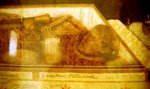
Fearing a possible transference of this mysterious holy body (supposed to have growing hair and nails) by the Portuguese (1505-1658) to some other locality, the villagers had concealed the mortal remains at Ambana Indurugiri cave close to Elpitiya in the Galle district for safety and security. The second rendition is that he had departed Vijayaba Pirivena and had resided at Obbegoda Temple at Moneragala and Dikwella for a brief period and finally settled down at Ambana Indurugiri cave surrounded by a mammoth woodland at that period (1476), It is in the folktale and legend that he was also an exorcist who had decreed demons to execute manual labour work to intensify the protection and security of Ambana cave and the vicinity. In consideration of those facts, it can be assumed that his demise would have taken place during 1491. After a considerable length of time, on receipt of information about this mysterious and miraculous cadaver, a Portuguese team had approached in search of this grotto and after three unsuccessful attempts, had taken control over the body and had prepared preliminary arrangements to despatch the holy body to Goa in India. St Francis Xavier who had arrived from portugal to propagate missionary activities here had participated as the leader of the expedition to shift the body to Goa. While on the journey he had suffered and attack of dysentery and had passed away. It is supposed that the participants of the expedition cremated him here and had interpreted that the body they were carrying was of St. Francis Xavier. Finally this sacred body had been carried over to Goa and reposed at the Basilica of Bon Jesu. It is presumed that the venerable monk had consumed some medicament which was prepared by himself (Sidualurasaya or Siddaloka Rasaya) before he breathed his last and as a result it is surmised that his body would remain approximately till the year 4230. This fact is embodied in the final stanza engraved by him on a sheet of copper before his demise which is depicted below , Christians too are in possession of similar legendary and historical factors to prove and establish that this cadaver is of St. Francis Xavier. Hence time is opportune to focus the attention of the officials concerned to get this bone of contention cleared and resolved to ascertain whether this extraordinary mortal remains are of Ven. Sri Rahula Thera or St. Francis Xavier.
This is the space era and it will not be an intricate task or a complicate exercise to establish by the application of modern technology and science whether this prodigious cadaver is of Asian or Western origin. The conspicuous and significant services rendered by Ven. Sri Rahula Thera especially in the poetical field cannot be characterized in abridged form as it is a herculean task. Particularly the Sinhala Buddhist community owes a deep debt of gratuity to Ven. Sri Rahula Thera for his multifarious and multiplex services.
Watch The Video:
http://www.facebook.com/#!/video/video.php?v=1482543556378&ref=mf
Ven. Thotagamuwe Sri Rahula Thera was born in 1408 at Dematana, an attractive and fascinating village close to Dedigama in the Kegalle district. He was named in lay life as Jayaba Kumaru. As a result of his mother Keerawelle Kumari, (the elder sister of Queen of Parakramabahu VI) who passed away in the first year of his birth and his father Wickramabahu being ordained after a lapse of two years of his birth, he was taken by family members and well wishers to the palace of Kotte and was placed under the guardianship of King Parakramabahu the VIth (Siri Perakumba) 1412 - 1467. Having been educated under both, his grandfather Uthurumula Rahula Thera and his uncle Wilgammula Thera, he was ordained according to the Buddhist traditional rituals and was known as Vachissara Rahula Thera (1425). In a short spell of time he procured a profound and wide knowledge in a variety of oriental languages and the following voluminous compositions written by him will adequately bear testimony to his inestimable erudition and intellectuality. Buddhagajjaya 1430, Vurthamala Sandesaya 1435, Paravi Sandesaya 1445, Selalihini Sandesaya 1447, Kawyasekaraya 1449, Panchika Pradeepaya 1457, Buddipasadiniya 1480, Sakaskada and Mawulu Sandesaya. It is recorded that Ven. Sri Rahula Thera spent his prime of life at Thotagamuwa Temple and on account of this reason he was widely recognized as Thotagamuwe Sri Rahula Thera. Vijayaba Pirivena of Thotagamuwa in the Galle district served as the most popular centre of learning about nine and half centuries
back. Thotagamuwa is a picturesque hamlet adjacent to Hikkaduwa town. King Vijayabahu I (1055 - 1110) was instrumental in inaugurating this extensively acclaimed Vijayaba Pirivena. It is the presumption of our historians and archaeologists that this edifice would have been a five storeyed building and a dominant institution of education equivalent to a university where diverse subjects were in the curriculum including the Tamil langauge. It is assumed that this monastery was later renovated and refurbished as a two storeyed structure by King Parakramabahu IV (1302 - 1326). Ven. Thotagamuwe Sri Rahula Thera succeeded as the chief prelate of the most reputed and renowned Thotagamuwa Vijayaba Pirivena followed by Uthurumula Rahula Thera and Galathurumula There. He was a multilinguist (Shad Bhasha Parameswara) and a lettered oriental scholar par excellence and was competent in reciting the Thripitaka (the three divisions of the Buddhist scriptures) by rote.
Ven. Sri Rahula Thera was also a distinguished author, veteran astrologer and a proficient ayurvedic physician whose reputation pervaded beyond our shores. Relating to the latter part of his life there are two legendary versions. After rendering an nestimable and monumental contribution at Vijayaba Pirivena he passed away peacefully. On hearing this distressing and agonizing news, the villagers inhabiting around the temple flocked in their thousand to bestow their last homage and reverence.
Fearing a possible transference of this mysterious holy body (supposed to have growing hair and nails) by the Portuguese (1505-1658) to some other locality, the villagers had concealed the mortal remains at Ambana Indurugiri cave close to Elpitiya in the Galle district for safety and security. The second rendition is that he had departed Vijayaba Pirivena and had resided at Obbegoda Temple at Moneragala and Dikwella for a brief period and finally settled down at Ambana Indurugiri cave surrounded by a mammoth woodland at that period (1476), It is in the folktale and legend that he was also an exorcist who had decreed demons to execute manual labour work to intensify the protection and security of Ambana cave and the vicinity. In consideration of those facts, it can be assumed that his demise would have taken place during 1491. After a considerable length of time, on receipt of information about this mysterious and miraculous cadaver, a Portuguese team had approached in search of this grotto and after three unsuccessful attempts, had taken control over the body and had prepared preliminary arrangements to despatch the holy body to Goa in India. St Francis Xavier who had arrived from portugal to propagate missionary activities here had participated as the leader of the expedition to shift the body to Goa. While on the journey he had suffered and attack of dysentery and had passed away. It is supposed that the participants of the expedition cremated him here and had interpreted that the body they were carrying was of St. Francis Xavier. Finally this sacred body had been carried over to Goa and reposed at the Basilica of Bon Jesu. It is presumed that the venerable monk had consumed some medicament which was prepared by himself (Sidualurasaya or Siddaloka Rasaya) before he breathed his last and as a result it is surmised that his body would remain approximately till the year 4230. This fact is embodied in the final stanza engraved by him on a sheet of copper before his demise which is depicted below , Christians too are in possession of similar legendary and historical factors to prove and establish that this cadaver is of St. Francis Xavier. Hence time is opportune to focus the attention of the officials concerned to get this bone of contention cleared and resolved to ascertain whether this extraordinary mortal remains are of Ven. Sri Rahula Thera or St. Francis Xavier.
This is the space era and it will not be an intricate task or a complicate exercise to establish by the application of modern technology and science whether this prodigious cadaver is of Asian or Western origin. The conspicuous and significant services rendered by Ven. Sri Rahula Thera especially in the poetical field cannot be characterized in abridged form as it is a herculean task. Particularly the Sinhala Buddhist community owes a deep debt of gratuity to Ven. Sri Rahula Thera for his multifarious and multiplex services.
Attachments
Documentary Video Link:
http://www.facebook.com/#!/video/video.php?v=1482543556378&ref=mf
Ven. Thotagamuwe Sri Rahula Thera was born in 1408 at Dematana, an attractive and fascinating village close to Dedigama in the Kegalle district. He was named in lay life as Jayaba Kumaru. As a result of his mother Keerawelle Kumari, (the elder sister of Queen of Parakramabahu VI) who passed away in the first year of his birth and his father Wickramabahu being ordained after a lapse of two years of his birth, he was taken by family members and well wishers to the palace of Kotte and was placed under the guardianship of King Parakramabahu the VIth (Siri Perakumba) 1412 - 1467. Having been educated under both, his grandfather Uthurumula Rahula Thera and his uncle Wilgammula Thera, he was ordained according to the Buddhist traditional rituals and was known as Vachissara Rahula Thera (1425). In a short spell of time he procured a profound and wide knowledge in a variety of oriental languages and the following voluminous compositions written by him will adequately bear testimony to his inestimable erudition and intellectuality. Buddhagajjaya 1430, Vurthamala Sandesaya 1435, Paravi Sandesaya 1445, Selalihini Sandesaya 1447, Kawyasekaraya 1449, Panchika Pradeepaya 1457, Buddipasadiniya 1480, Sakaskada and Mawulu Sandesaya. It is recorded that Ven. Sri Rahula Thera spent his prime of life at Thotagamuwa Temple and on account of this reason he was widely recognized as Thotagamuwe Sri Rahula Thera. Vijayaba Pirivena of Thotagamuwa in the Galle district served as the most popular centre of learning about nine and half centuries
back. Thotagamuwa is a picturesque hamlet adjacent to Hikkaduwa town. King Vijayabahu I (1055 - 1110) was instrumental in inaugurating this extensively acclaimed Vijayaba Pirivena. It is the presumption of our historians and archaeologists that this edifice would have been a five storeyed building and a dominant institution of education equivalent to a university where diverse subjects were in the curriculum including the Tamil langauge. It is assumed that this monastery was later renovated and refurbished as a two storeyed structure by King Parakramabahu IV (1302 - 1326). Ven. Thotagamuwe Sri Rahula Thera succeeded as the chief prelate of the most reputed and renowned Thotagamuwa Vijayaba Pirivena followed by Uthurumula Rahula Thera and Galathurumula There. He was a multilinguist (Shad Bhasha Parameswara) and a lettered oriental scholar par excellence and was competent in reciting the Thripitaka (the three divisions of the Buddhist scriptures) by rote.
Ven. Sri Rahula Thera was also a distinguished author, veteran astrologer and a proficient ayurvedic physician whose reputation pervaded beyond our shores. Relating to the latter part of his life there are two legendary versions. After rendering an nestimable and monumental contribution at Vijayaba Pirivena he passed away peacefully. On hearing this distressing and agonizing news, the villagers inhabiting around the temple flocked in their thousand to bestow their last homage and reverence.
Fearing a possible transference of this mysterious holy body (supposed to have growing hair and nails) by the Portuguese (1505-1658) to some other locality, the villagers had concealed the mortal remains at Ambana Indurugiri cave close to Elpitiya in the Galle district for safety and security. The second rendition is that he had departed Vijayaba Pirivena and had resided at Obbegoda Temple at Moneragala and Dikwella for a brief period and finally settled down at Ambana Indurugiri cave surrounded by a mammoth woodland at that period (1476), It is in the folktale and legend that he was also an exorcist who had decreed demons to execute manual labour work to intensify the protection and security of Ambana cave and the vicinity. In consideration of those facts, it can be assumed that his demise would have taken place during 1491. After a considerable length of time, on receipt of information about this mysterious and miraculous cadaver, a Portuguese team had approached in search of this grotto and after three unsuccessful attempts, had taken control over the body and had prepared preliminary arrangements to despatch the holy body to Goa in India. St Francis Xavier who had arrived from portugal to propagate missionary activities here had participated as the leader of the expedition to shift the body to Goa. While on the journey he had suffered and attack of dysentery and had passed away. It is supposed that the participants of the expedition cremated him here and had interpreted that the body they were carrying was of St. Francis Xavier. Finally this sacred body had been carried over to Goa and reposed at the Basilica of Bon Jesu. It is presumed that the venerable monk had consumed some medicament which was prepared by himself (Sidualurasaya or Siddaloka Rasaya) before he breathed his last and as a result it is surmised that his body would remain approximately till the year 4230. This fact is embodied in the final stanza engraved by him on a sheet of copper before his demise which is depicted below , Christians too are in possession of similar legendary and historical factors to prove and establish that this cadaver is of St. Francis Xavier. Hence time is opportune to focus the attention of the officials concerned to get this bone of contention cleared and resolved to ascertain whether this extraordinary mortal remains are of Ven. Sri Rahula Thera or St. Francis Xavier.
This is the space era and it will not be an intricate task or a complicate exercise to establish by the application of modern technology and science whether this prodigious cadaver is of Asian or Western origin. The conspicuous and significant services rendered by Ven. Sri Rahula Thera especially in the poetical field cannot be characterized in abridged form as it is a herculean task. Particularly the Sinhala Buddhist community owes a deep debt of gratuity to Ven. Sri Rahula Thera for his multifarious and multiplex services.
http://www.facebook.com/#!/video/video.php?v=1482543556378&ref=mf
Ven. Thotagamuwe Sri Rahula Thera was born in 1408 at Dematana, an attractive and fascinating village close to Dedigama in the Kegalle district. He was named in lay life as Jayaba Kumaru. As a result of his mother Keerawelle Kumari, (the elder sister of Queen of Parakramabahu VI) who passed away in the first year of his birth and his father Wickramabahu being ordained after a lapse of two years of his birth, he was taken by family members and well wishers to the palace of Kotte and was placed under the guardianship of King Parakramabahu the VIth (Siri Perakumba) 1412 - 1467. Having been educated under both, his grandfather Uthurumula Rahula Thera and his uncle Wilgammula Thera, he was ordained according to the Buddhist traditional rituals and was known as Vachissara Rahula Thera (1425). In a short spell of time he procured a profound and wide knowledge in a variety of oriental languages and the following voluminous compositions written by him will adequately bear testimony to his inestimable erudition and intellectuality. Buddhagajjaya 1430, Vurthamala Sandesaya 1435, Paravi Sandesaya 1445, Selalihini Sandesaya 1447, Kawyasekaraya 1449, Panchika Pradeepaya 1457, Buddipasadiniya 1480, Sakaskada and Mawulu Sandesaya. It is recorded that Ven. Sri Rahula Thera spent his prime of life at Thotagamuwa Temple and on account of this reason he was widely recognized as Thotagamuwe Sri Rahula Thera. Vijayaba Pirivena of Thotagamuwa in the Galle district served as the most popular centre of learning about nine and half centuries
back. Thotagamuwa is a picturesque hamlet adjacent to Hikkaduwa town. King Vijayabahu I (1055 - 1110) was instrumental in inaugurating this extensively acclaimed Vijayaba Pirivena. It is the presumption of our historians and archaeologists that this edifice would have been a five storeyed building and a dominant institution of education equivalent to a university where diverse subjects were in the curriculum including the Tamil langauge. It is assumed that this monastery was later renovated and refurbished as a two storeyed structure by King Parakramabahu IV (1302 - 1326). Ven. Thotagamuwe Sri Rahula Thera succeeded as the chief prelate of the most reputed and renowned Thotagamuwa Vijayaba Pirivena followed by Uthurumula Rahula Thera and Galathurumula There. He was a multilinguist (Shad Bhasha Parameswara) and a lettered oriental scholar par excellence and was competent in reciting the Thripitaka (the three divisions of the Buddhist scriptures) by rote.
Ven. Sri Rahula Thera was also a distinguished author, veteran astrologer and a proficient ayurvedic physician whose reputation pervaded beyond our shores. Relating to the latter part of his life there are two legendary versions. After rendering an nestimable and monumental contribution at Vijayaba Pirivena he passed away peacefully. On hearing this distressing and agonizing news, the villagers inhabiting around the temple flocked in their thousand to bestow their last homage and reverence.
Fearing a possible transference of this mysterious holy body (supposed to have growing hair and nails) by the Portuguese (1505-1658) to some other locality, the villagers had concealed the mortal remains at Ambana Indurugiri cave close to Elpitiya in the Galle district for safety and security. The second rendition is that he had departed Vijayaba Pirivena and had resided at Obbegoda Temple at Moneragala and Dikwella for a brief period and finally settled down at Ambana Indurugiri cave surrounded by a mammoth woodland at that period (1476), It is in the folktale and legend that he was also an exorcist who had decreed demons to execute manual labour work to intensify the protection and security of Ambana cave and the vicinity. In consideration of those facts, it can be assumed that his demise would have taken place during 1491. After a considerable length of time, on receipt of information about this mysterious and miraculous cadaver, a Portuguese team had approached in search of this grotto and after three unsuccessful attempts, had taken control over the body and had prepared preliminary arrangements to despatch the holy body to Goa in India. St Francis Xavier who had arrived from portugal to propagate missionary activities here had participated as the leader of the expedition to shift the body to Goa. While on the journey he had suffered and attack of dysentery and had passed away. It is supposed that the participants of the expedition cremated him here and had interpreted that the body they were carrying was of St. Francis Xavier. Finally this sacred body had been carried over to Goa and reposed at the Basilica of Bon Jesu. It is presumed that the venerable monk had consumed some medicament which was prepared by himself (Sidualurasaya or Siddaloka Rasaya) before he breathed his last and as a result it is surmised that his body would remain approximately till the year 4230. This fact is embodied in the final stanza engraved by him on a sheet of copper before his demise which is depicted below , Christians too are in possession of similar legendary and historical factors to prove and establish that this cadaver is of St. Francis Xavier. Hence time is opportune to focus the attention of the officials concerned to get this bone of contention cleared and resolved to ascertain whether this extraordinary mortal remains are of Ven. Sri Rahula Thera or St. Francis Xavier.
This is the space era and it will not be an intricate task or a complicate exercise to establish by the application of modern technology and science whether this prodigious cadaver is of Asian or Western origin. The conspicuous and significant services rendered by Ven. Sri Rahula Thera especially in the poetical field cannot be characterized in abridged form as it is a herculean task. Particularly the Sinhala Buddhist community owes a deep debt of gratuity to Ven. Sri Rahula Thera for his multifarious and multiplex services.
Similar threads

- Replies
- 1
- Views
- 153

- Replies
- 3
- Views
- 226


- Replies
- 10
- Views
- 590

