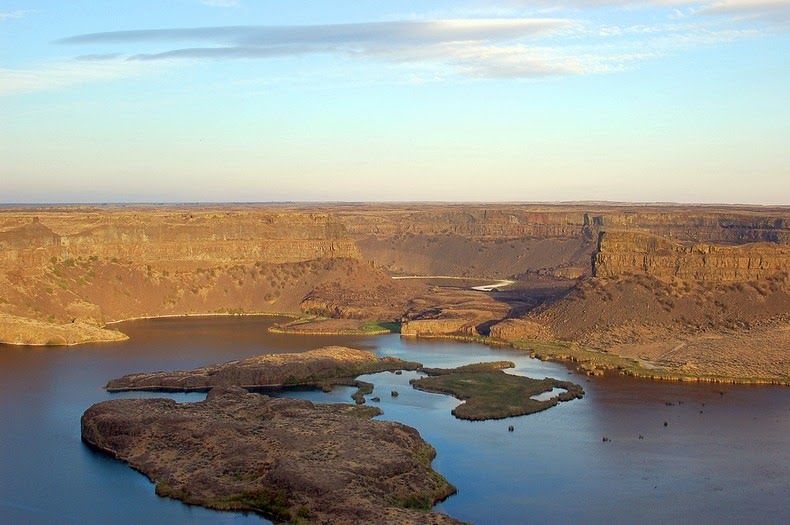
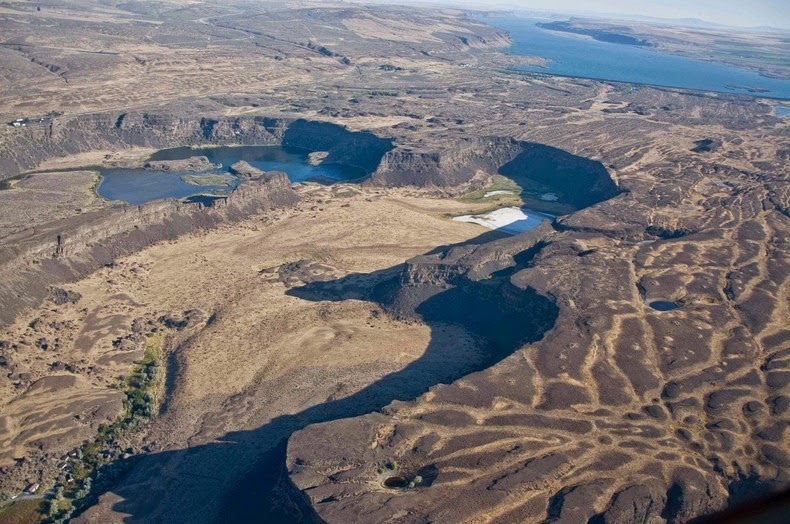
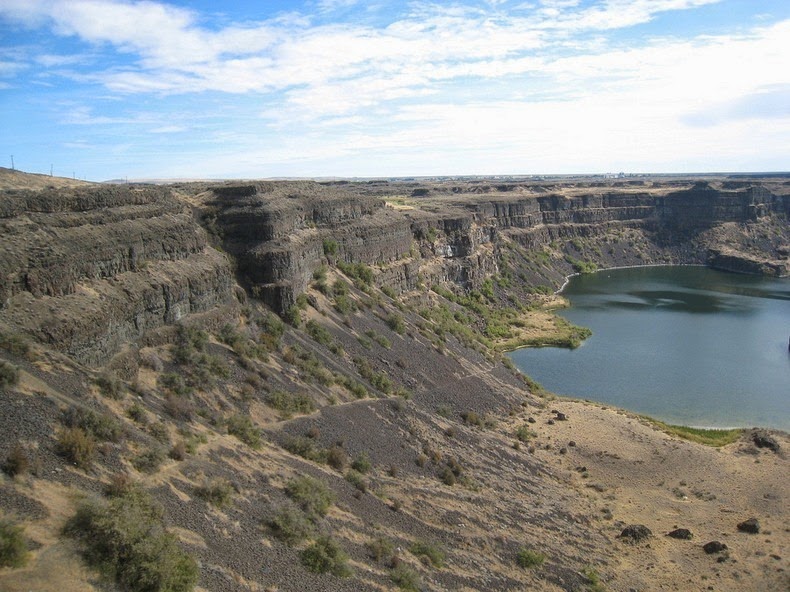
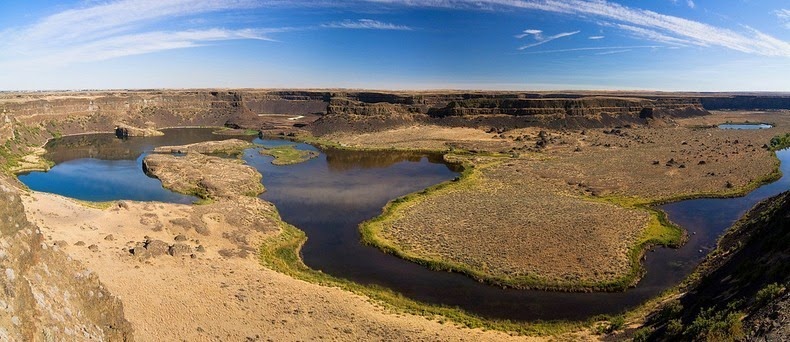
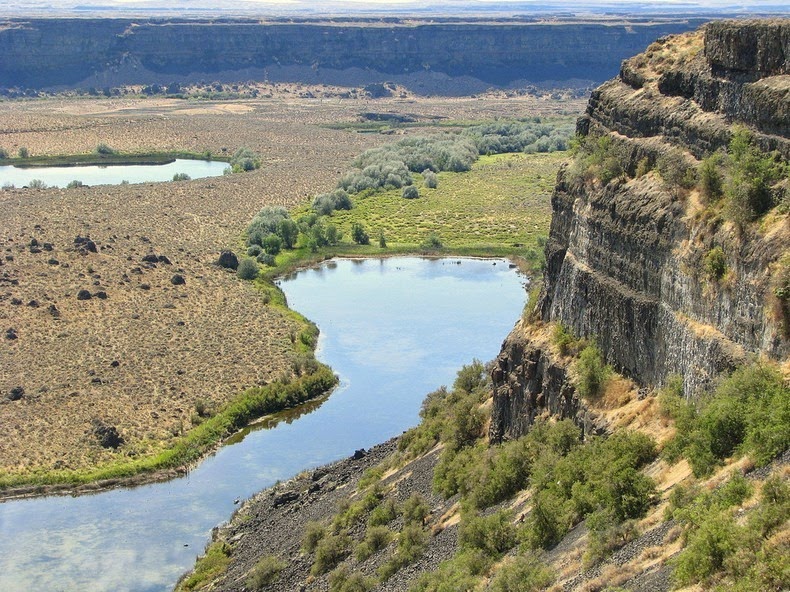
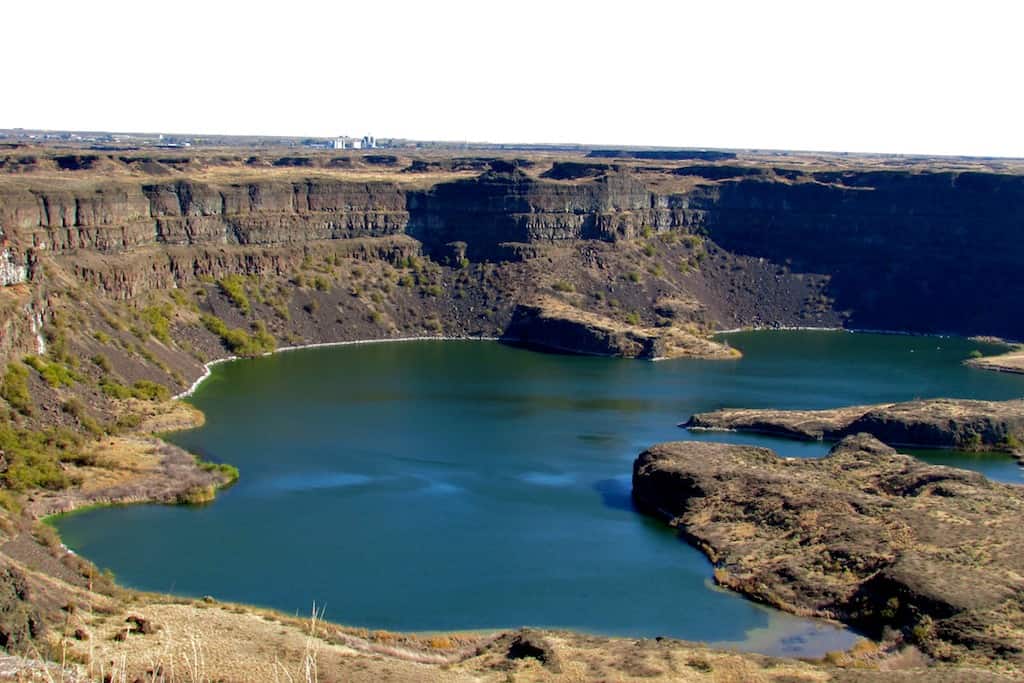
Located in central Washington, on the opposite side of the Upper Grand Coulee from the Columbia River, is a 3.5-mile long and 400-foot high scalloped precipice known as Dry Falls. As the name suggests, Dry Falls no longer carries water, but at one time, it was once the largest waterfall that is known to have existed on earth. It is five times the width of the Niagara falls and more than twice its height. It is speculated that during the last ice age, catastrophic flooding channeled water at 65 miles per hour through the Upper Grand Coulee and over this 400-foot rock face. At this time, it is estimated that the flow of the falls was ten times the current flow of all the rivers in the world combined.