
Latest ads
-
BlackWall V2ray servers
- hu KANNA
- Updated:
-
 Peppa Pig Family Plush Toy Set – 5 Characters
- anil1961
- Updated:
-
Express VPN PC - 1 Year Rs. 600.00
- Sanathbh
- Updated:
-
Capcut Pro 7 Days Team Plan - Rs. 3️⃣0️⃣0️⃣
- Sanathbh
- Updated:
-
 Singapore V2ray VPN for Tunneling
- hu KANNA
- Updated:
You are using an out of date browser. It may not display this or other websites correctly.
You should upgrade or use an alternative browser.
You should upgrade or use an alternative browser.




 Museum Island eka gana danagena hitiye naha
Gračanica Monastery, SERBIA
Gračanica (Serbian: Манастир Грачаница or Manastir Gračanica) is a Serbian Orthodox monastery located in Kosovo and Metohija. It was founded by the Serbian king Stefan Milutin in 1321. On July 13, 2006 it was placed on UNESCO's World Heritage List under the name of Medieval Monuments in Serbia as an extension of the Visoki Dečani site which was overall placed on the List of World Heritage Sites in danger.
Gračanica Monastery is one of King Milutin's last monumental endowments. It is situated in the village of Gračanica, a Serb enclave 5 km (3.1 mi) from Pristina. The monastery is in the close vicinity of Lipljan (ancient Roman town of Ulpiana), the old residence of bishops.

Gračanica (Serbian: Манастир Грачаница or Manastir Gračanica) is a Serbian Orthodox monastery located in Kosovo and Metohija. It was founded by the Serbian king Stefan Milutin in 1321. On July 13, 2006 it was placed on UNESCO's World Heritage List under the name of Medieval Monuments in Serbia as an extension of the Visoki Dečani site which was overall placed on the List of World Heritage Sites in danger.
Gračanica Monastery is one of King Milutin's last monumental endowments. It is situated in the village of Gračanica, a Serb enclave 5 km (3.1 mi) from Pristina. The monastery is in the close vicinity of Lipljan (ancient Roman town of Ulpiana), the old residence of bishops.

Visoki Dečani Monastery, SERBIA
Visoki Dečani (Serbian Cyrillic: Високи Дечани) is a major Serb Orthodox Christian monastery located in disputed Serbia's province of Kosovo and Metohija, 12 km south of the town of Peć. The monastic katholikon is the largest medieval church in the Balkans containing the most extensive preserved fresco decoration.
The monastery was established in a chestnut grove by Serbian King Stefan Uroš III Dečanski in 1327. Its original founding charter is dated to 1330. The following year the king died and was buried at the monastery, which henceforth became his popular shrine. Indeed, the epithet Dečanski refers to the king's foundation of the monastery. The construction was continued by his son Emperor Stefan Uroš IV Dušan until 1335, but the wall-painting was not completed until 1350.


Visoki Dečani (Serbian Cyrillic: Високи Дечани) is a major Serb Orthodox Christian monastery located in disputed Serbia's province of Kosovo and Metohija, 12 km south of the town of Peć. The monastic katholikon is the largest medieval church in the Balkans containing the most extensive preserved fresco decoration.
The monastery was established in a chestnut grove by Serbian King Stefan Uroš III Dečanski in 1327. Its original founding charter is dated to 1330. The following year the king died and was buried at the monastery, which henceforth became his popular shrine. Indeed, the epithet Dečanski refers to the king's foundation of the monastery. The construction was continued by his son Emperor Stefan Uroš IV Dušan until 1335, but the wall-painting was not completed until 1350.


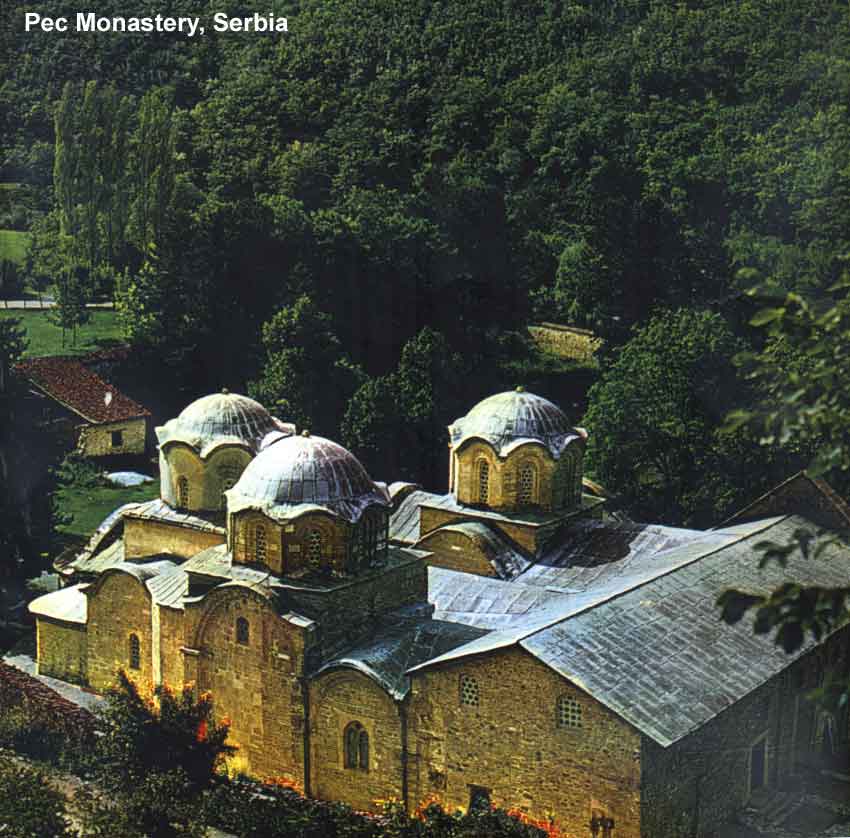
The Patriarchate of Peć, SERBIA
The Patriarchate of Peć (Serbian: Пећка патријаршија or Pećka Patrijaršija) is a Serbian Orthodox monastery located near Peć, in Kosovo and Metohija. The complex of churches is the spiritual seat and mausoleum of the Serbian archbishops and patriarchs.
On July 13, 2006 it was placed on UNESCO's World Heritage List as an extension of the Visoki Dečani site which was overall placed on the List of World Heritage Sites in danger.

The Patriarchate of Peć (Serbian: Пећка патријаршија or Pećka Patrijaršija) is a Serbian Orthodox monastery located near Peć, in Kosovo and Metohija. The complex of churches is the spiritual seat and mausoleum of the Serbian archbishops and patriarchs.
On July 13, 2006 it was placed on UNESCO's World Heritage List as an extension of the Visoki Dečani site which was overall placed on the List of World Heritage Sites in danger.

Studenica Monastery, SERBIA
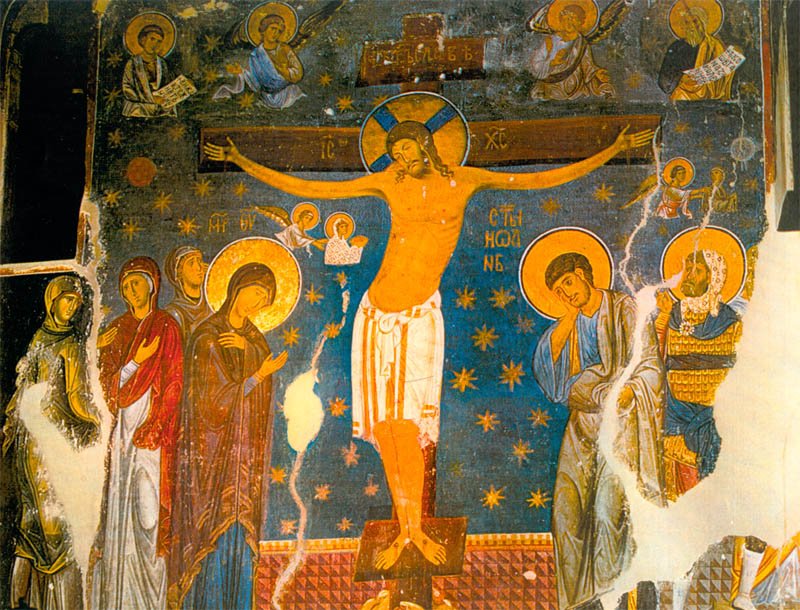
The Studenica monastery (Serbian: Манастир Студеница / Manastir Studenica) is a Serbian Orthodox monastery situated 39 km southwest of Kraljevo, in central Serbia. It is one of the largest and richest Serb Orthodox monasteries.
Stefan Nemanja, the founder of the medieval Serb state, founded the monastery in 1190. The monastery's fortified walls encompass two churches: the Church of the Virgin, and the Church of the King, both of which were built using white marble. The monastery is best known for its collection of 13th- and 14th century Byzantine-style fresco paintings.
In 1986 UNESCO included Studenica monastery on the list of World Heritage Sites.

The Studenica monastery (Serbian: Манастир Студеница / Manastir Studenica) is a Serbian Orthodox monastery situated 39 km southwest of Kraljevo, in central Serbia. It is one of the largest and richest Serb Orthodox monasteries.
Stefan Nemanja, the founder of the medieval Serb state, founded the monastery in 1190. The monastery's fortified walls encompass two churches: the Church of the Virgin, and the Church of the King, both of which were built using white marble. The monastery is best known for its collection of 13th- and 14th century Byzantine-style fresco paintings.
In 1986 UNESCO included Studenica monastery on the list of World Heritage Sites.


Our Lady of Ljeviš Monastery, SERBIA
Our Lady of Ljeviš (Serbian: Богородица Љевишка / Bogorodica Ljeviška) is a 12th century Serbian Orthodox Church in the town of Prizren, located in the disputed Serbian province of Kosovo and Metohija. It was converted to a mosque during the Ottoman Empire and then back into an Orthodox Church in the early 20th century.
The Church was guarded by KFOR after June 1999. However, it was burned down during the 2004 unrest in Kosovo by Albanian mobs.
A group of experts sponsored by Serbia has visited the church on several occasions to assess the damage, but no concrete steps have been taken. The church is subject to constant looting (valuable lead has repeatedly been stolen from the roof).
On July 13, 2006 Our Lady of Ljeviš was placed on UNESCO's World Heritage List as an extension of the Visoki Dečani site (named Medieval Monuments in Kosovo and Metohija), which as a whole was placed on the List of World Heritage Sites in danger.

The famous fresco "Bathing of the Christ" before it was destroyed and burned by Albanians in 2004

A fresco of Saint Simeon (Stefan Nemanja), the Father of the Serbian Orthodox Church

Our Lady of Ljeviš (Serbian: Богородица Љевишка / Bogorodica Ljeviška) is a 12th century Serbian Orthodox Church in the town of Prizren, located in the disputed Serbian province of Kosovo and Metohija. It was converted to a mosque during the Ottoman Empire and then back into an Orthodox Church in the early 20th century.
The Church was guarded by KFOR after June 1999. However, it was burned down during the 2004 unrest in Kosovo by Albanian mobs.
A group of experts sponsored by Serbia has visited the church on several occasions to assess the damage, but no concrete steps have been taken. The church is subject to constant looting (valuable lead has repeatedly been stolen from the roof).
On July 13, 2006 Our Lady of Ljeviš was placed on UNESCO's World Heritage List as an extension of the Visoki Dečani site (named Medieval Monuments in Kosovo and Metohija), which as a whole was placed on the List of World Heritage Sites in danger.

The famous fresco "Bathing of the Christ" before it was destroyed and burned by Albanians in 2004

A fresco of Saint Simeon (Stefan Nemanja), the Father of the Serbian Orthodox Church



Similar threads


- Replies
- 0
- Views
- 83

- Replies
- 1
- Views
- 167

- Replies
- 2
- Views
- 310

- Replies
- 7
- Views
- 508
