


For years, it was unpopular within the health industry after it was found to contain fats that potentially cause heart disease and obesity, and a structure that requires a longer digestive time and causes constipation and increased body toxicity. However, many experts have now concluded that some vitamins and minerals can only be found sufficiently in meat products, and that most vegetarians will become deficient in these nutrients over time.
Hence, a recent article in Prevention magazine asks, “Does this latest swing back to red meat mean that we’re heading straight for imminent health disaster?” Their answer was, “Not at all. In moderation, lean meats can provide significant health benefits, from preventing vitamin and mineral deficiencies and boosting immunity to building stronger blood.”
In fact, meat does provide many health benefits. Dr. Susan Kleiner, R.D, PhD. and owner of High Performance Nutrition in Mercer Island, Washington says, “People read reports that red meat causes cancer and heart disease so they think they have to stop eating meat. What they don’t realize is that people in these studies eat more than ten ounces a day. Eating three to five ounces a day is considered quite healthful.”
One of the most important nutrients found in abundance in meat is iron – a mineral that boosts the oxygen carrying capacity of blood. Without enough iron, our red blood cells get smaller and we start feeling worn out. Women and athletes are even more at risk for iron deficient anemia, because their bodies use more iron due to menstruation and exercise. In one study, 47 inactive women were enrolled in a 12-week moderate aerobics program. After the 12 weeks, their iron levels showed a significant drop. This could explain why some people who exercise complain that they still feel fatigued even though they “should” feel more energetic from their efforts.
Iron is also found in abundance in dark leafy greens such as spinach or Swiss chard; however, it takes about five cups of uncooked Swiss chard or spinach to equal the iron found in 10 ounces of meat. Realistically, even a person who is willing to eat five cups of greens in a day would not find them available year round, particularly during the winter.
Furthermore, meats contain an iron called heme iron which is fifteen percent more absorbable than non-heme (plant) iron. And consuming heme iron actually helps the absorption of non-heme iron; therefore, it is a good idea to combine foods from the plant and animal kingdoms for the best balance and benefit.
To compensate for the deficiency of iron in vegetarian and low meat diets, many people take iron supplements. However, it has been found that consuming many of these supplements can actually be detrimental rather than helpful because most are made from a non-organic iron which is not absorbable by the body, but instead forms deposits over time, which can lead to an increased risk of infections, heart disease and cancer.
Zinc, responsible for supporting the immune system, is another mineral found abundantly in meat. A three-ounce top round, for instance, provides one third of the USRDA (U.S. Recommended Daily Allowance) for zinc, which like iron is more easily absorbable coming from meat than vegetable sources. However, unlike iron, it is not readily available within the plant kingdom. One would have a hard time getting enough zinc in a strictly vegetarian diet unless they were to consume a few cups of pumpkin seeds every day. Therefore, a person who never eats meat would soon become deficient in zinc.
Vitamin B-12 is perhaps the most difficult to obtain nutrient that meat provides, as it is virtually unavailable in the plant kingdom at all. In fact, most doctors recommend that vegans (those that do not eat meat products at all) absolutely need to take a vitamin B-12 supplement. Doctors have noted that many vegetarians feel “fine” for years; then, five or seven years down the road, they suddenly feel fatigued. Strict vegetarians are at high risk for developing “pernicious anemia,” a rare and often fatal disorder resulting from a depletion of B-12 in the system. This is because vitamin B-12, which is stored in the liver, depletes itself over time. Most people who include at least some meat products in their diet, however, will never have this problem. Therefore, most experts advise eating meat at least occasionally in the vegetarian diet.
Source(s):
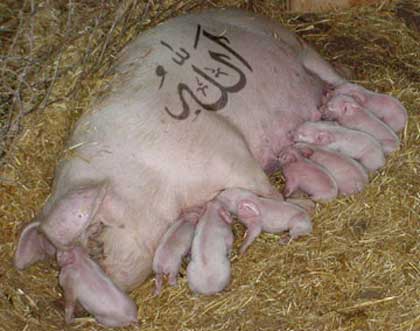
P/S: Well, what i understand from your question is that why we as muslims are not allowed to only eat pork when according to the article all kinds of red meat raises risk of death. Red meat increases death depending on the proportions we consume everyday. Any food which is consumed over the limit will be big disaster to our health. So, take it averagely as i mentioned above. However, different thing goes to pork as the pork meat originally contain many virusses and harmful substances as you can search a lott about it through the internet
Hence, a recent article in Prevention magazine asks, “Does this latest swing back to red meat mean that we’re heading straight for imminent health disaster?” Their answer was, “Not at all. In moderation, lean meats can provide significant health benefits, from preventing vitamin and mineral deficiencies and boosting immunity to building stronger blood.”
In fact, meat does provide many health benefits. Dr. Susan Kleiner, R.D, PhD. and owner of High Performance Nutrition in Mercer Island, Washington says, “People read reports that red meat causes cancer and heart disease so they think they have to stop eating meat. What they don’t realize is that people in these studies eat more than ten ounces a day. Eating three to five ounces a day is considered quite healthful.”
One of the most important nutrients found in abundance in meat is iron – a mineral that boosts the oxygen carrying capacity of blood. Without enough iron, our red blood cells get smaller and we start feeling worn out. Women and athletes are even more at risk for iron deficient anemia, because their bodies use more iron due to menstruation and exercise. In one study, 47 inactive women were enrolled in a 12-week moderate aerobics program. After the 12 weeks, their iron levels showed a significant drop. This could explain why some people who exercise complain that they still feel fatigued even though they “should” feel more energetic from their efforts.
Iron is also found in abundance in dark leafy greens such as spinach or Swiss chard; however, it takes about five cups of uncooked Swiss chard or spinach to equal the iron found in 10 ounces of meat. Realistically, even a person who is willing to eat five cups of greens in a day would not find them available year round, particularly during the winter.
Furthermore, meats contain an iron called heme iron which is fifteen percent more absorbable than non-heme (plant) iron. And consuming heme iron actually helps the absorption of non-heme iron; therefore, it is a good idea to combine foods from the plant and animal kingdoms for the best balance and benefit.
To compensate for the deficiency of iron in vegetarian and low meat diets, many people take iron supplements. However, it has been found that consuming many of these supplements can actually be detrimental rather than helpful because most are made from a non-organic iron which is not absorbable by the body, but instead forms deposits over time, which can lead to an increased risk of infections, heart disease and cancer.
Zinc, responsible for supporting the immune system, is another mineral found abundantly in meat. A three-ounce top round, for instance, provides one third of the USRDA (U.S. Recommended Daily Allowance) for zinc, which like iron is more easily absorbable coming from meat than vegetable sources. However, unlike iron, it is not readily available within the plant kingdom. One would have a hard time getting enough zinc in a strictly vegetarian diet unless they were to consume a few cups of pumpkin seeds every day. Therefore, a person who never eats meat would soon become deficient in zinc.
Vitamin B-12 is perhaps the most difficult to obtain nutrient that meat provides, as it is virtually unavailable in the plant kingdom at all. In fact, most doctors recommend that vegans (those that do not eat meat products at all) absolutely need to take a vitamin B-12 supplement. Doctors have noted that many vegetarians feel “fine” for years; then, five or seven years down the road, they suddenly feel fatigued. Strict vegetarians are at high risk for developing “pernicious anemia,” a rare and often fatal disorder resulting from a depletion of B-12 in the system. This is because vitamin B-12, which is stored in the liver, depletes itself over time. Most people who include at least some meat products in their diet, however, will never have this problem. Therefore, most experts advise eating meat at least occasionally in the vegetarian diet.
Source(s):
P/S: Well, what i understand from your question is that why we as muslims are not allowed to only eat pork when according to the article all kinds of red meat raises risk of death. Red meat increases death depending on the proportions we consume everyday. Any food which is consumed over the limit will be big disaster to our health. So, take it averagely as i mentioned above. However, different thing goes to pork as the pork meat originally contain many virusses and harmful substances as you can search a lott about it through the internet




 arjun job ekak karanawada.?


