The making of a Serial Killer. and Mother's influence on him.

Aug 19, 2008
11,653
167
0
Sri Lanka
Edgein.jpg
Ed Gein Considered to be a mild-mannered bachelor whose emotional development had been stunted by his domineering mother, he shocked the world when police found his vest of human skin and a cache of body parts. Gein is the model for The Silence of the Lambs' Buffalo Bill and Psycho's Norman Bates.

Childhood
Ed Gein was born on August 27, 1906 in La Crosse County, Wisconsin.[2] His parents, George and Augusta Gein (nee Lehrke),[citation needed] both natives of Wisconsin, had two sons: Henry George Gein, and his younger brother, Edward Theodore Gein. George Gein was a violent alcoholic who was frequently unemployed. The elder Gein would usually come home inebriated and physically abuse his sons. Despite Augusta's deep contempt for her husband, the atrophic marriage persisted because of the family's religious belief about divorce. Augusta Gein operated a small grocery store and eventually purchased a farm on the outskirts of the small town of Plainfield, Wisconsin, which then became the Gein family's permanent home.[3]
Augusta Gein moved to this location to prevent outsiders from influencing her sons.[3] Edward Gein left the premises only to go to school. Besides school, he spent most of his time doing chores on the farm.
Augusta Gein, a fervent Lutheran, drummed into her boys the innate immorality of the world, the evil of drink, and the belief that all women (herself excluded) were prostitutes, and instruments of the devil. She reserved time every afternoon to read to them from the Bible, usually selecting graphic verses from the Old Testament dealing with death, murder, and divine retribution.[citation needed]
With a slight growth over one eye and an effeminate demeanor, the younger Gein became a target for bullies. Classmates and teachers recalled off-putting mannerisms, such as seemingly random laughter, as if he were laughing at his own personal jokes. To make matters worse, his mother scolded him whenever he tried to make friends. Despite his poor social development, he did fairly well in school, particularly in reading.
Gein tried to make his mother happy, but she was rarely pleased with her boys. She often abused them, believing that they were destined to become failures like their father. During their teens and throughout their early adulthood, the boys remained detached from people outside of their farmstead, and so had only each other for company.[3]


After his brother's death, Gein lived alone with his mother. Augusta Gein died on December 29, 1945, from a series of strokes, at which time Gein "lost his only friend and one true love. And he was absolutely alone in the world."[5]
Gein remained on the farm, supporting himself with earnings from odd jobs. He boarded up rooms mostly used by his mother, such as the upstairs, downstairs parlor, and living room, leaving them untouched. He lived in a small room next to the kitchen. Gein became interested in reading death-cult magazines and adventure stories, and between 1947 and 1954 made as many as 40 night time visits to three local graveyards in order to exhume a number of recently buried bodies.[4]

Arrest

Police suspected Gein's involvement in the disappearance of a hardware store owner, Bernice Worden, in Plainfield on November 16, 1957. Upon entering a shed on his property, they made the first discovery of the night: Worden's corpse. She had been decapitated, her headless body hung upside down by means of ropes at her wrists and a crossbar at her ankles. The torso was empty, the ribcage split and the body "dressed out" like that of a deer.[6] These mutilations had been performed postmortem; she had been shot at close-range with a .22-caliber rifle.
Searching the house, authorities found:[7]

  • Four noses
  • Bone fragments
  • Nine death masks
  • A bowl made from a skull
  • Ten female heads with the tops sawed off
  • Human skin covering several chair seats
  • Pieces of salted genitalia in a box
  • Skulls on his bedposts
  • Organs in the refrigerator
  • A pair of lips on a string,
Some neighborhood children, whom Gein occasionally babysat, had seen or heard of the shrivelled heads, which Gein offhandedly described as relics from the South Seas sent by a cousin who had served in World War II. Upon investigation, these turned out to be human facial skins, carefully peeled from cadavers and used by Gein as masks.
Gein eventually admitted under questioning that he dug up the graves of recently buried middle-aged women he thought resembled his mother[8] and took the bodies home, where he tanned their skin to make his possessions. Gein's practice of putting on the tanned skins of women was described as an "insane transvestite ritual".[9] Gein denied having sex with the bodies he exhumed, explaining, "They smelled too bad."[9] During interrogation, Gein also admitted to the shooting death of Mary Hogan, who had been missing since 1954.
Shortly after his mother's death, Gein had decided he wanted a sex change. He created a "woman suit" so he could pretend to be a female.

258-edGeinArrested11_1957done.standalone.prod_affiliate.2.jpg
Trial


Ed Gein was found mentally incompetent and thus unfit to stand trial at the time of his arrest, and was sent to the Central State Hospital (now the Dodge Correctional Institution) in Waupun, Wisconsin. Later, Central State Hospital was converted into a prison, and Gein was transferred to Mendota State Hospital in Madison, Wisconsin. In 1968, Gein's doctors determined he was sane enough to stand trial. The trial started on November 14, 1968, lasting just one week. He was found guilty of first-degree murder by judge Robert H. Gollmar, but because he was found to be legally insane, he spent the rest of his life in a mental hospital.[11][12]
 
Aug 19, 2008
11,653
167
0
Sri Lanka
Another one who killed over 600 people.

200px-Henry_Lee_Lucas.jpg

Henry Lee Lucas (August 23, 1936[1] – March 13, 2001[2]) was an American criminal, convicted of murder and once listed as America's most prolific serial killer; he later recanted his confessions, and flatly stated "I am not a serial killer" in a letter to researcher Patrick Poff.[3]
Lucas confessed to involvement in about 600 murders, with an average of about one murder per week between his release from prison in mid-1975 to his arrest in mid-1983. A more widely circulated total of about 350 murders committed by Lucas is based on confessions deemed "believable" by a Texas-based Lucas Task Force, a group which was criticized by the Attorney General of Texas, Jim Mattox, and others for sloppy police work and taking part in an extended "hoax".[4]
Beyond his recantation, some of Lucas's confessions have been challenged as inaccurate by a number of critics, including law enforcement and court officials. Lucas claimed to have been initially subjected to poor treatment and coercive interrogation tactics while in police custody, and to have confessed to murders in an effort to improve his living conditions. This calls into question many of his alleged murders, since his confessions were often the sole evidence cited in favor of his guilt, especially his sole death penalty conviction. Amnesty International reported "the belief of two former state Attorneys General that Lucas was in all likelihood innocent of the crime for which he was sentenced to death."[5]
Lucas's sentence was commuted to life in prison in 1998 by then-Governor George W. Bush, it was the only commutation in Bush's entire history as Governor of Texas. Lucas died in prison of natural causes. Because Lucas's death removed the possibility of resolution in many instances, a number of questions remain unresolved. Some authorities—while admitting that Lucas tended to exaggerate his accounts and told some outright lies, and also recognizing that the Lucas Task Force engaged in some very questionable tactics—insist that Lucas was a viable suspect in a number of unsolved murders. Despite these factors, Lucas still maintains a reputation, in the words of author Sarah L. Knox, "as one of the world's worst serial killers—even after the debunking of the majority of his confessions by the Attorney General of Texas."[6]
Lucas allegedly carried out many murders with an accomplice, Ottis Toole, whose reputation as a serial killer is mostly unaltered by Lucas's recantations.


Early life

Lucas was born in a one-room log cabin in Blacksburg, Virginia, the youngest of nine children. His mother, Viola Dixon Waugh, was an alcoholic prostitute. His father, Anderson Lucas, was an alcoholic and former railroad employee who had lost his legs after being hit by a freight train. He would usually come home inebriated, and would suffer from Viola's wrath as often as his sons.
Lucas claimed that he and his brother were regularly beaten by Viola, often for no reason. He once spent three days in a coma after his mother struck him with a wooden plank, and on many occasions he was forced by his mother to watch her having sex with men. Lucas also claimed that his mother would often dress him in girls' clothing. His sister Almeda Lucas supports his story, and she claims that she once had two pictures of Henry as a toddler dressed in girls' clothing. Lucas described an incident when he was given a mule as a gift by his uncle, only to see his mother shoot and kill it. Another incident Lucas described occurred when he was eight. He claimed he was given a teddy bear by one of his teachers, and was then beaten by his mother for accepting charity.
When Lucas was 10, his brother accidentally stabbed him in the left eye while they were fighting. His mother ignored the injury for four days, and subsequently the eye grew infected and had to be replaced by a glass eye.
In December 1949, Anderson Lucas died of hypothermia, after going home drunk and collapsing outside during a blizzard. Shortly after, Henry dropped out of school in the sixth grade and ran away from home, drifting around Virginia. Lucas claimed that he first practiced bestiality and zoosadism while he was a runaway, and also began committing petty thefts and burglaries around the state. Lucas claimed to have committed his first murder in 1951, when he strangled 17-year-old Laura Burnsley, who refused his sexual advances. Like most of his confessions, he later retracted this claim. On June 10, 1954, Lucas was convicted on over a dozen counts of burglary in and around Richmond, Virginia, and was sentenced to four years in prison. He escaped in 1957, was recaptured three days later, and was released on September 2, 1959.
In late 1959, Lucas traveled to Tecumseh, Michigan to live with his half-sister, Opal. Around this time, Lucas was engaged to marry a pen pal with whom he had corresponded while incarcerated. When his mother visited him for Christmas, she disapproved of her son's fiancée and insisted he move back to Blacksburg. He refused, and they argued repeatedly about his upcoming nuptials.


First known murder

On January 11, 1960, Lucas killed his mother during the course of an ongoing argument regarding whether or not he should return home to his mother's house to care for her as she grew older. He claimed she struck him over the head with a broom, at which point he struck her on the neck and she fell. Lucas then fled the scene. He subsequently said,
“ All I remember was slapping her alongside the neck, but after I did that I saw her fall and decided to grab her. But she fell to the floor and when I went back to pick her up, I realized she was dead. Then I noticed that I had my knife in my hand and she had been cut.
” She was not in fact dead, and when Lucas's half-sister Opal (with whom he was staying) returned later, she discovered their mother alive in a pool of blood. She called an ambulance, but it turned out to be too late to save Viola Lucas's life. The official police report stated she died of a heart attack precipitated by the assault. Lucas returned to Virginia, then says he decided to drive back to Michigan, but was arrested in Ohio on the outstanding Michigan warrant.
Lucas claimed to have attacked his mother only in self-defense, but his claim was rejected, and he was sentenced to between 20 and 40 years' imprisonment in Michigan for second-degree murder. After serving ten years in prison, he was released in June 1970 due to prison overcrowding.

And he has killed almost all hundreds of people were killed after that release.
 
Last edited:
Aug 19, 2008
11,653
167
0
Sri Lanka
Edmund Kemper: The Coed Butcher


By Katherine Ramsland


At age 15, this genius-level serial killer killed his grandparents. Then he killed pretty hitchhikers and ended up decapitating his mother.

Time Bomb

On August 27, 1964, 15-year-old Edmund Emil Kemper III was with his paternal grandparents on their 17-acre ranch in North Fork, California. Hed gone there during the previous Christmas holidays, remaining for the rest of that school year before returning to his mother, and was now back. He wasnt happy about that. Already six-foot-four and socially awkward, he was an intimidating figure, and people tended to shunt him from one place to another. Hed grown frustrated and angry, and later described himself as a walking time bomb. If only someone had known then how to defuse his rage. Instead, the people around him seemed to ensure that it would grow worse.
1-1-Murder-and-Madness-book.jpg
Murder and Madness

Kemper disliked how his mother treated him, and his grandmother was just as bad. They were always pushing him around and telling him what to do. According to his own statements, he harbored fantasies of killing and mutilating them. And not just them: As a child, writes psychiatrist Donald Lunde in Murder and Madness, Kemper wished that everyone else in the world would die, and he envisioned killing many of them himself. He had also indulged in tormenting cats. Hed buried one alive, then dug it up, cut off its head and stuck the head on a stick.
1-2-Kempers-grandmother.jpg
Edmund Kemper's grandmother as young woman

That August afternoon, he argued in the kitchen with his sixty-six-year-old grandmother, Maude. Lunde, who interviewed him at length years later, says that he had displaced his anger at his mother onto Maude, so it did not take much to make him react. Enraged, Kemper grabbed a rifle, and when she warned him not to shoot the birds, he turned and shot her instead. He hit her in the head, writes Margaret Cheney in Why? The Serial Killer in America, killing her, and then shot her twice in the back. (Lunde says that he also stabbed her repeatedly with a kitchen knife, and David K. Frazier writes in Murder Cases of the Twentieth Century that it was three times in the back.) So his first killing, if this account is correct, was impulsive, more a thoughtless act than a planned predatory incident. But then he had to do something to hide it from his grandfather. He was a big kid for his age, the product of a six-foot mother and a father who was six-foot-eight. So he did not have much difficulty dragging his grandmothers corpse into the bedroom.
1-3-Kempers-grandfather.jpg
Edmund Kemper's grandfather as young man

But then his grandfather, also named Edmund, drove up. The man was 72, and it was he who had given the boy the .22 caliber rifle the previous Christmas. Young Edmund heard his car outside. He went to the window and made the decision to finish the job hed begun. As the elderly man got out of the car, Kemper raised the rifle and shot him as well. Cheney says that he then hid the body in the garage. In his way, writes Lunde, he had avenged the rejection of both his father and his mother. Not knowing what else to do, he called his mother in Montana and told her what he had done. Clarnell urged him to call the police, and no doubt she was thinking of the dire warning that Cheney says she had given Edmunds biological father, whose parents were now dead. She had told him not to be surprised if the boy killed them one day.


Psychiatric Follow-up

Thats the day he picked up Aiko Koo, who had given up waiting for her bus and hitched a ride. Hed been feeling the energy that inspired his fantasies of murder. This girl seemed perfect for his next grim venture. He was surprised that she was only fifteen, but determined to carry out his plan. About that encounter, Kemper said: I pulled the gun out to show her I had it...she was freaking out. Then I put the gun away and that had more effect on her than pulling it out. He got out of the car, locking himself out, which gave her an advantage, but she was too scared to pick up his gun. She could have reached over and grabbed the gun, he said later, but I think she never gave it a thought. Instead, she unlocked the door and let him back in.
He pinched her nostrils to force her to black out, says Frazier, and raped her. Then he strangled her until he was sure she was dead and rode around with her body in the trunk of his car. He had a few drinks before taking her home to dismember and dissect her in the same manner he had done with his first two victims. Once he had tasted this power over women, he knew, it was only a matter of time before hed want it again. But first he had to prepare to convince the psychiatrists who were monitoring his case that he was cured.
The day after he killed Aiko Koo, Kemper went before a panel of psychiatrists as a follow-up requirement for parole. Hed done well in school, had tried finding a job, and as far as anyone knew, he had stayed out of trouble. He knew what they wanted to hear and he put on his best act. The first doctor talked with him for a while and indicated that he saw no reason to consider Kemper a danger to anyone. The second one actually used the words normal and safe, according to Cheney. Both recommended the sealing of his juvenile records as a way to help him to become a better citizen. Yet even as the two psychiatrists congratulated themselves on being part of a system that had rehabilitated a child killer, Kemper delighted in his secret. Damio writes that not only had killed a girl the day before the analysis, but he had her head in the trunk of his car outside, which Kemper disputes.
Once again, he was in the game. He had succeeded at convincing the learned professionals that he was something other than he really was, and they had wrongly inferred that he was no longer a danger. The judge did not agree, but had no grounds to deny the request to seal the records. Thus, eight years after he had killed his grandparents, Kemper gained his freedom. As he drove away with a clean bill of mental health, he felt pleased. Now he was free to continue with his experiments. He found a place to bury Koos head and hands above Boulder Creek, and there they remained undiscovered until the following May.
9-1-Trophies-of-Kempers-vic.jpg
Trophies of Kemper's victims

And he was not finished. While he laid low for a while, he kept fantasizing about taking the lives of those young women. He kept trophies and photographs of his grisly work to help renew the experience, and as he clashed with his mother time and again, the urge to kill built up within him.

Revenge

After killing six young women, the six-foot-nine giant turned his anger against his ultimate target: his mother. While most experts later claim that his killing was really about symbolic rehearsal for killing his mother, and once hed dispatched her, he no longer needed to kill, Kempers explanation is quite different. He indicated in an interview that he had sensed the cops closing in after Sergeant Aluffi had paid him a call about his gun and he wanted to spare his mother the embarrassment of learning that he was the Coed Butcher. However, his treatment of her corpse tells another story.
Kemper also said that he feared that his mother had found the items he had taken from the women hed killed. He wondered if he should flee or kill her. I cant get away from her...She knows all my buttons and I dance like a puppet. He knew that he would now kill her, but he waited for the opportune moment. She went out with friends one evening and came home tipsy from alcohol (although some accounts say nothing about her inebriated state).
Kemper went into her room, and according to him, she said, I suppose you want to talk now. He told her no. In his 1978 interview, he said he then started to cry and put his hand to his mouth. It was the first time he had broken his composure. Hed spoken about the other murders with no show of guilt, compassion or remorse, but his mothers death was another matter.
He waited for her to go to bed, he said, and then went into her room with a claw hammer. It was so hard. He admitted that to remember it hurt him. I cut off her head, and I humiliated her, of course. She was dead, because of the way she raised her son. But later he said hed wished shed stayed up and talked to him. He put her head on the mantel and said what he wanted to say. He also threw darts. For the first time, she did not argue with him. That felt satisfying, but he also knew it was over for him. He would undoubtedly be linked to this crime. He penned a brief note, quoted in Cheneys book: Appx. 5:15 A.M. Saturday. No need for her to suffer anymore at the hands of this horrible murderous butcher. It was quick, sleep, the way I wanted it.
Some sources indicate that Kemper believed having two victims would deflect attention from him, so he then invited Sally Hallett over. He punched and strangled her, then laid her naked on his bed. He spent the night with the two corpses in the house, with blood everywhere, and one account indicates that he tried to have sex with Halletts corpse. He also beheaded her. On Easter morning, he fled in Sallys car. As he drove, he turned on the radio, hoping to hear on the news that someone had discovered the bodies. Yet there were no news flashes. That disappointed him. By the time he reached Pueblo, after driving some 1,500 miles, he decided to instigate the discovery himself. Stopping at a phone booth, he called the police.
11-1-Edmund-Kemper.jpg
Edmund Kemper, in custody, dwarfs others

Kemper made it easy for the cops. He showed them where he had buried the head of Cynthia Schall in his mothers backyard, saying he had placed it there so he could take satisfaction in knowing, according to one detective, she was on his property looking toward the sky. As they drove, he described each murder in minute detail and showed them where he had deposited each victims remains.
11-2-Body-removed.jpg
Body removed, Edmund Kemper's home


Read full story
http://www.trutv.com/library/crime/serial_killers/predators/kemper/edmund_1.html
 
Last edited:
Aug 19, 2008
11,653
167
0
Sri Lanka
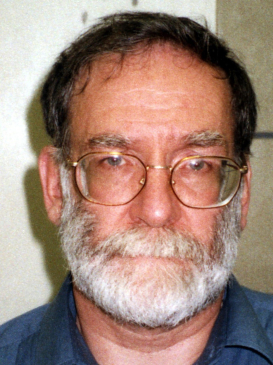
218 murders (Posibly around 250) including parents...

Harold_Shipman_mug_shot.jpg

Harold Frederick "Fred" Shipman[1] (14 January 1946 – 13 January 2004) was a British convicted serial killer and former doctor. He is the most prolific known serial killer in history with 218 murders being positively ascribed to him, although the real number may be higher.
On 31 January 2000, a jury found Shipman guilty of 15 murders. He was sentenced to life imprisonment and the judge recommended that he never be released. The whole life tariff was confirmed by the Home Secretary a little over two years later.
After his trial, the Shipman Inquiry, chaired by Dame Janet Smith, decided there was enough evidence to suggest Shipman had probably killed about 250 people, of whom 218 could be positively identified. About 80% of his victims were women. His youngest victim was Peter Lewis, a 41-year-old man.[2] Much of Britain's legal structure concerning health care and medicine was reviewed and modified as a direct and indirect result of Shipman's crimes, especially after the findings of the Shipman Inquiry, which began on 1 September, 2000 and lasted almost two years. Shipman is the only British doctor found guilty of murdering his patients.[3]
Shipman died on 13 January, 2004, after hanging himself in his cell at Wakefield Prison in West Yorkshire.
Contents

[hide]

[edit] Early life and career

Shipman was born in Nottingham, Nottinghamshire, the son of Vera and Harold Shipman, who was a council lorry driver.[4] His working class parents were devout Methodists.[4] Shipman was particularly close to his mother, who died during his teenage years.[4][5] Shipman graduated from Leeds School of Medicine in 1970, and started work at Pontefract General Infirmary in Pontefract, West Riding of Yorkshire. In 1974, he took his first position as a general practitioner (GP) in Todmorden, West Yorkshire. In 1975 he was caught forging prescriptions of pethidine for his own use. He was fined £600, and briefly attended a drug rehabilitation clinic in York. After a brief spell as medical officer for Hatfield College, Durham, and temporary work for the National Coal Board, he became a GP at the Donneybrook Medical Centre in Hyde, Cheshire, in 1977.
Shipman continued working as a GP in Hyde throughout the 1980s and founded his own surgery on Market Street in 1993, becoming a respected member of the community. In 1983, he was interviewed on the Granada television documentary World in Action on how the mentally ill should be treated in the community.[6]
[edit] Detection

In March 1998, Dr. Linda Reynolds of the Brooke Surgery in Hyde—prompted by Deborah Massey from Frank Massey and Son's funeral parlour—expressed concerns to John Pollard, the coroner for the South Manchester District, about the high death rate among Shipman's patients. In particular, she was concerned about the large number of cremation forms for elderly women that he had needed countersigned. She claimed Shipman was, either through negligence or intent, killing his patients.
The matter was brought to the attention of the police, who were unable to find sufficient evidence to bring charges; The Shipman Inquiry later blamed the police for assigning inexperienced officers to the case. Between 17 April 1998, when the police abandoned the investigation, and Shipman's eventual arrest, he killed three more people.[7][8] His last victim was Kathleen Grundy, a former Mayor of Hyde, who was found dead at her home on 24 June 1998. Shipman was the last person to see her alive, and later signed her death certificate, recording "old age" as cause of death.
Grundy's daughter, lawyer Angela Woodruff, became concerned when solicitor Brian Burgess informed her that a will had been made, apparently by her mother (although there were doubts about its authenticity). The will excluded her and her children, but left £386,000 to Shipman. Burgess told Woodruff to report it, and went to the police, who began an investigation. Grundy's body was exhumed, and when examined found to contain traces of diamorphine (heroin), often used for pain control in terminal cancer patients. Shipman was arrested on 7 September 1998, and was found to own a typewriter of the type used to make the forged will.[9]
The police then investigated other deaths Shipman had certified, and created a list of 15 specimen cases to investigate. They discovered a pattern of his administering lethal overdoses of diamorphine, signing patients' death certificates, and then forging medical records indicating they had been in poor health.[10]
Prescription For Murder, a book by journalist Brian Masters, reports two theories on why Shipman forged the will. One is that he wanted to be caught because his life had got out of control, the other that he planned to retire at fifty-five and leave the country.
 

4keven4

Well-known member
  • May 31, 2007
    7,739
    212
    63
    GMT +1
    ithin buruwo
    umbe mewa dala mokadda kiyanne hadanne?
    yako wena website walin gedi pitin aran copy karanna epa
    poddak wadagath widiyakata thread eke dapan
    mona modayekda manda tho
    tho honda UNP ekatama thamay
    pol buruwa
     
    Aug 19, 2008
    11,653
    167
    0
    Sri Lanka
    ithin buruwo
    umbe mewa dala mokadda kiyanne hadanne?
    yako wena website walin gedi pitin aran copy karanna epa
    poddak wadagath widiyakata thread eke dapan
    mona modayekda manda tho
    tho honda UNP ekatama thamay
    pol buruwa

    Sorry
    if you can't read them.
    Your language shows your education level.
    That is not my fault.
    Ability to read too is a talent,
    a rare talent
    and a skill too.
    More you hate reading
    it will be more difficult.
    So read,
    even if it hurts.

    I thought
    members who can read
    and pay attention to
    how mothers have affected the serial killers most.
    Some of them have killed their mothers
    and one has killed both the parents.
    There must be common factors.
    :no:

     
    Last edited:
    Aug 19, 2008
    11,653
    167
    0
    Sri Lanka
    One thing very significant in their lives is their attachment
    or detachment(negative attachment) to mother
    which is beyond normal.
    Some of them have killed mother.
    In Buddha's teaching killing parents is
    two of the five worst karmas one can commit.
    They had negative power accumulated...
    which is Sankhara... powerful chemical imbalances
    in their brain and nervous system.
    When you accumulate Sankhara
    you need more as we need food.
    Sankhara is also one of the 4 types of food
    kind of mental food
    according to Buddha.
     

    4keven4

    Well-known member
  • May 31, 2007
    7,739
    212
    63
    GMT +1
    Sorry
    if you can't read them.
    Your language shows your education level.
    That is not my fault.
    Ability to read too is a talent,
    a rare talent
    and a skill too.
    More you hate reading
    it will be more difficult.
    So read,
    even if it hurts.

    I thought
    members who can read
    and pay attention to
    how mothers have affected the serial killers most.
    Some of them have killed their mothers
    and one has killed both the parents.
    There must be common factors.
    :no:


    jus like the way my language can implicate my education level
    it does implicate ur state of mind and your harsh childhood by ur past threads and current threads
    coming from fake accounts and directly insulting mother land?
    now how does that suppose to implicate your education level and your state of mind?
    that you are retarded one of like those fellows?
    hence you don't love your mother country do u even love your mother?
    psycho
     
    Aug 19, 2008
    11,653
    167
    0
    Sri Lanka
    jus like the way my language can implicate my education level
    it does implicate ur state of mind and your harsh childhood by ur past threads and current threads
    coming from fake accounts and directly insulting mother land?
    now how does that suppose to implicate your education level and your state of mind?
    that you are retarded one of like those fellows?
    hence you don't love your mother country do u even love your mother?
    psycho
    Who can insult a land.
    Land is get insulted or glorified
    according to
    the behavior, intelligence of it's people,culture and other such factors.
    We know well how high or low they are
    because we live here among mostly people like you.
    :)


    4keven4

    Well-known member
  • May 31, 2007
    7,739
    212
    63
    GMT +1
    Who can insult a land.
    Land is get insulted or glorified
    according to
    the behavior, intelligence of it's people,culture and other such factors.
    We know well how high or low they are
    because we live here among mostly people like you.
    :)


    not talking about it as jus a piece land asshole
    you are insulting the land where you born where your ancestors came from
    so you trying to justify it?
    you trying to justify the act of insulting your motherland?
    the country you born the country where you gain your respect the country where you learnt something?
    what a dork
    man that does show your level of intelligence
    oh great
    such idiotic

    ""A person who is respectful towards his land, civilization and language, attains greatness and he acquires all the happiness of life. His deeds should be such that makes the motherland, the culture and language proud.""

    ~ RIGVEDA ~
     

    ubeysekara

    Member
    Mar 13, 2007
    138
    0
    0
    ADO ATULA
    umbe ta nam kawadawath hari yanne na yako
    tho nam maha sakkili ballek ooi
    thamnge maw bimata garu karanne nathi miniha diha deyyowath balanne na
    tho maha amu sakkiliyek ooi
    wal sakkili ballek
    thota nathath thoge lamaynta ganita hari waradinawa kawadahari
    eke saththakinma wenawa
    wal sakkili para balla
    thoge mulu paramparawama hadigawila yanna one
    paraya
     
    Aug 19, 2008
    11,653
    167
    0
    Sri Lanka
    ADO ATULA
    umbe ta nam kawadawath hari yanne na yako
    tho nam maha sakkili ballek ooi
    thamnge maw bimata garu karanne nathi miniha diha deyyowath balanne na
    tho maha amu sakkiliyek ooi
    wal sakkili ballek
    thota nathath thoge lamaynta ganita hari waradinawa kawadahari
    eke saththakinma wenawa
    wal sakkili para balla
    thoge mulu paramparawama hadigawila yanna one
    paraya


    Mehema nam ada mawbimata garu karana aya katha karanne.
    Matanam oya godata wetenna lajjayi.
    Wanachara widiyata hasirena kenek Mawbimata garu karanawa kiwwama
    eka e mawbimata nindaawak.
    :no:

    Gauravaya kiyana eka pistholayak oluwata thiyala aran denn puluwan kiyalada hithanne?
    :)
     
    Aug 19, 2008
    11,653
    167
    0
    Sri Lanka
    not talking about it as jus a piece land asshole
    you are insulting the land where you born where your ancestors came from
    so you trying to justify it?
    you trying to justify the act of insulting your motherland?
    the country you born the country where you gain your respect the country where you learnt something?
    what a dork
    man that does show your level of intelligence
    oh great
    such idiotic

    ""A person who is respectful towards his land, civilization and language, attains greatness and he acquires all the happiness of life. His deeds should be such that makes the motherland, the culture and language proud.""

    ~ RIGVEDA ~

    I don't respect or condemn
    anything or anyone as a whole.
    And I don't respect or condemn
    just because a part is good or bad.
    And I don't follow what politicians preach.
    "Beware the leader who bangs the drums of war in order to whip the citizenry into a patriotic fervor, for patriotism is indeed a double-edged sword. It both emboldens the blood, just as it narrows the mind. And when the drums of war have reached a fever pitch and the blood boils with hate and the mind is closed, the leader will have no need in seizing the rights of the citizenry. Rather, the citizenry, infused with fear and blinded by patriotism, will offer up all their rights unto the leader and gladly so. How do I know? For this is what I have done. And I am Caesar."
    Julius Caesar


    Knowingly or unknowingly you are being used.
    I am not a donkey
    to pull the cart of some hypocrites.