


~ Giant Panda ~


Scientific Name
Ailuropoda melanoleuca
Status
Endangered (IUCN 3.1)
Population
1,600 in the wild (2004)
Habitat
Temperate Broadleaf and Mixed Forests of Southwest China
The giant panda was once widespread throughout southern and eastern China, as well as neighbouring Myanmar (Burma) and northern Vietnam.
Due to expanding human populations and development, the species is now restricted to only 20 or so isolated patches of mountain forest in Sichuan, Shaanxi and Gansu provinces.

What Do They Eat??
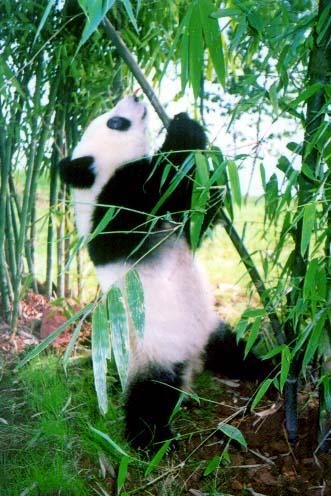
The simple answers is: bamboo.
A Panda's daily menu consists almost entirely of the leaves, stems, and shoots of various bamboo species.
Bamboo contains very little nutritional value, so pandas must eat 12-38kg every day to meet their energy needs.
Only about 1% of their diet is made up of other plants and meat. Occasionally the panda will hunt for pikas and other small rodents.
How Big, Tall, Heavy etc Are The Pandas?
Pandas have a white coat with black fur around their eyes, on their ears, muzzle, legs and shoulders.
Unique physical features:
Size
Distinctive black and white coat.

Ongoing threats to the panda's survival
Despite the conservation success in the panda's habitat in recent years problems still persist.
The major factors contributing to habitat loss and fragmentation — the most pressing threats to the giant panda — are:

More Info

Scientific Name
Ailuropoda melanoleuca
Status
Endangered (IUCN 3.1)
Population
1,600 in the wild (2004)
Habitat
Temperate Broadleaf and Mixed Forests of Southwest China
The giant panda was once widespread throughout southern and eastern China, as well as neighbouring Myanmar (Burma) and northern Vietnam.
Due to expanding human populations and development, the species is now restricted to only 20 or so isolated patches of mountain forest in Sichuan, Shaanxi and Gansu provinces.

What Do They Eat??
The simple answers is: bamboo.
A Panda's daily menu consists almost entirely of the leaves, stems, and shoots of various bamboo species.
Bamboo contains very little nutritional value, so pandas must eat 12-38kg every day to meet their energy needs.
Only about 1% of their diet is made up of other plants and meat. Occasionally the panda will hunt for pikas and other small rodents.
How Big, Tall, Heavy etc Are The Pandas?
Pandas have a white coat with black fur around their eyes, on their ears, muzzle, legs and shoulders.
Unique physical features:
- Broad, flat molar teeth
- Enlarged wrist bone that functions as an opposable thumb
Size
- Giant pandas are about 150cm long from nose to rump, with a 10-15cm tail.
- A large adult panda can weigh about 100-150kg, with males 10% larger and 20% heavier than females.
Distinctive black and white coat.

Ongoing threats to the panda's survival
Despite the conservation success in the panda's habitat in recent years problems still persist.
The major factors contributing to habitat loss and fragmentation — the most pressing threats to the giant panda — are:
- conversion of forests to agricultural areas,
- medicinal herb collection,
- bamboo harvesting,
- poaching, and
- large-scale development activities such as road construction, hydropower development, and mining.

More Info


 nice post!


