


Tissamaharama Raja Maha Viharaya & Other Historical Places.

Tissamaharama (තිස්සමහාරාමය) is a town in south-eastern Sri Lanka. It used to be the capital of the Sinhalese Kingdom of Ruhuna as early as the 3rd century B.C. Only few buildings from that period can still be seen today. The large artificial Tissa Wewa lake, which was a part of a sophisticated irrigation system, also dates from that time. Today, the town mainly serves as a starting point for visits to Yala National Park and Kataragama.
Tissamaharama is one of the most pleasant towns in the southern coast. The beautiful man-made tank (reservoir) in Tissa, Tissa Wewa with its remarkable bird life provides the scenic backdrop to the town. Tissa was the sanctuary in the deep south, where Sinhalese patriots fled to rally support against marauding Dravidian invaders from Southern India. Known by the name of Mahagama (great town), it was one of the principal settlements of the southern province of Ruhuna. Mahagama was founded in the third century BC by a brother of the King Devanam Piya Tissa of Anuradhapura, & later rose to prominence under King Kavantissa, father of the hero of the nation, King Dutugamunu of Ruhuna.
Modern Tissa is a bustling city with the main street lined with banks, shops & little cafes and kiosks. Refreshing breeze from the large reservoir sweeps the town. The town in turn is bounded by a beautiful expanse of paddy fields. In the midst of paddy fields stands most impressive of Tissa's dagobas (stupas). The combination of cluster of dagobas & two beautiful tanks lend Tissa a certain distinction & a sense of history making it in sharp contrast with the other towns of southern coast.
Tissa Maha Dagoba (Tissa great stupa)
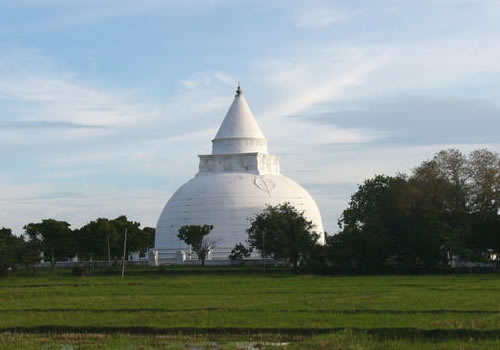
Most impressive is the restored Maha Stupa, built by King Kavantissa in the 3rd century BC located between Tissa town centre and the tank. It was the largest dagoba in the island at the time. Today, for Buddhist pilgrims, it is one of the sixteen most sacred sites (Solosmasthana) in the country. The dagoba has a circumference of 165m & stands 55.8m high, is enshrined with sacred tooth relic & forehead bone relic of Buddha.


Tissa Wewa Rainwater reservior
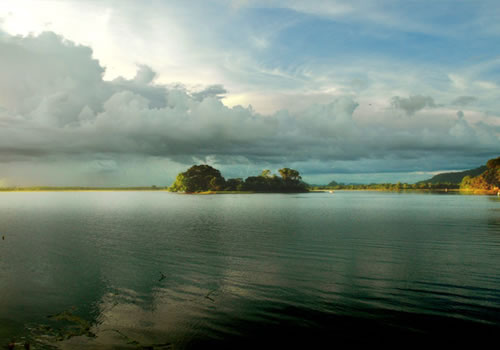
North of the modern town lies the beautiful Tissa Wewa, an expansive artificial lake built by King Kavantissa in the 2nd century BC of the ancient southern kingdom of Ruhuna. The shore nearest the town is often busy with crowds of people bathing & flock of aquatic birds including bitterns, herons & egrets skimming across the waters. A beautiful walk leads along the massive bund (embankment) which encloses the lake's southern shore, shaded by a procession of majestic old trees.
Yatala Dagoba
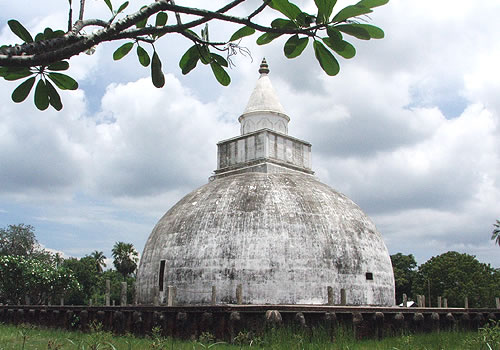
By the Tissa-Deberawewa road is Yatala Wehera, built 2300 years ago by King Yatalatissa with its surrounding wall of sculpted elephant heads & moat and large moonstone. There is also a large monolith with scorings on one face that are believed to have been made by chains used to tether royal elephants.

Sandagiri Dagoba
Nearby stands the Sandagiri Dagoba, together with the remains of a monastery complex. A walk around the dagoba provides us with an insight into the construction of the great dagobas. Santagiri (or Sandagiri) dagoba, too was built by Kavantissa in the second century BC & now restored to its original glory.
(Sandagiri Stone)

Menik dagoba
We continue down the road for a couple of hundred meters to reach the Menik dagoba.
Ruins of Galkanumandiya
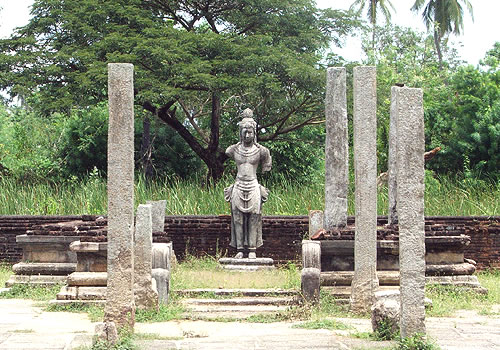
The small cluster of pillars you pass en route is all that remains of the Galkanumandiya, thought to be some kind of monastic building.
Wirawila Wewa (Wirawila rain water reservoir) Bird Sanctuary
Between the northern & southern turn-offs to Tissa, the Hambantota Wellawaya road runs on a causeway across the large Wirawila Wewa (Reservoir). The best time for bird watching is early morning.
Kirinda
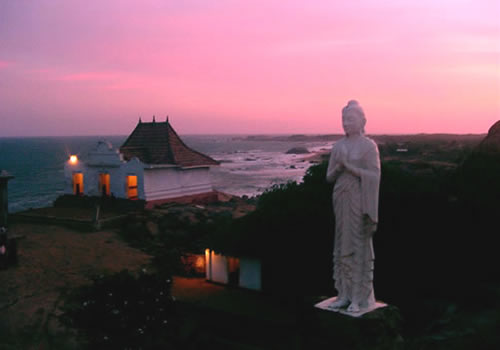
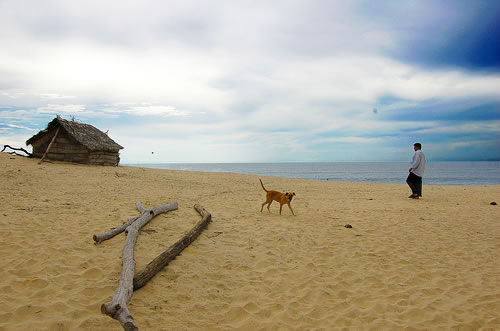
Kirinda is a small but beautiful village on the southern coast of Sri Lanka, 10 km south of Tissa & close to Kataragama. It has a beautiful beach and a Buddhist shrine built on a huge round rock. The area is also close to the Great and Little Basses reefs which provide some of the most spectacular scuba diving in the country. Kirinda was used as a land base by Arthur C. Clarke's party when diving for the Great Basses wreck (Treasures of the Reef).
One of the most well-known attractions in Kirinda is the statue of Queen Vihara Maha Devi, the heroine of the nation & mother of the hero of the nation, King Dutugamunu. This is situated on the spot where she is said to have landed after being set adrift on the sea from Kelaniya.

Add Rep++ If you like my tread

Ela kiri aaaaaaaaaaaaaaaaaaaaaaaaaaaaaaaaaaaa!

Tissamaharama (තිස්සමහාරාමය) is a town in south-eastern Sri Lanka. It used to be the capital of the Sinhalese Kingdom of Ruhuna as early as the 3rd century B.C. Only few buildings from that period can still be seen today. The large artificial Tissa Wewa lake, which was a part of a sophisticated irrigation system, also dates from that time. Today, the town mainly serves as a starting point for visits to Yala National Park and Kataragama.
Tissamaharama is one of the most pleasant towns in the southern coast. The beautiful man-made tank (reservoir) in Tissa, Tissa Wewa with its remarkable bird life provides the scenic backdrop to the town. Tissa was the sanctuary in the deep south, where Sinhalese patriots fled to rally support against marauding Dravidian invaders from Southern India. Known by the name of Mahagama (great town), it was one of the principal settlements of the southern province of Ruhuna. Mahagama was founded in the third century BC by a brother of the King Devanam Piya Tissa of Anuradhapura, & later rose to prominence under King Kavantissa, father of the hero of the nation, King Dutugamunu of Ruhuna.
Modern Tissa is a bustling city with the main street lined with banks, shops & little cafes and kiosks. Refreshing breeze from the large reservoir sweeps the town. The town in turn is bounded by a beautiful expanse of paddy fields. In the midst of paddy fields stands most impressive of Tissa's dagobas (stupas). The combination of cluster of dagobas & two beautiful tanks lend Tissa a certain distinction & a sense of history making it in sharp contrast with the other towns of southern coast.
Tissa Maha Dagoba (Tissa great stupa)
Most impressive is the restored Maha Stupa, built by King Kavantissa in the 3rd century BC located between Tissa town centre and the tank. It was the largest dagoba in the island at the time. Today, for Buddhist pilgrims, it is one of the sixteen most sacred sites (Solosmasthana) in the country. The dagoba has a circumference of 165m & stands 55.8m high, is enshrined with sacred tooth relic & forehead bone relic of Buddha.


Tissa Wewa Rainwater reservior
North of the modern town lies the beautiful Tissa Wewa, an expansive artificial lake built by King Kavantissa in the 2nd century BC of the ancient southern kingdom of Ruhuna. The shore nearest the town is often busy with crowds of people bathing & flock of aquatic birds including bitterns, herons & egrets skimming across the waters. A beautiful walk leads along the massive bund (embankment) which encloses the lake's southern shore, shaded by a procession of majestic old trees.
Yatala Dagoba
By the Tissa-Deberawewa road is Yatala Wehera, built 2300 years ago by King Yatalatissa with its surrounding wall of sculpted elephant heads & moat and large moonstone. There is also a large monolith with scorings on one face that are believed to have been made by chains used to tether royal elephants.

Sandagiri Dagoba
Nearby stands the Sandagiri Dagoba, together with the remains of a monastery complex. A walk around the dagoba provides us with an insight into the construction of the great dagobas. Santagiri (or Sandagiri) dagoba, too was built by Kavantissa in the second century BC & now restored to its original glory.
(Sandagiri Stone)

Menik dagoba
We continue down the road for a couple of hundred meters to reach the Menik dagoba.
Ruins of Galkanumandiya
The small cluster of pillars you pass en route is all that remains of the Galkanumandiya, thought to be some kind of monastic building.
Wirawila Wewa (Wirawila rain water reservoir) Bird Sanctuary
Between the northern & southern turn-offs to Tissa, the Hambantota Wellawaya road runs on a causeway across the large Wirawila Wewa (Reservoir). The best time for bird watching is early morning.
Kirinda
Kirinda is a small but beautiful village on the southern coast of Sri Lanka, 10 km south of Tissa & close to Kataragama. It has a beautiful beach and a Buddhist shrine built on a huge round rock. The area is also close to the Great and Little Basses reefs which provide some of the most spectacular scuba diving in the country. Kirinda was used as a land base by Arthur C. Clarke's party when diving for the Great Basses wreck (Treasures of the Reef).
One of the most well-known attractions in Kirinda is the statue of Queen Vihara Maha Devi, the heroine of the nation & mother of the hero of the nation, King Dutugamunu. This is situated on the spot where she is said to have landed after being set adrift on the sea from Kelaniya.

Add Rep++ If you like my tread

Ela kiri aaaaaaaaaaaaaaaaaaaaaaaaaaaaaaaaaaaa!


