එළකිරි රසායන විද්‍යාව පන්තිය

fishD

Active member
  • Jun 12, 2010
    739
    51
    28
    අයිස් ලන්තයේ
    එළකිරි රසායන විද්‍යාව පන්තිය

    එළකිරි රසායන විද්‍යාව පන්තිය

    EXAM ඉවර වෙලා දෑන් ගොඩාක් නිදහස්

    ඉතින් පොඩි වෑඩක් පටන් ගන්න තමා හදන්නෙ !!

    ඔක්කොටොම කලින් අද ආපු නන්ගිලා මල්ලීලා හෑමදෙනාටම ජයවේවා කිවුවා !!

    හරි වෑඩි කතා ඔනී නෑ

    කෙලින්ම වෑඩට බහිමු

    ඔයාලා දන්නවා නේ A/L වලට රසායන ව්ද්යාව හරිම වෑදගත්

    අපි මේ එකේ ඔයාලට තියෙන රසායන ව්ද්යා ගෑටලු ගෑන කතා කරමු

    මම දන්න දන්න විදියට කියලා දෙන්නම් , බෑරි නම් කාගෙන් හරි අහල හරි කියලා දෙන්නම් (අපි එහෙමයි )

    THREAD එක BUMPකරලා තියාගමු !!!

    දෑන් ඉතින් BUMP එකක්වත් නොදා යනවා නෙමෙයි ඕන් ... ගහනවා ACID !!!
     
    Last edited:
    • Like
    Reactions: Mr.Truth

    Pink panther

    Well-known member
  • Nov 8, 2011
    23,234
    3,134
    113
    36
    ~ ση тнє ƒℓσω ~
    fnVd.jpeg
     

    sameerasadaru

    Member
    Jan 17, 2010
    18,139
    720
    0
    ..::ÏÑ H€R H€♥RŦ::..
    අපෝ මේකෙත් පටන් ගත්තද මේ මගුල :angry:
    උබට වෙන විශයක් තිබ්බෙම නැද්ද වෙන :baffled: මදැයි ටිකක් නිදහසේ ඉන්න එලකිරි ආවා :( :rofl:

    එල මචන් ගොඩක් අයට වැදගත් වෙයි:yes: දිගටම කර ගෙන යන්න :D
     
    • Like
    Reactions: fishD

    fishD

    Active member
  • Jun 12, 2010
    739
    51
    28
    අයිස් ලන්තයේ
    අපෝ මේකෙත් පටන් ගත්තද මේ මගුල :angry:
    උබට වෙන විශයක් තිබ්බෙම නැද්ද වෙන :baffled: මදැයි ටිකක් නිදහසේ ඉන්න එලකිරි ආවා :( :rofl:

    එල මචන් ගොඩක් අයට වැදගත් වෙයි:yes: දිගටම කර ගෙන යන්න :D

    :D:D:D:D
     

    fishD

    Active member
  • Jun 12, 2010
    739
    51
    28
    අයිස් ලන්තයේ
    Using the Oxidation Number Technique

    Tip-off – If you are asked to balance an equation and if you are not told whether the reaction is a redox reaction or not, you can use the following procedure.
    General Steps
    Step 1: Try to balance the atoms in the equation by inspection, that is, by the standard technique for balancing non-redox equations. (Many equations for redox reactions can be easily balanced by inspection.) If you successfully balance the atoms, go to Step 2. If you are unable to balance the atoms, go to Step 3.
    Step 2: Check to be sure that the net charge is the same on both sides of the equation. If it is, you can assume that the equation is correctly balanced. If the charge is not balanced, go to Step 3.
    Step 3: If you have trouble balancing the atoms and the charge by inspection, determine the oxidation numbers for the atoms in the formula, and use them to decide whether the reaction is a redox reaction. If it is not redox, return to Step 1 and try again. If it is redox, go to Step 4.
    Step 4: Determine the net increase in oxidation number for the element that is oxidized and the net decrease in oxidation number for the element that is reduced.
    Step 5: Determine a ratio of oxidized to reduced atoms that would yield a net increase in oxidation number equal to the net decrease in oxidation number (a ratio that makes the number of electrons lost equal to the number of electrons gained).
    Step 6: Add coefficients to the formulas so as to obtain the correct ratio of the atoms whose oxidation numbers are changing. (These coefficients are usually placed in front of the formulas on the reactant side of the arrow.)
    Step 7: Balance the rest of the equation by inspection.
     

    fishD

    Active member
  • Jun 12, 2010
    739
    51
    28
    අයිස් ලන්තයේ
    ANOTHER EXAMPLE

    Fe2+(aq)
    arrow-right.gif
    Fe3+(aq) (oxidation)
    MnO4-(aq)
    arrow-right.gif
    Mn2+(aq) (reduction)


    mewata thamai half reactions kiyanne ,,, eeta passe e half reactions balance kara ganna one
    menna mehema


    Fe2+(aq)
    arrow-right.gif
    Fe3+(aq) + e-
    MnO4-(aq) + 8H+(aq) + 5e-
    arrow-right.gif
    Mn2+(aq) + 4H2O


    dan overall reaction eka liya ganna menna mehema


    5Fe2+(aq)
    arrow-right.gif
    5Fe3+(aq) + 5e-
    MnO4-(aq) + 8H+(aq) + 5e-
    arrow-right.gif
    Mn2+(aq) + 4H2O
    ------------------------------------------------------------
    5Fe2+(aq) + MnO4-(aq) + 8H+(aq)
    arrow-right.gif
    5Fe3+(aq) + Mn2+(aq) + 4H2O


    :) :) :) :)

    mokak hari seen ekak tiyenawa nam PM ekak danna ......... :)
     
    Last edited:

    fishD

    Active member
  • Jun 12, 2010
    739
    51
    28
    අයිස් ලන්තයේ
    Compressibility factor


    The compressibility factor (Z) is a useful thermodynamic property for modifying the ideal gas law to account for behavior of real gases.[1][2][3][4][5] It is a measure of how much the thermodynamic properties of a real gas deviate from those expected of an ideal gas. It may be thought of as the ratio of the actual volume of a real gas to the volume predicted by the ideal gas at the same temperature and pressure as the actual volume.
    For an ideal gas, Z always has a value of 1. For real gases, the value may deviate positively or negatively, depending on the effect of the intermolecular forces of the gas. The closer a real gas is to its critical point or to its saturation point, the larger are the deviations of the gas from ideal behavior.

    The ideal gas law is defined as:
    1142f61356382badab6f4500c3d131d1.png
    and the ideal gas law corrected for non-ideality is defined is:
    6d95277630cd497b198ae3863960c8fc.png
    where:
    44c29edb103a2872f519ad0c9a0fdaaa.png
    = pressure
    1b007b2e910d8dbb8ccb4dda34306722.png
    = molar volume of the gas
    21c2e59531c8710156d34a3c30ac81d5.png
    = compressibility factor
    e1e1d3d40573127e9ee0480caf1283d6.png
    = Universal gas constant
    b9ece18c950afbfa6b0fdbfa4ff731d3.png
    = temperature and thus:
    df0a5ac8b6ac47d01cee7a4e6dbf130e.png
     

    fishD

    Active member
  • Jun 12, 2010
    739
    51
    28
    අයිස් ලන්තයේ
    What is a Mole?

    A mole is the amount of pure substance containing the same number of chemical units as there are atoms in exactly 12 grams of carbon-12 (i.e., 6.023 X 10²³).


    6.023 X 10²³ kiyanne constant ekak. e thamai AVOGADRO's number kiyala kiyanne :) :)
     

    fishD

    Active member
  • Jun 12, 2010
    739
    51
    28
    අයිස් ලන්තයේ
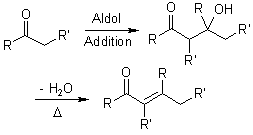
    Aldol Condensation

    aldol-1.gif

    In some cases, the adducts obtained from the Aldol Addition can easily be converted (in situ) to α,β-unsaturated carbonyl compounds, either thermally or under acidic or basic catalysis. The formation of the conjugated system is the driving force for this spontaneous dehydration. Under a variety of protocols, the condensation product can be obtained directly without isolation of the aldol.


    AND THE MECHANISM IS