ජල_බිදුවකට_වෙඩි_තිබ්බෙමි
 The Amazing High Speed Bullet Photography

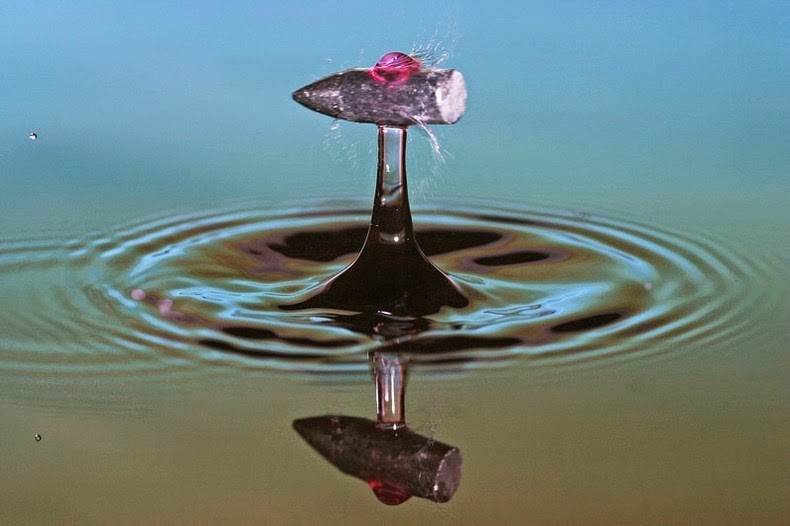
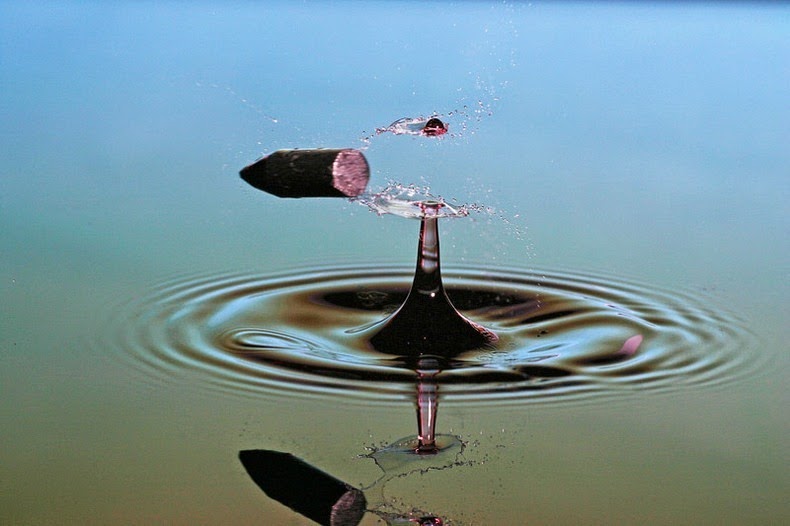
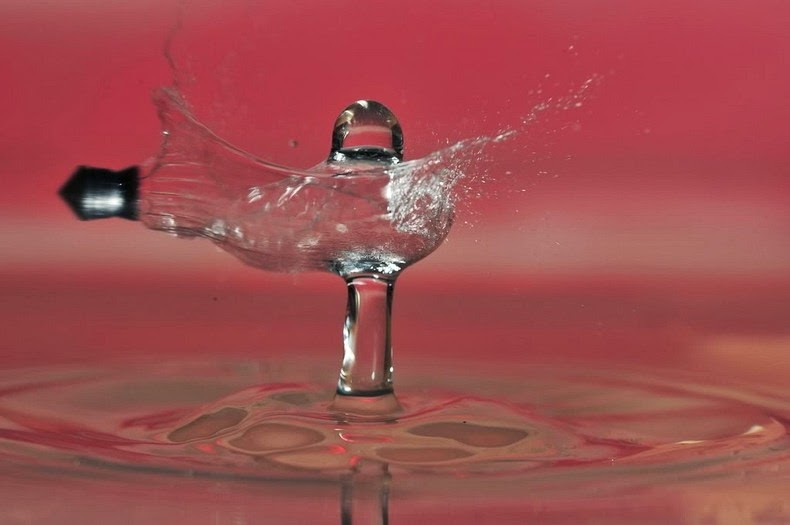
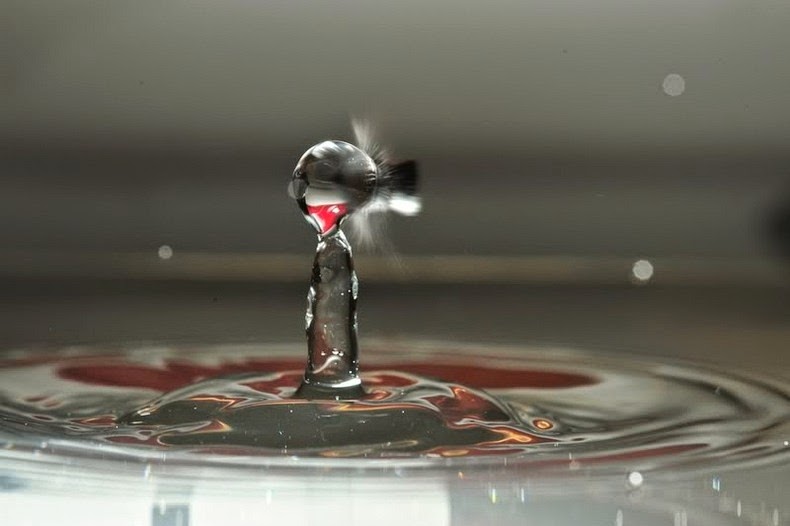
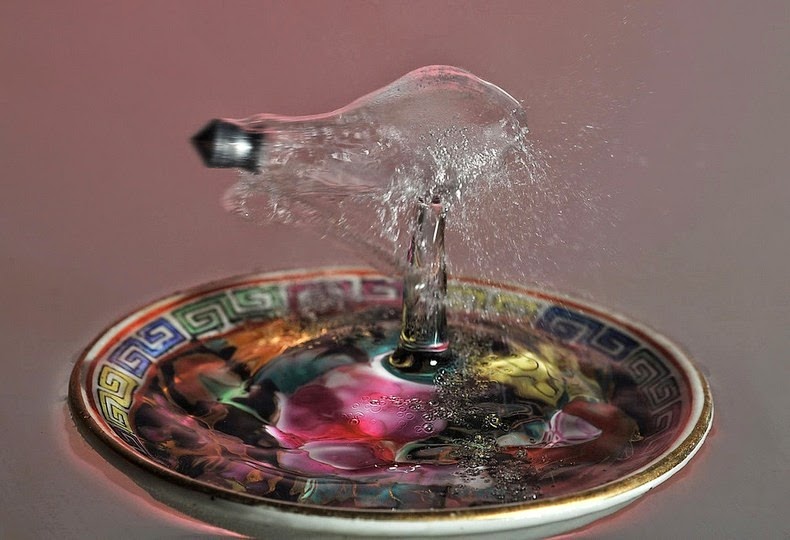
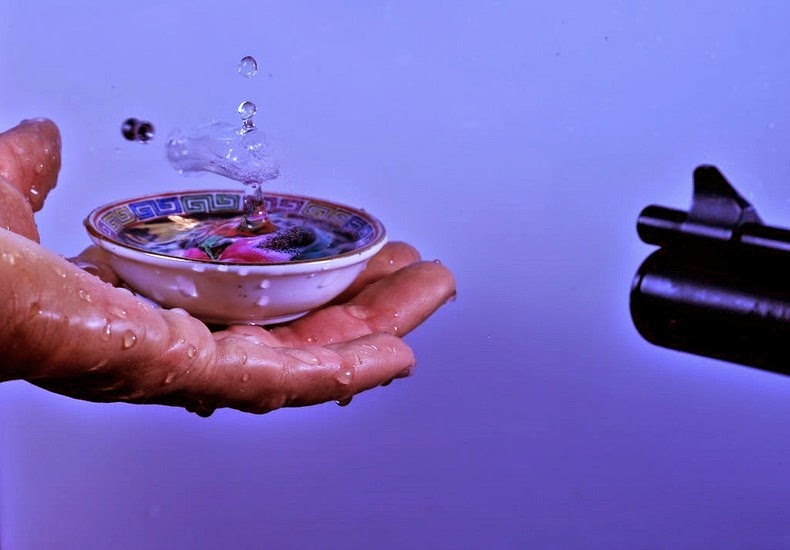
Shooting pictures of bullets through targets like water balloon and fruits is hard enough. What if the target itself is moving or instantaneous? Dutch photographer Alexander Augusteijn does precisely that. Using a device he built himself, Augusteijn takes pictures of bullets slicing through drops of water.
“I use a normal flash to achieve very short illuminations,” said Alexander Augusteijn. “The most critical parameter in this kind of photography is timing, which is achieved by computer control of shutter, flash, valve, gun or whatever other device is used.”
“These kind of images require a lot of experimentation, dedication, patience and willingness to endlessly clean spill of liquids and debris from objects shot to pieces. Several hundreds of trial shots may be needed to get timing correct. After that, the process is pretty well controlled, and often half of the shots will be usable, with 1 out of 10 really interesting.”
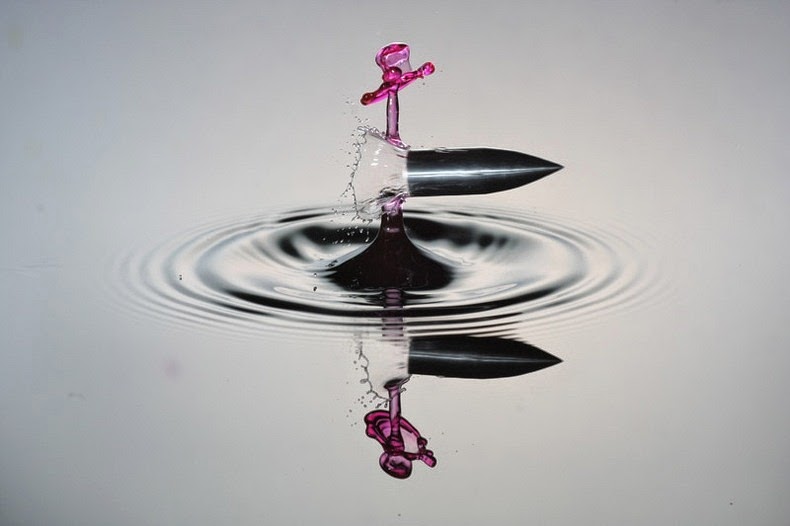
Alexander Augusteijn explains how he took this pictures:
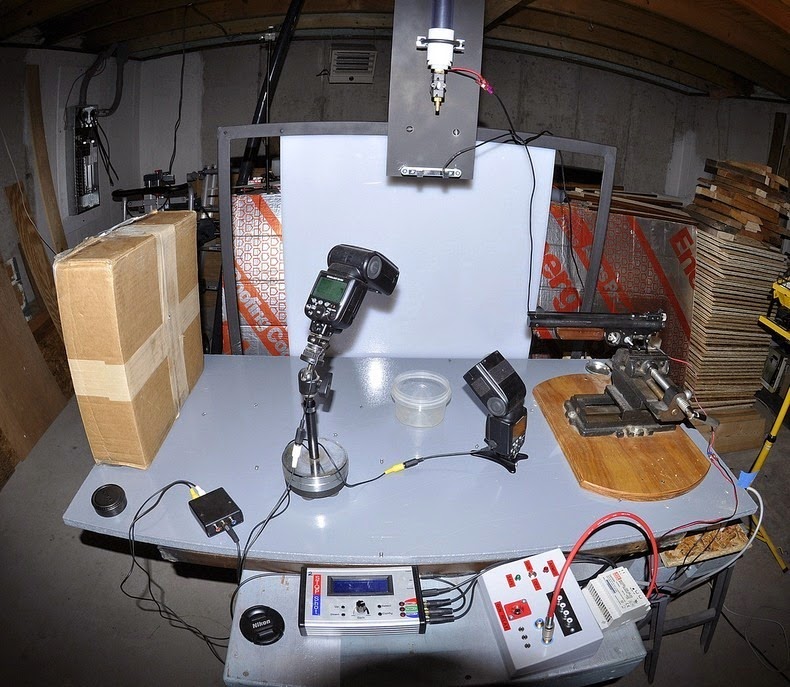
1.A single precisely measured drop is released from a 12vDC valve connected to a Marriot siphon.
2.The drop falls through the beams of 2 stacked infrared photogates which starts the clock on 2 intervolometers.
3.One intervolometer, after a calculated delay, sends a signal to a 12vDC relay which activates a 24vDC linear solenoid. The solenoid, which is mounted on the gun, pulls the trigger upon activation.
4.The gun, with grips removed, is mounted in a machinist vice with adjustable x-y axes which allows for precise targeting adjustments. Targeting is done using a laser sight mounted on the gun barrel adjusted so that the laser beam intersects the bullet path exactly 6 inches from the barrel end. This is where the bullet will be after a pre-calculated delay. I call this point 'ground zero'.
5.Measuring how long it takes the gun to fire and the bullet to be 6 inches from the barrel end was the most difficult task. It required measuring how long it takes the relay to close, how long for the solenoid to pull the trigger, and how long for the bullet to travel through the barrel and then an additional 6 inches. To accomplish this, I used two infrared detectors connected to an intervolometer which measures camera shutter delay time. I adapted it to measure the time interval from when the initial signal to 'fire' is sent to the 12vDC relay to when the bullet traveled 6 inches (ground zero').
6.Using precise calculations, I know how long it takes for the drop and the pellet to arrive at 'ground zero' simultaneously after drop release. The intervolometer is then programmed with the correct time delay intervals.
7.Upon drop release, a second infrared photogate sends a signal to a second intervolometer which controls two SB900 Speedlites. The lights are adjusted to fire at 1/128 power which delivers a flash duration of 1/38,500ths second; fast enough to stop the pellet motion satisfactorily.
8.As I know precisely how long it takes both the pellet and the drop to arrive at 'ground zero' and collide, I simply program this delay into the intervolometer controlling the flash. I can advance or retard the timing of the flash to capture the pellet anywhere before, during, or after the impact capturing the entire sequence. The sequence, of course, must be different drop, but the technique is so precise that it appears to be a single event.
9.The camera, with mirror locked up and set to shutter speed of 1 second, is fired immediately by a second channel on intervolometer #1 from the same signal triggered by the drop release.
10.To capture the event, I simply pre-focus on 'ground zero' with a 200mm Micro lens, lock the camera mirror up, shut off room lights, and press one button on intervolometer #1 to release a drop whereupon the whole process happens automatically.
The whole process takes 28ms + or - a ms or two.
All calculations required working with time intervals of 1,000ths of a second to capture the event.The hit rate, using the method described, is close to 100%.
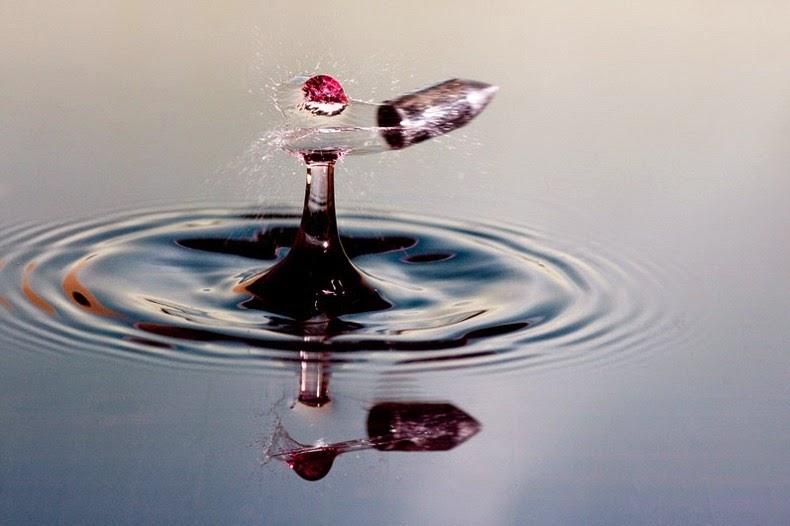
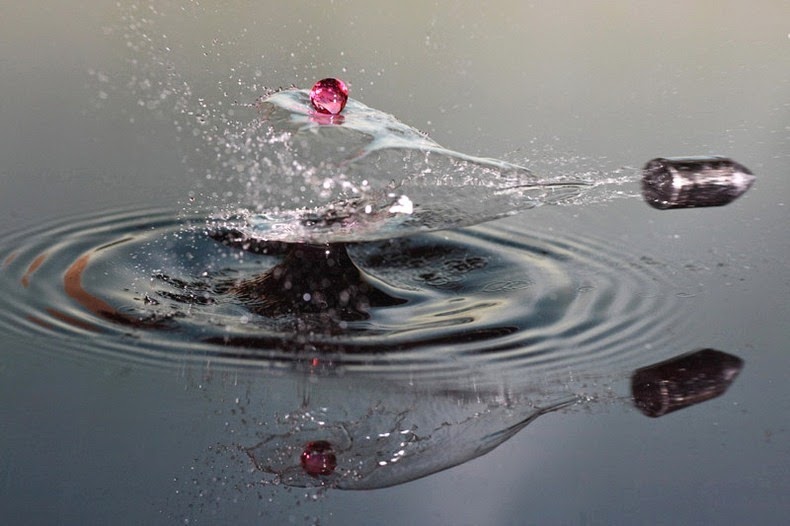
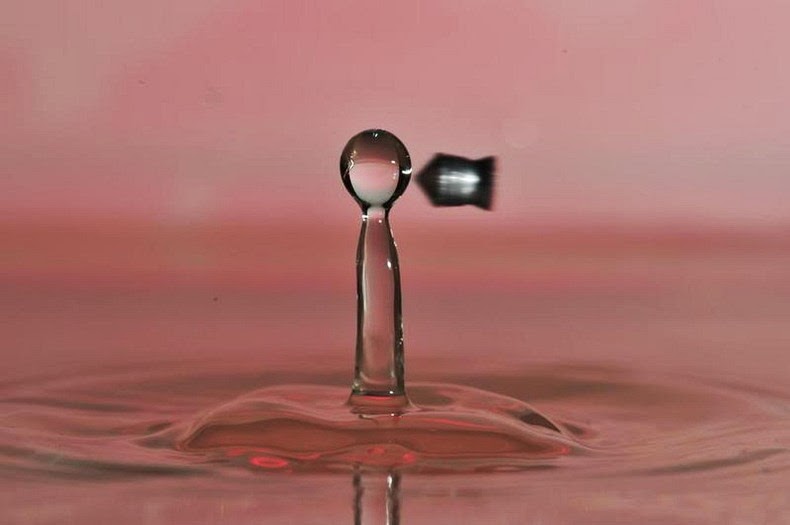
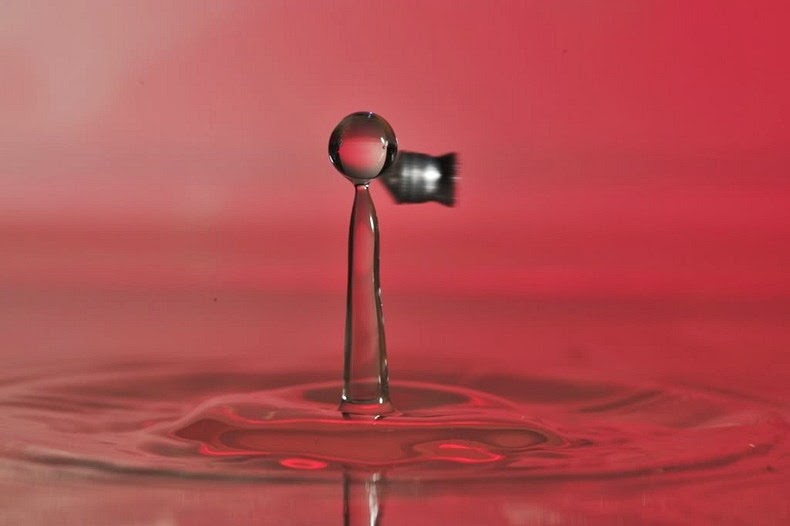
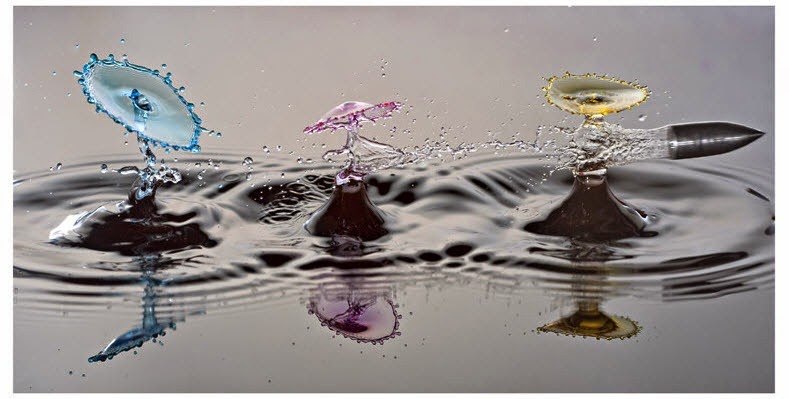


Shooting pictures of bullets through targets like water balloon and fruits is hard enough. What if the target itself is moving or instantaneous? Dutch photographer Alexander Augusteijn does precisely that. Using a device he built himself, Augusteijn takes pictures of bullets slicing through drops of water.
“I use a normal flash to achieve very short illuminations,” said Alexander Augusteijn. “The most critical parameter in this kind of photography is timing, which is achieved by computer control of shutter, flash, valve, gun or whatever other device is used.”
“These kind of images require a lot of experimentation, dedication, patience and willingness to endlessly clean spill of liquids and debris from objects shot to pieces. Several hundreds of trial shots may be needed to get timing correct. After that, the process is pretty well controlled, and often half of the shots will be usable, with 1 out of 10 really interesting.”
Alexander Augusteijn explains how he took this pictures:
1.A single precisely measured drop is released from a 12vDC valve connected to a Marriot siphon.
2.The drop falls through the beams of 2 stacked infrared photogates which starts the clock on 2 intervolometers.
3.One intervolometer, after a calculated delay, sends a signal to a 12vDC relay which activates a 24vDC linear solenoid. The solenoid, which is mounted on the gun, pulls the trigger upon activation.
4.The gun, with grips removed, is mounted in a machinist vice with adjustable x-y axes which allows for precise targeting adjustments. Targeting is done using a laser sight mounted on the gun barrel adjusted so that the laser beam intersects the bullet path exactly 6 inches from the barrel end. This is where the bullet will be after a pre-calculated delay. I call this point 'ground zero'.
5.Measuring how long it takes the gun to fire and the bullet to be 6 inches from the barrel end was the most difficult task. It required measuring how long it takes the relay to close, how long for the solenoid to pull the trigger, and how long for the bullet to travel through the barrel and then an additional 6 inches. To accomplish this, I used two infrared detectors connected to an intervolometer which measures camera shutter delay time. I adapted it to measure the time interval from when the initial signal to 'fire' is sent to the 12vDC relay to when the bullet traveled 6 inches (ground zero').
6.Using precise calculations, I know how long it takes for the drop and the pellet to arrive at 'ground zero' simultaneously after drop release. The intervolometer is then programmed with the correct time delay intervals.
7.Upon drop release, a second infrared photogate sends a signal to a second intervolometer which controls two SB900 Speedlites. The lights are adjusted to fire at 1/128 power which delivers a flash duration of 1/38,500ths second; fast enough to stop the pellet motion satisfactorily.
8.As I know precisely how long it takes both the pellet and the drop to arrive at 'ground zero' and collide, I simply program this delay into the intervolometer controlling the flash. I can advance or retard the timing of the flash to capture the pellet anywhere before, during, or after the impact capturing the entire sequence. The sequence, of course, must be different drop, but the technique is so precise that it appears to be a single event.
9.The camera, with mirror locked up and set to shutter speed of 1 second, is fired immediately by a second channel on intervolometer #1 from the same signal triggered by the drop release.
10.To capture the event, I simply pre-focus on 'ground zero' with a 200mm Micro lens, lock the camera mirror up, shut off room lights, and press one button on intervolometer #1 to release a drop whereupon the whole process happens automatically.
The whole process takes 28ms + or - a ms or two.
All calculations required working with time intervals of 1,000ths of a second to capture the event.The hit rate, using the method described, is close to 100%.