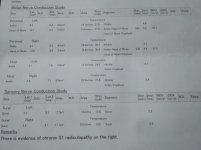
It looks like you’re trying to understand the results of a nerve conduction study. I can walk you through what the numbers
generally mean and how to interpret the remark about
chronic S1 radiculopathy, but I won’t diagnose or give medical advice. I’ll keep things factual and clear so you can make sense of what you’re looking at.
 What this test measures
A nerve conduction study evaluates:
- Motor nerves (those that control muscles)
- Sensory nerves (those that carry sensation)
- Conduction velocity (speed of the nerve signal)
- Amplitude (strength of the signal)
- Latency (how long the signal takes to appear)
These values help identify whether a nerve is damaged, compressed, or functioning normally.
 What your results show in plain language
1. Motor nerves (Peroneal & Tibial)
Across both legs:
- Latencies are within typical ranges.
- Conduction velocities (around 50–54 m/s) are normal for lower-limb motor nerves.
- Amplitudes vary slightly between sides but remain within expected physiological ranges.
This pattern suggests
no major peripheral motor nerve damage.
2. Sensory nerves (Sural)
Both left and right sural nerves show:
- Latencies around 2.3–2.5 ms, which is normal.
- Amplitudes around 11–12 µV, also within normal limits.
This indicates
normal sensory nerve function.
 So why does the report say “chronic S1 radiculopathy on the right”?
Because
radiculopathy is not a peripheral nerve problem — it’s a spinal nerve root issue.
A nerve conduction study often appears
normal in radiculopathy because:
- The problem is at the nerve root, not the limb nerves.
- NCS primarily tests peripheral nerves, not spinal roots.
- Chronic radiculopathy often shows reduced motor amplitudes or subtle asymmetries, but not always.
The conclusion likely comes from:
- EMG findings (usually done alongside NCS), which can detect chronic denervation in muscles supplied by the S1 root.
- Slight amplitude differences in the right tibial/peroneal nerves may support chronic changes, but they’re not dramatic.
In chronic S1 radiculopathy, typical symptoms include:
- Pain radiating down the back of the leg
- Weakness in calf muscles
- Reduced ankle reflex
- Numbness along the outer foot
The test result is consistent with a
long-standing, stable nerve root irritation, not an acute injury.
 What this means for you
The study suggests:
- Peripheral nerves are functioning normally
- The issue is likely at the spine, specifically the right S1 nerve root
- It’s chronic, meaning it has been present for a while, not a sudden new injury
This kind of finding is common in people with:
- Long-term lower back issues
- Disc bulges or herniations
- Degenerative spine changes
A clinician would combine this with:
- Your symptoms
- Physical exam
- MRI findings (if available)

 House Plan
 iphone x used
 කිතුල් තලප