🐍💊💊 Moderna co-founder using mRNA technology to treat venomous snakebites 💊💊🐍

Stimulus mind

Well-known member
  • Feb 27, 2021
    30,946
    152,886
    113
    GettyImages-1229578701.jpg


    Derrick Rossi always said he’d be satisfied with his work when it had a positive impact on humanity. But after his research around mRNA technology paved the way for the rapid introduction of an effective COVID-19 vaccine, the co-founder of Moderna realized he wasn’t quite ready to hang up his hat.“I always said to people that I’ll be really happy on the day that we can impact human health,” said Rossi, speaking from the Boston area where he now lives. “I guess that day has finally come, and I’ve said I’ll hang up my hat, but I’m not ready yet.”Today, Rossi is no longer with Moderna and dedicates much of his time to a new passion: preventing the hundreds of thousands of debilitating injuries and deaths that happen each year due to venomous snakebites.

    Scientists who work in the tight-knit snakebite research community say nothing substantial has changed about how we treat venomous snakebite in over 100 years.Rossi said that’s not good enough for what should be considered a global health challenge that kills approximately 100,000 people per year and maims another 500,000.Many of the people affected are impoverished and work manual labour jobs like farming in continents like Asia and Africa. Rossi says there simply hasn’t been the will in the pharmaceutical industry to tackle the issue.“It really is an economic issue in addition to a health issue,” said Rossi, using impoverished farmers as an example. “Subsistence farmers don’t make a lot of money and when you lose a limb and can’t do it anymore or you lose your life and you’re the major farmer in the family, it has a devastating impact on those communities and families.”
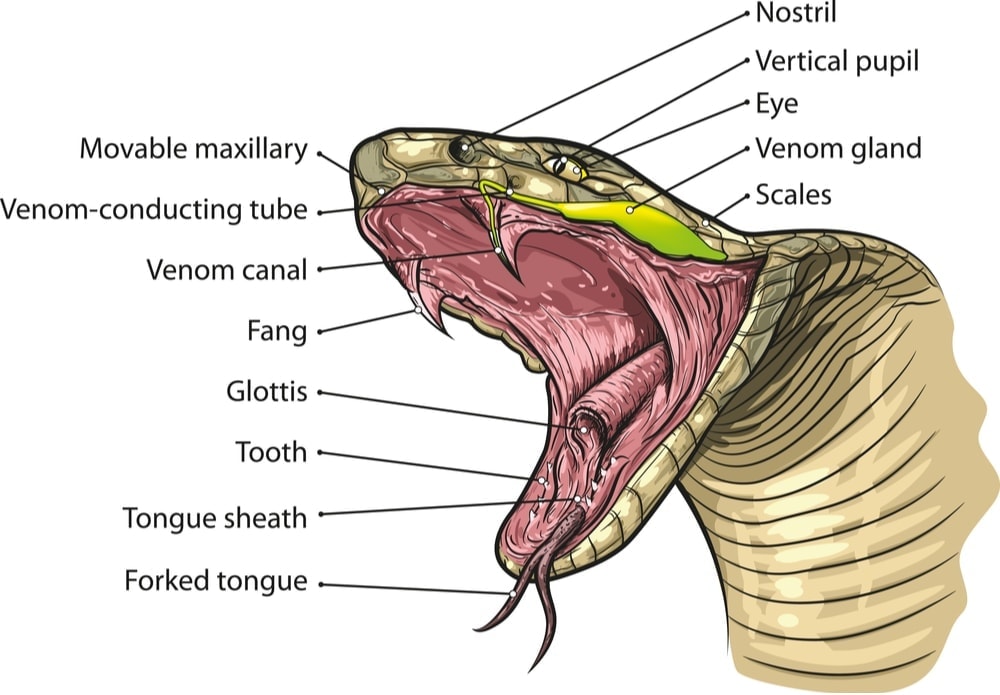
    snake-anatomy.jpg


    There was an element of chance around how Rossi became involved in fighting venomous snakebites. Rossi has done countless interviews since Moderna became one of the first companies to produce a COVID-19 vaccine using a new technology called mRNA, which instructs the human body’s cells on how to deal with a threat like a coronavirus. In one interview, he mentioned offhand that mRNA could have more uses than vaccines, such as for antisera used to treat venomous snakebites. That comment caught the attention of scientists in the snakebite community and eventually led him to become an adviser for a company called Ophirex, which is working on a pill that could help save people’s lives immediately after a snakebite.

    Ophirex founder Matthew Lewin said many people die from snakebites on their way to the hospital since those most at risk of venomous snakebites are sometimes days away from the nearest hospital — and because antisera are expensive and need to be kept in a cold place. To combat that, Ophirex is working on a pill that targets a specific enzyme found in the venom of many snakes, and which is particularly harmful to the human body. Lewin and Rossi say the pill could be the difference between someone dying en route to the hospital or making a full recovery.“Seventy-five per cent of the deaths (from snakebites) occur before patients even get help,” said Lewin, who is based just north of San Francisco.“For me, the idea that you could have something that could act as a bridge to survival on top of having a better outcome in the cases is really compelling.”

    20210102_STP501.jpg


    They also hope the pill could help people recover more quickly and fully from a snakebite, and to prevent the venom from devastating a body to the point where amputation is required. And since it’s just a pill, it would be relatively cheap to manufacture and easy for a person to store in their pocket. While Ophirex’s focus right now is that product (which is about to begin clinical trials in the U.S. and India), Rossi still believes mRNA could be a game-changer in the fight against venomous snakebite. Theoretically, he said the technology could be used to manufacture antisera that are cheaper and better than the current versions available. Antiserum is complicated to manufacture. Rossi said the process involves collecting venom from a snake, injecting it into a horse (since horses don’t die from most snake venoms), extracting the horse’s blood and using the antibodies that the horse creates.

    With enough funding support, Rossi says it’s feasible that scientists could use mRNA technology to manufacture a better antiserum and take the horse out of the equation, which could also greatly reduce the production cost. He also said the manufactured antisera could be manufactured to be better suited to humans, rather than the current antidotes that use horse cells. Sakthi Vaiyapuri, a snakebite researcher in the U.K. who has seen the impact of venomous snakes in his own home community in southern India, said he believes mRNA could even one day be used to create a vaccine for venoms.


    “Until I met Derrick, I thought vaccines will be useless for snakebite because snakebite is an acute problem, it can kill a person within minutes to hours,” said Vaiyapuri, who has also worked alongside Lewin since 2014.“In those cases vaccines can’t make an impact quickly,” For example, he said the body is allowed more time to produce antibodies for COVID-19 upon infection, which is why vaccines were an obvious goal to fight the coronavirus.

    However, he said research shows that mRNA vaccines can produce antibodies in as little as three hours, which gives him hope that targeted vaccine campaigns in rural villages could one day save countless lives. Back at Ophirex’s labs, Rossi says the molecule they’re using to tackle snakebites is only the first step in their fight.

    “What we’d like to see is a success with this first approach,” said Rossi. Then, he says their goals can broaden from there.


    Source:
    By Salmaan Farooqui
    - The Canadian Press -
     

    Wana5ara

    Well-known member
  • Sep 13, 2018
    177
    357
    63
    1625649109557.png

    Peradeniya University scientists are awaiting the Health Ministry’s go-ahead to launch the first locally manufactured anti-serum to treat snakes bites.

    The University’s Head Professor, Faculty of Veterinary Pathobiology, R. P. V. J. Rajapakse, said that half a dose of the locally produced serum was sufficient to treat snake bite victims

    “The preclinical tests have been completed and the level of efficacy was excellent,” he said.

    He said an imported dose costs eight US dollars, whereas the local product can be made available at a more competitive price.

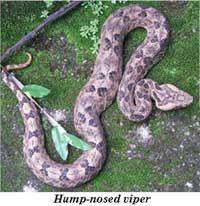
    Russell’s viper (Daboia russelii), common Krait (Bungarus caeruleus), Hump-nosed viper (Hypnale hypnale), Cobra (Naja naja), Saw-scaled viper (Echis carinatus) and Ceylon krait (Bungarus ceylonicus) are snakes considered “medically important” in Sri Lanka.

    viper2.jpg
    The most common bite is Hump-nosed viper and Ceylon krait, which are highly venomous and found only is Sri Lanka, he said.

    “Usually, we import anti-serum from India. However, as they produce antivenin using Indian snakes, the toxicity and composition vary from Sri Lankan snake species venom as the Krait and Hump-nosed Viper species are not found there”, he explained.

    “Therefore we decided to develop antivenin compatible with our ‘medically important’ snakes in collaboration with an Indian, WHO recommended laboratory”, he noted.

    Prof. Rajapakse said that Sri Lanka can even export antivenin to other countries if a WHO recommended bio-safe plant was established under a substantial investment.

    The local anti-serum was developed by the Peradeniya University under the guidance of Prof. S. A. M. Kularatne, Senior Professor of Medicine and Senior Scientist Anslem de Silva in collaboration with the Department of Wildlife Conservation, Ministry of Science and Technology.

    The government spends around Rs. 1 billion to import anti-venom serum from India, but experts have pointed out that the potency of the venom, particularly when it comes to Russell’s Viper and Hump-nosed Viper in Sri Lanka are more toxic than in India.

    Medical experts say that a victim with serious bites suffer acute kidney damage and many other complications when it comes to the hypnale species.

    Professors S. A. M. Kularatne, Kolitha Sellahewa, Ariyarani Ariyaratnam, Kalana Maduwage and Dr. Namal Ratnayake from the Teaching Hospital, Ratnapura, have managed several hundred cases of hypnale.

    A decade ago, snake bites were a major problem with some 60,000 people falling victim annually. Only around 40,000 of the victims received treatment from hospitals, while the others resorted to traditional native snake bite treatment.

    In total, 97% of snake bite deaths are caused by the cobra, Russell’s Viper and Common India Krait. Apart from them, the Sri Lankan Krait and Saw Scaled Viper are categorized as a dangerous species though they have not caused many deaths. The Merrem’s Hump-nosed Viper is considered by the Sri Lanka Medical Association as a deadly species.

    However, of the land snakes only a few are ‘medically important’ or can inflict a bite, where the venom could be mild, moderate or highly venomous. It is of interest to note that to date, modern medical literature record human fatalities only due to four species of snakes – Russell’s Viper, Cobra, Kraits and the Hump-nosed Viper.

    The Hump-nosed Pit Viper (Hypnale Merrem’s pit viper) is a snake widely distributed in Sri Lanka and the South Western coastal region of India.

    It is the most common snake responsible for venomous snakebites in Sri Lanka, estimated to be between 22% to 77% of all snakebites (de Silva, 1981; Seneviratne, 2000). For centuries, it was considered a relatively innocuous snake until 1821, when for the first time, swelling and bleeding due to bites by H. hypnale was reported in animals (Davy, 1821)


    Link - The island
     

    imhotep

    Well-known member
  • Mar 29, 2017
    14,852
    8
    35,433
    113
    Thanks for both the major content posters here. As of today the most effective treatment for snake bites is anti-serum or antivenoms whichever you call it.

    Anti-venoms are purified antibodies against venoms or venom components. First of all, the venom is obtained from the snakes by milking and other creatures by invasive techniques. Then small doses of venom is injeted into an animal, and the dose gradually increased as the animal builds up a tolerance to the venom. The animal produces antibodies to the venom. When the doses being injected are large, the amount of antibody produced is large.
    These antibodies are harvested by taking blood off from the animals and separating out the antibodies followed by a purification process.
    These are subsequently injected into a patient, and the binding sites on the antibody fragments bind to the venoms thus neutralising effect. This technique is very old and used since the 1890s.

    But, somewhere around 2015, scientists found that the mRNA encoding the toxins in snakebite venom can be recovered directly from venom. This paved the way for the feasibility of using venom-derived RNA for future antivenom applications. At that time the mRNA stabilizing over long term and purification were not advanced like today but the ideas and the work continued. This method has the advantage that all you need is the venom, without any harm to the poisonous creature or the use of an animal to develop antibodies.
    The mRNA will function just like the Pfizer/Moderna vaccines for the body to produce antibodies for the venom.

    That's the two major differences in the mRNA and the anti-venom approach.

    Note that the mRNA technology is not limited only for Covid vaccines. Cancer vaccines, Protein replacement therapy – A wide range of diseases can be treated using mRNA to express proteins- the lungs, liver, and heart - Gene therapy, Cell reprogramming etc.
    The Covid epidemic will accelerate the developments in all these areas as the fear of mRNA has gone away.
     
    Last edited: