4 ur knowledge iThis is a gift

tremigues

Well-known member
  • Dec 24, 2006
    4,033
    164
    63
    kandy
    Ithin ada poya dawasanee. hithuna me wage deyak karanna wada wadagath wenne danuma dena kea ithin man hithuwa lokaye thiyena pansal kipayaka wisthara oyala ekka beda ganna.:) me okkoma puduma hithena pansal ithin kammali kiyala kiyawanne nathiwa inna epa:no: mokada math ehema kalayak hitiya eth ada hithenawa ai kiyawauwe naththe kiyala ok kiyawala oya punchi mola gediyata danuma tikak da gannako:):)
    11.gif


    01.

    Shwedagon Pagoda
    (Myanmar)

    No one knows exactly when the shwedagon Pagoda in Myanmar was built – legend has it that it is 2,500 years old though archaeologists estimate that it was built between the 6th and 10th century.

    Now, when people say "golden temple" they usually mean that the structure is golden in color. But when it comes to the Shwedagon Pagoda, golden literally means covered in gold! In the 15th century, a queen of the Mon people donated her weight in gold to the temple. This tradition continues until today, where pilgrims often save for years to buy small packets of gold leafs to stick to the temple walls.

    As if all that gold wasn’t enough, the spire of the stupa or dome is covered with over 5,000 diamonds and 2,000 rubies (there’s even a 76 carat diamond at the very tip!). And oh, the temple housed one of the holiest relics in Buddhism: eight strands of Buddha’s hair.


    shwedagon-pagoda.jpg


    Shwedagon Pagoda and its golden stupa
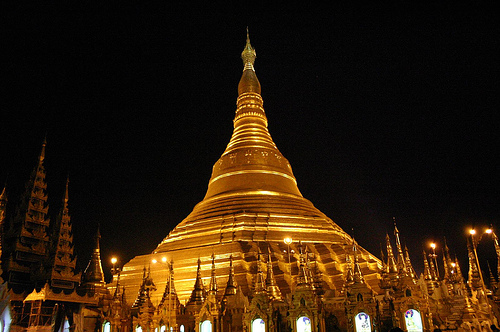
    shwedagon-pagoda-night.jpg

    Shwedagon Pagoda at night.
     
    • Like
    Reactions: sanoka

    tremigues

    Well-known member
  • Dec 24, 2006
    4,033
    164
    63
    kandy
    02.
    Wat Rong Khun

    (Thailand)


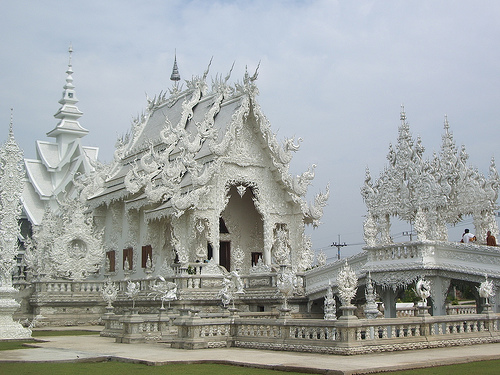
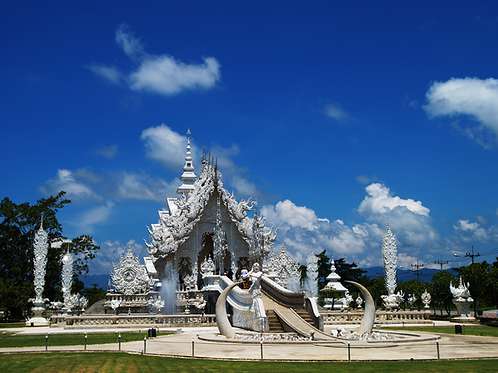
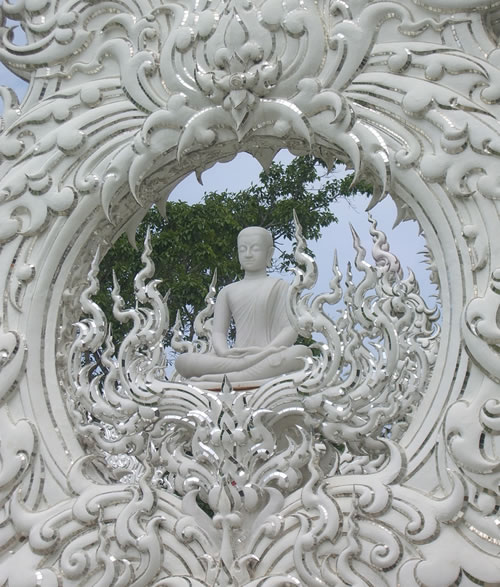
    Wat Rong Khun in Chiang Rai, Thailand is unlike any Buddhist temples in the world. The all-white, highly ornate structure gilded in mosaic mirrors that seem to shine magically, is done in a distinctly contemporary style. It is the brainchild of renowned Thai artist Chalermchai Kositpipat.
    Actually, the temple is still under construction. Chalermchai expects it will take another 90 years to complete, making it the Buddhist temple equivalent of the Sagrada Familia church in Barcelona, Spain!


    wat-rong-khun-1.jpg

    Wat Rong Khun, the White Temple


    wat-rong-khun-2.jpg

    Wat Rong Khun, from a distance


    wat-rong-khun-roof-details.jpg

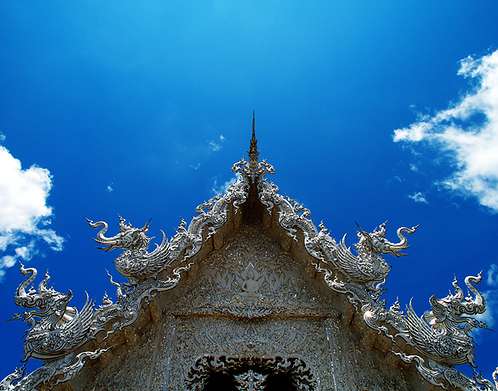
    Details of the temple roof. Image


    wat-rong-khun-arches.jpg

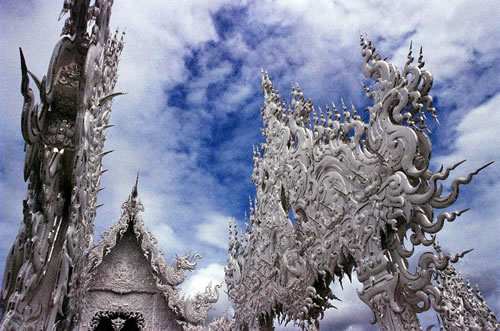
    The ornately detailed arches


    wat-rong-khun-buddha.jpg

    Buddha sculpture, gilded with mosaic mirrors


    wat-rong-khun-hands-of-hell.jpg

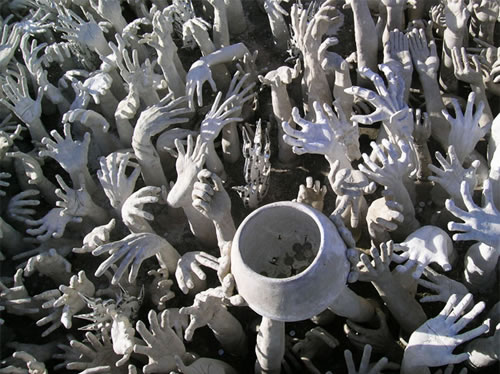
    The hands of hell want your change

     
    • Like
    Reactions: Pink panther

    tremigues

    Well-known member
  • Dec 24, 2006
    4,033
    164
    63
    kandy
    Borobudur

    03. Borobudur

    (Indonesia)

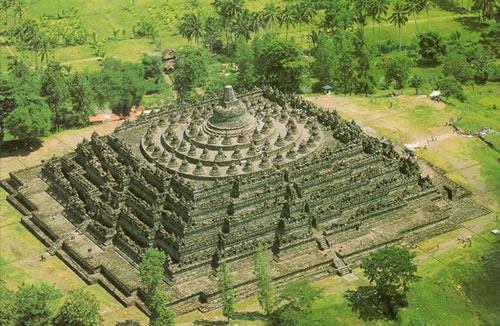
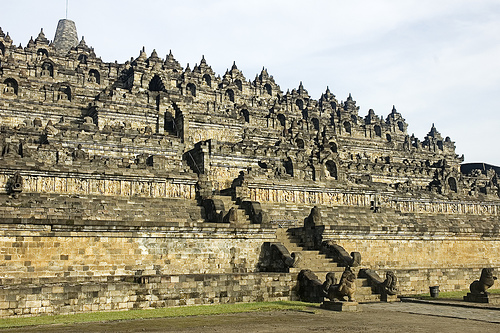
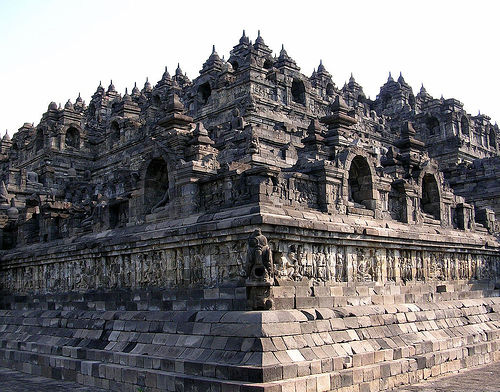
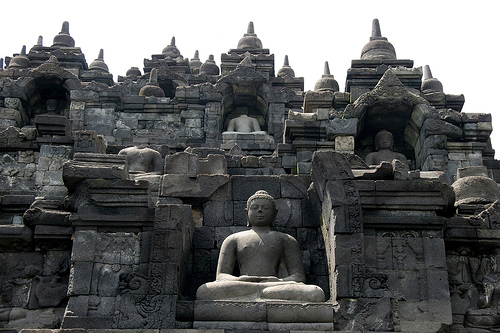
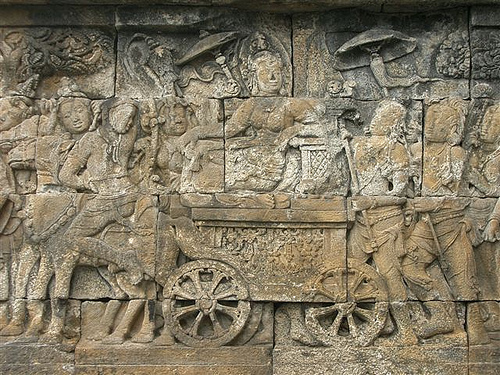
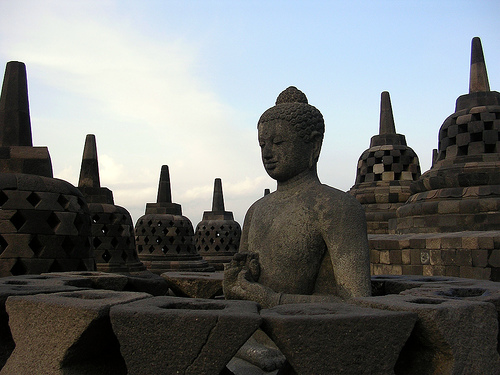
    In the 19th century, Dutch occupiers of Indonesia found a massive ancient ruin deep in the jungles of Java. What they discovered was the complex of Borobudur, a gigantic structure built with nearly 2 million cubic feet (55,000 m³) of stones. The temple has nearly 2,700 relief panels and 504 Buddha statues.

    Until today, no one knows for sure when and why it was built, nor the reason for its complete abandonment hundreds of years ago. Some scholars believe that Borobudur is actually a giant textbook of Buddhism, as its bas reliefs tell the story of the life of Buddha and the principles of his teachings. To "read," a pilgrim must make his way through nine platforms and walk a distance of over 2 miles.


    borobudur-aerial-view.jpg

    Aerial view of Borobudur.


    borobudur-3.jpg


    borobudur-1.jpg


    borobudur-2.jpg


    borobudur-stupa.jpg

    Inside each of the lattice stupa is a Buddha statue


    borobudur-bas-relief.jpg

    A bas relief in Borobudur​


    Last edited:

    tremigues

    Well-known member
  • Dec 24, 2006
    4,033
    164
    63
    kandy
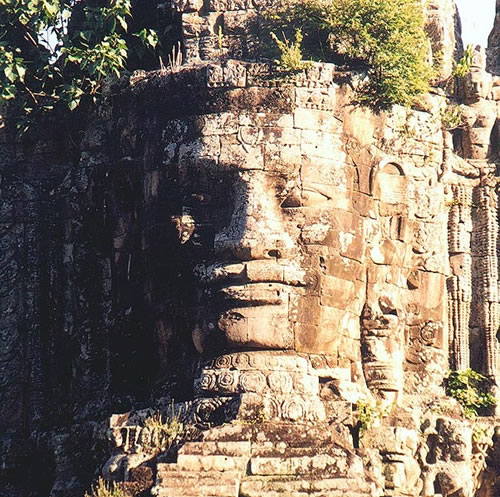
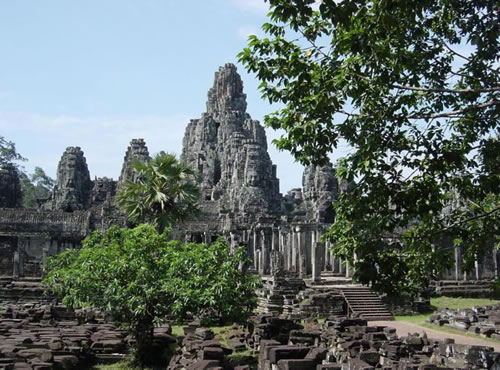
    Angkor Wat, Angkor Thom, and Bayon

    ( Cambodia )

    Angkor Wat

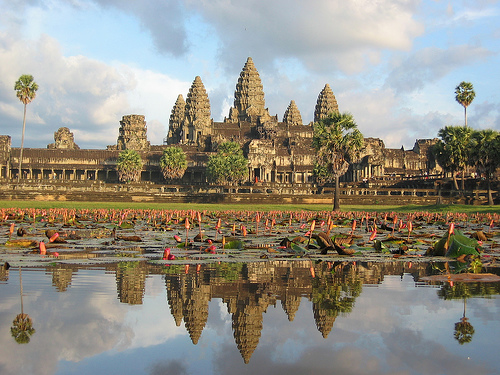
    was built in the early 12th century in what is now Cambodia. The world famous temple was first a Hindu one, dedicated to Vishnu. In the 14th or 15th century, as Buddhism swept across Asia, it became a Buddhist temple.
    The Western world’s got a glimpse of Angkor Wat when a 16th century Portuguese monk visited the temple and eloquently described it as "of such extraordinary construction that it is not possible to describe it with a pen, particularly since it is like no other building in the world. It has towers and decoration and all the refinements which the human genius can conceive of." His words still rang true today.


    Bayon

    two fantastic temples that serve as the ancient capital of Khmer empire.


    ankor-wat-1.jpg

    Angkor Wat

    angkor-thom.jpg

    The face of Bodhisattva Avalokiteshvara at Angkor Thom.
    Image: Manfred Werner

    bayon.jpg

    Bayon, which described by Maurice Glaize, an Angkor conservator of the 1940s, as "but a muddle of stones, a sort of moving chaos assaulting the sky"

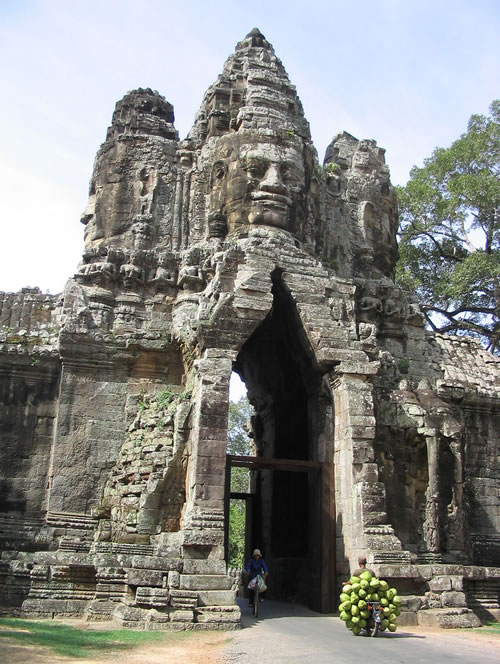
    bayon-entrance.jpg

    Entrance to Bayon. That man on the bike is carrying coconuts. Lots and lots of

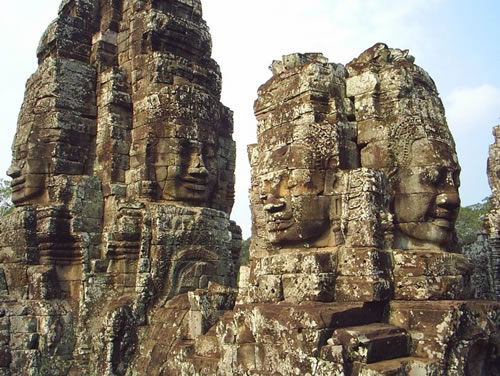
    bayon-faces.jpg

    The faces of Bayon.
     

    tremigues

    Well-known member
  • Dec 24, 2006
    4,033
    164
    63
    kandy
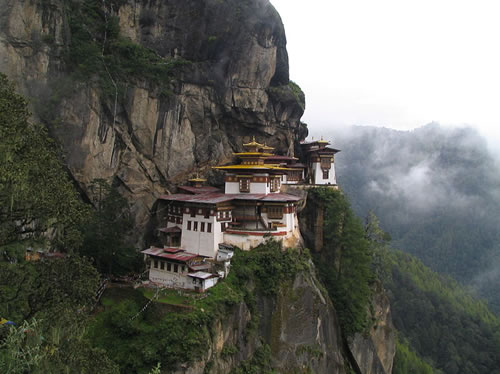
    Tiger’s Nest Monastery

    ( Bhutan )
    Tiger’s Nest Monastery, perched precariously on the edge of a 3,000-feet-high cliff in Paro Valley, is one of the holiest places in Bhutan. Legend has it that guru rinpoche, the second Buddha, flew onto the cliff on the back of a tigress, and then meditated in a cave which now exists within the monastery walls.
    The monastery, formally called Taktshang Goemba, was built in 1692 and reconstructed in 1998 after a fire. Now, the monastery is restricted to practicing Buddhists on religious retreats and is off-limits to ordinary tourists.
    taktshang-monastery.jpg

    Image: Douglas J. McLaughlin


    tremigues

    Well-known member
  • Dec 24, 2006
    4,033
    164
    63
    kandy
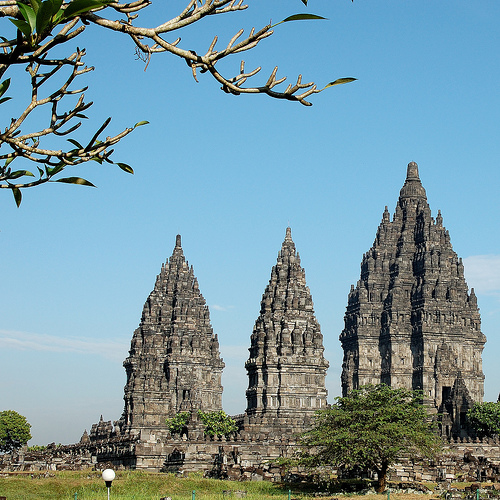
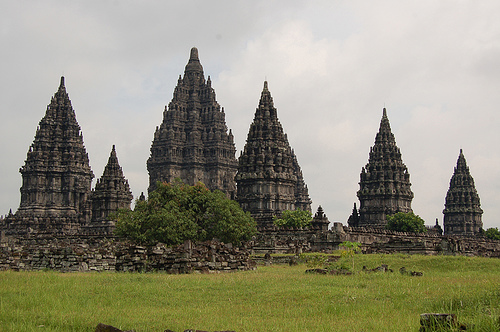
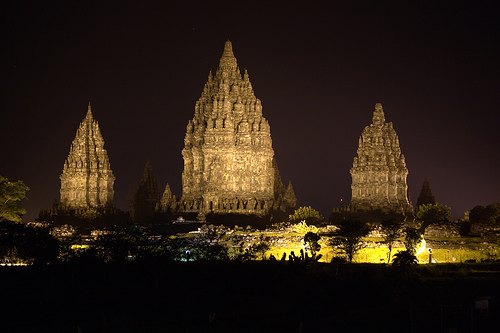
    Prambanan

    (Central Java, Indonesia)

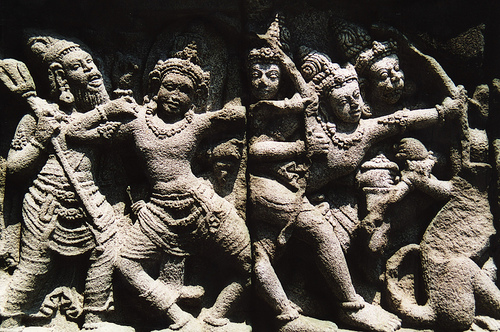
    Prambanan is a Hindu temple in Central Java, Indonesia. The temple was built in 850 CE, and is composed of 8 main shrines and 250 surrounding smaller ones.

    Nearly all the walls of the temple are covered in exquisite bas relief carvings, which narrate stories of Vishnu’s incarnations, adventures of Hanuman the Monkey King, the RAMAYANAYA epic and other legends.

    Though not the biggest temple in Indonesia , Prambanan makes up in beauty and grace for what it lacks in size.


    prambanan-1.jpg


    Prambanan’s main complex.

    prambanan-2.jpg


    Six of Prambanan’s eight main shrines.

    prambanan-at-night.jpg


    Prambanan at night.

    prambanan-bas-relief.jpg

    Bas-Relief at Prambanan.


    Last edited:

    tremigues

    Well-known member
  • Dec 24, 2006
    4,033
    164
    63
    kandy
    Temple of Heaven

    (Beijing, the capital of China)

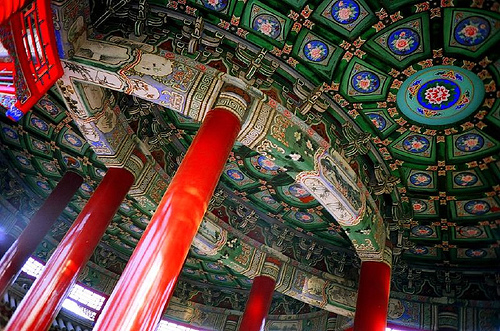
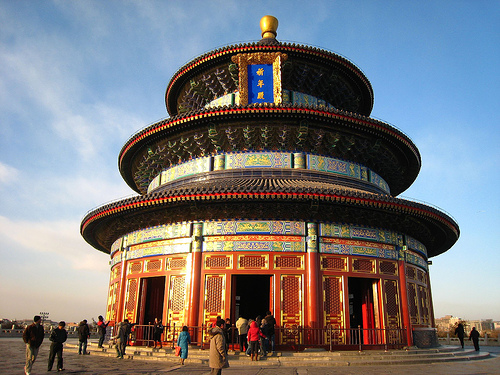
    The Temple of Heaven is a Taoist temple in Beijing, the capital of China. The temple was constructed in 14th century by Emperor Yongle of the Ming Dynasty (who also built the Forbidden City) as his personal temple, where he would pray for good harvest and to atone for the sins of his people.
    The Temple’s architecture is quite interesting: everything in the temple, which represents Heaven, is circular whereas the ground levels, which represent the Earth, are square.

    imperial-vault-ceiling.jpg


    Ceiling of the Imperial Vault, Temple of Heaven

    temple-of-heaven-2.jpg

    Close up of the Hall of Prayer for Good Harvest, Temple of Heaven.
     

    tremigues

    Well-known member
  • Dec 24, 2006
    4,033
    164
    63
    kandy
    Chion-in Temple

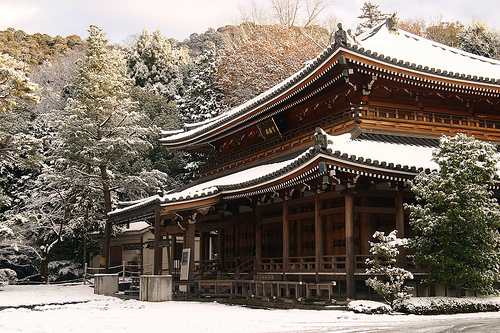
    was built in 1234 CE to honor the founder of Jodo (Pure Land) Buddhism, a priest named Honen, who fasted to death in the very spot. At one point in time, the complex had 21 buildings but due to earthquakes and fire, the oldest surviving building is from the 17th century.
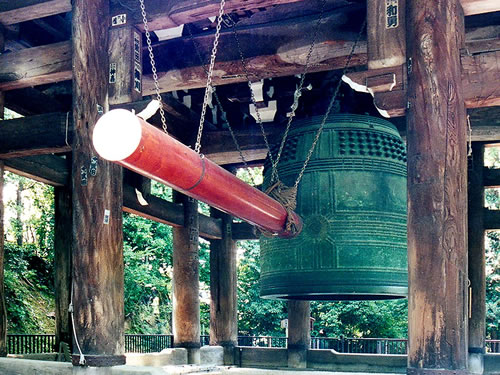
    Visitors to the Chion-in Temple must first pass through the largest gate in Japan: the two-story San-mon Gate. The temple bell is also a record setter: it weighs 74 tons and needs 17 monks to ring it during the New Year celebrations.
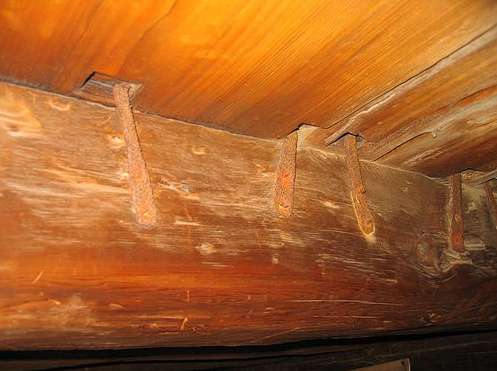
    Another interesting feature of the Chion-in Temple is the "singing" floor of the Assembly Hall. Called a uguisu-bari or nightingale floor, the wooden planks were designed to creak at every footstep to alert the monks of intruders!

    chionin-temple-snow.jpg

    A building in the Chion-in Temple complex in winter time.​

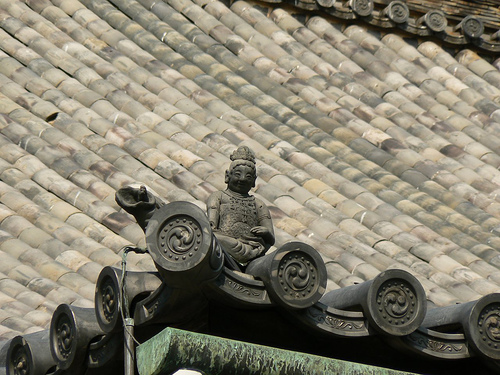
    chionin-temple-roof-details.jpg


    Details of the Chion-in Temple roof. Notice a feudal family’s crest stamped on the roof tiles, as a symbol of their patronage.

    chionin-bell.jpg


    Chion-in’s Temple Bell.

    chionin-nightingale-singing-floor.jpg


    The Nightingale Floor construction