


The mechanism was found by chance in the remains of an ancient ship, discovered sometime before Easter 1900 at a depth of 42 m. Near the isle of Antikythera. (Greece) Many statues and other artifacts were retrieved on site by Greek sponge divers. The mechanism itself was discovered on May 17, 1902, when archaeologist Valerios Stais noticed that a piece of rock recovered from the site had a gear wheel embedded in it. Upon examination, it was found that the "rock" was in fact a heavily encrusted and corroded mechanism which had survived in three main parts and dozens of smaller fragments. The device itself was surprisingly thin; about 33cm (13in) high, 17cm (6.75in) wide and 9cm (3.5in) thick, made of bronze and originally mounted in a wooden frame. It was inscribed with a text of over 2,000 characters, of which about 95% have been deciphered. The full text of the inscription has not yet been published.
The purpose of building this mechanism was to uncover the Exact positions of the Five visible planets of the solar system. Mercury,Venus,Mars,Jupiter and Saturn...
The machine is a combination of A set of Gears, Bearings and Levers

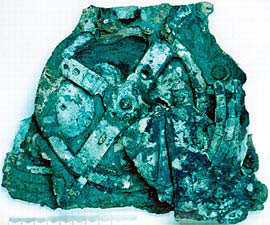
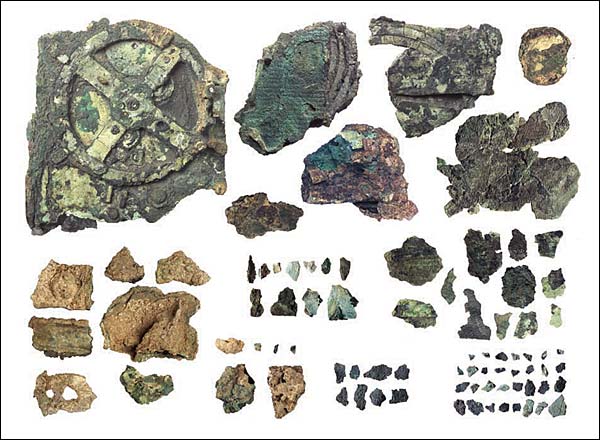


This is the interior of the machine..
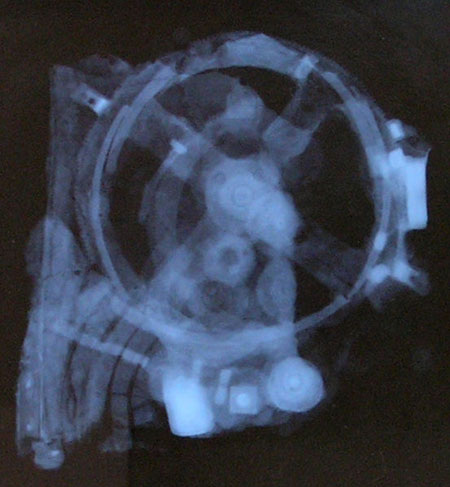
The X-Ray images clearly shows a Differential gear inside!
Deferential gear was believed to be invented in the late 18th century
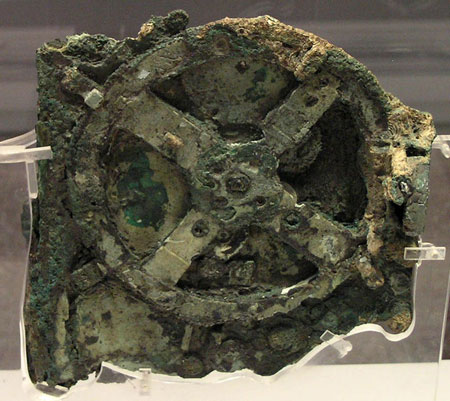

Archaeologists and modern scientists conclude that this mechanism, is undoughtly, the first computer of the world !
The device is displayed in the Bronze Collection of the National Archaeological Museum of Athens...
A replica has been built by the Research team with the help of a clock maker.. It was succesful and now can be seen at the british museum.


The purpose of building this mechanism was to uncover the Exact positions of the Five visible planets of the solar system. Mercury,Venus,Mars,Jupiter and Saturn...
The machine is a combination of A set of Gears, Bearings and Levers


This is the interior of the machine..
The X-Ray images clearly shows a Differential gear inside!
Deferential gear was believed to be invented in the late 18th century

Archaeologists and modern scientists conclude that this mechanism, is undoughtly, the first computer of the world !
The device is displayed in the Bronze Collection of the National Archaeological Museum of Athens...
A replica has been built by the Research team with the help of a clock maker.. It was succesful and now can be seen at the british museum.


