


From consulting pulmonologists to asking players to sit indoors, the ICC and event organisers are taking other steps too to help the players.
If conditions are not suitable, officials will watch the readings until such time as it improves sufficiently to allow play. Just as it would happen for rain or a wet outfield, the extra time that is built into a cricket match will be used up if necessary, and if that is exhausted, the match will start losing overs.
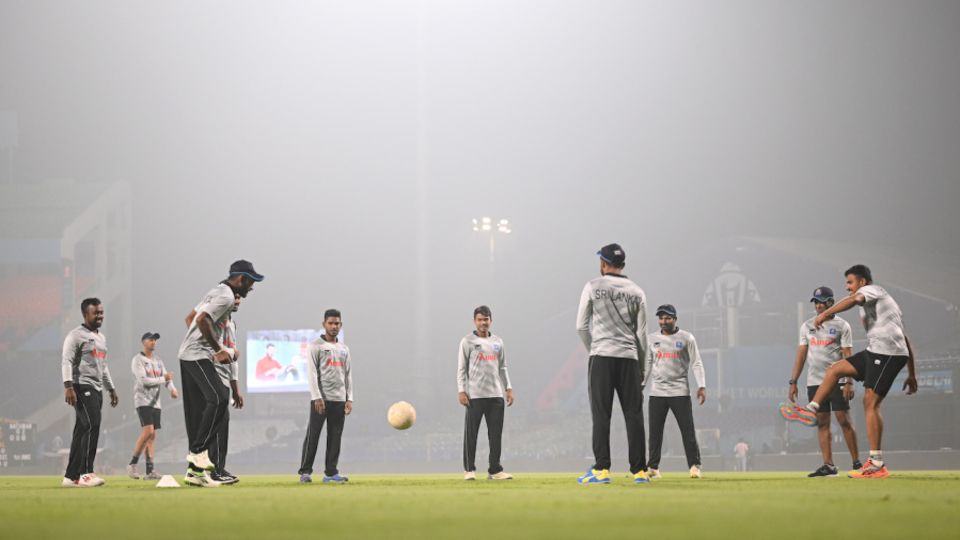
SLC Team management is not at all bothered about Sri Lankan players.
They did the training without taking precautionary actions.
Bangladesh only 7 players came for the practice.
If an ODI cannot be completed (each team would have to bat a minimum of 20 overs for it to considered a completed ODI), the teams will take a point each from the game.
What happens on match day?
With monitoring ongoing at the stadium itself, match officials, in concert with medical staff, will take a call on when conditions are suitable for play. Because air quality is being considered as essentially a part of the weather by the ICC, the toss is expected to happen at 1:30pm local, and so long as the ICC and the medical staff consider the air quality suitable for play, the match will begin at 2pm.If conditions are not suitable, officials will watch the readings until such time as it improves sufficiently to allow play. Just as it would happen for rain or a wet outfield, the extra time that is built into a cricket match will be used up if necessary, and if that is exhausted, the match will start losing overs.
SLC Team management is not at all bothered about Sri Lankan players.
They did the training without taking precautionary actions.
Bangladesh only 7 players came for the practice.
If an ODI cannot be completed (each team would have to bat a minimum of 20 overs for it to considered a completed ODI), the teams will take a point each from the game.


