
Latest ads
-
 Peppa Pig Family Plush Toy Set – 5 Characters
- anil1961
- Updated:
-
Express VPN PC - 1 Year Rs. 600.00
- Sanathbh
- Updated:
-
Capcut Pro 7 Days Team Plan - Rs. 3️⃣0️⃣0️⃣
- Sanathbh
- Updated:
-
 Singapore V2ray VPN for Tunneling
- hu KANNA
- Updated:
-
Web hosting for your business
- avishka777
- Updated:
You are using an out of date browser. It may not display this or other websites correctly.
You should upgrade or use an alternative browser.
You should upgrade or use an alternative browser.


where do u live bro? i saw sum good piranas @ kiribathgoda.cool thread,
Where can i Buy some Pirana's ??
where do u live bro? i saw sum good piranas @ kiribathgoda.
Rajagiriya, how much will they cost ?


Silver Arowana
The Silver Arowana comes from the Amazon River in South America. They are very beautiful and a fascinating fish to watch. However, because of their huge adult size of 35 - 40 inches (89 - 102 cm) they are not recommended for the beginning aquarist. Actually, this is one of those fish that are probably best kept in the wild or in huge public aquariums.
The Arowana requires at least a 200 gallon (750 liters) tank to adequately keep them. You also need an excellent aquarium filter such as an external canister filter. Arowanas are also excellent jumpers so you will need a good, tight fitting hood with no escape holes. In the wild, the Silver Arowana can jump out of the water at insects and small animals on overhanging branches.
Because of their potential adult size, there are not many compatible tank mates that quickly come to mind but you may be able to keep an Arowana with a larger Common Pleco.
This fish is definitely one fish species that is best left to the experts and public aquariums.
Scientific Name : Osteoglossum bicirrhosum
Common Names : Dragon Fish, Arawana, Aruana, Arrowana, etc.
Arowana Care Level : Moderate to Difficult, needs a large tank and is not recommended for the beginning aquarist. Needs a good aquarium filter like an external canister filter.
Size : 35 - 40 inches (89 - 102 cm)
pH : 6.0 - 7.5
Temperature : 75°F - 83°F (24°C - 28°C)
Lifespan : 10 - 20 years or longer.
Origin / Habitat : South America, Amazon River
Temperament / Behavior : Can be aggressive, especially with smaller aquarium species.
Breeding / Mating / Reproduction : They have been bred in captivity. The males carry the eggs in their mouths (mouth brooder).
Tank Size : 200 gallon minimum but preferrably much larger tanks. This fish is best left in the wild, in public aquarium displays or with advanced hobbyists with the equipment and space to keep them.
Compatible Tank Mates : Because of the huge adult size of Arowana there are very few common aquarium species recommended. One that may potentially be kept with them is the Common Pleco, but you would need an even bigger tank (bigger than 200 gallons) to provide both of them with adequate water volume as adults.
Fish Disease : Freshwater Fish Disease
Diet / Fish Food : A carnivore - provide a varied diet with pellet food, frozen food and they will definitely accept live food.
Tank Region : Mostly at the top of tank
Gender : May only be possible to determine gender differences in mature adults Arowanas. Males may have larger mouths since they are mouth breeders


Silver Arowana
The Silver Arowana comes from the Amazon River in South America. They are very beautiful and a fascinating fish to watch. However, because of their huge adult size of 35 - 40 inches (89 - 102 cm) they are not recommended for the beginning aquarist. Actually, this is one of those fish that are probably best kept in the wild or in huge public aquariums.
The Arowana requires at least a 200 gallon (750 liters) tank to adequately keep them. You also need an excellent aquarium filter such as an external canister filter. Arowanas are also excellent jumpers so you will need a good, tight fitting hood with no escape holes. In the wild, the Silver Arowana can jump out of the water at insects and small animals on overhanging branches.
Because of their potential adult size, there are not many compatible tank mates that quickly come to mind but you may be able to keep an Arowana with a larger Common Pleco.
This fish is definitely one fish species that is best left to the experts and public aquariums.
Scientific Name : Osteoglossum bicirrhosum
Common Names : Dragon Fish, Arawana, Aruana, Arrowana, etc.
Arowana Care Level : Moderate to Difficult, needs a large tank and is not recommended for the beginning aquarist. Needs a good aquarium filter like an external canister filter.
Size : 35 - 40 inches (89 - 102 cm)
pH : 6.0 - 7.5
Temperature : 75°F - 83°F (24°C - 28°C)
Lifespan : 10 - 20 years or longer.
Origin / Habitat : South America, Amazon River
Temperament / Behavior : Can be aggressive, especially with smaller aquarium species.
Breeding / Mating / Reproduction : They have been bred in captivity. The males carry the eggs in their mouths (mouth brooder).
Tank Size : 200 gallon minimum but preferrably much larger tanks. This fish is best left in the wild, in public aquarium displays or with advanced hobbyists with the equipment and space to keep them.
Compatible Tank Mates : Because of the huge adult size of Arowana there are very few common aquarium species recommended. One that may potentially be kept with them is the Common Pleco, but you would need an even bigger tank (bigger than 200 gallons) to provide both of them with adequate water volume as adults.
Fish Disease : Freshwater Fish Disease
Diet / Fish Food : A carnivore - provide a varied diet with pellet food, frozen food and they will definitely accept live food.
Tank Region : Mostly at the top of tank
Gender : May only be possible to determine gender differences in mature adults Arowanas. Males may have larger mouths since they are mouth breeders
i had one machan.but died last december..bought it for 8000 and stayed 2 years in my tank


machan kiribathgoda passkaagena kadawatha paththata enakota! hambawena mahara junction eka laga thiyana aquarium ekekoheda hitiye machan .?

Arowana Fish (sometimes called dragon fish) can be a great choice for those that think big. Some varieties can grow up to Four feet long (120cm). They can be feisty, though become tamer with age to the point of eating from your fingers, and not the fingers themselves. The Arowana Fish comes from somewhat primitive origins (Jurassic Age), and some varieties are nicknamed “Bony Tongued Fish”.
Arowana fish are carnivores, though will generally eat nearly anything. Young Arowana Fish may be fed frozen or live brine shrimp, black worms, and even small fish. When older, some larger fish will do. Baby Arowana Fish should be fed maybe 3 times a day, medium sized twice a day, and adults once a day, or even once every other day. Variety is important for a well balanced diet in Arowana Fish just like for most other fish.
The Arowana eating habits produce a lot of waste and you should therefore, pay extra attention to water conditions (Ammonia, Nitrite, and Nitrate) in your aquarium. Changing 25% to 33% of the water weekly is advisable, or better yet, 20% twice a week. You should maintain the pH neutral. Pay particular attention to the temperature and pH ranges suggested below on the various species, since if you have it too warm, it might cause them to age faster, look less Arowana, and even shorten their life. A to cold temperature might on the other hand kill them.
Generally, a good healthy Arowana Fish will grow to be at least 24 to 30 inches (60-75cm). Some varieties can become 48 inches (120 cm) in the wild. They may be aggressive (definitely not good community fish), and Arowana fish can sometimes be best kept alone in an aquarium. Remember that other smaller fish in the tank may become their dinner.
Arowana fish will often swim in the top of the aquarium, and are capable of jumping from the aquarium. Keep the aquarium well covered to avoid coming home to a dead pet. Silver Arowana Fish in the wild have been known to jump at insects in trees.
Arowana Fish may live for many years, and if well cared for Arowana fish may live longer than 20 years in captivity. If you keep the aquarium temperature towards the lower end, they may look young longer than they would in a higher temperaturel. Please pay particular attention to each Arowana Fish’s needs below.
The Asian Arowana or Golden Arowana (Scleropages formosus) is considered an endangered species. Care should be taken to follow the law in purchasing and transporting them. Asian Arowana fish generally can grow to about 36 inches, and are often much more expensive then the other Arowana species. These are well known and popular South East Asia where they are believed to bring luck. Feeding them healthy Guppies, Gold Fish, Frogs, or Shrimp makes a good stable diet. The temperature is best kept between 75 and 86 degrees Fahrenheit (24-30 C), and a pH level between 7.0 and 7.5 are advisable.

The Silver Arowana (Osteoglossum bicirrhosum) comes from the Amazon Basin. They can grow to around 48 inches in the wild, and are usually the cheapest Arowana species. Silver Arowana can be more jumpy then the other species and more than one Silver Arowana have jumped to their death in a badly covered aquarium.
Silver Arowana may take a while to adjust to non-live food. Sometimes to the brink of starvation. Feed them meaty food like, fish, crab, or Shrimp (try to avoid the salt). This Arowana Fish thrives in temperatures between 75 and 86 degrees Fahrenheit (24-30 C), and pH between 6 and 7. Young Silver Arowana should not be in a tank shorter then 36 inches/ 90 cm, and as they get older, 48 inches/ 120 cm though when your Arowana fish reaches 15 inches/ 40 cm they will need a much larger tank. These Arowana Fish can become aggressive towards similar species and should be kept alone in the aquarium tank unless it is very big. They can also be kept with larger catfish and a few other species. They are a definitely predator and will eat smaller fish. As juveniles, they may be suitable for smaller home aquarium, though with growth, they are likely to outgrow the home and become suitable only for large public aquariums.

The Spotted Arowana (Scleropages leichardti) is mostly found from Southern Australia. They can grow to around 36 inches/ 90 cm (they do however only seldom reach this length in an aquarium), and are less sought after then the Asian Arowana. They are also called Dawson River Saratoga, Southern Saratoga, Spotted Barramundi, Australian Spotted Arowana, and Leichardti Saratoga. They tend to stay closer to the bottom than other Arowana fish species. This means that it sometimes is possible to keep them with Silver Arowana fish. As far as food, they are capable of eating most things that will fit their mouth (crickets, Hikari pellets, insects, etc). This Arowana fish species prefers a temperatures between 75 and 86 degrees Fahrenheit (24-30 C), and a pH level between 6.5 and 7.5. They may be territorial and aggressive.

The Northern Arowana (Scleropages jardini) is found mostly in Northern Australia. They can grow to around 36 inches/ 90 cm. They are also called Northern Saratoga, Jardine Saratoga, Gulf Saratoga, Australian Gold or Pearl Arowana and Jardini Saratoga. They eat similar food as the Spotted Arowana (Southern Australia), and are less likely to jump out of the tank than other species (though they might). This variety of Arowana Fish is best kept at a pH level of 6.0 - 7.5 and temperatures of 72 to 80 degrees Fahrenheit (22-27 C). While less aggressive then others, they are still predators and will likely eat anything that will fit in their mouths. They will eat Crayfish, Fish, Insects, and pellets with a little effort to get them started.

The African Arowana (Heterotis niloticus) comes from western and central Africa. They grow up to around 40 inches/100 cm. They are more rare than other Arowana Fish species. They are predators known to eat small fish. This Arowana Fish prefers temperatures between 75 and 86 degrees Fahrenheit (24-30 C) and a pH level of 6.7 to 7.5 (7.0 preferred). They eat shrimp, fish, live worms, and insects in captivity.
The Black Arowana fish (Osteoglossum ferreirai) comes from South America in the Rio Negro basin. They grow up to around 40 inches / 100 com, though they seldom reach this length in captivity. The Black Arowana fish eat live fish, large insects, spiders, Tubifex worms, and may also eat pellets and flakes (not all specimens accept pellets and flakes). Young Arowana fish of this species tend to be delicate, though older fish tend to be more hardy. They prefer a pH level of 5-7 with 6.4 being the optimum level, and temperatures between 75 and 86 degrees Fahrenheit (24-30 C).

Arowana fish are carnivores, though will generally eat nearly anything. Young Arowana Fish may be fed frozen or live brine shrimp, black worms, and even small fish. When older, some larger fish will do. Baby Arowana Fish should be fed maybe 3 times a day, medium sized twice a day, and adults once a day, or even once every other day. Variety is important for a well balanced diet in Arowana Fish just like for most other fish.
The Arowana eating habits produce a lot of waste and you should therefore, pay extra attention to water conditions (Ammonia, Nitrite, and Nitrate) in your aquarium. Changing 25% to 33% of the water weekly is advisable, or better yet, 20% twice a week. You should maintain the pH neutral. Pay particular attention to the temperature and pH ranges suggested below on the various species, since if you have it too warm, it might cause them to age faster, look less Arowana, and even shorten their life. A to cold temperature might on the other hand kill them.
Generally, a good healthy Arowana Fish will grow to be at least 24 to 30 inches (60-75cm). Some varieties can become 48 inches (120 cm) in the wild. They may be aggressive (definitely not good community fish), and Arowana fish can sometimes be best kept alone in an aquarium. Remember that other smaller fish in the tank may become their dinner.
Arowana fish will often swim in the top of the aquarium, and are capable of jumping from the aquarium. Keep the aquarium well covered to avoid coming home to a dead pet. Silver Arowana Fish in the wild have been known to jump at insects in trees.
Arowana Fish may live for many years, and if well cared for Arowana fish may live longer than 20 years in captivity. If you keep the aquarium temperature towards the lower end, they may look young longer than they would in a higher temperaturel. Please pay particular attention to each Arowana Fish’s needs below.
The Asian Arowana or Golden Arowana (Scleropages formosus) is considered an endangered species. Care should be taken to follow the law in purchasing and transporting them. Asian Arowana fish generally can grow to about 36 inches, and are often much more expensive then the other Arowana species. These are well known and popular South East Asia where they are believed to bring luck. Feeding them healthy Guppies, Gold Fish, Frogs, or Shrimp makes a good stable diet. The temperature is best kept between 75 and 86 degrees Fahrenheit (24-30 C), and a pH level between 7.0 and 7.5 are advisable.

The Silver Arowana (Osteoglossum bicirrhosum) comes from the Amazon Basin. They can grow to around 48 inches in the wild, and are usually the cheapest Arowana species. Silver Arowana can be more jumpy then the other species and more than one Silver Arowana have jumped to their death in a badly covered aquarium.
Silver Arowana may take a while to adjust to non-live food. Sometimes to the brink of starvation. Feed them meaty food like, fish, crab, or Shrimp (try to avoid the salt). This Arowana Fish thrives in temperatures between 75 and 86 degrees Fahrenheit (24-30 C), and pH between 6 and 7. Young Silver Arowana should not be in a tank shorter then 36 inches/ 90 cm, and as they get older, 48 inches/ 120 cm though when your Arowana fish reaches 15 inches/ 40 cm they will need a much larger tank. These Arowana Fish can become aggressive towards similar species and should be kept alone in the aquarium tank unless it is very big. They can also be kept with larger catfish and a few other species. They are a definitely predator and will eat smaller fish. As juveniles, they may be suitable for smaller home aquarium, though with growth, they are likely to outgrow the home and become suitable only for large public aquariums.

The Spotted Arowana (Scleropages leichardti) is mostly found from Southern Australia. They can grow to around 36 inches/ 90 cm (they do however only seldom reach this length in an aquarium), and are less sought after then the Asian Arowana. They are also called Dawson River Saratoga, Southern Saratoga, Spotted Barramundi, Australian Spotted Arowana, and Leichardti Saratoga. They tend to stay closer to the bottom than other Arowana fish species. This means that it sometimes is possible to keep them with Silver Arowana fish. As far as food, they are capable of eating most things that will fit their mouth (crickets, Hikari pellets, insects, etc). This Arowana fish species prefers a temperatures between 75 and 86 degrees Fahrenheit (24-30 C), and a pH level between 6.5 and 7.5. They may be territorial and aggressive.

The Northern Arowana (Scleropages jardini) is found mostly in Northern Australia. They can grow to around 36 inches/ 90 cm. They are also called Northern Saratoga, Jardine Saratoga, Gulf Saratoga, Australian Gold or Pearl Arowana and Jardini Saratoga. They eat similar food as the Spotted Arowana (Southern Australia), and are less likely to jump out of the tank than other species (though they might). This variety of Arowana Fish is best kept at a pH level of 6.0 - 7.5 and temperatures of 72 to 80 degrees Fahrenheit (22-27 C). While less aggressive then others, they are still predators and will likely eat anything that will fit in their mouths. They will eat Crayfish, Fish, Insects, and pellets with a little effort to get them started.

The African Arowana (Heterotis niloticus) comes from western and central Africa. They grow up to around 40 inches/100 cm. They are more rare than other Arowana Fish species. They are predators known to eat small fish. This Arowana Fish prefers temperatures between 75 and 86 degrees Fahrenheit (24-30 C) and a pH level of 6.7 to 7.5 (7.0 preferred). They eat shrimp, fish, live worms, and insects in captivity.
The Black Arowana fish (Osteoglossum ferreirai) comes from South America in the Rio Negro basin. They grow up to around 40 inches / 100 com, though they seldom reach this length in captivity. The Black Arowana fish eat live fish, large insects, spiders, Tubifex worms, and may also eat pellets and flakes (not all specimens accept pellets and flakes). Young Arowana fish of this species tend to be delicate, though older fish tend to be more hardy. They prefer a pH level of 5-7 with 6.4 being the optimum level, and temperatures between 75 and 86 degrees Fahrenheit (24-30 C).

i had one machan.but died last december..bought it for 8000 and stayed 2 years in my tank
i had 5 machn... 2 pearl arows and 3 silvers... all died
how to identify whtr ur fish is pregnant???
Mollys:
Resized to 56% (was 636 x 368) - Click image to enlarge

Female Molly

Pregnant Female Molly
Swordtails:

Female Swordtail
Resized to 72% (was 500 x 323) - Click image to enlarge
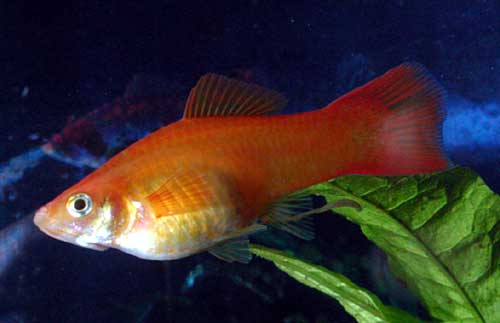
Pregnant Female Swordtail
Platys:
Resized to 99% (was 360 x 240) - Click image to enlarge

Female Platy

Pregnant Female Platy
Guppys:

Female Guppy

Pregnant Female Guppy
Endlers:

Mollys:
Resized to 56% (was 636 x 368) - Click image to enlarge

Female Molly

Pregnant Female Molly
Swordtails:

Female Swordtail
Resized to 72% (was 500 x 323) - Click image to enlarge
Pregnant Female Swordtail
Platys:
Resized to 99% (was 360 x 240) - Click image to enlarge

Female Platy

Pregnant Female Platy
Guppys:

Female Guppy

Pregnant Female Guppy
Endlers:

machan these fish are called lucky fish.came to sl with fenshui business.i had 5 machn... 2 pearl arows and 3 silvers... all died


Type: Freshwater
Size: 8" (20cm) diameter
Tank Size Needed (Minimum): 40 gallons (150L)
Water pH: 5.5 to 6.5
Water Hardness: Soft (0-5 dH)
Temperature: 80-86°F (26-30°C)
Origin: South America – Amazon River, Columbia, and Peru
Social: Does best in a pair or school. Will successfully live with other non-aggressive fish, particularly Hatchets, Pencils, and Tetras that like very warm water.
Life span: 10+ years
Diet: Carnivore. Prefers live or frozen food (bloodworms, brine shrimp, krill, small insects). Some will learn to eat pellet or flake food, but only if bred in captivity.
Difficulty Rating: Advanced
Comments: Discus fish are very colorful but somewhat difficult to keep. A cichlid fish, they have a flat body similar to an Angel fish, though more rounded and with curved fins. There are two main species of discus, the red and the blue. Because the two species can be bred together, the variety of discus hybrids, colors, and patterns produced by breeders is stunning. Some of these include leopard spots, vertical stripes, horizontal stripes, snakeskin patterns, solid colors and solids with patches of spots, all in colors from tangerine to sky blue, from green to red.
Though these fish are beautiful in an aquarium, they are not for beginners. Some are difficult to feed and will refuse to eat new foods. Discus fish tend to be delicate and will easily contract diseases if the water in the aquarium is less than perfect. Frequent water changes are required (some experts recommend 20% daily), as are warm temperatures. Breeders recommend monthly worming as well, to keep the fish as healthy as possible. Some captive-raised discus fish will adapt to harder water but most prefer very soft water. A large aquarium is necessary, especially if keeping more than one discus. An absolute minimum of 10 gallons (38L) per discus is recommended, preferably more.
Also, this fish is much happier in a community tank where there are no larger, more aggressive fish for it to cope with. Discus fish can be nervous and shy. They do better with low light in the aquarium, along with plenty of plants and other aquarium furnishings for security.
Breeding discus fish is very difficult, but once the babies are born, breeders can observe one of the most unique traits of this fish: the young feed off the mucus produced on the scales of their parents.
wow


Type: Freshwater
Size: 8" (20cm) diameter
Tank Size Needed (Minimum): 40 gallons (150L)
Water pH: 5.5 to 6.5
Water Hardness: Soft (0-5 dH)
Temperature: 80-86°F (26-30°C)
Origin: South America – Amazon River, Columbia, and Peru
Social: Does best in a pair or school. Will successfully live with other non-aggressive fish, particularly Hatchets, Pencils, and Tetras that like very warm water.
Life span: 10+ years
Diet: Carnivore. Prefers live or frozen food (bloodworms, brine shrimp, krill, small insects). Some will learn to eat pellet or flake food, but only if bred in captivity.
Difficulty Rating: Advanced
Comments: Discus fish are very colorful but somewhat difficult to keep. A cichlid fish, they have a flat body similar to an Angel fish, though more rounded and with curved fins. There are two main species of discus, the red and the blue. Because the two species can be bred together, the variety of discus hybrids, colors, and patterns produced by breeders is stunning. Some of these include leopard spots, vertical stripes, horizontal stripes, snakeskin patterns, solid colors and solids with patches of spots, all in colors from tangerine to sky blue, from green to red.
Though these fish are beautiful in an aquarium, they are not for beginners. Some are difficult to feed and will refuse to eat new foods. Discus fish tend to be delicate and will easily contract diseases if the water in the aquarium is less than perfect. Frequent water changes are required (some experts recommend 20% daily), as are warm temperatures. Breeders recommend monthly worming as well, to keep the fish as healthy as possible. Some captive-raised discus fish will adapt to harder water but most prefer very soft water. A large aquarium is necessary, especially if keeping more than one discus. An absolute minimum of 10 gallons (38L) per discus is recommended, preferably more.
Also, this fish is much happier in a community tank where there are no larger, more aggressive fish for it to cope with. Discus fish can be nervous and shy. They do better with low light in the aquarium, along with plenty of plants and other aquarium furnishings for security.
Breeding discus fish is very difficult, but once the babies are born, breeders can observe one of the most unique traits of this fish: the young feed off the mucus produced on the scales of their parents.

Similar threads


- Replies
- 2
- Views
- 413


