


වාහන විත්ති 264 - විදුළි වාහන වල බැටරි ප්රතිචක්රීයකරණය.
‘නිසාන්’, ‘සුමිටෝමෝ’ යන සමාගම් සමඟ එක්ව, 4R [4R Energy Corporation] යන සමාගම ජපානයේ විදුළි වාහන බැටරි චක්රීයකරණය කිරීමේ ව්යාපෘතියක් ප්රථම වරට ආරම්භ කරයි.
මේ ව්යාපෘතිය, මුලින්ම හඳුන්වා දුන් ‘නිසාන් ලීෆ්’ පළමු පරම්පරාවේ වාහන වැනි වාහන වල බැටරි නැවත ප්රතිචක්රීය කිරීමට මහත් සේ ඉවහල් වේ යයි බලාපොරොත්තු වේ. විදුළි වාහනවලට මිනිසුන්ගේ ඇති ප්රතිචාරයේ විශාල වෙනසක් වේ මෙමගින් වේ යයි අනුමාන කරන්නේ, මෙම ප්රතිචක්රීයකරණය කරන බැටරි වලට අවශ්ය අමු ද්රව්ය අලුතෙන් අනවශ්ය නිසාත්, එහි මිළද එමගින් සාපේක්ෂව ඉතා අඩුවන හෙයින් මෙන්ම මේ ක්රමය පරිසර හිතකාමීද වන නිසාය.
විදුළි වාහන සඳහා අවශ්ය මූලික අමුද්රව්ය වන ලිතියම්, නිකල් සහ කොබෝල්ට්, 2050 වසර වන විට සැපයීමේ ප්රශ්ණ වලට තුඩු දීමට හැකි වන බවට අනාවැකි පළවී ඇති හෙයින් මේ ප්රතිචක්රීයකරණ උත්සාහය ඉතා වැදගත් වනු ඇත. බැටරියක මිළ සාමාන්යයෙන් විදුළි වාහනයේ මිලෙන් පහෙන් එකක් පමණ වේ.
නමුත් මේ ප්රතිචක්රීය කරන ලද බැටරියේ මිළ ඊට වඩා බොහෝ අඩු වේ. එනම් එය ජපන් යෙන් මුදලින් 300,000 ක් හෙවත් ස්ටර්ලින් පවුන් 2015ක් වේ. එනම් අළුත් බැටරියකට යන මිලෙන් භාගයකි. 4R සමාගමේ විධායක අධ්යක්ෂක එයිජි මකිනෝ මහතා [chief executive Eiji Makino, 4R.] කියන ආකාරයට, මේ හේතුව නිසා මුල් පරම්පරාවේ නිසාන් ලීෆ් වාහන වලට නව ජීවයක් ලැබෙනු ඇත.
[පසු වදන :- මේ කියන ‘නිසාන් ලීෆ් 2012 වසරේ වාහන වල මෝටරයේ බලය වඩාත් වැඩිය. මෙතරම් ත්වරණයක්, පාරේ යන වාහනයකට අවශ්යද යන්න ඔබට සිතෙනු ඇත. වාහනයේ ආසනයේ ‘හෙඩ් රෙස්ට්’ එක හෙවත් ඔළුවේ පසුපස වදින සීට් කොටස නැති නම්, උපරිම ත්වරණයක දී බෙල්ලට හානි විය හැක.]
මේ වාහනයේ ත්වරණය හොන්ඩා සිවික් 1800 CC වාහනයට වඩා වැඩි වේ. ලංකාවේ මේ වාහන ඇති නිසා ඔබටද මෙය පරීක්ෂා කළ හැක. මෙහි තේරුම නම්, එම පරණම නිසාන් ලීෆ් වාහන වලටද ඉහළ ඉල්ලුමක් ඇති වනු ඇත යන්නය.
බැටරි ප්රතිචක්රීයකරණ අළුත් කර්මාන්ත ශාලාව ජපානයේ පරමාණුක ව්යසනය සිදු වූ ෆුකුෂිමා හී ඇති නෙමී [Namie] යන ප්රදේශයේ ඉදි කරන්නේ එම ප්රදේශය නැවත යථා තත්වයට ගැනීමේ අරමුණෙනි.
සුමිටෝමෝ සමාගම මේ බැටරියේ ඇති බැටරි මොඩියුල 48, පැය 4 කින් විශ්ලේෂණය කිරීමේ ක්රමයක් සොයා ගෙන ඇත.
මුලින් දින 16ක් ගතවුණු මේ විශ්ලේෂණ කටයුත්ත පැය 4 කින් ඉටු කර ගැන්මට හැකිවීම විශාල ජයග්රහණයක් යයි ජපන් ඉංජිනේරුවෝ සිතති.
80% ක් ධාරිතාවයට පත් බැටරි මොඩියුල නැවත කාර් වලටද, ඉන් අඩු ප්රමාණයක ධාරිතාවයට පත් බැටරි මොඩියුල, ‘ෆෝක් ලිෆ්ට්’, ‘ගොල්ෆ් පිටි වල භාවිතා කරන ට්රොලි’ වැනි අඩු විදුළි බලයක් ඇති කුඩා වාහන වලට භාවිතා කෙරෙනු ඇත.
මේ ක්රමය පැරණි බැටරි වලට පමණක් නොව, බැටරි රසායනය වෙනස් බැටරි ඇති අලුතෙන් එන විදුළි වාහනවලටද භාවිතා කල හැකි වණු ඇත.
http://www.sundaytimes.lk/180304/bu...ecycle-electric-vehicle-batteries-283999.html
While electric vehicle batteries when they are worn out are reused and recycled, in Sri Lanka this facility is not available for the electric vehicle owners as these vehicles are not imported through official agents. And since they are imported individually the Japanese manufacturer – Nissan doesn’t provide any such support.
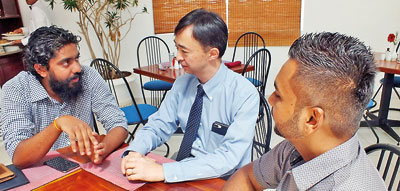
Mr. Hiroshi Saitoh (centre) with Mr. Mahisanka Abeywickrama and Mr.Damith Gunatilleke.
There are about 5,000 electric vehicles in Sri Lanka whose owners have formed an association called the Electric Vehicles Club, Sri Lanka (EVC) and the club has been working to resolve this battery issue. They have been talking to Nissan and as a result of attempts of the club Nissan and another company, Sumisho Machinery Trade Corporation have floated a joint venture, 4R Energy which is now putting up a plant to make these worn out batteries reusable and recycled.
For the Sri Lankan electric vehicle owners to get the best out of the new factory, a Japanese – Hiroshi Saitoh, Deputy General Manager, Automotive Department No.2, Sumisho, was flown to Sri Lanka. He had discussions with the officials of the Electric Vehicle Club – Mahisanka Abeywickrama, Co-founder and Interim Committee member and Damith Gunatilleke, Chief Technical Officer, EVC. Mr. Saitoh was in Sri Lanka for three days and EVC also arranged a discussion with various connected parties.
When the Business Times met Mr. Saitoh, in the company of the two officials of EVC, he said that what they do in the factory is dismantle the used batteries and go through the components carefully to remove all the non-performing components to refabricate to construct a usable battery. All the bad components are removed for recycling. He said that when they are recycled, they would be released to the environment which is a great benefit.
He said that if the non-performing components are left in the battery, the performance of other performing components gets affected. The ‘re-use and recycling factory would commence operation in April this year.
Mr. Abeywickrama told the Business Times that the increased use of electric vehicles would benefit the country immensely because fossil fuel usage in the vehicles are reduced which is of benefit to the environment in addition to reducing fuel consumption.
Mr. Saitoh said that there are about 100,000 electric vehicles in Japan and to encourage more and more use of electric vehicles, the Japanese government offers financial support to ensure that the vehicles are used at least for six years and if this condition is violated the support would be withdrawn.
The "eRoad" charges electric vehicles via electrified tracks which are built into the middle of the road
The vehicle connects to the track via a moveable arm that's connected underneath the car or truck


Last edited:


