


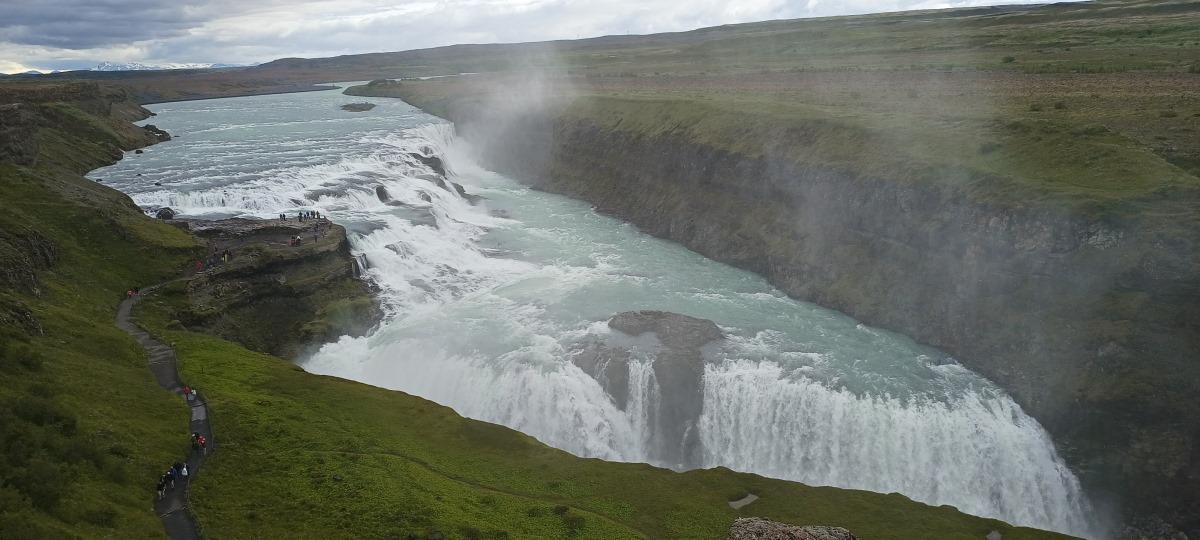
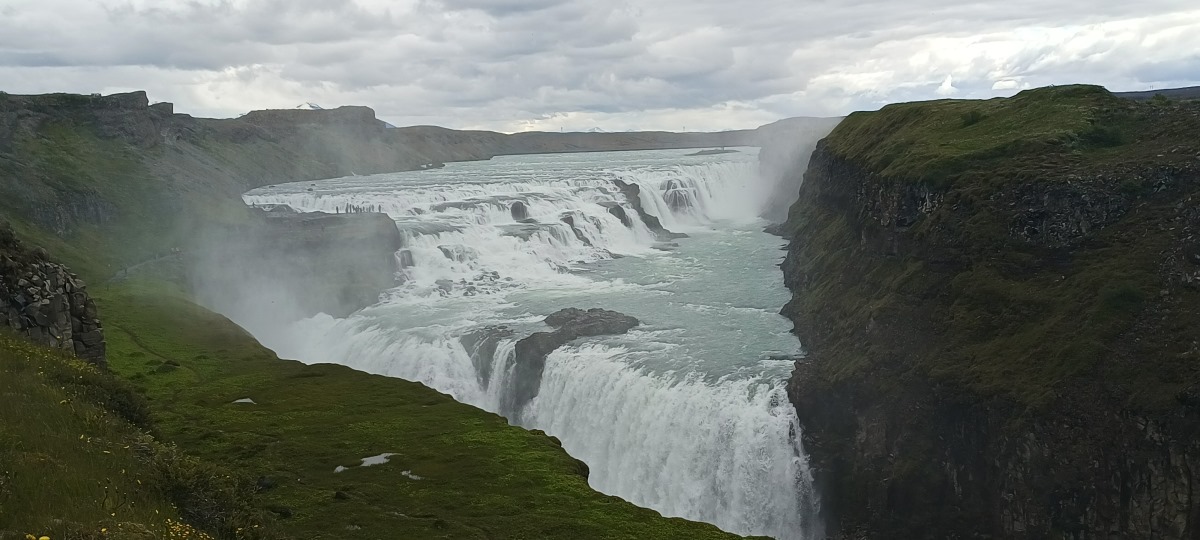
Gullfoss (translated to ‘Golden Falls’) is one of Iceland’s most iconic and beloved waterfalls, found in the Hvítá river canyon in Southwest Iceland.
This falls is about a two hour drive from Reykjavik, but along the normal tourist route, called the "Golden Circle" route. It's very close to the Geysir geothermal area and the Þingvellir National Park.
In volume Gulfoss is the largest in Europe. In the summer, approximately 140 cubic meters (459 cubic feet) of water surges down the waterfall every second, whilst in winter that number drops to around 109 cubic meters (358 cubic feet).
The water in Hvítá river travels from the glacier Langjökull, before cascading 32 meters (105 feet) down Gullfoss’ two stages in a dramatic display of nature’s raw power.
Because of the waterfall’s two stages, Gullfoss should actually be thought of as two separate features. The first, shorter cascade is 11 meters tall (36 feet), whilst the second drop is 21 meters (69 feet). The canyon walls on both sides of the waterfall reach heights of up to 70 meters (230 feet), descending into the great Gullfossgjúfur canyon. Geologists believe that this canyon was formed by glacial outbursts at the beginning of the last age.
Photos: 28-06-2022
This falls is about a two hour drive from Reykjavik, but along the normal tourist route, called the "Golden Circle" route. It's very close to the Geysir geothermal area and the Þingvellir National Park.
In volume Gulfoss is the largest in Europe. In the summer, approximately 140 cubic meters (459 cubic feet) of water surges down the waterfall every second, whilst in winter that number drops to around 109 cubic meters (358 cubic feet).
The water in Hvítá river travels from the glacier Langjökull, before cascading 32 meters (105 feet) down Gullfoss’ two stages in a dramatic display of nature’s raw power.
Because of the waterfall’s two stages, Gullfoss should actually be thought of as two separate features. The first, shorter cascade is 11 meters tall (36 feet), whilst the second drop is 21 meters (69 feet). The canyon walls on both sides of the waterfall reach heights of up to 70 meters (230 feet), descending into the great Gullfossgjúfur canyon. Geologists believe that this canyon was formed by glacial outbursts at the beginning of the last age.
Photos: 28-06-2022
Last edited:


 bumpiyo


