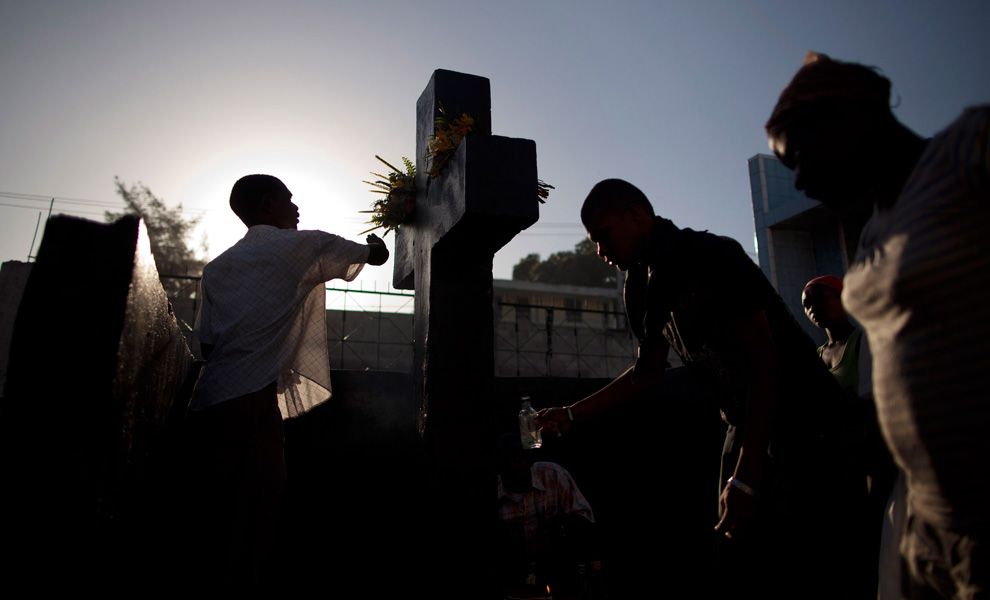
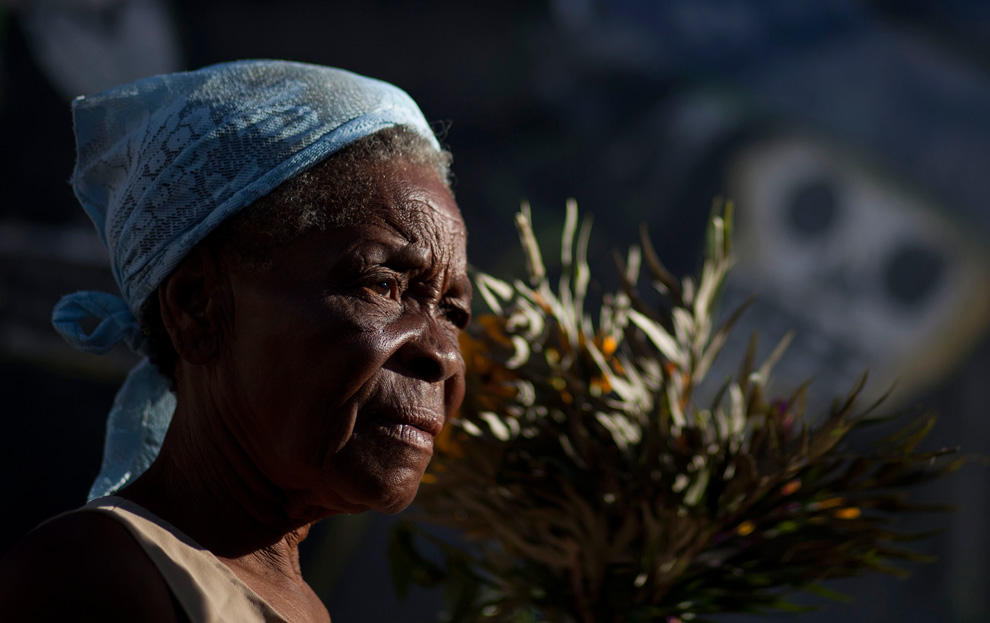
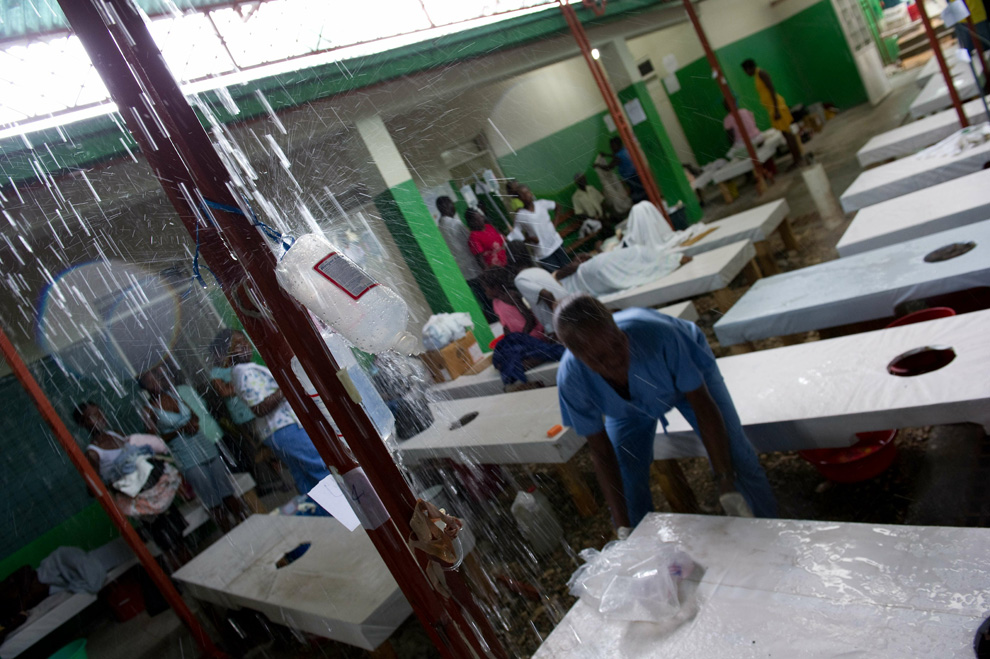
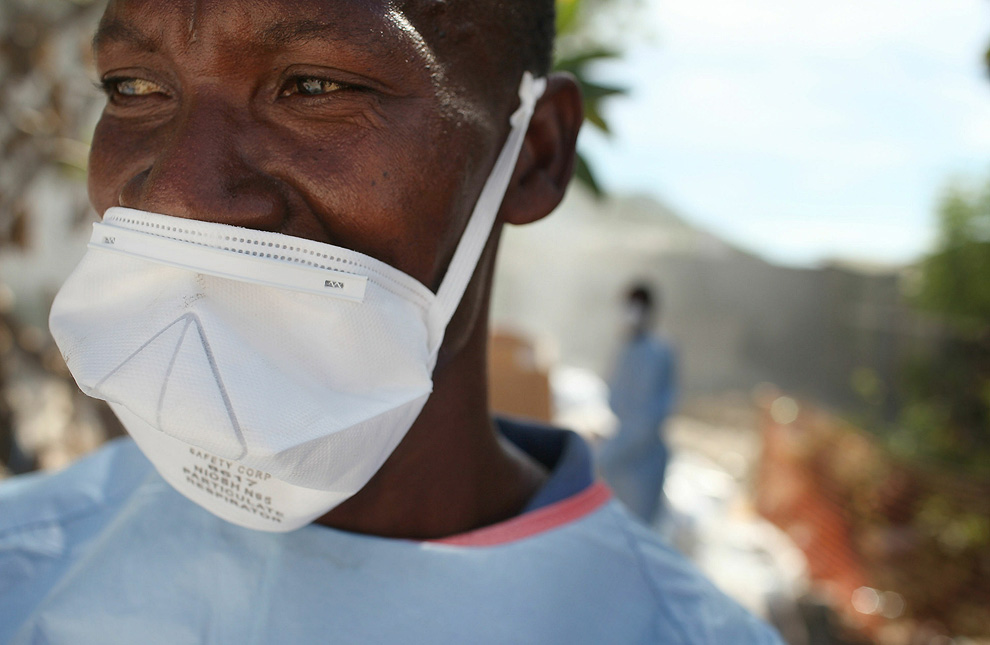
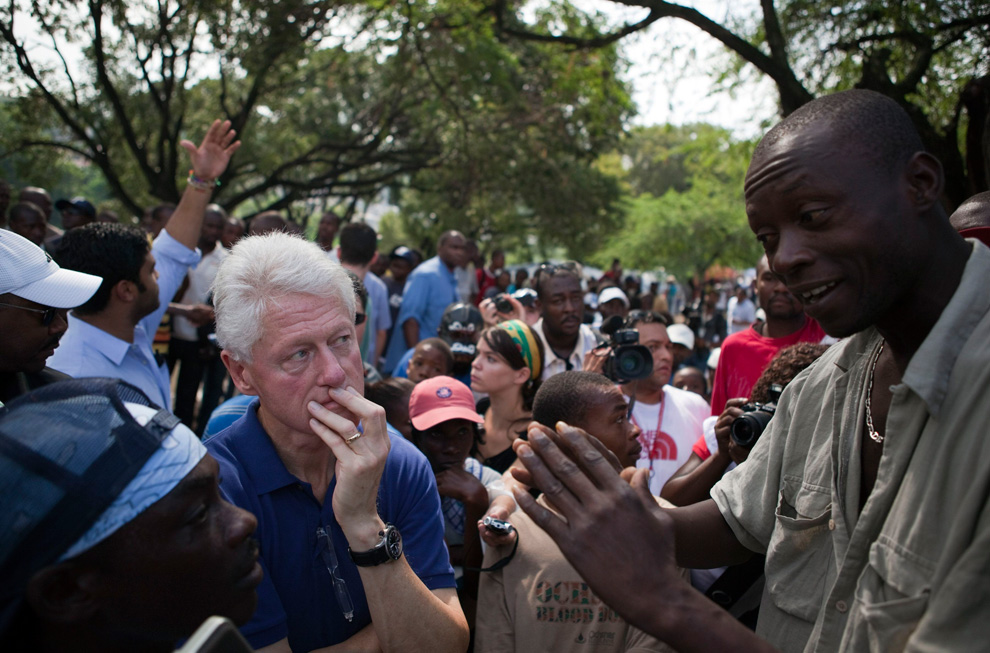
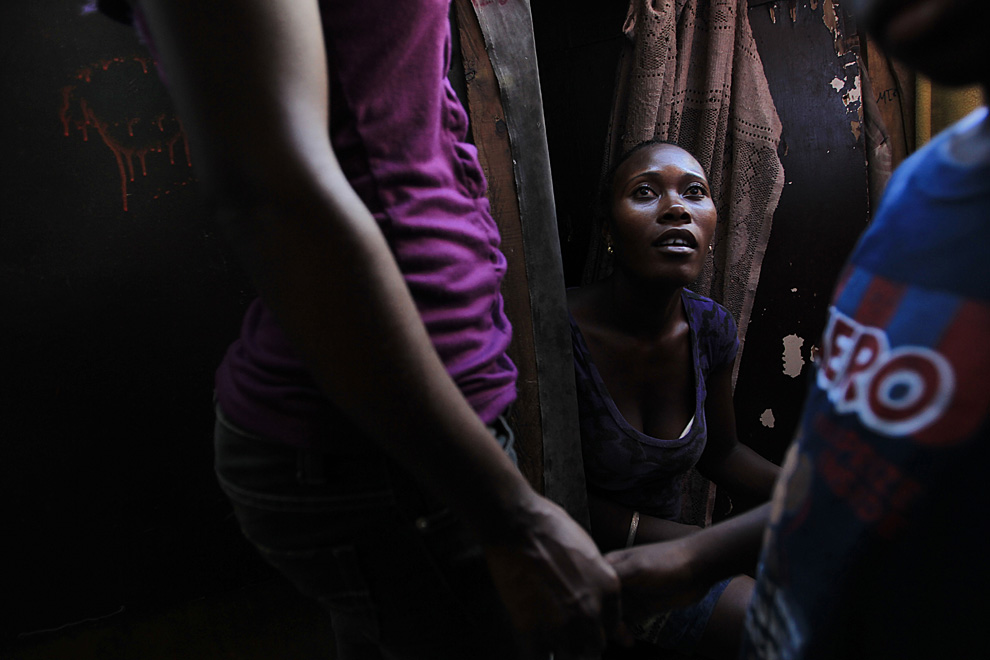
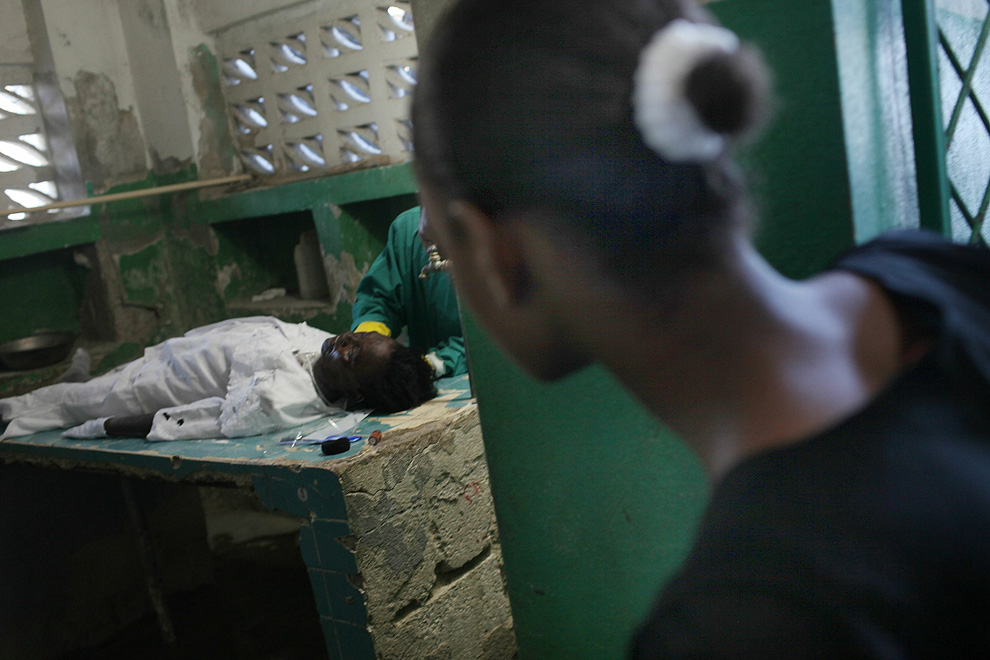
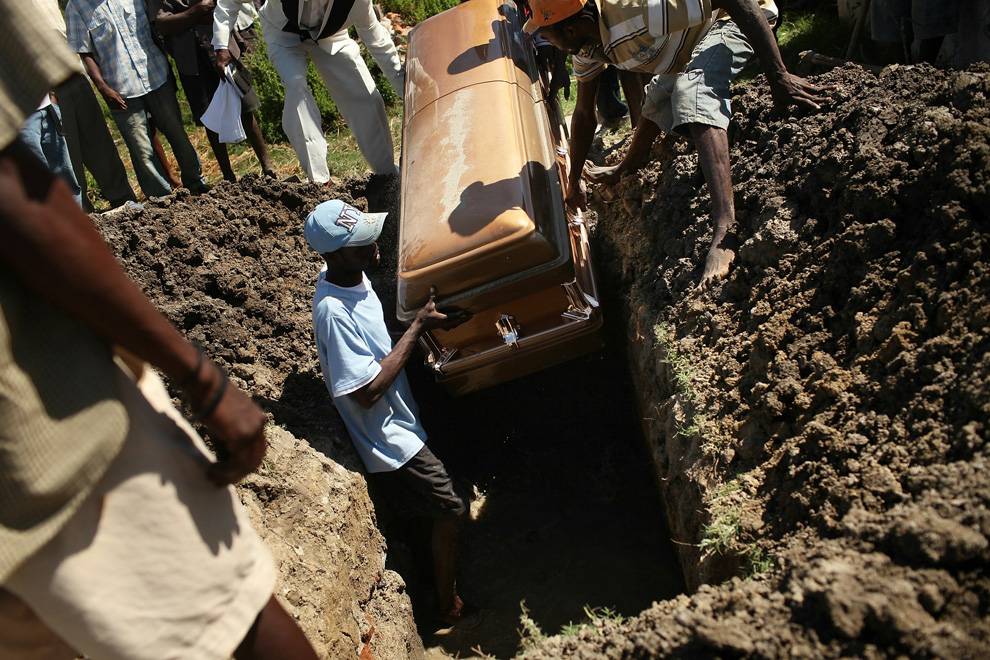
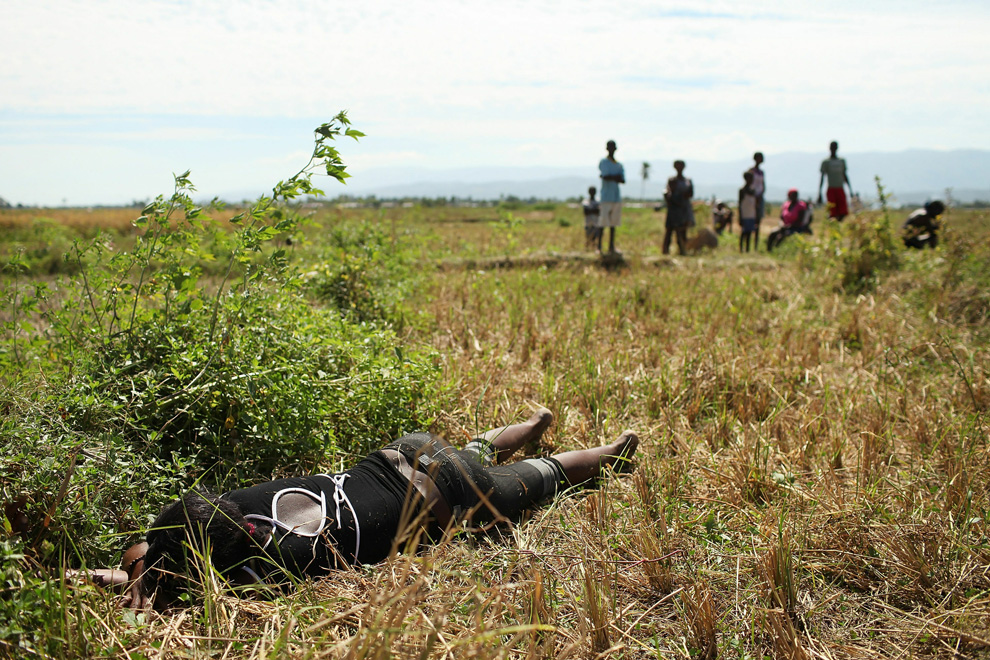
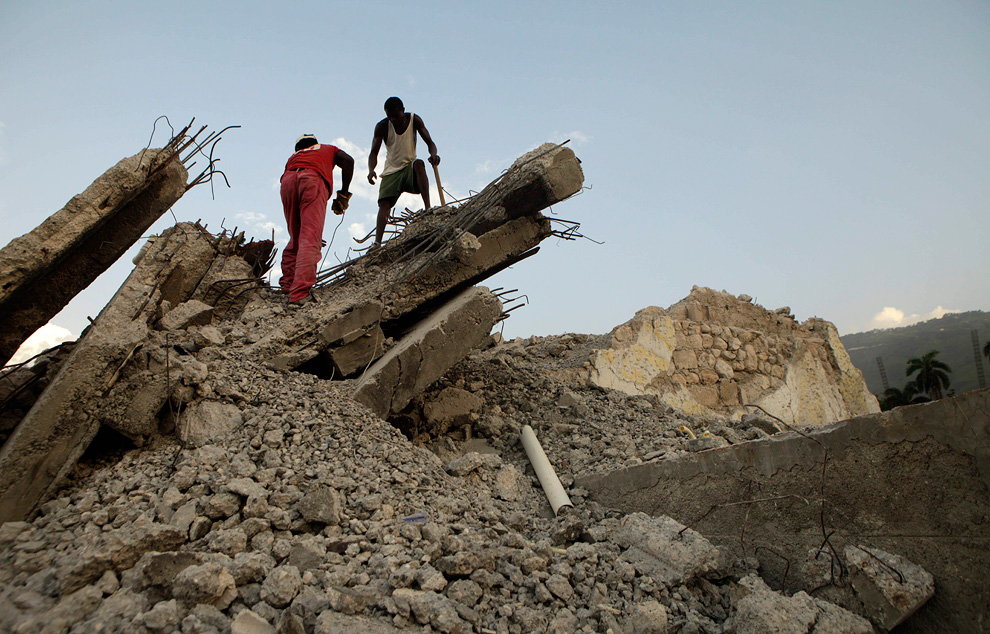
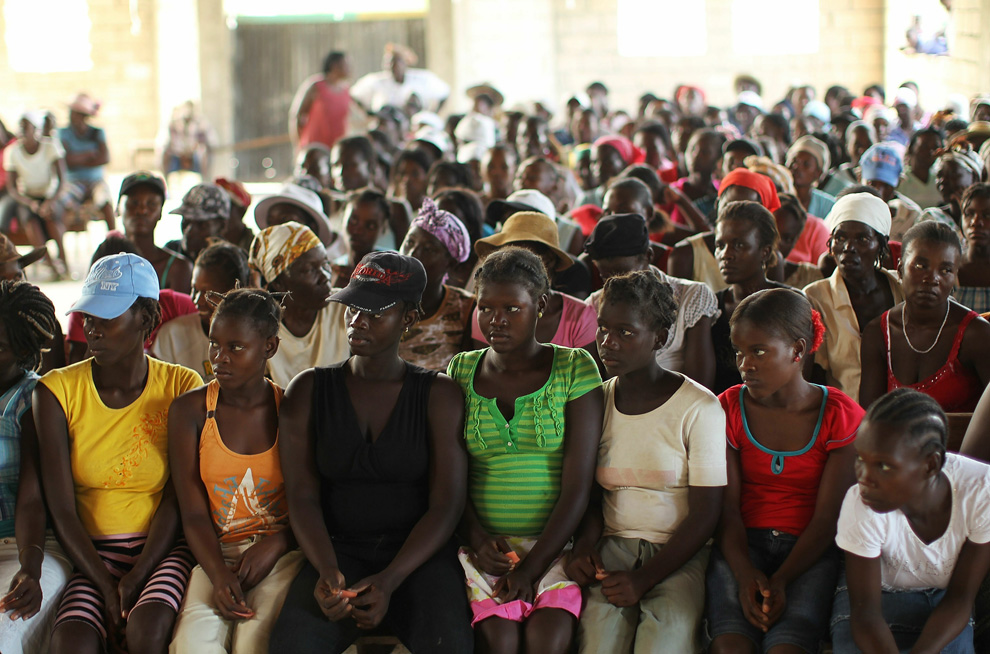
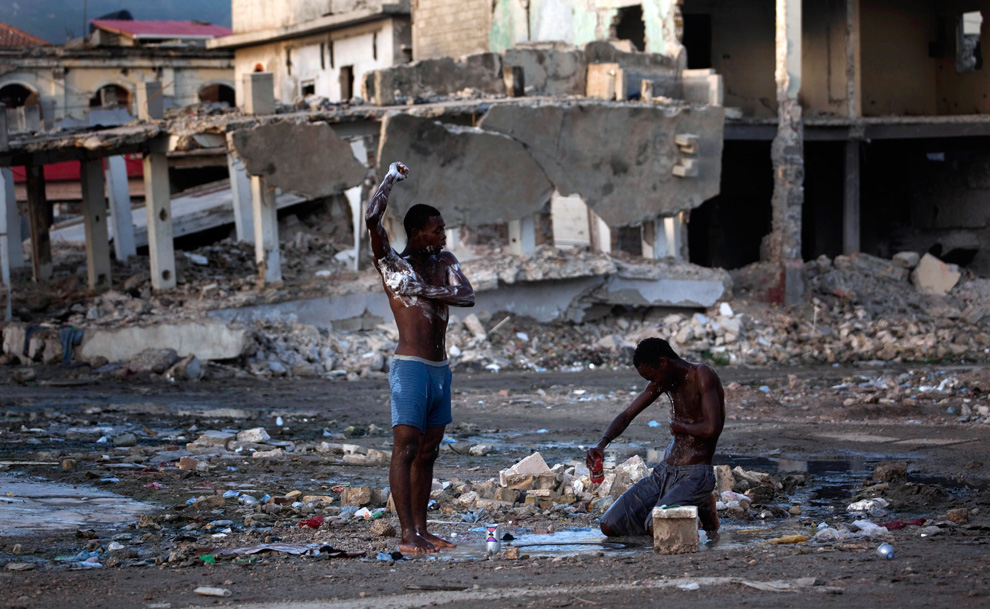
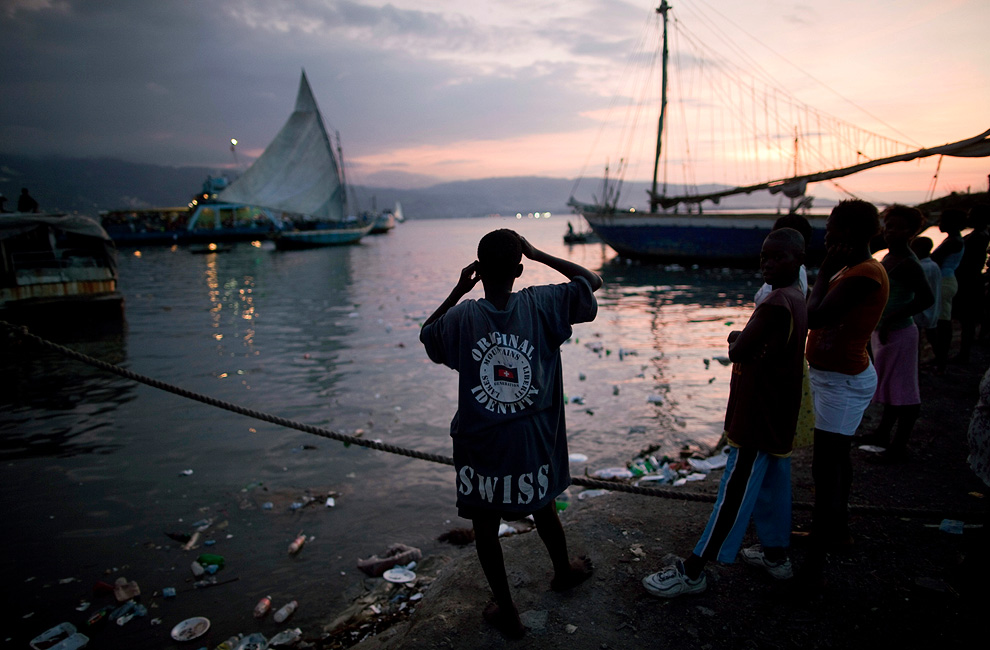
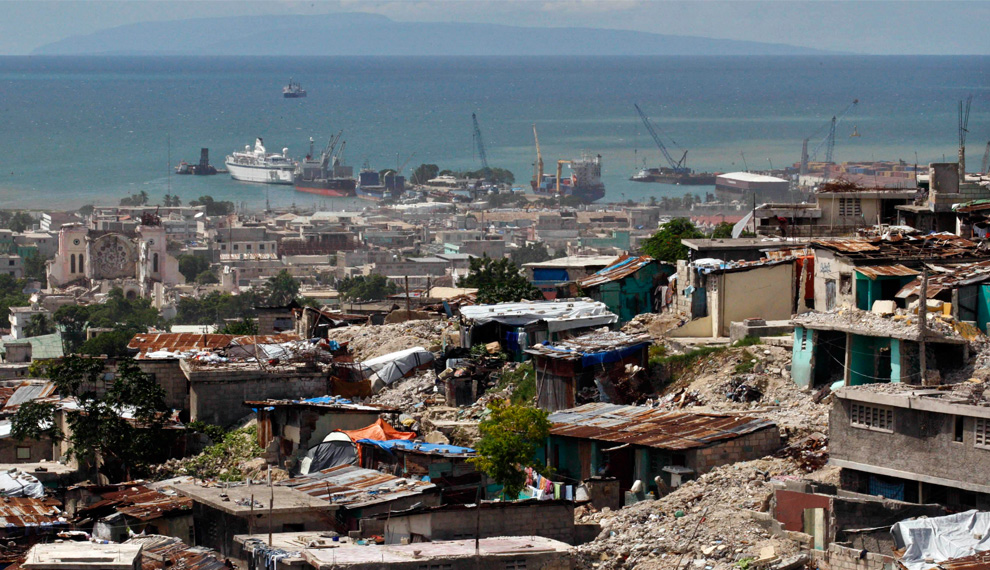
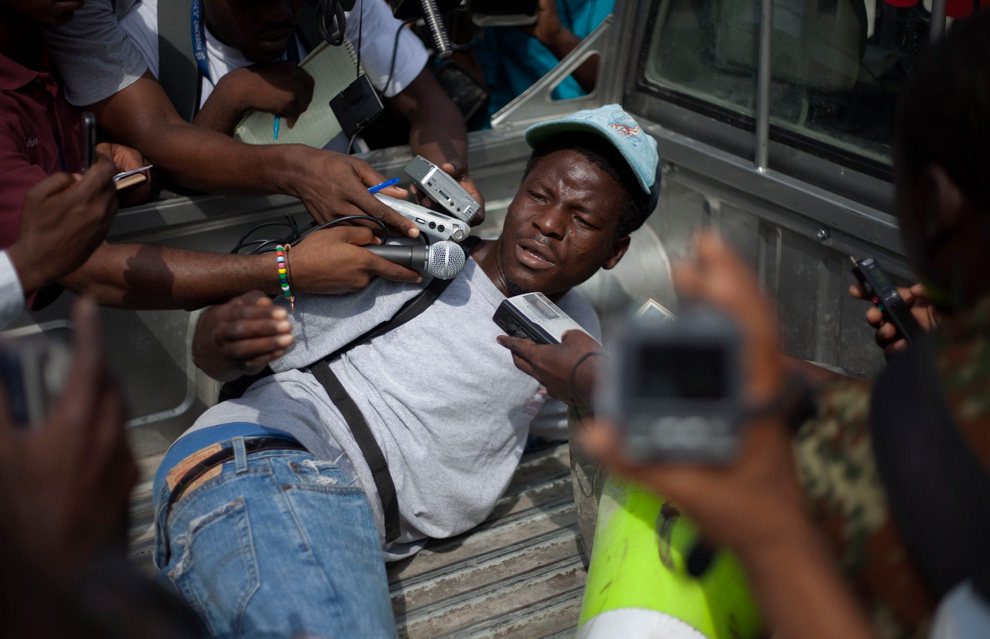
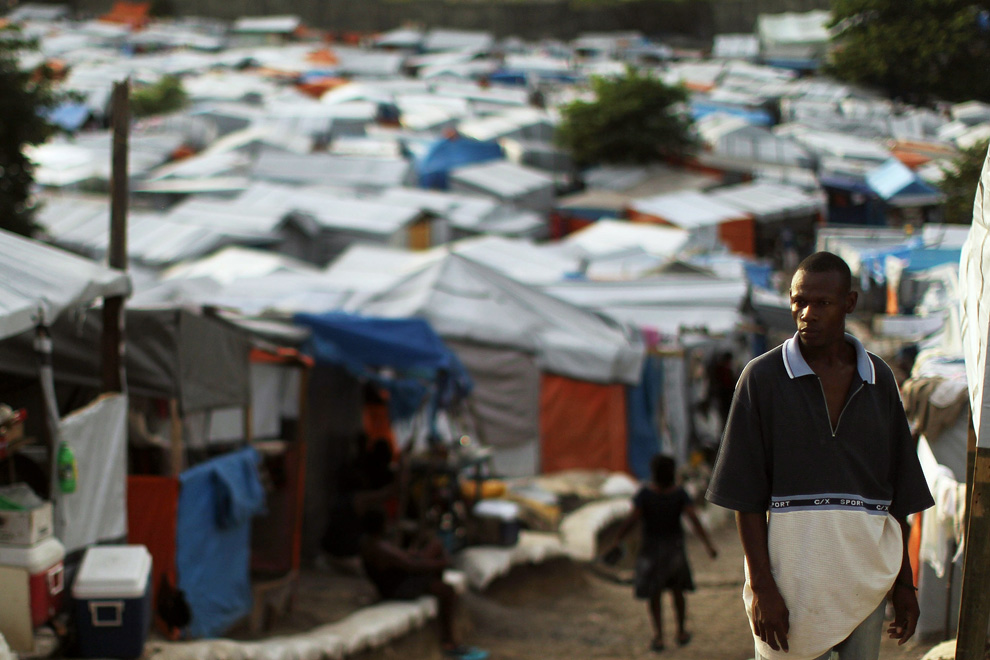
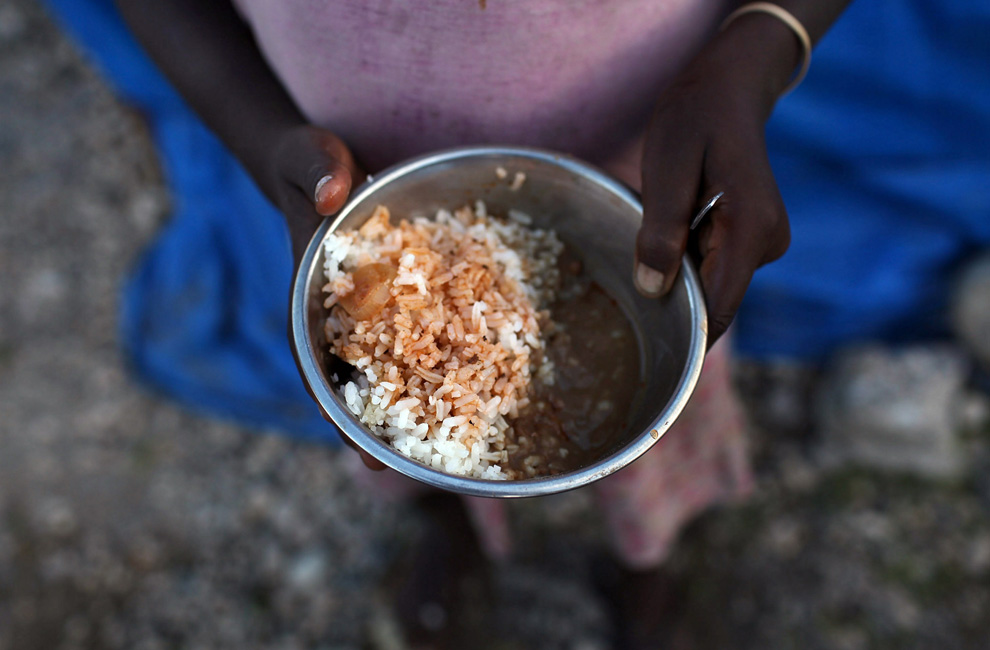
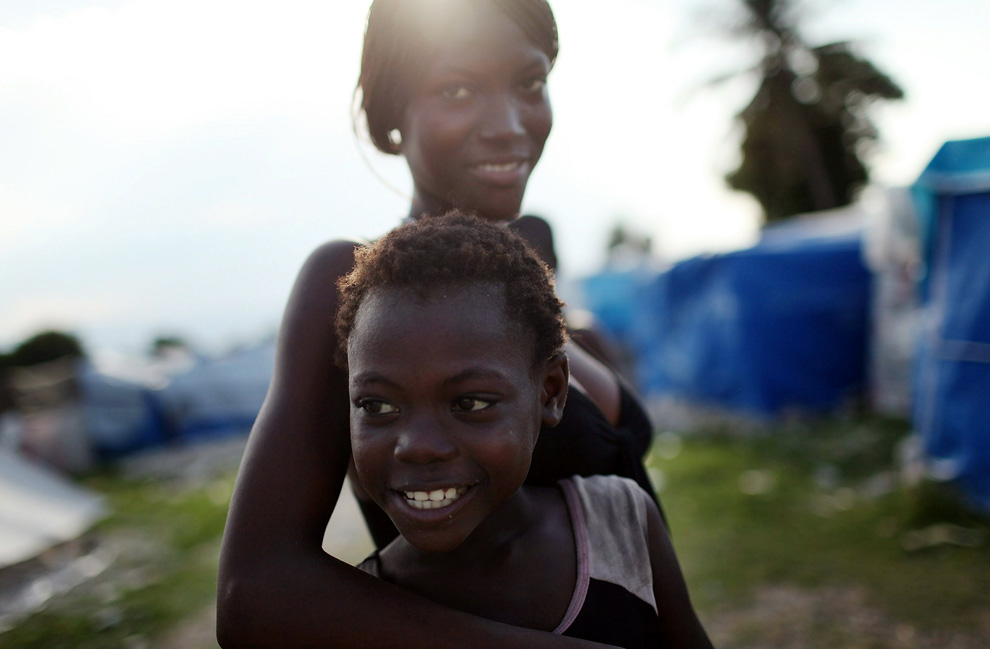
It has now been nearly ten months since the devastating January earthquake struck Haiti, reducing Port-au-Prince to rubble and claiming over 300,000 lives. In the time since, Haiti's government, the United Nations, and many other aid agencies have struggled just to keep the population healthy and fed as it tries get back on its feet. Recent weeks have seen an outbreak of cholera, which has killed more than 300 people. The cholera strain is not native to Haiti, and reportedly matches strains found in South Asia, placing suspicion on U.N. personnel from that area who were stationed nearby. Some 1.3 million people are still crammed into thousands of makeshift camps dotted around the capital, leaving them vulnerable to both disease outbreaks and the elements - of particular concern as Tropical Storm Tomas now approaches, and may grow to Hurricane strength by landfall on Friday
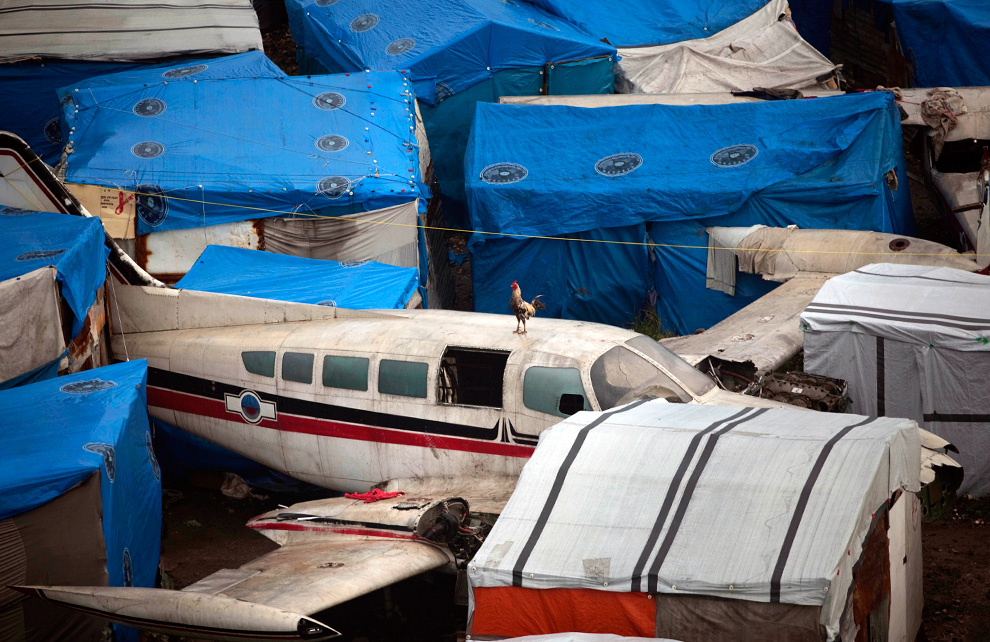
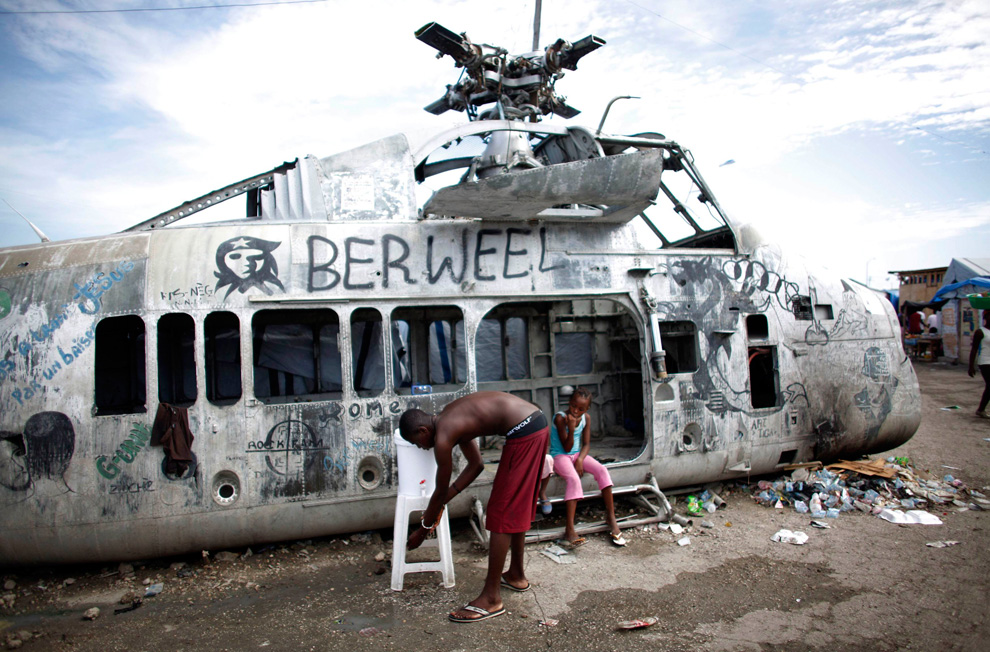
A rooster stands on the roof of an abandoned aircraft in a camp set up for Jan. 12 earthquake victims on an abandoned air strip in Port-au-Prince, Haiti on Wednesday, September 29th, 2010.

A wider view of a tent city set up for earthquake victims in Port-au-Prince, Haiti on Wednesday, September 29th, 2010.
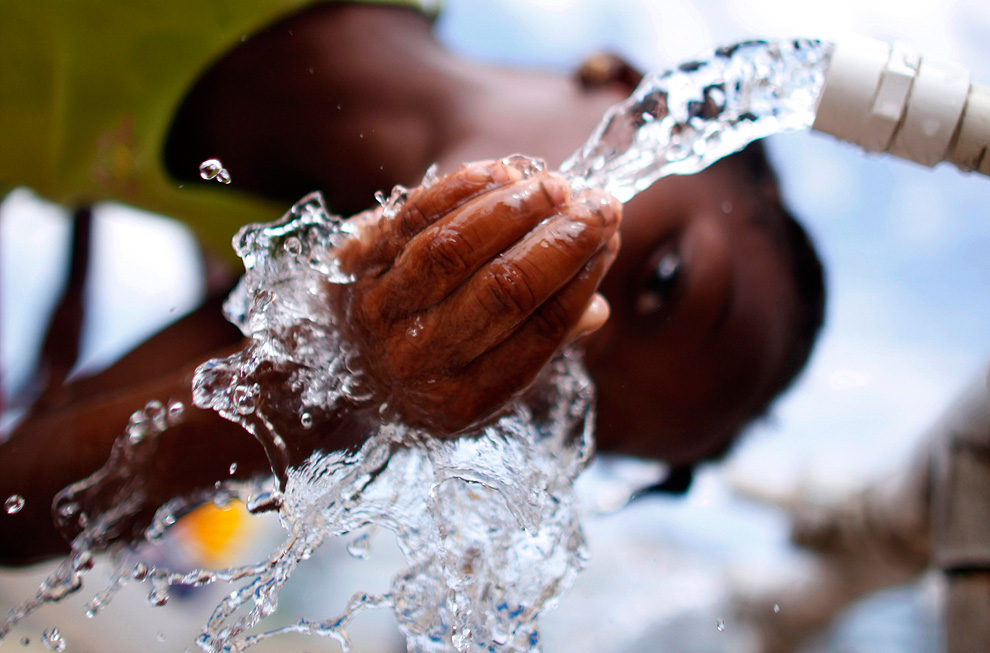
An earthquake survivor drinks water from a well in a provisional camp at downtown Port-au-Prince October 30, 2010

A cholera patient is brought into a hospital run by the Haitian government where Doctors Without Borders is treating people with cholera October 30, 2010 in St. Marc, Haiti
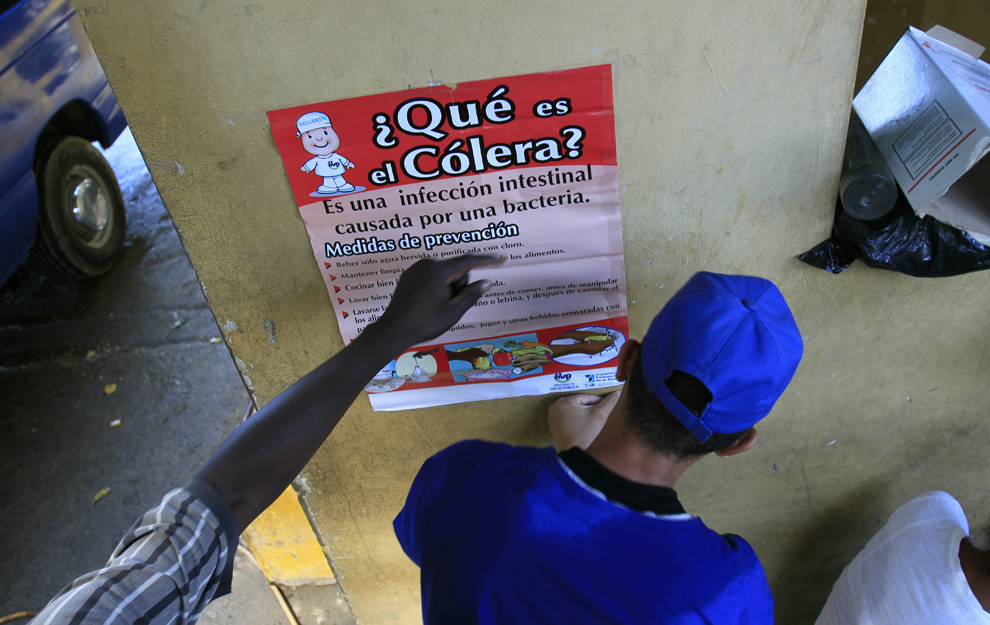
A Public Health civil servant sticks posters with information on cholera around Dajabon, in the Dominican Republic, in the border with Haiti, on October 27, 2010.
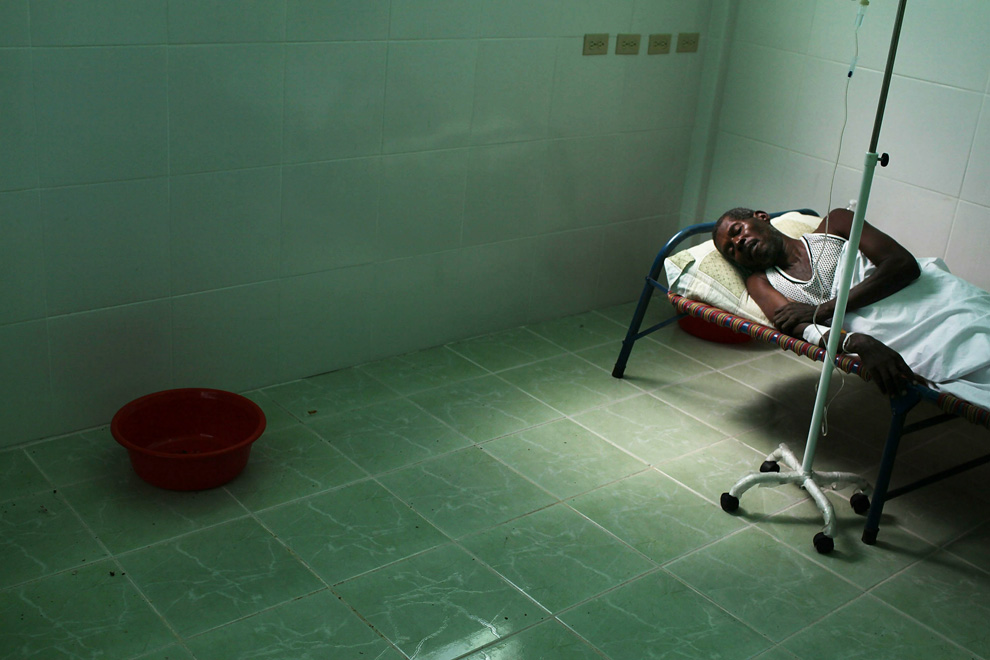
A man suffering from cholera rests in bed at a rural hospital on October 28, 2010 in L'Arcahaie, Haiti.
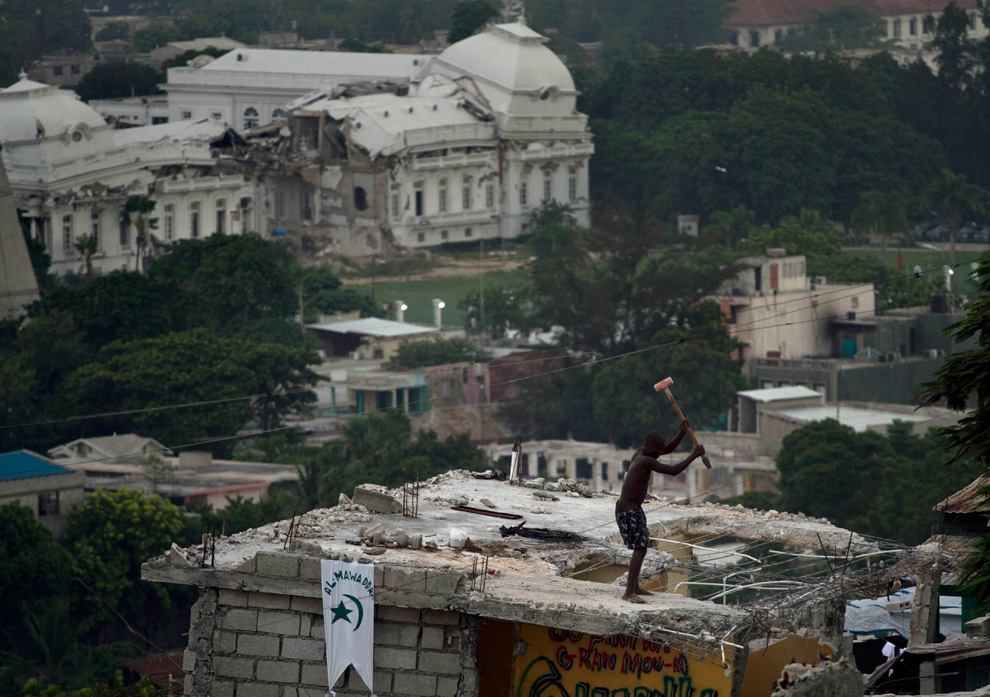
A youth uses a hammer to demolish his home near the National Palace, in the Fort Nationale neighborhood of Port-au-Prince, Haiti on Monday Sept. 20, 2010
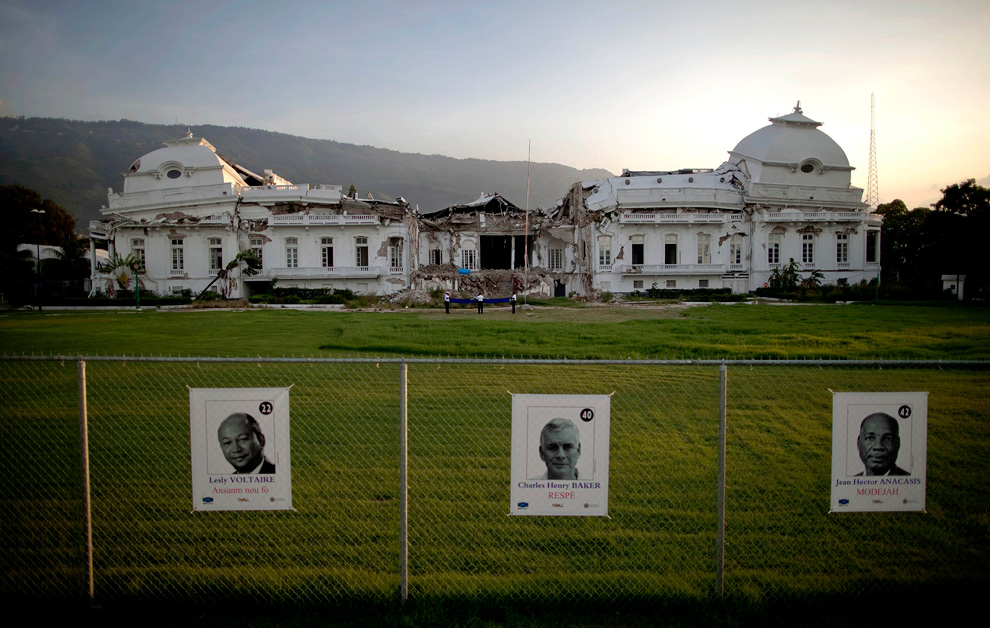
Photos of Lesly Voltaire, of the Ansanm nou fo party, or "Together we are strong" party, left, Charles Henry Baker, of the RESPE party, or "Respect" party center and Jean Hector Anacasis, of the Modejahthe party, or "Democratic Movement of the Haitian Youth", all three presidential candidates for Haiti's general elections, are hung from a fence surrounding the earthquake-damaged National Palace in Port-au-Prince, Haiti on Monday, Oct. 11, 2010. Haiti will hold elections Nov. 28
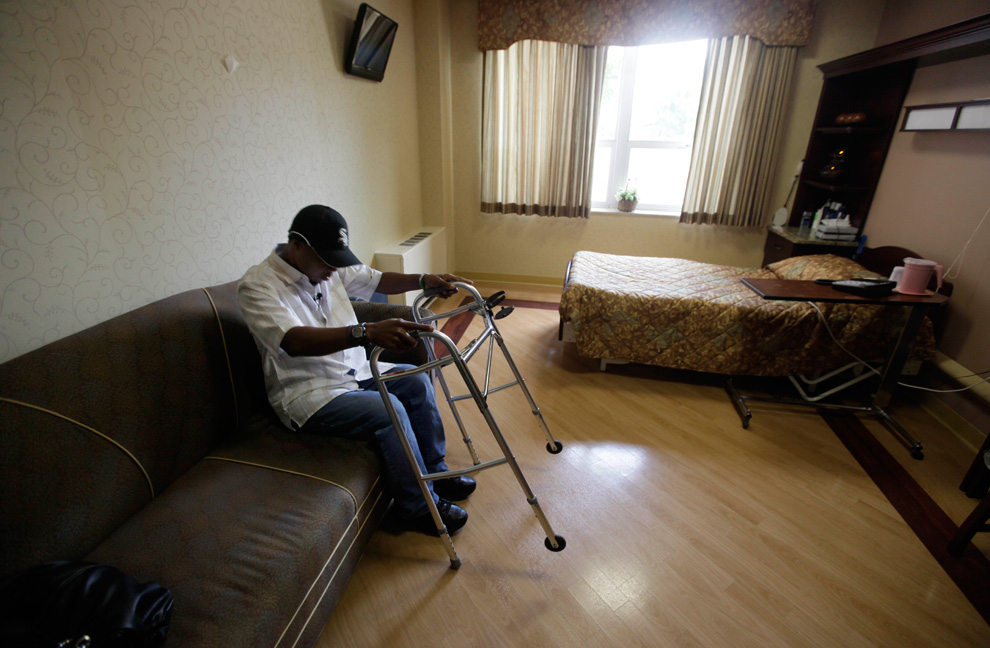
Bazelais Suy returns to his room after working with rehab therapists at Glencrest Nursing & Rehabilitation Center in Chicago, Illinois. Suy is a Haitian student activist whose spine was crushed when a university building collapsed in Haiti's catastrophic earthquake last January. He was airlifted to Chicago for six months of intensive rehabilitation and recently returned to Haiti with hopes of helping rebuild the country. Photo taken on June 22, 2010
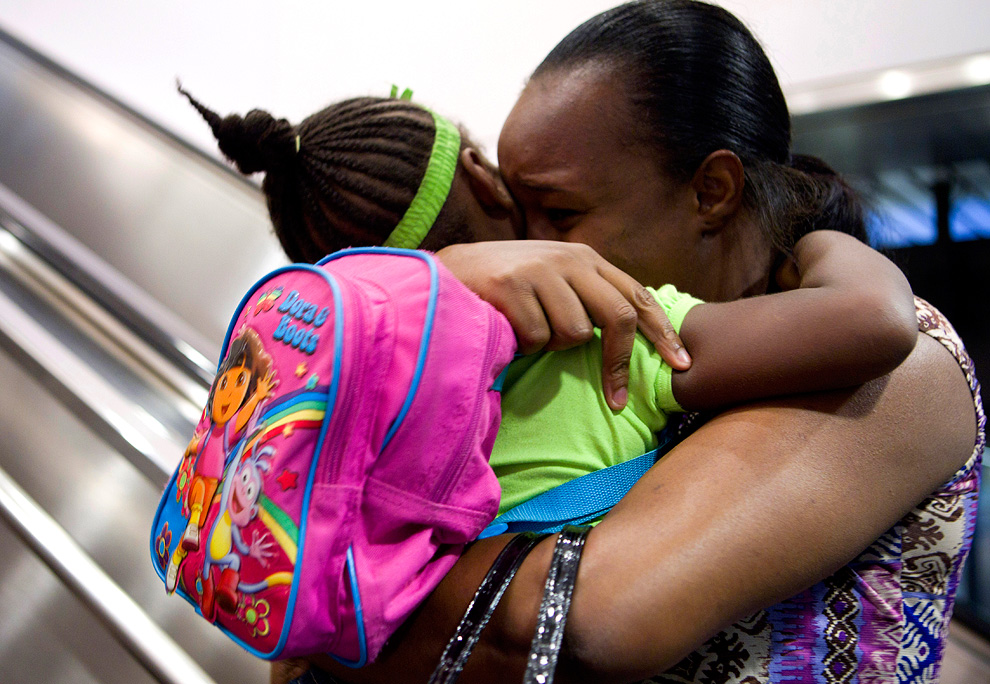
After an 8-month separation, Abby Emile, 3, from Haiti, is reunited with her mother, Lynda Maurice in Boston, Massachusetts on August 14th, 2010. Lynda had flown to the United States on a visa in December of 2009, to be with her husband. A problem with immigration paperwork meant young Abby had to stay behind in Haiti with relatives for a short while - then the Earthquake hit in January, and eight more months would pass until Abby was able to be with her parents once more.

Haitians in Port-au-Prince walk the dark streets of downtown on August 3, 2010.
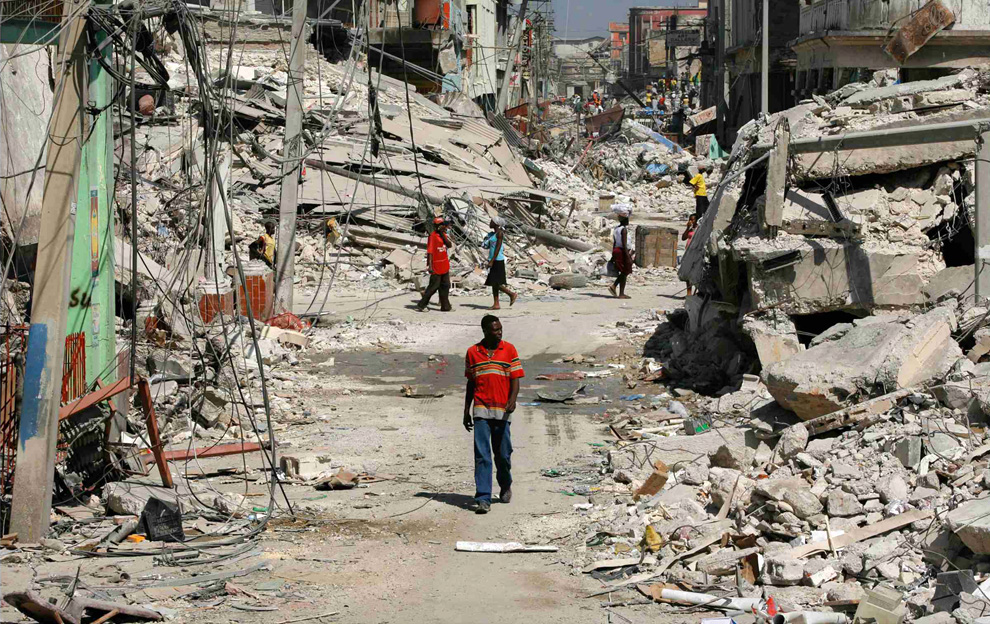
1 of 2) A "before" photograph shows Haitians walking in a badly damaged street after an earthquake in Port-au-Prince, on February 3, 2010. See below for the "after" photo
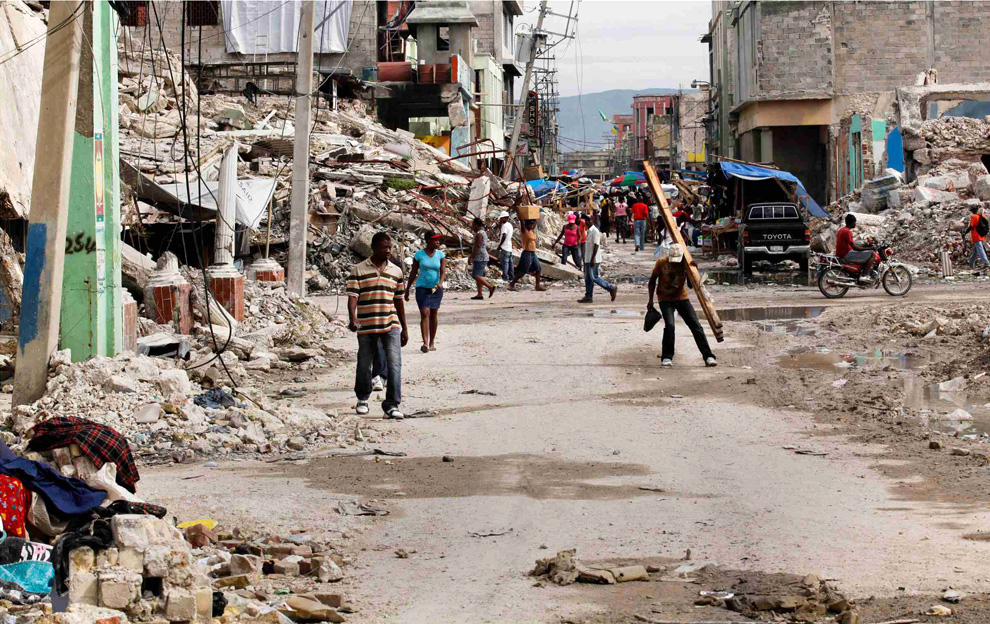
(2 of 2) An "after" photograph from September 30, 2010 - seven months later - shows Haitians walking on the same street as above. By some estimates, only 2 percent of the 250 million cubic meters of debris in Port-au-Prince has been cleared, for reasons ranging from lack of equipment and money to an abysmal property records system. Meanwhile, most Haitians just live and work around the piles of debris.
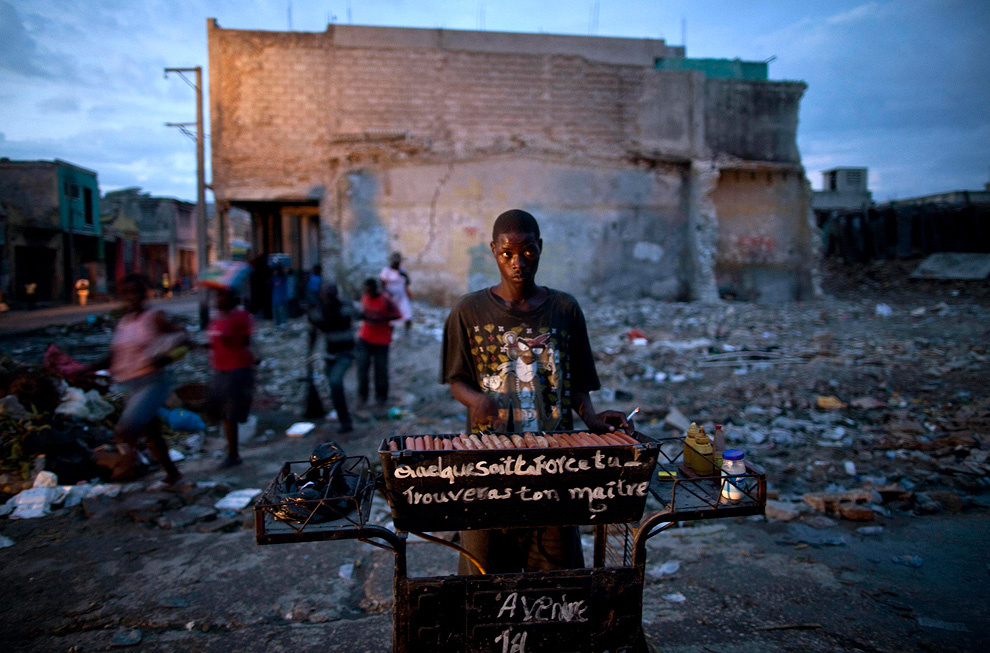
A hot dog vendor works in downtown Port-au-Prince, Haiti, Friday Oct. 8, 2010
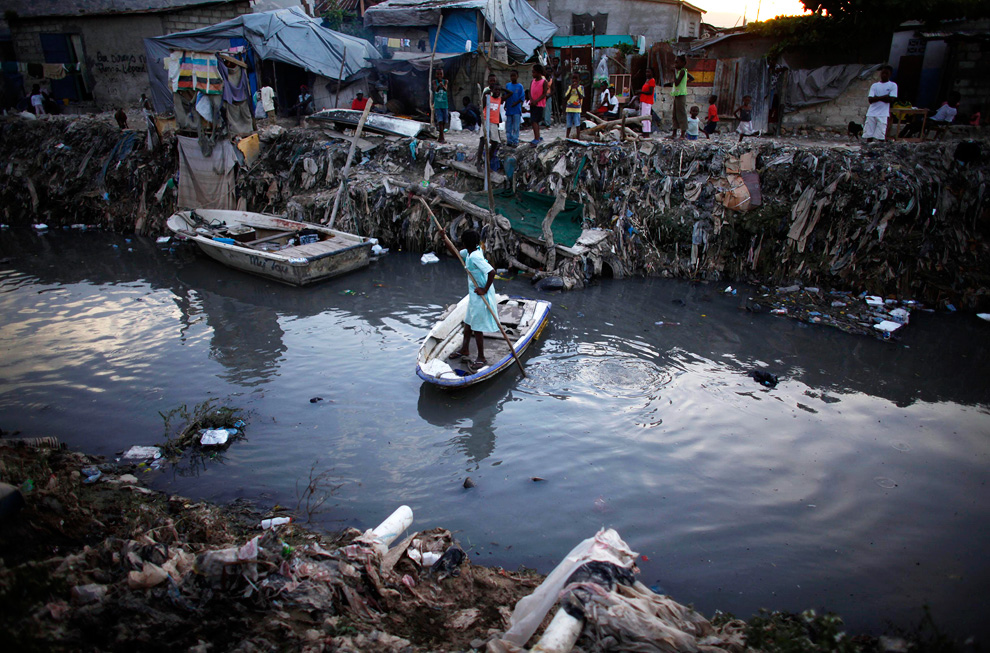
A resident crosses a dirty drain which leads into the sea at downtown Port-au-Prince October 29, 2010.
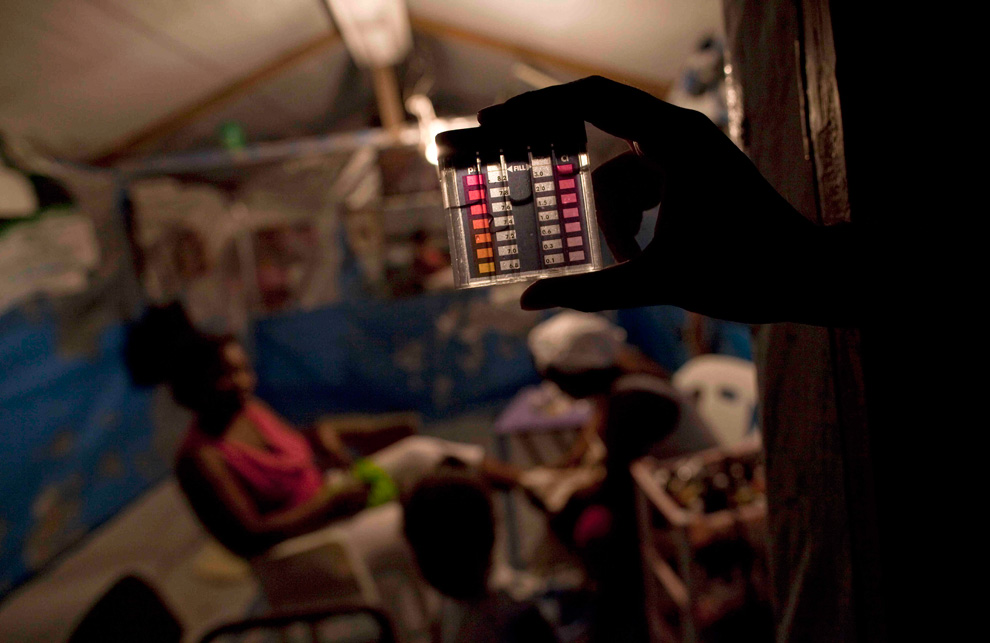
An employee of Haiti's Ministry of Health shows a device that measures the level of chlorine in the water stored in plastic tanks that is consumed by earthquake survivors at a refugee camp in Port-au-Prince, Haiti, Monday, Oct. 25, 2010. The Haitian government is conducting tests in the camps around the capital and purifying the water with chlorine tablets in order to avoid the spread of the cholera outbreak that killed more than 250 people in rural Haiti
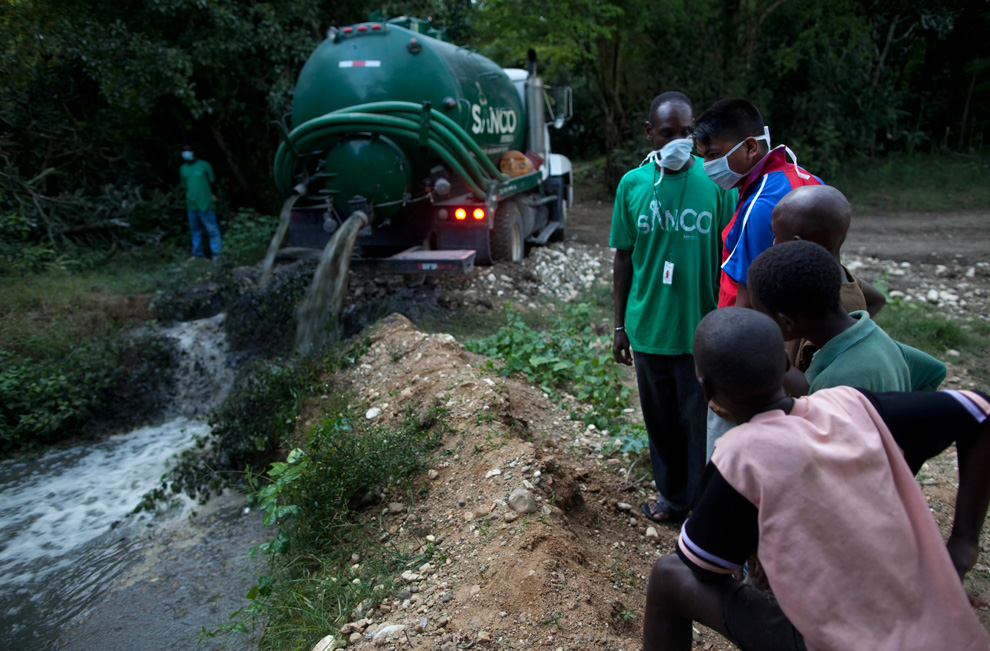
A tanker truck deposits excrement from the Nepali UN base in an area 400 meters away from the base in Mirebalais, Haiti, Wednesday, Oct. 27, 2010. U.N. investigators took samples of foul-smelling waste flowing behind a Nepalese peacekeeping base toward an infected river system on Wednesday, following persistent accusations that excrement from the newly arrived unit caused the epidemic that has sickened more than 4,000 people in the earthquake-ravaged nation.
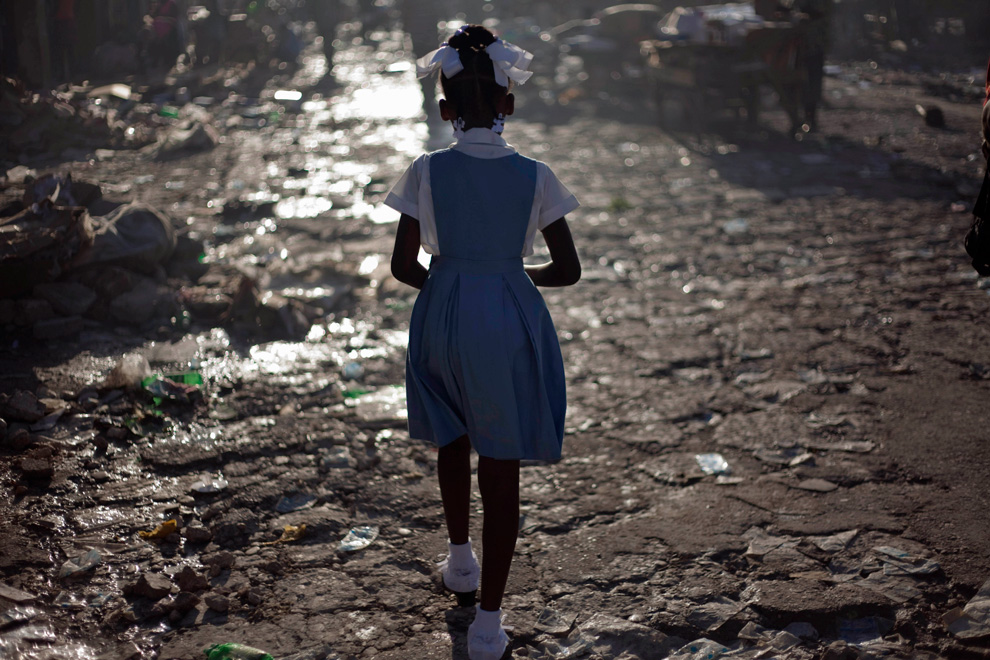
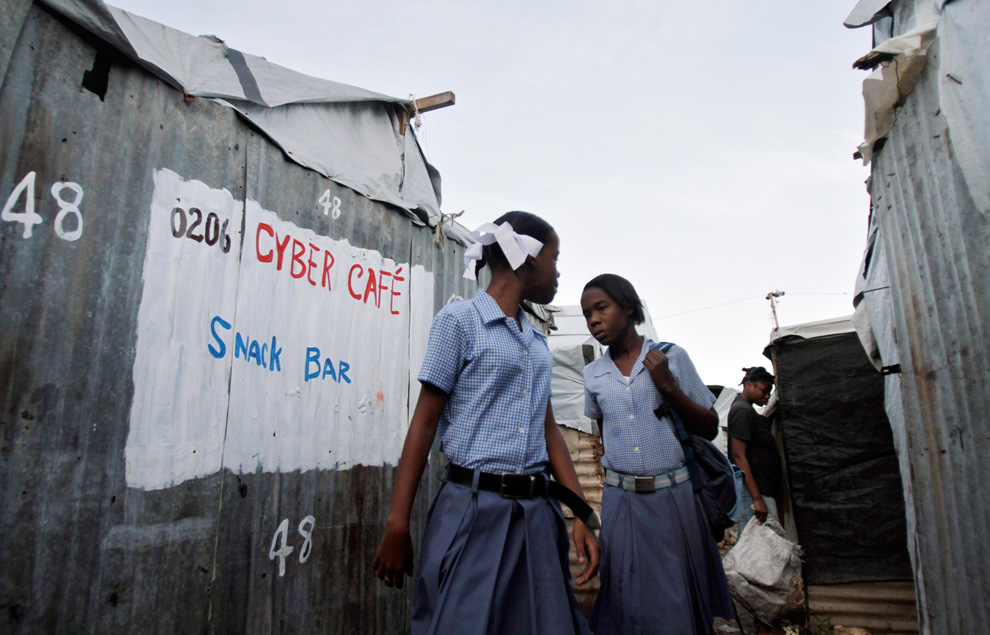
A girl makes her way to school in downtown In Port-au-Prince, Haiti, Tuesday, Oct. 12, 2010.
A rooster stands on the roof of an abandoned aircraft in a camp set up for Jan. 12 earthquake victims on an abandoned air strip in Port-au-Prince, Haiti on Wednesday, September 29th, 2010.

A wider view of a tent city set up for earthquake victims in Port-au-Prince, Haiti on Wednesday, September 29th, 2010.
An earthquake survivor drinks water from a well in a provisional camp at downtown Port-au-Prince October 30, 2010

A cholera patient is brought into a hospital run by the Haitian government where Doctors Without Borders is treating people with cholera October 30, 2010 in St. Marc, Haiti
A Public Health civil servant sticks posters with information on cholera around Dajabon, in the Dominican Republic, in the border with Haiti, on October 27, 2010.
A man suffering from cholera rests in bed at a rural hospital on October 28, 2010 in L'Arcahaie, Haiti.
A youth uses a hammer to demolish his home near the National Palace, in the Fort Nationale neighborhood of Port-au-Prince, Haiti on Monday Sept. 20, 2010
Photos of Lesly Voltaire, of the Ansanm nou fo party, or "Together we are strong" party, left, Charles Henry Baker, of the RESPE party, or "Respect" party center and Jean Hector Anacasis, of the Modejahthe party, or "Democratic Movement of the Haitian Youth", all three presidential candidates for Haiti's general elections, are hung from a fence surrounding the earthquake-damaged National Palace in Port-au-Prince, Haiti on Monday, Oct. 11, 2010. Haiti will hold elections Nov. 28
Bazelais Suy returns to his room after working with rehab therapists at Glencrest Nursing & Rehabilitation Center in Chicago, Illinois. Suy is a Haitian student activist whose spine was crushed when a university building collapsed in Haiti's catastrophic earthquake last January. He was airlifted to Chicago for six months of intensive rehabilitation and recently returned to Haiti with hopes of helping rebuild the country. Photo taken on June 22, 2010
After an 8-month separation, Abby Emile, 3, from Haiti, is reunited with her mother, Lynda Maurice in Boston, Massachusetts on August 14th, 2010. Lynda had flown to the United States on a visa in December of 2009, to be with her husband. A problem with immigration paperwork meant young Abby had to stay behind in Haiti with relatives for a short while - then the Earthquake hit in January, and eight more months would pass until Abby was able to be with her parents once more.

Haitians in Port-au-Prince walk the dark streets of downtown on August 3, 2010.
1 of 2) A "before" photograph shows Haitians walking in a badly damaged street after an earthquake in Port-au-Prince, on February 3, 2010. See below for the "after" photo
(2 of 2) An "after" photograph from September 30, 2010 - seven months later - shows Haitians walking on the same street as above. By some estimates, only 2 percent of the 250 million cubic meters of debris in Port-au-Prince has been cleared, for reasons ranging from lack of equipment and money to an abysmal property records system. Meanwhile, most Haitians just live and work around the piles of debris.
A hot dog vendor works in downtown Port-au-Prince, Haiti, Friday Oct. 8, 2010
A resident crosses a dirty drain which leads into the sea at downtown Port-au-Prince October 29, 2010.
An employee of Haiti's Ministry of Health shows a device that measures the level of chlorine in the water stored in plastic tanks that is consumed by earthquake survivors at a refugee camp in Port-au-Prince, Haiti, Monday, Oct. 25, 2010. The Haitian government is conducting tests in the camps around the capital and purifying the water with chlorine tablets in order to avoid the spread of the cholera outbreak that killed more than 250 people in rural Haiti
A tanker truck deposits excrement from the Nepali UN base in an area 400 meters away from the base in Mirebalais, Haiti, Wednesday, Oct. 27, 2010. U.N. investigators took samples of foul-smelling waste flowing behind a Nepalese peacekeeping base toward an infected river system on Wednesday, following persistent accusations that excrement from the newly arrived unit caused the epidemic that has sickened more than 4,000 people in the earthquake-ravaged nation.
A girl makes her way to school in downtown In Port-au-Prince, Haiti, Tuesday, Oct. 12, 2010.