Dutthagamani of Sri Lanka

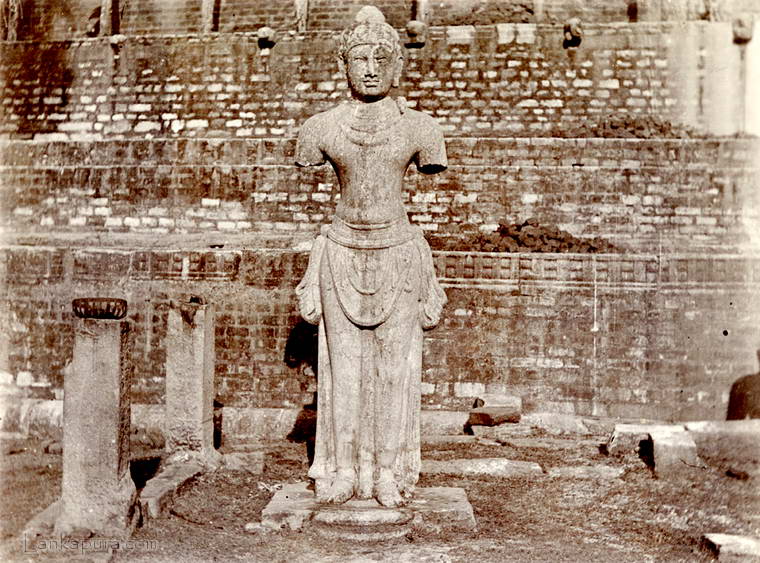
Dutugamunu Statue situated in Ruwanveliseya
Sinhalese king of Sri Lanka who reigned from 161 BC to 137 BC. He is renowned for defeating and overthrowing the usurping Tamil king of Anuradhapura, Elara of India, expanding and beautifying the city, and projecting the power of his native Rajarata region across the island of Sri Lanka.

Dutugamunu Statue situated in Ruwanveliseya
Sinhalese king of Sri Lanka who reigned from 161 BC to 137 BC. He is renowned for defeating and overthrowing the usurping Tamil king of Anuradhapura, Elara of India, expanding and beautifying the city, and projecting the power of his native Rajarata region across the island of Sri Lanka.
Due to his significance as one of the most potent symbol of Sinhalese historical power, Dutugemunu's story is swathed in myth and legend. However, many aspects of the accounts of his life have been verified by contemporary inscriptions, and the basic account of his life is generally accepted as accurate.
Ancestry and Family

King Kavantissa - Father

Viharamaha Devi - Mother
The Mahavamsa constitutes the major source on Dutugemunu's reign and dedicates some six chapters (out of 35) to his tale. In chapter 22 he is described as being descended from the ancient royal family of Rajarata through Devanampiyatissa's brother Mahanaga. At the time of his birth Dutugemunu's father was Kavantissa, king of Ruhuna, a small kingdom in south-east Sri Lanka outside of the influence of Rajarata in the north; the border between the two polities was the Mahaganga, or 'Great River', possibly the modern Menik Ganga. Kavantissa is portrayed in the Mahamvamsa as 'devoutly believing in the three gems, [and] he provided the brotherhood continually with...needful things
Dutugemunu's mother was Viharamahadevi, daughter of Tissa, king of Kalyani. Legend has it that as punishment for Tissa slaying a Buddhist monk, Kalyani had been subject to a series of deluges from the sea. To placate it Tissa placed his daughter Devi in a golden boat with the words 'A King's Daughter' written on the side, and set her out to sea. Miraculously the princess washed ashore, alive and well, in Ruhuna, and married Kavantissa.
During her pregnancy with Dutugemunu, Viharamahadevi had a series of peculiar cravings, including the urge to sleep on a pillow made of honeycombs. In particular her urge to drink the water used to wash a sword that had cleaved the head of a warrior of Elara, whilst standing on that same head, raised the interest of the soothsayers at court, who predicted that 'The queen's son, when he has vanquished the Damilas (Tamil invaders) and built up a united kingdom, will make the doctrine to shine forth brightly. Viharamahadevi gave birth to a son named Gamani Abhaya some time later, and after that to another child, a boy named Tissa.
Around the time of Gamani's birth, 'an elephant of the six-tusked race brought his young one thither and left him here and went his way,Named Kandula, he went on to become Gamani's mount and accompanied him through much of the prince's adventures
The Battle in the Palace and Early Reign

Flag Of Duthtugamunu
By the age of 16 Gamani was 'vigorous, renowned, intelligent and a hero in majesty and might, if a little wayward. Determined to expel the invading king of Rajarata Gamani, levied an army from around Rohana and declared his intention to regain the north to his father. The king forbade this stating that 'the land on this side of the river is enough; the resulting exchange between father and son saw Gamani being dubbed 'Duttha Gamani', his friends fleeing to Malaya, and he himself being incarcerated in a royal prison.
Kavantissa is known as a brilliant strategist who recognised early that he needed to make his kingdom powerful before waging a war against the invaders. He assembled armies and gave made his kingdom prosperous in "rice and betel leaf" - this meaning that the people had a lot of agricultural surplus. The legendary ten "great giants" - men who had great strength - are brought into the army at this time. Kavantissa repeatedly makes Dutugemunu and Tissa swear that they would never fight one another and that they would always respect and listen to the advice of the priests. He also makes the ten giants swear never to pick sides in a war between the brothers.
Upon Kavantissa's death, Dutugemunu found himself having to defend his crown against his younger brother Tissa, who had seized possession of not only the elephant Kandula, but the dowager queen Viharamahadevi as well. The war between the two began with a defeat for Dutugemunu at Culanganiyapitthi, where 'many thousands of the king's (Dutugemunu's) men' perished. Dutugemunu was forced to flee back to Mahagama where he levied another army and engaged Tissa in yet another battle in the vicinity of the city. Legend has it that as Tissa, fought his brother riding the royal elephant "Kandula" against Dutugemunu who rode a mare. Dutugemunu at one point made the mare jump over the elephant causing the elephant to recognise its master and attempt to kill Tissa who hastily dismounts via a tree. Dutugemunu was victorious and Tissa was smuggled off the battlefield disguised as the corpse of a monk. It is said that Dutugemunu recognised the ploy and called out to his brother "Are you not ashamed to be carried on the back of these priests?" Some time afterwards, however, Dutugemunu and Tissa were reconciled through the efforts of Viharamahadevi and the monks, and Tissa became one of the king's foremost generals.

King Kavantissa - Father

Viharamaha Devi - Mother
The Mahavamsa constitutes the major source on Dutugemunu's reign and dedicates some six chapters (out of 35) to his tale. In chapter 22 he is described as being descended from the ancient royal family of Rajarata through Devanampiyatissa's brother Mahanaga. At the time of his birth Dutugemunu's father was Kavantissa, king of Ruhuna, a small kingdom in south-east Sri Lanka outside of the influence of Rajarata in the north; the border between the two polities was the Mahaganga, or 'Great River', possibly the modern Menik Ganga. Kavantissa is portrayed in the Mahamvamsa as 'devoutly believing in the three gems, [and] he provided the brotherhood continually with...needful things
Dutugemunu's mother was Viharamahadevi, daughter of Tissa, king of Kalyani. Legend has it that as punishment for Tissa slaying a Buddhist monk, Kalyani had been subject to a series of deluges from the sea. To placate it Tissa placed his daughter Devi in a golden boat with the words 'A King's Daughter' written on the side, and set her out to sea. Miraculously the princess washed ashore, alive and well, in Ruhuna, and married Kavantissa.
During her pregnancy with Dutugemunu, Viharamahadevi had a series of peculiar cravings, including the urge to sleep on a pillow made of honeycombs. In particular her urge to drink the water used to wash a sword that had cleaved the head of a warrior of Elara, whilst standing on that same head, raised the interest of the soothsayers at court, who predicted that 'The queen's son, when he has vanquished the Damilas (Tamil invaders) and built up a united kingdom, will make the doctrine to shine forth brightly. Viharamahadevi gave birth to a son named Gamani Abhaya some time later, and after that to another child, a boy named Tissa.
Around the time of Gamani's birth, 'an elephant of the six-tusked race brought his young one thither and left him here and went his way,Named Kandula, he went on to become Gamani's mount and accompanied him through much of the prince's adventures
The Battle in the Palace and Early Reign

Flag Of Duthtugamunu
By the age of 16 Gamani was 'vigorous, renowned, intelligent and a hero in majesty and might, if a little wayward. Determined to expel the invading king of Rajarata Gamani, levied an army from around Rohana and declared his intention to regain the north to his father. The king forbade this stating that 'the land on this side of the river is enough; the resulting exchange between father and son saw Gamani being dubbed 'Duttha Gamani', his friends fleeing to Malaya, and he himself being incarcerated in a royal prison.
Kavantissa is known as a brilliant strategist who recognised early that he needed to make his kingdom powerful before waging a war against the invaders. He assembled armies and gave made his kingdom prosperous in "rice and betel leaf" - this meaning that the people had a lot of agricultural surplus. The legendary ten "great giants" - men who had great strength - are brought into the army at this time. Kavantissa repeatedly makes Dutugemunu and Tissa swear that they would never fight one another and that they would always respect and listen to the advice of the priests. He also makes the ten giants swear never to pick sides in a war between the brothers.
Upon Kavantissa's death, Dutugemunu found himself having to defend his crown against his younger brother Tissa, who had seized possession of not only the elephant Kandula, but the dowager queen Viharamahadevi as well. The war between the two began with a defeat for Dutugemunu at Culanganiyapitthi, where 'many thousands of the king's (Dutugemunu's) men' perished. Dutugemunu was forced to flee back to Mahagama where he levied another army and engaged Tissa in yet another battle in the vicinity of the city. Legend has it that as Tissa, fought his brother riding the royal elephant "Kandula" against Dutugemunu who rode a mare. Dutugemunu at one point made the mare jump over the elephant causing the elephant to recognise its master and attempt to kill Tissa who hastily dismounts via a tree. Dutugemunu was victorious and Tissa was smuggled off the battlefield disguised as the corpse of a monk. It is said that Dutugemunu recognised the ploy and called out to his brother "Are you not ashamed to be carried on the back of these priests?" Some time afterwards, however, Dutugemunu and Tissa were reconciled through the efforts of Viharamahadevi and the monks, and Tissa became one of the king's foremost generals.