Martin Luther King's 1963 Dream speech

hemalsilva

Well-known member
  • Oct 16, 2006
    16,040
    2,690
    113
    Paraguay
    Revisiting Martin Luther King's 1963 Dream speech

    As people gather today to commemorate the 50th anniversary of Martin Luther King Jr.'s "I Have a Dream" speech, we look at images from that event in 1963 and from tumultuous times during the civil rights movement. King's pivotal speech addressing racism in this country was a crucial event in the history of civil rights and one that will always be remembered, not just on this milestone anniversary. -Leanne Burden Seidel ( 20 photos total)
    bp1.jpg


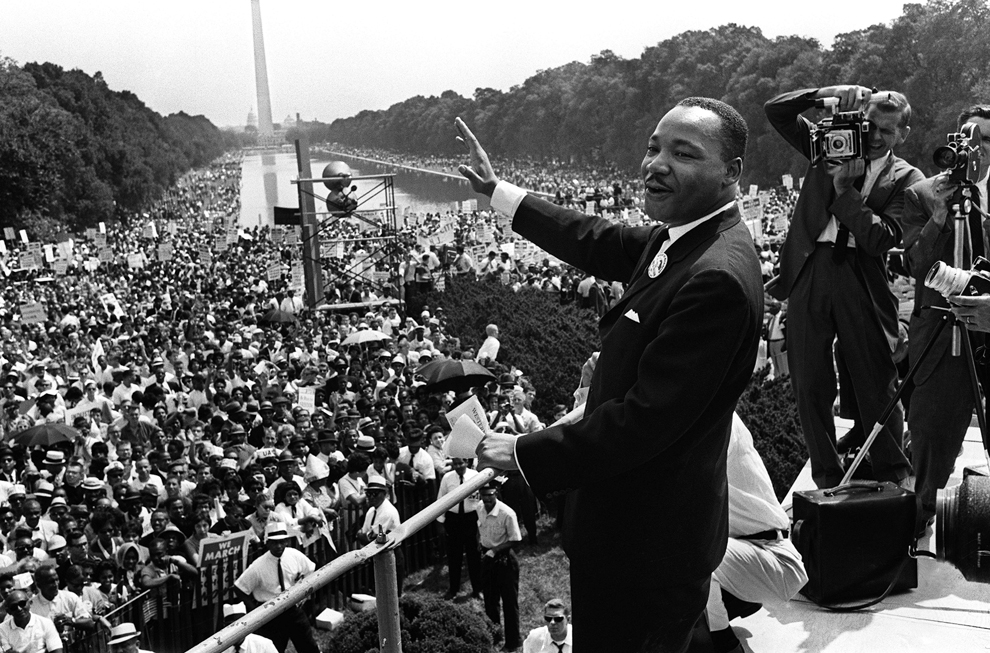
    US civil rights leader Martin Luther King Jr. waves from the steps of the Lincoln Memorial to supporters on the Mall in Washington, DC, during the "March on Washington" on Aug. 28, 1963. In 1963 King spoke in front of 250,000 people, explaining his wish for better relations between black and white Americans. His words were engraved on the steps of the monument where he spoke.

    bp18.jpg

     
    Last edited:

    hemalsilva

    Well-known member
  • Oct 16, 2006
    16,040
    2,690
    113
    Paraguay
    bp2.jpg


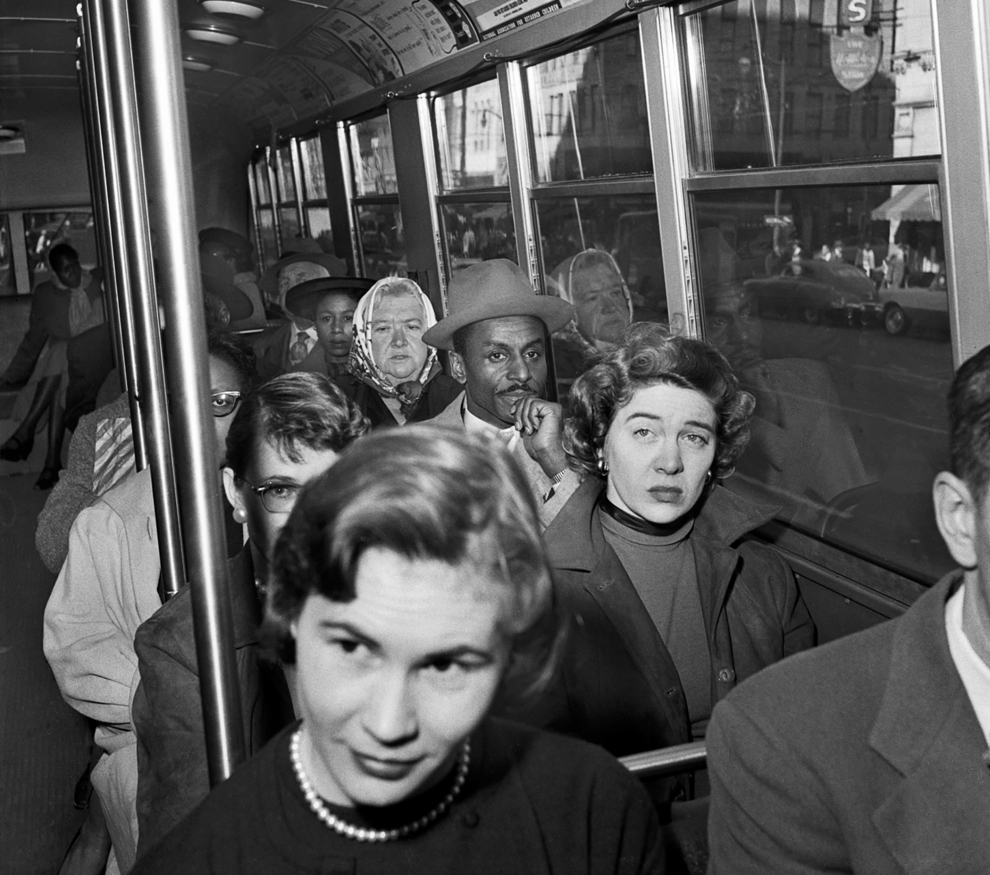
    Rev. Fred Shuttlesworth, center in hat, joins white passengers on a city bus in Birmingham, Ala., six days after the U.S. Supreme Court ruled that the buses must integrate on Dec. 26, 1956. Shuttlesworth boarded hours after a bomb exploded inside his Collegeville, Ala., house.​
     

    hemalsilva

    Well-known member
  • Oct 16, 2006
    16,040
    2,690
    113
    Paraguay
    bp4.jpg


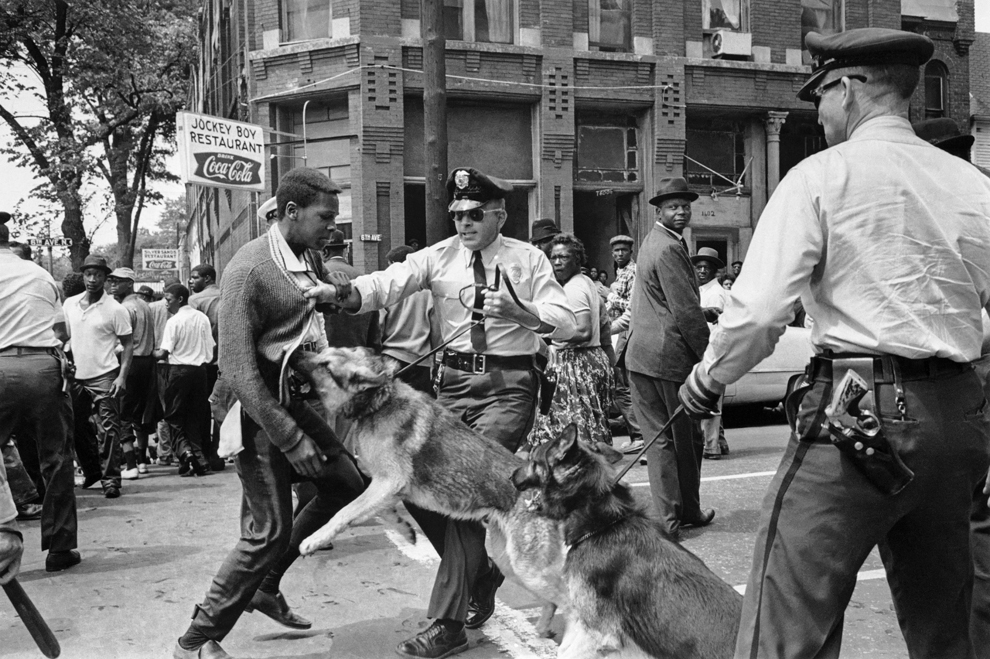
    Walter Gadsden, 17, defying an anti-parade ordinance of Birmingham, Ala., is attacked by a police dog on May 3, 1963.​
     

    hemalsilva

    Well-known member
  • Oct 16, 2006
    16,040
    2,690
    113
    Paraguay
    bp5.jpg


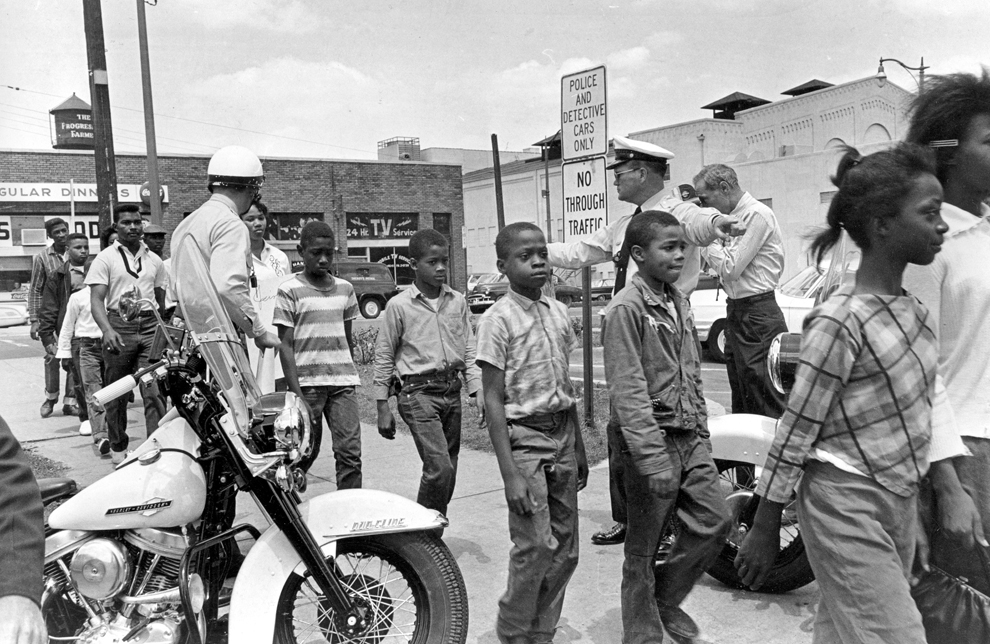
    Police lead a group of black school children to jail after their arrest for protesting against racial discrimination near city hall in Birmingham, Ala. on May 4, 1963

    bp6.jpg


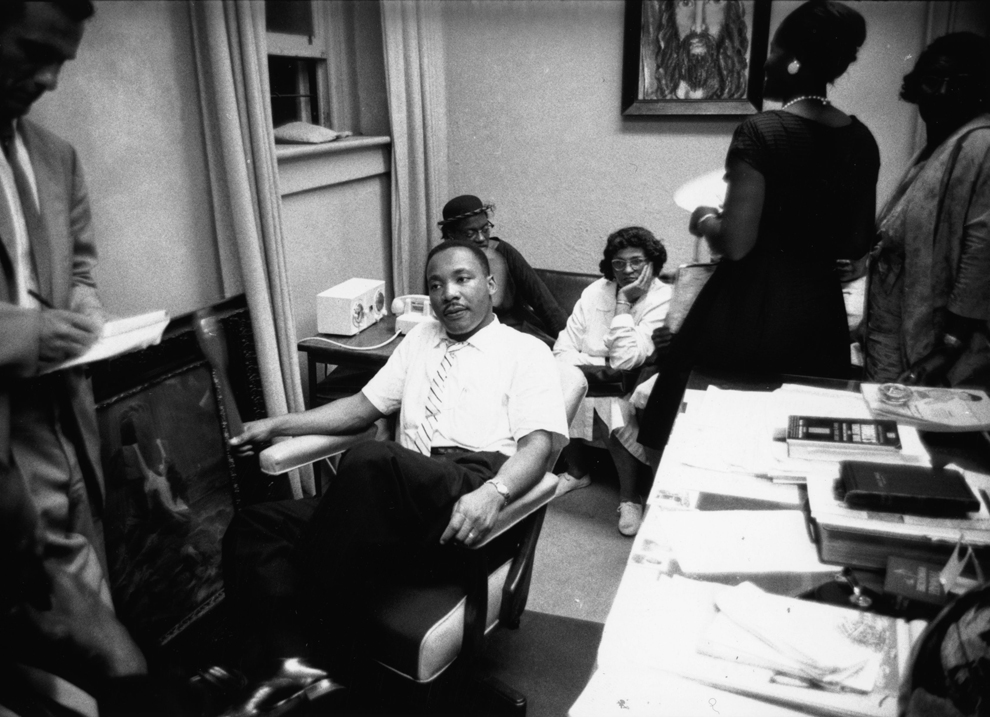
    Rev. Ralph Abernathy, left, and Martin Luther King, Jr. walk through a corridor of the city jail in Birmingham, Ala., where they were held for several hours following conviction on charges of parading without a permit. They posted bond of $2,500.

    bp7.jpg


    Police and firefighters gather near a fire that razed several houses owned by black residents in Birmingham, Ala., on May 12, 1963, one block from a black motel which was bombed and the same distance from a church where civil rights demonstrations started.​
     

    hemalsilva

    Well-known member
  • Oct 16, 2006
    16,040
    2,690
    113
    Paraguay
    bp8.jpg


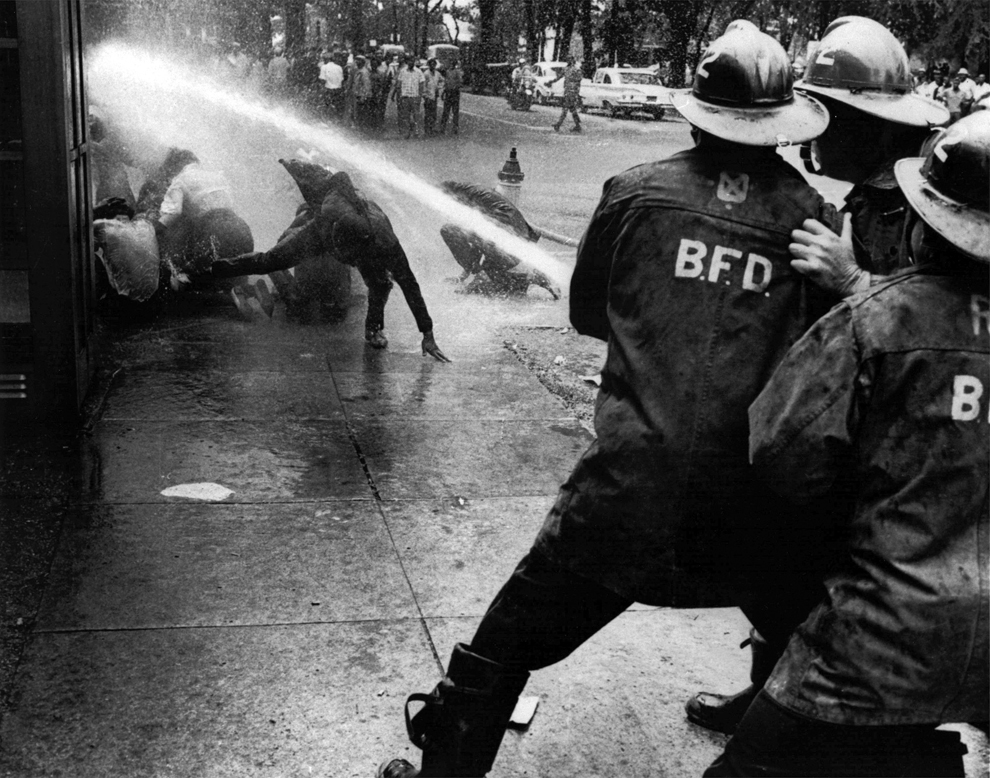
    Firefighters use their water hose against civil rights demonstrators in Birmingham, Ala. on July 15, 1963.

    bp9.jpg


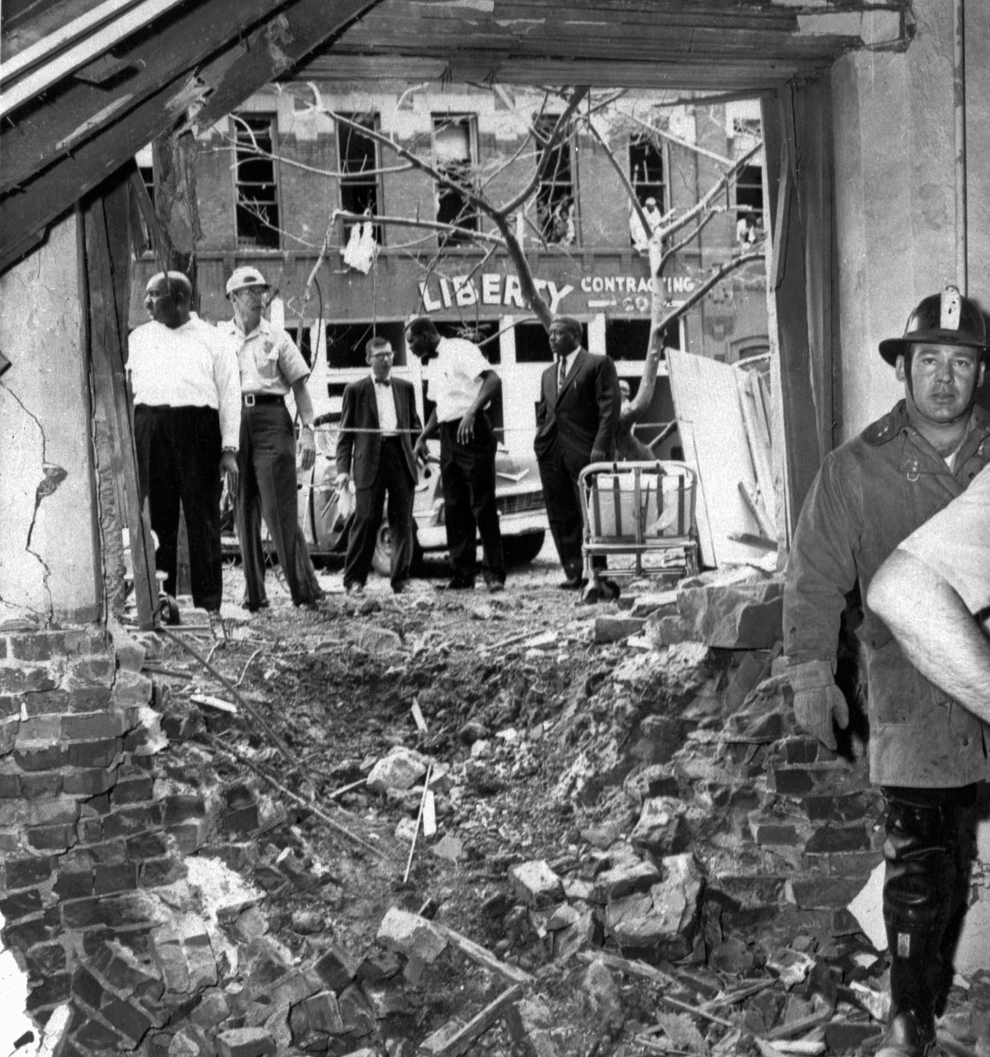
    Emergency workers and others stand around a large crater from a bomb which killed four black girls in the Sixteenth Street Baptist Church in Birmingham, Ala. on Sept. 15, 1963. The windows of the building across the street in the background were also blown out.

    bp10.jpg


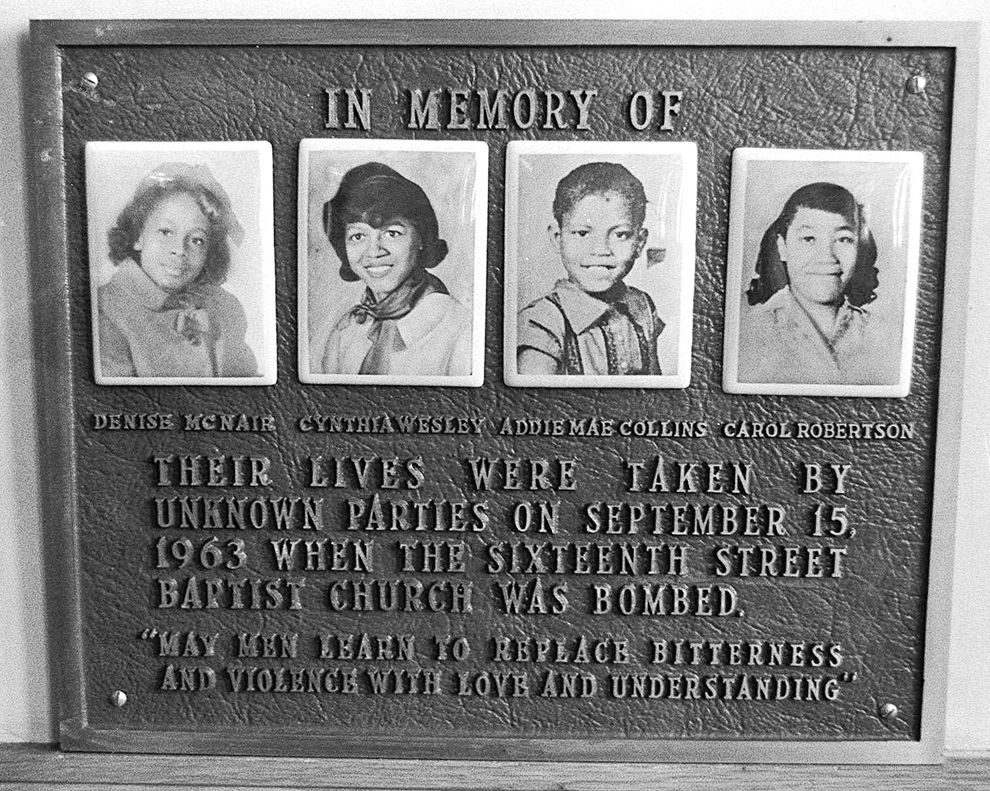
    A memorial plaque at the Sixteenth Street Baptist Church in Birmingham, Ala. for Denise McNair, Cynthia Wesley, Addie Mae Collins and Carole Robertson, the four girls killed in a bombing at the church in 1963.​
     

    hemalsilva

    Well-known member
  • Oct 16, 2006
    16,040
    2,690
    113
    Paraguay
    bp11.jpg


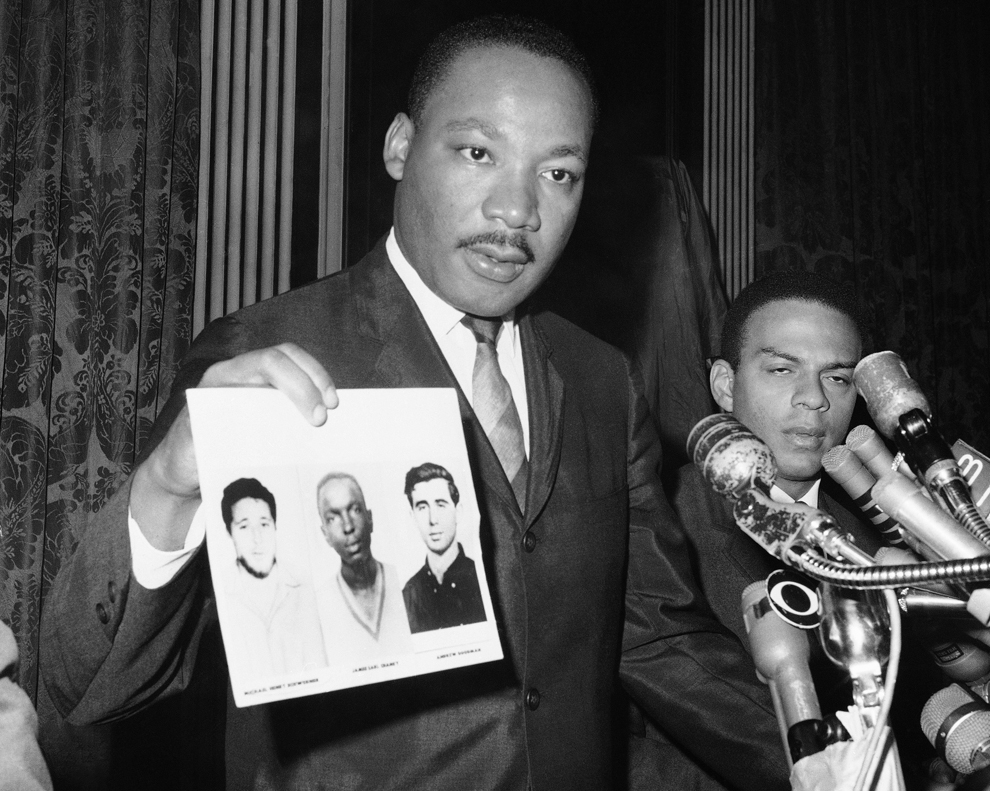
    Civil rights leader Dr. Martin Luther King Jr. displays pictures of three civil rights workers, Michael Schwerner, James Chaney, and Andrew Goodman who were slain in Mississippi the summer before at a news conference in New York on Dec. 4., 1964. He commended the FBI for its arrests in Mississippi in connection with the slayings. As the burgeoning civil rights movement gathered force in the 1960s, demonstrators were brutalized and killed, sometimes at the hands of law officers. Many slayings remain unsolved. But in some cases where local authorities failed to go after the attackers or all-white juries refused to convict, the federal government moved in with civil rights charges.

    bp12.jpg


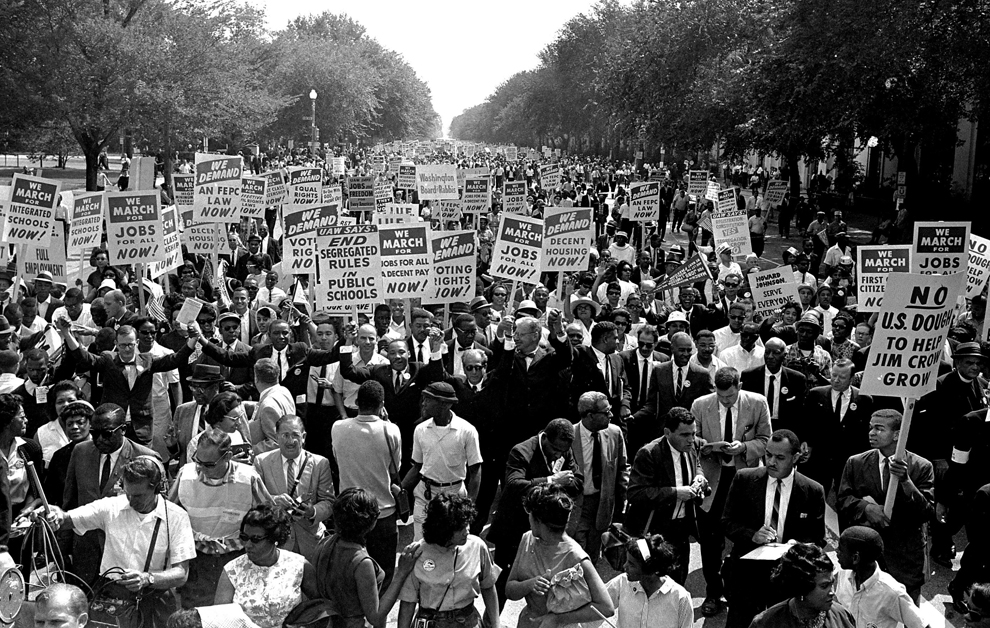
    Dr. Martin Luther King Jr., center left with arms raised, marches along Constitution Avenue with other civil rights protestors carrying placards, from the Washington Monument to the Lincoln Memorial during the March on Washington on Aug. 28, 1963.

    bp13.jpg


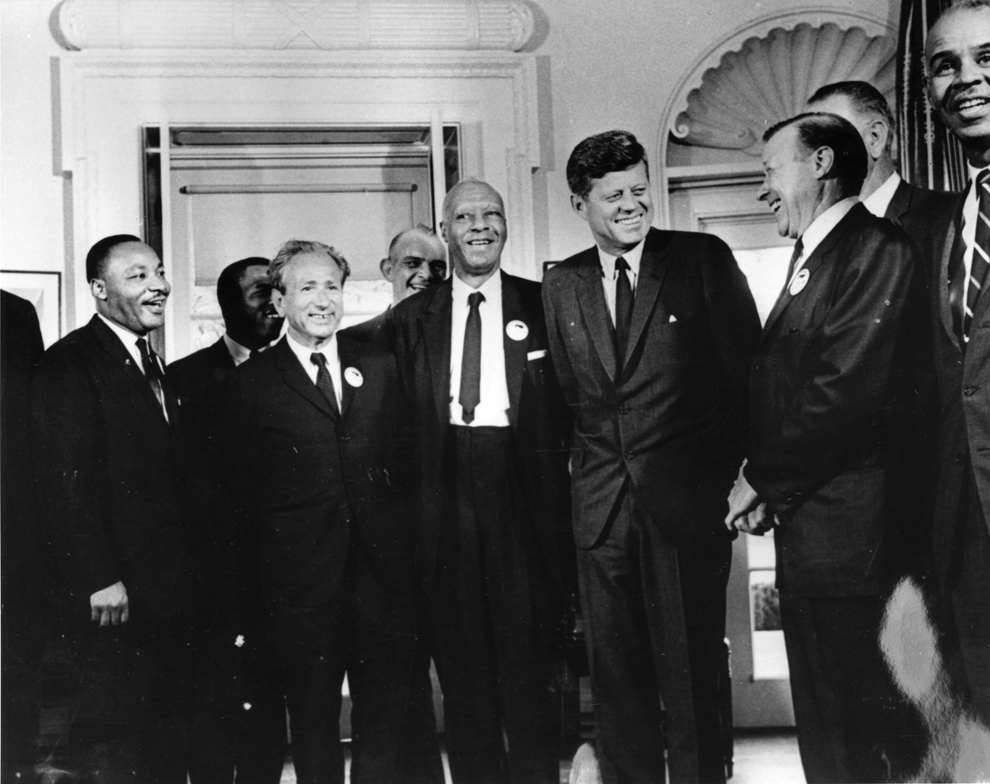
    American president John F. Kennedy in the White House with leaders of the civil rights March on Washington (left to right) Whitney Young, Dr Martin Luther King (1929 - 1968), Rabbi Joachim Prinz, A. Philip Randolph, President Kennedy, Walter Reuther (1907 - 1970) and Roy Wilkins. Behind Reuther is Vice-President Lyndon Johnson.​
     

    hemalsilva

    Well-known member
  • Oct 16, 2006
    16,040
    2,690
    113
    Paraguay
    bp14.jpg


    Civil rights demonstrators gather at the Washington Monument grounds before noon, before marching to the Lincoln Memorial, seen in the far background at right, where the March on Washington for Jobs and Freedom will end with a speech by Rev. Martin Luther King Jr., now known as the "I Have A Dream" speech.

    bp15.jpg


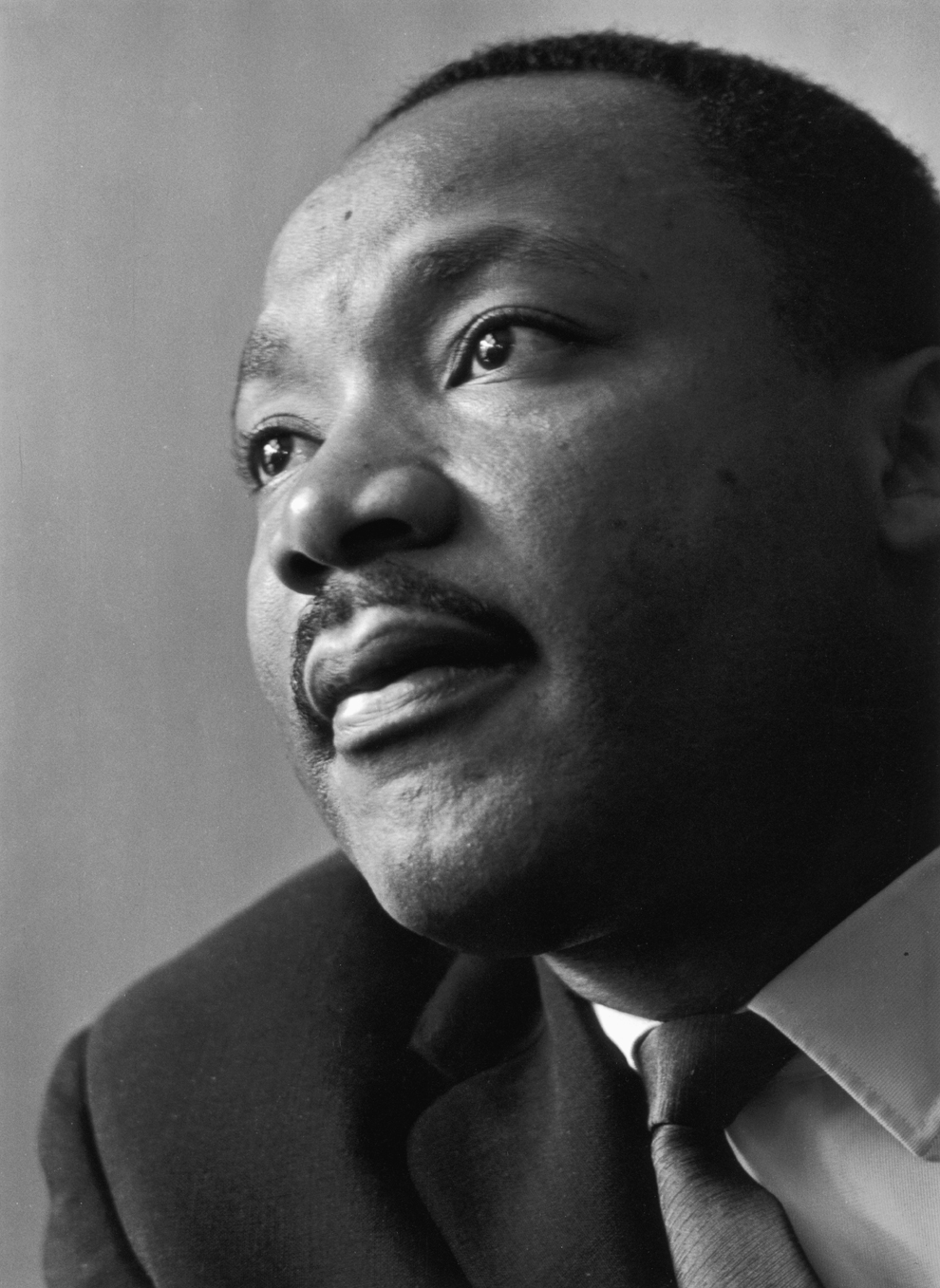
    Portrait of American civil rights campaigner Martin Luther King Jr. (1929 - 1968). His iconic "I Have a Dream" is being remembered as a significant event in the civil rights movement.

    bp16.jpg


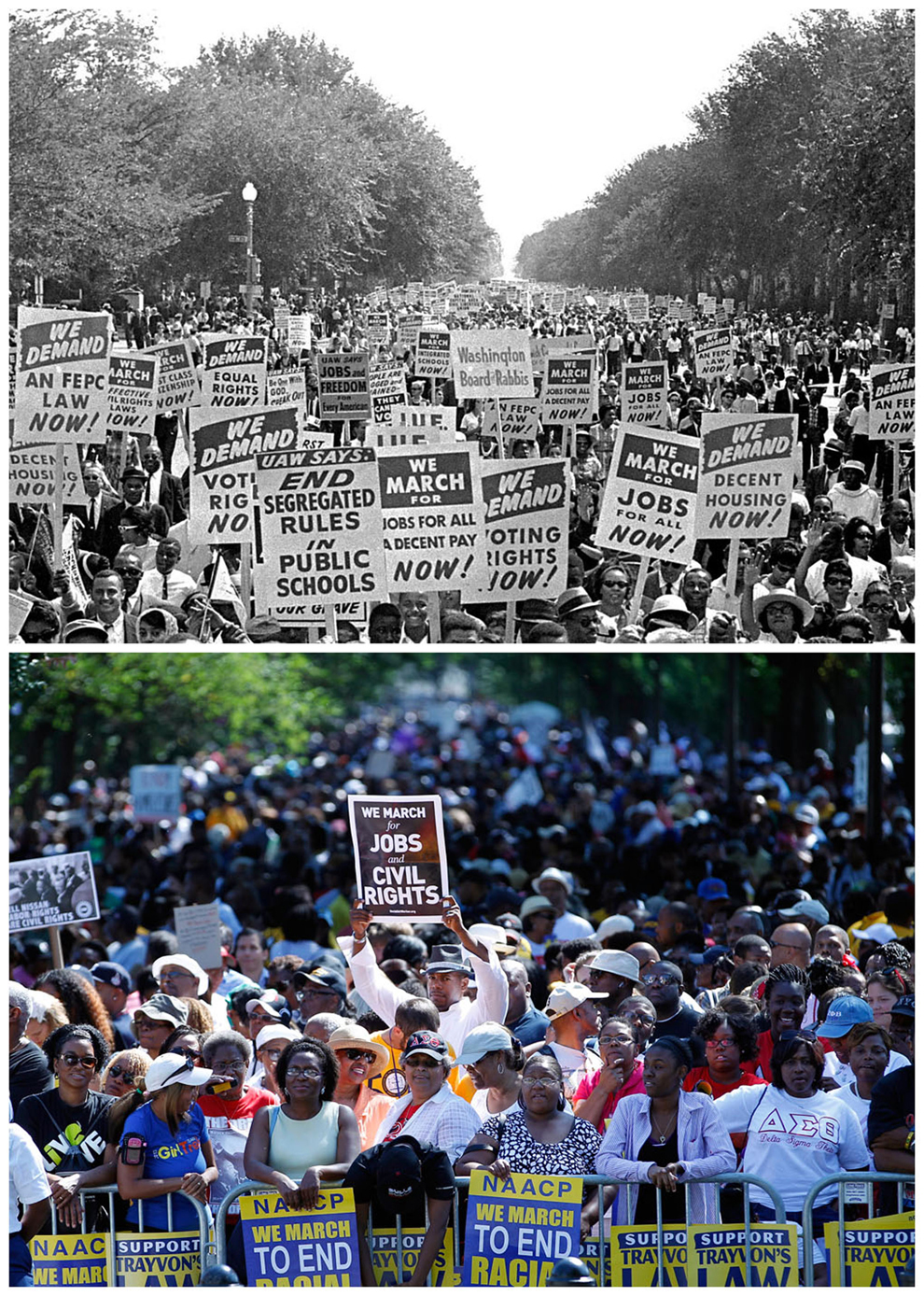
    At top, civil rights protestors march down Constitution Avenue carrying placards during the March on Washington on Aug. 28, 1963; and at bottom, people rally at the Lincoln Memorial in Washington to commemorate the 50th anniversary of the 1963 march Saturday, Aug. 24, 2013. Dr. Martin Luther King Jr. delivered his "I Have a Dream" speech during the March on Washington on Aug. 28, 1963.​
     

    hemalsilva

    Well-known member
  • Oct 16, 2006
    16,040
    2,690
    113
    Paraguay
    bp17.jpg


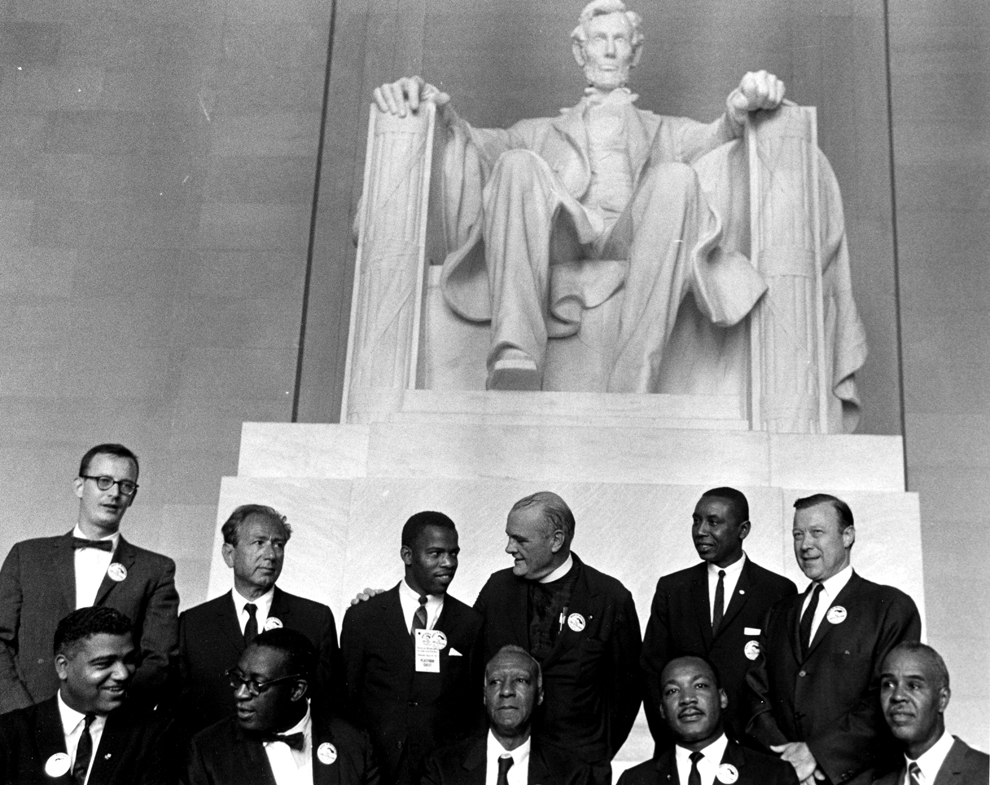
    Civil Rights leaders pose in the Lincoln Memorial during the March on Washington for Jobs and Freedom, Washington DC, August 28, 1963. Pictured are, standing from left, director of the National Catholic Conference for Interracial Justice Matthew Ahmann, Rabbi Joachim Prinz (1902 - 1988), Student Nonviolent Coordinating Committee (SNCC) leader John Lewis, Protestant minister Eugene Carson Blake (1906 - 1985), Congress of Racial Equality (CORE) leader Floyd McKissick (1922 - 1991), and labor union leader Walter Reuther (1907 - 1970); sitting from left, National Urban League executive director Whitney Young (1921 - 1971), unidentified, labor union leader A Philip Randolph (1889 - 1979), Dr. Reverend Martin Luther King Jr. (1929 - 1968), and National Association for the Advancement of Colored People (NAACP) leader Roy Wilkins (1901 - 1981). The march and rally provided the setting for the Dr. King iconic 'I Have a Dream' speech.

    bp18.jpg


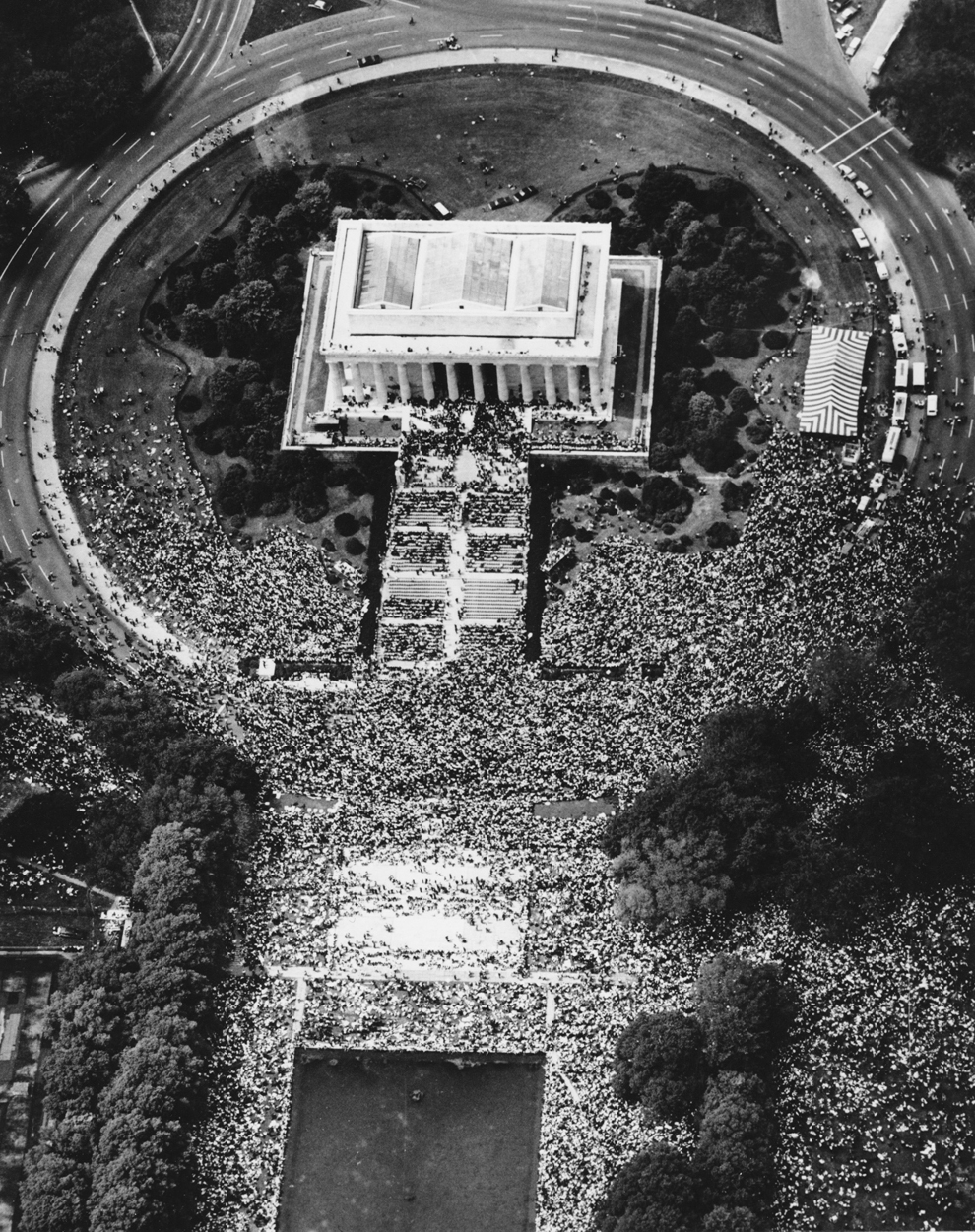
    This aerial view shows crowds at the Lincoln Memorial in Washington during Martin Luther King Jr.'s "I Have A Dream" speech on Aug. 28, 1963.

    bp19.jpg


    The Rev. Dr. Martin Luther King Jr., head of the Southern Christian Leadership Conference, speaks to thousands during his "I Have a Dream" speech in front of the Lincoln Memorial for the March on Washington for Jobs and Freedom in Washington on Aug. 28, 1963. Actor-singer Sammy Davis Jr. is at bottom right.​
     

    hemalsilva

    Well-known member
  • Oct 16, 2006
    16,040
    2,690
    113
    Paraguay
    bp20.jpg


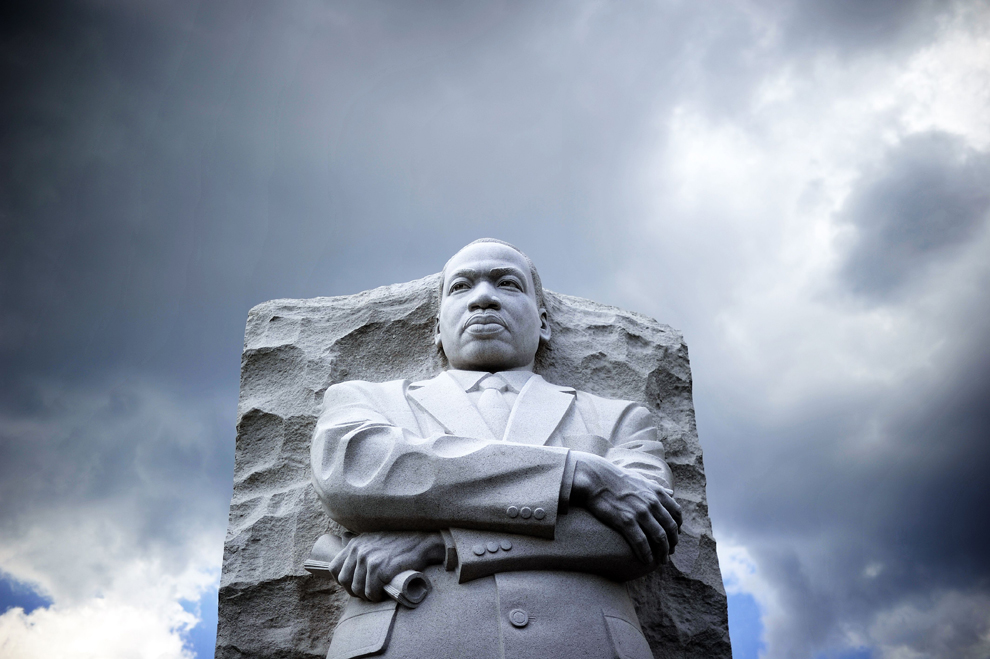
    The statue of Martin Luther King Jr. in Washington, DC, as thousands of people gather to commemorate the 50th anniversary of The March on Washington. The March on Washington is best remembered for King's stirring vision of a United States free of inequality and prejudice, telecast live to a nation undergoing a phenomenal decade of soul-searching, crisis and change.​
     
    • Like
    Reactions: NUWAN BUWA