


Colombo, Sri Lanka (CNN)Sri Lanka's economy has "completely collapsed," Prime Minister Ranil Wickremesinghe said Wednesday, as the crisis-hit nation faces an increasingly dire situation that has left millions struggling with fuel, electricity and food shortages.
"Our economy has faced a complete collapse," Wickremesinghe told Sri Lanka's Parliament, adding the government was seeking help from its global partners and the International Monetary Fund (IMF) to stabilize the economy.
But Wickremesinghe warned the island nation of 22 million was "facing a far more serious situation" beyond the shortages.
Sri Lanka is in the midst of its worst financial crisis in seven decades, after its foreign exchange reserves plummeted to record lows, with dollars running out to pay for essential imports including food, medicine and fuel.
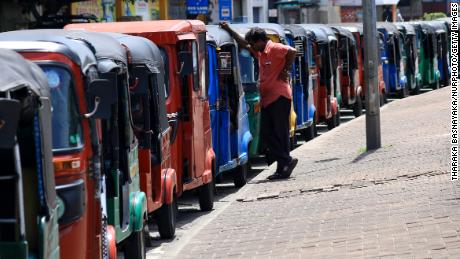
A driver looks on as hundreds of tuk-tuks wait for fuel in Colombo on June 20.
In recent weeks, the government has taken drastic measures to cope with the crisis, including implementing a four-day work week for public sector workers to allow them time to grow their own crops. However, the measures are doing little to ease the struggles faced by many in the country.
In several major cities, including the commercial capital, Colombo, hundreds continue to queue for hours to buy fuel, sometimes clashing with police and the military as they wait.
Trains have reduced in frequency, forcing travelers to squeeze into compartments and even sit precariously on top of them as they commute to work.
Patients are unable to travel to hospitals due to the fuel shortage and food prices are soaring. Rice, a staple in the South Asian nation, has disappeared from shelves in many shops and supermarkets.
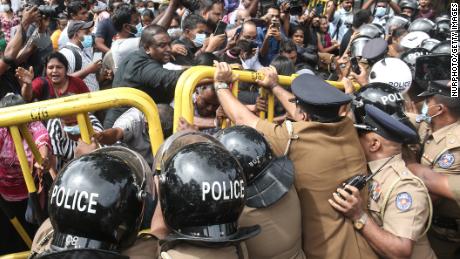
Protests erupt near Sri Lankan Prime Minister Ranil Wickremesinghe's private residence, amid the country's economic crisis, on June 22.
This week alone, 11 people have died waiting in queues for fuel, according to police officials
https://edition.cnn.com/2022/06/23/...y-collapse-prime-minister-intl-hnk/index.html
"Our economy has faced a complete collapse," Wickremesinghe told Sri Lanka's Parliament, adding the government was seeking help from its global partners and the International Monetary Fund (IMF) to stabilize the economy.
But Wickremesinghe warned the island nation of 22 million was "facing a far more serious situation" beyond the shortages.
Sri Lanka is in the midst of its worst financial crisis in seven decades, after its foreign exchange reserves plummeted to record lows, with dollars running out to pay for essential imports including food, medicine and fuel.
A driver looks on as hundreds of tuk-tuks wait for fuel in Colombo on June 20.
In recent weeks, the government has taken drastic measures to cope with the crisis, including implementing a four-day work week for public sector workers to allow them time to grow their own crops. However, the measures are doing little to ease the struggles faced by many in the country.
In several major cities, including the commercial capital, Colombo, hundreds continue to queue for hours to buy fuel, sometimes clashing with police and the military as they wait.
Trains have reduced in frequency, forcing travelers to squeeze into compartments and even sit precariously on top of them as they commute to work.
Patients are unable to travel to hospitals due to the fuel shortage and food prices are soaring. Rice, a staple in the South Asian nation, has disappeared from shelves in many shops and supermarkets.
Protests erupt near Sri Lankan Prime Minister Ranil Wickremesinghe's private residence, amid the country's economic crisis, on June 22.
This week alone, 11 people have died waiting in queues for fuel, according to police officials
https://edition.cnn.com/2022/06/23/...y-collapse-prime-minister-intl-hnk/index.html


