


The recent thread on Irukandji Jellyfish that mentioned about Turritopsis dohrnii, the 'biologically immortal': the jellyfish. This reminded me of another creature that's virtually indestructible - The Water Bear.
Water Bears, or Tardigrades, are chubby little anomalies that are damn near indestructible - they can bounce back from total desiccation (Water bears can survive being totally dehydrated by turning into glass), endure the greatest temperature extremes we can throw at them, and can even survive the frozen vacuum of space.
A team of scientists in Japan has sequenced their genomes, and finally shed some light on how they got so tough. It turns out tardigrades have developed a range of handy tools to help them avoid death time and time again - including a protein that acts as an in-built radiation shield for DNA.
Furthermore, the researchers showed that, when incorporated into human cells, this radiation-blocking protein also reduced the damage to human DNA from X-rays by an impressive 40 percent.
Takuma Hashimoto from The University of Tokyo, commented, "It is striking that a single gene is enough to improve the radiation tolerance of human cultured cells."
The team performed their genetic analysis on a specific species of water bear called Ramazzottius varieornatus, which is arguably the toughest of all tardigrade species. They found in the tiny creature's genome was a protein called Dsup - short for "damage suppressor" - which suppresses radiation damage, as well as the damage caused by desiccation, which be just as destructive to DNA.
If Dsup could also be transplanted into live humans, it could make us more resilient to radiation - something that would be extremely useful when we venture out further into space.
In addition to Dsup, the researchers also showed that the tardigrade genome contained 16 copies of anti-oxidant enzymes, while most animals have just 10, and they also have four copies of DNA repair genes - most animal cells only have one.
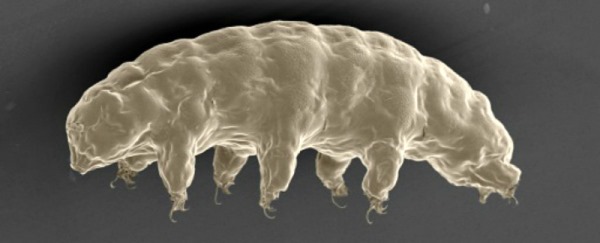
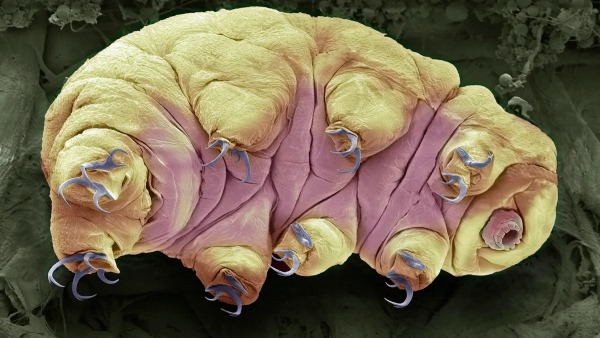
Water Bears, or Tardigrades, are chubby little anomalies that are damn near indestructible - they can bounce back from total desiccation (Water bears can survive being totally dehydrated by turning into glass), endure the greatest temperature extremes we can throw at them, and can even survive the frozen vacuum of space.
A team of scientists in Japan has sequenced their genomes, and finally shed some light on how they got so tough. It turns out tardigrades have developed a range of handy tools to help them avoid death time and time again - including a protein that acts as an in-built radiation shield for DNA.
Furthermore, the researchers showed that, when incorporated into human cells, this radiation-blocking protein also reduced the damage to human DNA from X-rays by an impressive 40 percent.
Takuma Hashimoto from The University of Tokyo, commented, "It is striking that a single gene is enough to improve the radiation tolerance of human cultured cells."
The team performed their genetic analysis on a specific species of water bear called Ramazzottius varieornatus, which is arguably the toughest of all tardigrade species. They found in the tiny creature's genome was a protein called Dsup - short for "damage suppressor" - which suppresses radiation damage, as well as the damage caused by desiccation, which be just as destructive to DNA.
If Dsup could also be transplanted into live humans, it could make us more resilient to radiation - something that would be extremely useful when we venture out further into space.
In addition to Dsup, the researchers also showed that the tardigrade genome contained 16 copies of anti-oxidant enzymes, while most animals have just 10, and they also have four copies of DNA repair genes - most animal cells only have one.
Last edited:


