chami t

Junior member
  • Nov 22, 2008
    654
    10
    18
    kandy
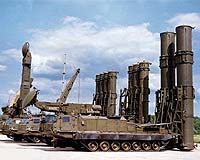
    BMD Focus: Russia's S-300s boost Iran


    missile-s-300-system-bg.jpg

    Washington (UPI) Dec 23, 2008
    A leading Iranian parliamentarian claimed Sunday that Russia had begun to send sections of its S-300 anti-aircraft and anti-missile defense system to Iran. The politically explosive claim could seriously damage the incoming Obama administration's hopes of improving relations with Russia and even reaching agreement to replace the aging 1991 Strategic Arms Reduction Treaty, which expires in December 2009.
    Esmaeil Kosari, deputy chairman of the parliamentary commission on national security and foreign policy, informed Iran's official Islamic Republic News Agency that after years of talks, agreement had finally been reached. He stated that Iran would initially base the S-300 surface-to-air interceptors to defend its borders.
    RIA Novosti, citing the IRNA report, also noted that in the past few months Russia also sent to Iran 29 Tor-M1 air defense missile systems worth $700 million under a deal closed in late 2005. The news agency further noted that Russian technicians had taught Iranian engineers and technicians how to operate the Tor-M1, including the radar systems that guide it.
    Reports about the impending sale of Russian S-300 anti-aircraft and anti-missile interceptor systems to Iran have been circulating and have been reported in these columns for almost four years. According to the RIA Novosti report, "these systems could greatly improve Iranian defenses against any airstrike on its strategically important sites, including nuclear facilities."
    RIA Novosti said the advanced version of the S-300 missile system, the S-300PMU1 -- NATO designation SA-20 Gargoyle -- could shoot down targets as far as 100 miles away and that it was capable of destroying ballistic missiles and aircraft at both low and high altitudes.
    The report also noted that Iran over the past year had carried out several much publicized military exercises culminating in ambitious Iranian air force and ballistic missile defense manometers from Sept. 15-18.
    The scale of the deal that will equip Iran with the Russian S-300 Growler system is a massive one.
    Russian military analyst Ilya Kramnik wrote Dec. 19 for RIA Novosti that Iran "expects to get five battalions of S-300PMUs, or up to 20 systems -- 60 launchers -- depending on the makeup of a battalion. Each of the launchers carries four 48N6E missiles -- 48N6E2s with the PMU-2 mobile launchers -- with a range of 150 kilometers -- 90 miles -- up to 200 kilometers -- 120 miles -- for the 48N6E2s."
    "Each launch system consists of three launchers and is capable of engaging six targets at the same time, aiming 12 missiles at them. One battalion consisting of four systems is, therefore, capable of dealing with 24 aircraft simultaneously. After changing position and replenishing ammunition, it can be quickly redeployed for repulsing a repeat raid," Kramnik wrote.
    However, just as the planned deployment of 10 U.S.-built Ground-based Mid-course Interceptors in Poland will require further U.S. batteries of shorter-range Patriot PAC-3 anti-ballistic missile interceptors to protect them, the deployment of Russian S-300s in Iran will set off an escalating process of further Russian ballistic missile defense investment in that country, too.
    Kramnik described this process of escalation, or intensified commitment. "It should be remembered that S-300 missiles themselves need to be protected -- for this purpose Iran can use Tor-M1 surface-to-air missiles -- SAMs -- and Chinese FM-80s," he wrote. "Coupled with S-300s, these short-range missiles can set up a credible air defense system able to protect the facility covered and itself."
    In Poland, U.S. GBIs are designed to shoot down any Iranian intercontinental ballistic missiles that might be aimed at Western Europe or the United States. The Patriots would not have the range to do that, but they could defend the GBI launch complex from being destroyed in any pre-emptive attack by Russian highly accurate, fast, low-flying, solid fuel Iskander-M missiles based in the Kaliningrad region north of Poland.
    Similarly, Kramnik noted, the S-300s would be designed to engage and destroy U.S. aircraft and missiles at longer range, while the Tor-M1s already sold and delivered to Iran would be a closer range, inner line of the layered air defense system.
    The S-300s may be especially effective as U.S. Tomahawk cruise missiles fly only at subsonic speeds of around 650 miles per hour. Russian cruise missiles fly three times as fast at Mach 2.8 --1,700 miles per hour.
    Kramnik's conclusion is therefore credible when he writes, "Five battalions of S-300 SAMs will contribute significantly not only to the protection of designated facilities, but also to the defense capability of (Iran) as a whole."
     

    chami t

    Junior member
  • Nov 22, 2008
    654
    10
    18
    kandy
    Anti-tank dogs:
    Hungry dogs with explosives Anti-tank dogs, also known as dog bombs or dog mines, were hungry dogs with explosives harnessed to their backs and trained to seek food under tanks and armoured vehicles. By doing so, a detonator (usually a small wooden lever) would go off, triggering the explosives and damaging or destroying the military vehicle.
    The dogs were employed by the Soviet Union during World War II for use against German tanks. The dogs were kept without food for a few days, then trained to find food under a tank. The dogs quickly learned that once released from their pens, food could be found under tracked vehicles. Once trained, the dogs were fitted with an explosive charge and set loose into a field of oncoming German tanks and other tracked vehicles. When the dog went underneath the tank—where there was less armour—the charge would detonate and damage the enemy vehicle.
    According to Soviet sources, the anti-tank dogs were successful at disabling a reported three hundred German tanks. They were enough of a problem to the Nazi advance that the Germans were compelled to take measures against them. An armoured vehicle’s top-mounted machine gun proved ineffective due to the relatively small size of the dogs and the fact that they were low to the ground, fast, and hard to spot. Orders were dispatched that commanded every German soldier to shoot any dogs on sight. Eventually the Germans began using tank-mounted flame-throwers to ward off the dogs. They were much more successful at dissuading the attacks, but some dogs would not stop.
    In 1942, one use of the anti-tank dogs went seriously awry when a large contingent ran amok, endangering everyone in the battle and forcing the retreat of an entire Soviet division. Soon afterward the anti-tank dogs were withdrawn from service. Training of anti-tank dogs continued until at least June 1996.
    5. Fire balloons:
    Incendiary hydrogen balloons
    Fire balloons or balloon bombs where hydrogen balloons with a load varying from a 12 kg (26 lb) incendiary to one 15 kg (33 lb) antipersonnel bomb and four 5 kg (11 lb) incendiaries attached. They were launched by Japan during World War II, designed to wreak havoc on Canadian and American cities, forests, and farmlands. Launch sites were located on the east coast of the main Japanese island of Honshu.
    From the late 1944 until early 1945, the Japanese launched over 9,000 of these fire balloons, of which 300 were found or observed in the U.S. Some guesswork gives the total number that made the trip at about 1,000. Despite the high hopes of their designers, the balloons were relatively ineffective as weapons, causing only six deaths and a small amount of damage, and they survive in memory mostly as an ingenious and dangerous curiosity. The bombs caused little damage, but their potential for destruction and fires was large. The bombs also had a potential psychological effect on the American people. The U.S. strategy was not to let Japan know of the balloon bombs’ effectiveness. Cooperating with the desires of the government, the press did not publish any balloon bomb incidents. As a result, the Japanese only learned of one bomb reaching Wyoming, landing and failing to explode, so they stopped the launches after less than six months.
    6. Exploding rats:
    Rat carcasses filled with plastic explosives
    Exploding rats were a weapon developed by the British army in World War II for use against Germany. Rat carcasses were filled with plastic explosives, with the idea that when the rats were shovelled along with coal into boilers, they would explode, causing significant damage. However, the first shipment of carcasses was intercepted by the Germans, and the plan was dropped. The Germans exhibited the rats at top military schools, and conducted searches for further exploding rats.
    7. Killer Dolphins:
    To seek and destroy submarines using kamikaze methods
    A military dolphin is a cetacean trained for military uses. The United States and Russian militaries have trained and employed oceanic dolphins for several reasons. Such military dolphins have been trained to rescue lost divers or to locate underwater mines.
    The U.S. Navy openly trains dolphins and sea lions under the U.S. Navy Marine Mammal Program, which is based in San Diego, California. Military dolphins were used by the U.S. Navy during the First and Second Gulf War. About 75 dolphins are in the Navy’s marine mammal program.
    The Russian military is believed to have closed its marine mammal program in the early 1990s. In 2000 the press reported that dolphins trained to kill by the Soviet Navy had been sold to Iran.
    Due to the secrecy of such practice, rumors of military dolphins include training them to lay underwater mines, to kill enemy combatants, or to seek and destroy submarines using kamikaze methods. There has even been speculation about the potential development of sophisticated equipment, such as poison darts, sonar jamming devices, and so on for dolphins, and about combat between cetaceans of both superpowers. The U.S. Navy denies ever having trained its marine mammals to harm or injure humans in any fashion or to carry weapons to destroy ships.
    8. Project Pigeon:
    A pigeon-guided missile
    During World War II, Project Pigeon (or Project Orcon, for “organic control”) was American behaviorist B. F. Skinner’s attempt to develop a pigeon-guided missile.
    The control system involved a lens at the front of the missile projecting an image of the target to a screen inside, while a pigeon trained (by operant conditioning) to recognize the target pecked at it. As long as the pecks remained in the center of the screen, the missile would fly straight, but pecks off-center would cause the screen to tilt, which would then, via a connection to the missile’s flight controls, cause the missile to change course. Three pigeons were to control the bomb’s direction by majority rule.
    Although skeptical of the idea, the National Defense Research Committee nevertheless contributed $25,000 to the research. However, Skinner’s plans to use pigeons in Pelican missiles was apparently too radical for the military establishment; although he had some success with the training, he could not get his idea taken seriously. The program was cancelled on October 8, 1944, because the military believed that “further prosecution of this project would seriously delay others which in the minds of the Division have more immediate promise of combat application.”
    Project Orcon was revived in 1948 by the Navy and was finally canceled in 1953.
    9. Cat Bombs:
    To sink German ships
    One of the CIA’s most bizarre Cold War efforts was Operation Acoustic Kitty. In declassified documents from the CIA’s super-secret Science and Technology Directorate, it was revealed that some Cold-War-era cats were surgically altered to become sophisticated bugging devices. The idea was that the cats would eavesdrop on Soviet conversations from park benches, windowsills and garbage containers. The cat was meant to just stroll up to the sensitive conversations, completely unnoticed. The clandestine cat’s electrical internals would then capture and relay the audio to awaiting agents.
    The project was funded and work began in 1961. Former CIA officer Victor Marchetti recounts the story of the Acoustic Kitty:
    “They slit the cat open, put batteries in him, wired him up. The tail was used as an antenna. They made a monstrosity. They tested him and tested him. They found he would walk off the job when he got hungry, so they put another wire in to override that. Finally, they’re ready. They took it out to a park bench and said, “Listen to those two guys. Don’t listen to anything else – not the birds, no cat or dog – just those two guys!”
    Operation Acoustic Kitty was completely abandoned in 1967, and declared an unadulterated failure. Possibly due to their embarrassing nature, the documents describing Acoustic Kitty remain partially censored even today. But one document does praise the Acoustic Kitty team for their efforts:
    “The work done on this problem over the years reflects great credit on the personnel who guided it, particularly (censored), whose energy and imagination could be models for scientific pioneers.”
    While the memo says that the use of trained cats is possible, it also says that “the environmental and security factors in using this technique in a real foreign situation force us to conclude that for our (intelligence) purposes, it would not be practical.”
     

    chami t

    Junior member
  • Nov 22, 2008
    654
    10
    18
    kandy
    The Father of All Bombs

    mob.jpg


    Saturday January 5, 2008
    Military aircraft routinely drop 500 pound bombs and even 1,000 pound bombs. Imagine a 30,000 pound bomb!
    The Air Force’s deep-earth “bunker-buster” weapon is one step closer to reality, now that engineers have tested modifications to the B-2 bomber to carry two of the 30,000-pound bombs, according to a http://www.stripes.com/article.asp?section=104&article=51422 The Pentagon has asked Congress for nearly $88 million to fund the development of the MOP (Massive Ordnance Penetrator) in fiscal 2008. The MOP is 9,000 pounds heavier than the Air Force's (Mother of All Bombs). Official USAF Photo
     

    chami t

    Junior member
  • Nov 22, 2008
    654
    10
    18
    kandy
    Thunderbirds


    tbirds.jpg


    The Thunderbirds squadron is an Air Combat Command unit composed of eight pilots (including six demonstration pilots), four support officers, three civilians and more than 130 enlisted personnel performing in 25 career fields.
    A Thunderbirds air demonstration is a mix of formation flying and solo routines. The four-aircraft diamond formation demonstrates the training and precision of Air Force pilots, while the solo aircraft highlight the maximum capabilities of the F-16.
    The pilots perform approximately 30 maneuvers in a demonstration. The entire show, including ground and air, runs about an hour and fifteen minutes. The season lasts from March to November, with the winter months used to train new members.
    Officers serve a two-year assignment with the squadron, while enlisted personnel serve three to four. Replacements must be trained for about half of the team each year, providing a constant mix of experience.
    The squadron performs no more than 88 air demonstrations each year and has never canceled a demonstration due to maintenance difficulty. More than 280 million people in all 50 states and 57 foreign countries have seen the red, white and blue jets in more than 3,500 aerial demonstrations.
    In addition to their responsibilities as the official U.S. Air Force aerial demonstration team, the Thunderbirds are part of our combat force. If required, the team's personnel and aircraft can be rapidly integrated into a fighter unit at Nellis Air Force Base, Nev. Since the aircraft are only slightly modified, they can be made combat-ready in less than 72 hours.
     

    chami t

    Junior member
  • Nov 22, 2008
    654
    10
    18
    kandy
    F-22

    raptor2.jpg
    Nicknamed the Raptor, the F-22 is the most advanced and expensive fighter fielded by any air force in the world. It is also the U.S. Air Force’s newest fighter aircraft. It entered service in December 2005 after 15 years of testing and development. During this process, the airframe was significantly redesigned and production numbers cut, as prototypes of the Raptor failed to meet Air Force expectations.
    The jet performs both air-to-air and air-to-ground missions.
     

    chami t

    Junior member
  • Nov 22, 2008
    654
    10
    18
    kandy
    [SIZE=+0]Background of the F-16

    [/SIZE]
    f-16.jpg
    [SIZE=-1]The F-16A, a single-seat model, first flew in December 1976. The first operational F-16A was delivered in January 1979 to the 388th Tactical Fighter Wing at Hill Air Force Base, Utah.[/SIZE]
    [SIZE=-1]The F-16B, a two-seat model, has tandem cockpits that are about the same size as the one in the A model. Its bubble canopy extends to cover the second cockpit. To make room for the second cockpit, the forward fuselage fuel tank and avionics growth space were reduced. During training, the forward cockpit is used by a student pilot with an instructor pilot in the rear cockpit.[/SIZE]
    [SIZE=-1]All F-16s delivered since November 1981 have built-in structural and wiring provisions and systems architecture that permit expansion of the multirole flexibility to perform precision strike, night attack and beyond-visual-range interception missions. This improvement program led to the F-16C and F-16D aircraft, which are the single- and two-place counterparts to the F-16A/B, and incorporate the latest cockpit control and display technology. All active units and many Air National Guard and Air Force Reserve units have converted to the F-16C/D.[/SIZE]
    [SIZE=-1]The F-16 was built under an unusual agreement creating a consortium between the United States and four NATO countries: Belgium, Denmark, the Netherlands and Norway. These countries jointly produced with the United States an initial 348 F-16s for their air forces. Final airframe assembly lines were located in Belgium and the Netherlands. The consortium's F-16s are assembled from components manufactured in all five countries. Belgium also provides final assembly of the F100 engine used in the European F-16s. Recently, Portugal joined the consortium. The long-term benefits of this program will be technology transfer among the nations producing the F-16, and a common-use aircraft for NATO nations. This program increases the supply and availability of repair parts in Europe and improves the F-16's combat readiness.[/SIZE]
    [SIZE=-1]USAF F-16 multi-mission fighters were deployed to the Persian Gulf in 1991 in support of Operation Desert Storm, where more sorties were flown than with any other aircraft. These fighters were used to attack airfields, military production facilities, Scud missiles sites and a variety of other targets.[/SIZE]
    [SIZE=-1]Most recently in the Spring of 1999 during Operation Allied Force, USAF F-16 multi-mission fighters flew a variety of missions to include suppression of enemy air defense, offensive counter air, defensive counter air, close air support and forward air controller missions. Mission results were outstanding as these fighters destroyed radar sites, vehicles, tanks, MiGs and buildings.[/SIZE]
     

    chami t

    Junior member
  • Nov 22, 2008
    654
    10
    18
    kandy
    F-35

    f35.jpg

    Nicknamed Lightning II, the F-35 Joint Strike Fighter was meant to be the new kid on the block in an arena of aging fighter and strike aircraft. Varying versions of the craft are slated for use by the U.S. Air Force, Navy and Marine Corps. However, its development, under way by Lockheed Martin Corp. for more than a decade, has proven problematic. Expense, design flaws and proprietary issues related to its technology have all hampered progress. As such, none of the fighters have yet entered service, and none are expected to do so before 2012.
     

    chami t

    Junior member
  • Nov 22, 2008
    654
    10
    18
    kandy
    F-14 Tomcat - Fleet Defende


    F1412.jpg
    F1422.jpg
    • Nation: United States
    • Length: 62 ft. 9 in.
    • Wingspan: 64ft. (spread), 38 ft. (swept)
    • Height: 16 ft.
    • Empty Weight: 43,735 lbs.
    • Loaded Weight: 61,000 lbs.
    • Crew: 2
    Performance (F-14D):
    • Power Plant: 2 × General Electric F110-GE-400 afterburning turbofans
    • Combat Range: 1,000 miles
    • Max Speed: Mach 2.34 (1,544 mph)
    • Thrust/Weight: 0.91
    The F-14 program commenced following the US Navy's withdrawal from the Tactical Fighter Experimental (TFX) Program in 1968. Designed to create a joint aircraft for both the US Navy and Air Force use, the TFX program ultimately produced the F-111. When it became clear that the TFX would not be able to fulfill the Navy's need for a fleet air defense fighter, it requested permission to terminate its part of the program. This was granted in May 1968, and a request for proposals was issued for a tandem two-seat fighter capable of Mach 2.2 and fulfilling a secondary close air support role.
    The Navy received responses from five companies and in December 1968, chose Grumman and McDonnell Douglas as the finalists. Both designs incorporated variable geometry wings (swing wings) similar to the F-111. After further review, the contract was awarded to Grumman in January 1969. In an effort to avoid interference from the Defense Department, the Navy skipped the prototype phase and pushed the program directly to full-scale development. Expanding its Calverton, Long Island plant, Grumman tested and refined the design with the first aircraft flying December 21, 1970.
     

    Zeus

    Well-known member
  • Sep 14, 2007
    20,327
    1,957
    113
    Kalutara
    chami t said:
    [SIZE=+0]Background of the F-16

    [/SIZE]
    [SIZE=-1]The F-16A, a single-seat model, first flew in December 1976. The first ........[/SIZE][SIZE=-1]as these fighters destroyed radar sites, vehicles, tanks, MiGs and buildings.[/SIZE]

    This is the most active flight in present :D

    USA used this killing machine to flat TORA bORA muntains :D
     

    Zeus

    Well-known member
  • Sep 14, 2007
    20,327
    1,957
    113
    Kalutara
    chami t said:
    F-22

    raptor2.jpg
    Nicknamed the Raptor, t...
    The jet performs both air-to-air and air-to-ground missions.

    one of my ever loving weapon this fight presented wi the gold jubilee of USA air force and theres a PC game for this also prduced by Novalogic( producer of Delta force -my fav game complany)
    And also there many secret technologies which make ppl to think that there is Alien touch :D
     

    Zeus

    Well-known member
  • Sep 14, 2007
    20,327
    1,957
    113
    Kalutara
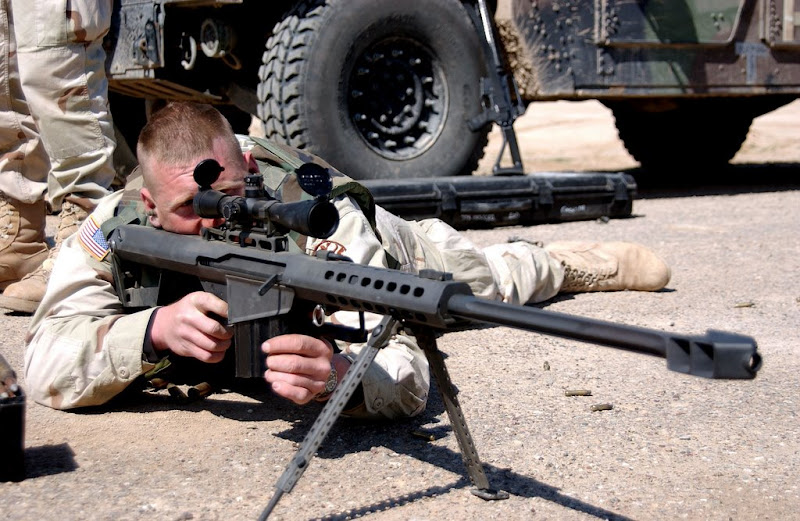
    And heres my beloved weapon

    I love her :yes:

    barrett_82A1.jpg


    And this man is the most luckiest man i ever saw

    M82rifle.jpg


    OK to the facts
    heres the bullet


    :shocked::shocked::shocked::shocked::shocked::shocked::shocked::shocked::shocked:
     
    Last edited: