


DEATH METAL

Death metal is a sub-genre of heavy metal that evolved out of thrash metal during the early 1980s.
Characteristics
Commonly recognized characteristics include usually violent or dark lyrics which focus on death as a nihilistic metaphor (although lately more philosophy-based lyrics, such as those of later Death have become popular as well), chromatic progressions and a narrative or "story telling" song structure such that there is not a verse-chorus cycle as much as an ongoing development of themes and motifs. It is usually identified by downtuned rhythm guitar, fast percussion and dynamic intensity. "Blast beats" are frequently used to add to the ferocity of the modern music. The vocals are commonly low gurgles named death grunt, growl, or death growl. This kind of vocalising is distorted by use of the throat and guts, unlike traditional singing techniques which discourages this technique. Some people consider it similar to the overtone style of singing. Music journalist Chad Bowar notes that, because of the similarity of the vocals to "unintelligible yelling", the style is sometimes described as "Cookie monster vocals"
Death metal's subject matter usually addresses more nihilistic themes than any other genre (alongside black metal), usually using metaphors of a gruesome nature to represent a larger concept. The genre was founded as the branch of metal praising 'death.' The focus on mortality along with the extreme nature of the music (as well as Possessed's "Death Metal") likely inspired the naming of this genre.
Death metal is occasionally known for abrupt tempo and time signature changes, and extremely fast and complex guitar and drumwork, although this is not always the case. Bands of this genre frequently utilize downtuned and distorted guitars, a downtuned, sometimes distorted bass guitar, a drum set (almost universally using two bass drums or a double bass drum pedal). Although this is the standard setup, bands have been known to incorporate other instruments such as keyboards. Death metal is very physically demanding of its musicians, especially in its more "technical" forms. Indeed, it is said by many familiar with death metal that much of the genre's oeuvre rivals classical and fusion jazz in difficulty; in particular, drummers in the style are almost universally required to have immense ability, as all but the most basic death metal requires incredible speed and accuracy, as well as the ability to play in odd meters and remember constant changes.
It is generally accepted that the origin of the name of the genre is the band Death, because of their band name, which was established in 1983, and was a trendsetter, the first to use many of the nuances of later death metal bands.
Early history (up to 1991)
Death metal is a subgenre of heavy metal. Growling vocals are the primary identifier for death metal for the newer generation. But this by itself also includes works such as Welcome to Hell from 1981 by British metal group Venom where the vocals may be mostly "growling", but the music is not what is generally meant by "death metal" today. Venom never labelled what they did, but their album Black Metal became the basis for labelling music with 'Satanic' lyrics and growling vocals as "black metal".
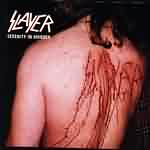
Genres are not usually identified solely by aesthetic form, and black or death metal labels are not easy to apply to some bands. One example of this is the American band Slayer, a pioneering thrash metal band. This genre (one that predates death metal), is also characterized by complex rhythmics and heavy guitar riffing. Slayer is not usually classified as a death metal band, and have never labelled themselves as such. Even so, with Reign in Blood from 1986, and subsequent works, they certainly influenced many early death metal bands.
Around 1983, aggressive U.S. bands such as Florida's Death, California's Possessed, and Chicago's Master began to form. If one would call this diffuse genre "early death metal", the first recorded examples of this would be Possessed's album Seven Churches from 1985 and early demotapes by Death, followed by Death's album Scream Bloody Gore from 1987. To their credit, these "early death metal" bands did push the format forward, something that would ultimately pay off in a new form of music that was substantially different from their closest forefather, thrash metal.
However, other death metal historians maintain that the 1985 brand of "early death metal" is more aptly summarised by the moniker "post-thrash" and that the band Death receives inflated credit partly because of its name. In particular, the music flora around 1985, although fitting the above description of "extreme brutality and speed" for its time, did not create anything significantly new compared to their immediate predecessors, and one would be hard pressed to identify strong and specific musical differences between, say Death's debut album from 1987 and same-period work by thrash metal bands such as the Brazilian Sepultura or even the aforementioned Venom, except perhaps slightly "growlier" vocals.
The alternative standpoint is that the modern concept of "death metal"—the point when it clearly decouples from the origins in heavy metal and thrash metal—can be set to 1989 or 1990. Just as in the original creation of NWOBHM (New Wave of British Heavy Metal) by Iron Maiden and other bands was sparked by the youthful energy of punk rock in the late 1970s, so did cross-fertilisation between metal and punk once more create something new in the late 1980s. The chaotic and often confusing development that took place around this time is well illustrated by the British band Napalm Death, often characterised as a "grindcore" band (see below). This band was simultaneously always part of the hardcore punk scene. However, Napalm Death themselves changed drastically around or before 1990, leaving grindcore (and most of the band members) behind. d other countries, drove a major shift in musical emphasis around 1990-1991.
In particular, on 1990's Harmony Corruption, Napalm Death can be heard playing something most fans would call death metal today, i.e. "modern death metal" by the above characterization. This album clearly displays aggressive and fairly technical guitar riffing, complex rhythmics, a sophisticated growling vocal delivery by Mark "Barney" Greenway, and thoughtful lyrics. Other bands contributing significantly to this early movement include Britain's Bolt Thrower and Carcass, Florida's Cannibal Corpse, Sweden's Entombed, New York's Suffocation, and Florida's Morbid Angel.
To close the circle, the band Death put out the album Human in 1991, certainly an example of modern death metal. The band Death's founder Chuck Schuldiner helped push the boundaries of uncompromising speed and technical virtuosity, mixing in highly technical and intricate rhythm guitar work with complex arrangements and emotive guitar solos. Other examples of this are Carcass's Necroticism: Descanting the Insalubrious from 1991, Suffocation's debut Human Waste from the same year and Entombed's Clandestine from 1992. At this point, all the above characteristics are clearly present: abrupt tempo and count changes, on occasion extremely fast drumming, morbid lyrics and growling delivery.
Later history (1991-)
During the 1990s, death metal grew in many directions, spawning a rich variety of subgenres, including the following:
Melodic death metal
Melodic death metal, where harmonies and melodies are much more present in the guitarwork. Although more melodic, it can sound more raw than the more precise sounding American variety. This subgenre is mostly associated with Sweden, especially in Gothenburg, as well as Norway and Finland (see Scandinavian death metal). The genre finds its best representation in At the Gates, In Flames, Dark Tranquillity, Children of Bodom and Arch Enemy. The Iron Maiden-esque techniques employed by these "Gothenburg" bands formed a riff-lexicon frequently used by many "Swedecore" bands that have risen in popularity since 2001. Because of this style's origin, these bands are (often mockingly) called "Gothencore." Many metal fans consider this genre to be separate from death metal.
CHILDREN OF BODOM

Scandinavian death metal
Scandinavian death metal, which could be called the forerunner of melodic death metal with bands like Entombed, Dismember, Unleashed and the before mentioned At the Gates. Entombed (ex-Nihilist) was the band, which started to combine punk and death/thrash riffs and set a trademark "Sunlight studios" guitar sound - formed by linking together two distortion boxes to create a raw, mechanical, electric buzz, which many bands of this genre later tried to reproduce. Nevertheless, this sound was inspired by British deathgrind band Unseen Terror on their debut album Human Error.
Florida death metal
Florida death metal, which includes some of the most notable bands. They are more rigid and percussive than the Swedish variant, more precise, refined and traditional; in many ways this style can be seen, at least in the early days as an extension of thrash metal, especially the Slayer/Kreator/Destruction variety, but with added complexity and brutality. It tends to be more direct and brutal than the "technical death metal" pioneered by bands such as Cynic and Atheist. Bands include Deicide, Malevolent Creation, Monstrosity, Obituary, Brutality, Morbid Angel, and Death, though later Death's albums fall more into the category of technical death metal (see below).
SLAYER
Technical death metal
Technical death metal, a narrow, but influential subgenre, refers to bands who are particularly distinguished by the virtuosity of their musicians. It should be noted, however, that much death metal requires considerable instrumental skill to perform. In fact, some consider the term "technical death metal" misleading, as it suggests that artistry and songwriting are given less focus than virtuosity and instrumental skill. Nonetheless, it is a term commonly applied to such bands as Gorguts, Necrophagist, Cynic, Atheist, Pestilence, Cryptopsy, Nile, and late Death.

Brutal death metal
Brutal death metal (also known as "percussive death metal") developed by combining certain aspects of the song structures of grindcore/goregrind with death metal. Brutal death metal is associated with bands like Cannibal Corpse, Suffocation, Disgorge, Dying Fetus, Sotajumala, Devourment, Immolation, Vital Remains, Vomit Remnants, Kruento, Wormed. One main characteristic of brutal death is the vocal style, called many things - death growl, "Cookie Monster", "bullfrog", or "guttural" vocals, which are almost always very low-pitched. The lyrics are mostly gore related, sung in a slow and choppy manner (though Cannibal Corpse's George 'Corpsegrinder' Fisher is known for his ability to belt out a rapidfire stream of lyrics while maintaining his trademark vocal sound). In addition, the guitar riffs are usually chunky grooves or hyper fast and down-tuned, often with pinch harmonics. The drumming is usually highly varied in style, ranging from slow and churning to blast beats, as is often the case in grindcore.
OBITUARY

CAUSE OF DEATH ALBUM COVER

Death/Doom
Death/doom is a slow and melancholic subgenre inspired by and mixed with classic doom metal. The genre was created by the likes of Disembowelment, My Dying Bride, Anathema, and Paradise Lost.
Blackened death metal
Blackened death metal, which is death metal fused with the Satanic elements of black metal, is most defined by the vocals and riffing style. Behemoth, Zyklon, and Dissection are prime examples of this genre, as is Emperor on their IX Equilibrium album.
Deathrash
Deathrash (also known as "Death/thrash") is a form of thrash metal with elements of death metal, including speed, guitar picking techniques, and vocals. In the earliest incarnation this style was the progression from thrash metal to death metal. Some bands are Possessed, Benediction, Pestilence and Sepultura with their early albums, Epidemic, Cancer, Konkhra, Criminal and the first two Sinister albums.
Grindcore is considered by some to be a more extreme variant of death metal and hardcore punk. However, many fans of grindcore and music historians would place it in a genre by itself, since the genre historically developed in parallel to death metal (both developed in the 1980s, death metal from thrash metal and grindcore from hardcore punk), each influencing the development of the other, but with early grindcore having a much more obvious hardcore punk, crossover thrash, and anarcho-punk influence. Early grindcore bands include Napalm Death (considered by many to be the founder of the genre), Carcass, Impetigo, Fear of God, Terrorizer, and Extreme Noise Terror.
CANNIBAL CORPSE


There are also other heavy metal sub-genres that have come from fusions between death metal and other non-metal genres, such as the fusion of death metal and Jazz played by Pestilence on their Spheres album, or the work of Florida bands Atheist and Cynic, the former of which sometimes went as far as to include jazz-style drum solos on albums, and the latter of which incorporated notable influences from fusion. Nile have also incorporated Egyptian music and Middle Eastern themes into their style.
Key artists
Key death metal bands include: Atheist, Autopsy, Bolt Thrower, Carcass, Cannibal Corpse, Death, Deicide, Dismember, Entombed, Immolation, Morbid Angel, Napalm Death, Obituary, Possessed, and Suffocation.
DEICIDE

SUFFOCATION

AUTOPSY


Death metal is a sub-genre of heavy metal that evolved out of thrash metal during the early 1980s.
Characteristics
Commonly recognized characteristics include usually violent or dark lyrics which focus on death as a nihilistic metaphor (although lately more philosophy-based lyrics, such as those of later Death have become popular as well), chromatic progressions and a narrative or "story telling" song structure such that there is not a verse-chorus cycle as much as an ongoing development of themes and motifs. It is usually identified by downtuned rhythm guitar, fast percussion and dynamic intensity. "Blast beats" are frequently used to add to the ferocity of the modern music. The vocals are commonly low gurgles named death grunt, growl, or death growl. This kind of vocalising is distorted by use of the throat and guts, unlike traditional singing techniques which discourages this technique. Some people consider it similar to the overtone style of singing. Music journalist Chad Bowar notes that, because of the similarity of the vocals to "unintelligible yelling", the style is sometimes described as "Cookie monster vocals"
Death metal's subject matter usually addresses more nihilistic themes than any other genre (alongside black metal), usually using metaphors of a gruesome nature to represent a larger concept. The genre was founded as the branch of metal praising 'death.' The focus on mortality along with the extreme nature of the music (as well as Possessed's "Death Metal") likely inspired the naming of this genre.
Death metal is occasionally known for abrupt tempo and time signature changes, and extremely fast and complex guitar and drumwork, although this is not always the case. Bands of this genre frequently utilize downtuned and distorted guitars, a downtuned, sometimes distorted bass guitar, a drum set (almost universally using two bass drums or a double bass drum pedal). Although this is the standard setup, bands have been known to incorporate other instruments such as keyboards. Death metal is very physically demanding of its musicians, especially in its more "technical" forms. Indeed, it is said by many familiar with death metal that much of the genre's oeuvre rivals classical and fusion jazz in difficulty; in particular, drummers in the style are almost universally required to have immense ability, as all but the most basic death metal requires incredible speed and accuracy, as well as the ability to play in odd meters and remember constant changes.
It is generally accepted that the origin of the name of the genre is the band Death, because of their band name, which was established in 1983, and was a trendsetter, the first to use many of the nuances of later death metal bands.
Early history (up to 1991)
Death metal is a subgenre of heavy metal. Growling vocals are the primary identifier for death metal for the newer generation. But this by itself also includes works such as Welcome to Hell from 1981 by British metal group Venom where the vocals may be mostly "growling", but the music is not what is generally meant by "death metal" today. Venom never labelled what they did, but their album Black Metal became the basis for labelling music with 'Satanic' lyrics and growling vocals as "black metal".
Genres are not usually identified solely by aesthetic form, and black or death metal labels are not easy to apply to some bands. One example of this is the American band Slayer, a pioneering thrash metal band. This genre (one that predates death metal), is also characterized by complex rhythmics and heavy guitar riffing. Slayer is not usually classified as a death metal band, and have never labelled themselves as such. Even so, with Reign in Blood from 1986, and subsequent works, they certainly influenced many early death metal bands.
Around 1983, aggressive U.S. bands such as Florida's Death, California's Possessed, and Chicago's Master began to form. If one would call this diffuse genre "early death metal", the first recorded examples of this would be Possessed's album Seven Churches from 1985 and early demotapes by Death, followed by Death's album Scream Bloody Gore from 1987. To their credit, these "early death metal" bands did push the format forward, something that would ultimately pay off in a new form of music that was substantially different from their closest forefather, thrash metal.
However, other death metal historians maintain that the 1985 brand of "early death metal" is more aptly summarised by the moniker "post-thrash" and that the band Death receives inflated credit partly because of its name. In particular, the music flora around 1985, although fitting the above description of "extreme brutality and speed" for its time, did not create anything significantly new compared to their immediate predecessors, and one would be hard pressed to identify strong and specific musical differences between, say Death's debut album from 1987 and same-period work by thrash metal bands such as the Brazilian Sepultura or even the aforementioned Venom, except perhaps slightly "growlier" vocals.
The alternative standpoint is that the modern concept of "death metal"—the point when it clearly decouples from the origins in heavy metal and thrash metal—can be set to 1989 or 1990. Just as in the original creation of NWOBHM (New Wave of British Heavy Metal) by Iron Maiden and other bands was sparked by the youthful energy of punk rock in the late 1970s, so did cross-fertilisation between metal and punk once more create something new in the late 1980s. The chaotic and often confusing development that took place around this time is well illustrated by the British band Napalm Death, often characterised as a "grindcore" band (see below). This band was simultaneously always part of the hardcore punk scene. However, Napalm Death themselves changed drastically around or before 1990, leaving grindcore (and most of the band members) behind. d other countries, drove a major shift in musical emphasis around 1990-1991.
In particular, on 1990's Harmony Corruption, Napalm Death can be heard playing something most fans would call death metal today, i.e. "modern death metal" by the above characterization. This album clearly displays aggressive and fairly technical guitar riffing, complex rhythmics, a sophisticated growling vocal delivery by Mark "Barney" Greenway, and thoughtful lyrics. Other bands contributing significantly to this early movement include Britain's Bolt Thrower and Carcass, Florida's Cannibal Corpse, Sweden's Entombed, New York's Suffocation, and Florida's Morbid Angel.
To close the circle, the band Death put out the album Human in 1991, certainly an example of modern death metal. The band Death's founder Chuck Schuldiner helped push the boundaries of uncompromising speed and technical virtuosity, mixing in highly technical and intricate rhythm guitar work with complex arrangements and emotive guitar solos. Other examples of this are Carcass's Necroticism: Descanting the Insalubrious from 1991, Suffocation's debut Human Waste from the same year and Entombed's Clandestine from 1992. At this point, all the above characteristics are clearly present: abrupt tempo and count changes, on occasion extremely fast drumming, morbid lyrics and growling delivery.
Later history (1991-)
During the 1990s, death metal grew in many directions, spawning a rich variety of subgenres, including the following:
Melodic death metal
Melodic death metal, where harmonies and melodies are much more present in the guitarwork. Although more melodic, it can sound more raw than the more precise sounding American variety. This subgenre is mostly associated with Sweden, especially in Gothenburg, as well as Norway and Finland (see Scandinavian death metal). The genre finds its best representation in At the Gates, In Flames, Dark Tranquillity, Children of Bodom and Arch Enemy. The Iron Maiden-esque techniques employed by these "Gothenburg" bands formed a riff-lexicon frequently used by many "Swedecore" bands that have risen in popularity since 2001. Because of this style's origin, these bands are (often mockingly) called "Gothencore." Many metal fans consider this genre to be separate from death metal.
CHILDREN OF BODOM

Scandinavian death metal
Scandinavian death metal, which could be called the forerunner of melodic death metal with bands like Entombed, Dismember, Unleashed and the before mentioned At the Gates. Entombed (ex-Nihilist) was the band, which started to combine punk and death/thrash riffs and set a trademark "Sunlight studios" guitar sound - formed by linking together two distortion boxes to create a raw, mechanical, electric buzz, which many bands of this genre later tried to reproduce. Nevertheless, this sound was inspired by British deathgrind band Unseen Terror on their debut album Human Error.
Florida death metal
Florida death metal, which includes some of the most notable bands. They are more rigid and percussive than the Swedish variant, more precise, refined and traditional; in many ways this style can be seen, at least in the early days as an extension of thrash metal, especially the Slayer/Kreator/Destruction variety, but with added complexity and brutality. It tends to be more direct and brutal than the "technical death metal" pioneered by bands such as Cynic and Atheist. Bands include Deicide, Malevolent Creation, Monstrosity, Obituary, Brutality, Morbid Angel, and Death, though later Death's albums fall more into the category of technical death metal (see below).
SLAYER
Technical death metal
Technical death metal, a narrow, but influential subgenre, refers to bands who are particularly distinguished by the virtuosity of their musicians. It should be noted, however, that much death metal requires considerable instrumental skill to perform. In fact, some consider the term "technical death metal" misleading, as it suggests that artistry and songwriting are given less focus than virtuosity and instrumental skill. Nonetheless, it is a term commonly applied to such bands as Gorguts, Necrophagist, Cynic, Atheist, Pestilence, Cryptopsy, Nile, and late Death.

Brutal death metal
Brutal death metal (also known as "percussive death metal") developed by combining certain aspects of the song structures of grindcore/goregrind with death metal. Brutal death metal is associated with bands like Cannibal Corpse, Suffocation, Disgorge, Dying Fetus, Sotajumala, Devourment, Immolation, Vital Remains, Vomit Remnants, Kruento, Wormed. One main characteristic of brutal death is the vocal style, called many things - death growl, "Cookie Monster", "bullfrog", or "guttural" vocals, which are almost always very low-pitched. The lyrics are mostly gore related, sung in a slow and choppy manner (though Cannibal Corpse's George 'Corpsegrinder' Fisher is known for his ability to belt out a rapidfire stream of lyrics while maintaining his trademark vocal sound). In addition, the guitar riffs are usually chunky grooves or hyper fast and down-tuned, often with pinch harmonics. The drumming is usually highly varied in style, ranging from slow and churning to blast beats, as is often the case in grindcore.
OBITUARY

CAUSE OF DEATH ALBUM COVER

Death/Doom
Death/doom is a slow and melancholic subgenre inspired by and mixed with classic doom metal. The genre was created by the likes of Disembowelment, My Dying Bride, Anathema, and Paradise Lost.
Blackened death metal
Blackened death metal, which is death metal fused with the Satanic elements of black metal, is most defined by the vocals and riffing style. Behemoth, Zyklon, and Dissection are prime examples of this genre, as is Emperor on their IX Equilibrium album.
Deathrash
Deathrash (also known as "Death/thrash") is a form of thrash metal with elements of death metal, including speed, guitar picking techniques, and vocals. In the earliest incarnation this style was the progression from thrash metal to death metal. Some bands are Possessed, Benediction, Pestilence and Sepultura with their early albums, Epidemic, Cancer, Konkhra, Criminal and the first two Sinister albums.
Grindcore is considered by some to be a more extreme variant of death metal and hardcore punk. However, many fans of grindcore and music historians would place it in a genre by itself, since the genre historically developed in parallel to death metal (both developed in the 1980s, death metal from thrash metal and grindcore from hardcore punk), each influencing the development of the other, but with early grindcore having a much more obvious hardcore punk, crossover thrash, and anarcho-punk influence. Early grindcore bands include Napalm Death (considered by many to be the founder of the genre), Carcass, Impetigo, Fear of God, Terrorizer, and Extreme Noise Terror.
CANNIBAL CORPSE


There are also other heavy metal sub-genres that have come from fusions between death metal and other non-metal genres, such as the fusion of death metal and Jazz played by Pestilence on their Spheres album, or the work of Florida bands Atheist and Cynic, the former of which sometimes went as far as to include jazz-style drum solos on albums, and the latter of which incorporated notable influences from fusion. Nile have also incorporated Egyptian music and Middle Eastern themes into their style.
Key artists
Key death metal bands include: Atheist, Autopsy, Bolt Thrower, Carcass, Cannibal Corpse, Death, Deicide, Dismember, Entombed, Immolation, Morbid Angel, Napalm Death, Obituary, Possessed, and Suffocation.
DEICIDE

SUFFOCATION

AUTOPSY


 i only have the albums of children of Bodom.. hebai matanam too much


