Tim Berners-Lee followed his dream of a better, easier way to communicate via computers on a global scale, which led him to create the
World-Wide Web.

Robert Cailliau, collaborator on the World-Wide Web project and first Web surfer.
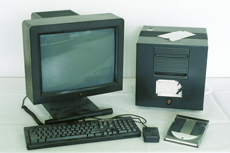
The historic NeXT computer used by Tim Berners-Lee in 1990, on display in the Microcosm exhibition at CERN. It was the first web server, hypermedia browser and web editor.
CERN, the European Organization for Nuclear Research, is where it all began in March 1989. A physicist, Tim Berners-Lee, wrote a proposal for information management showing how information could be transferred easily over the Internet by using hypertext, the now familiar point-and-click system of navigating through information. The following year, Robert Cailliau, a systems engineer, joined in and soon became its number one advocate.
The idea was to connect hypertext with the Internet and personal computers, thereby having a single information network to help CERN physicists share all the computer-stored information at the laboratory. Hypertext would enable users to browse easily between texts on web pages using links; The first examples were developed on NeXT computers.
A screen shot taken from a NeXT computer running TIm Berners-Lee's original WorldWideWeb browser. It has taken a long time for technology to catch up with Berners-Lee's original vision. The first ever web browser was also an editor, making the web an interactive medium, the problem was that it only ran on the NeXTStep operating system. With recent phenomena like blogs and wikis, the web is beginning to develop the kind of collaborative nature that its inventor envisaged from the start.
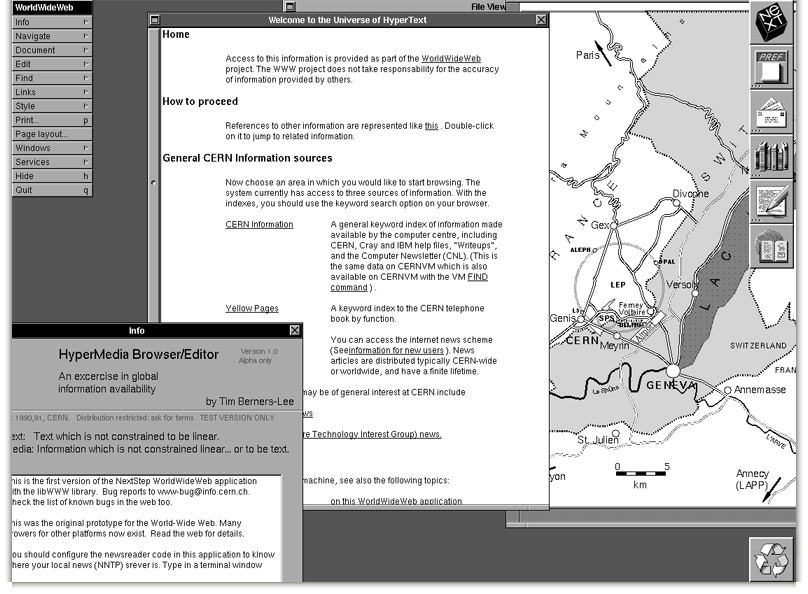
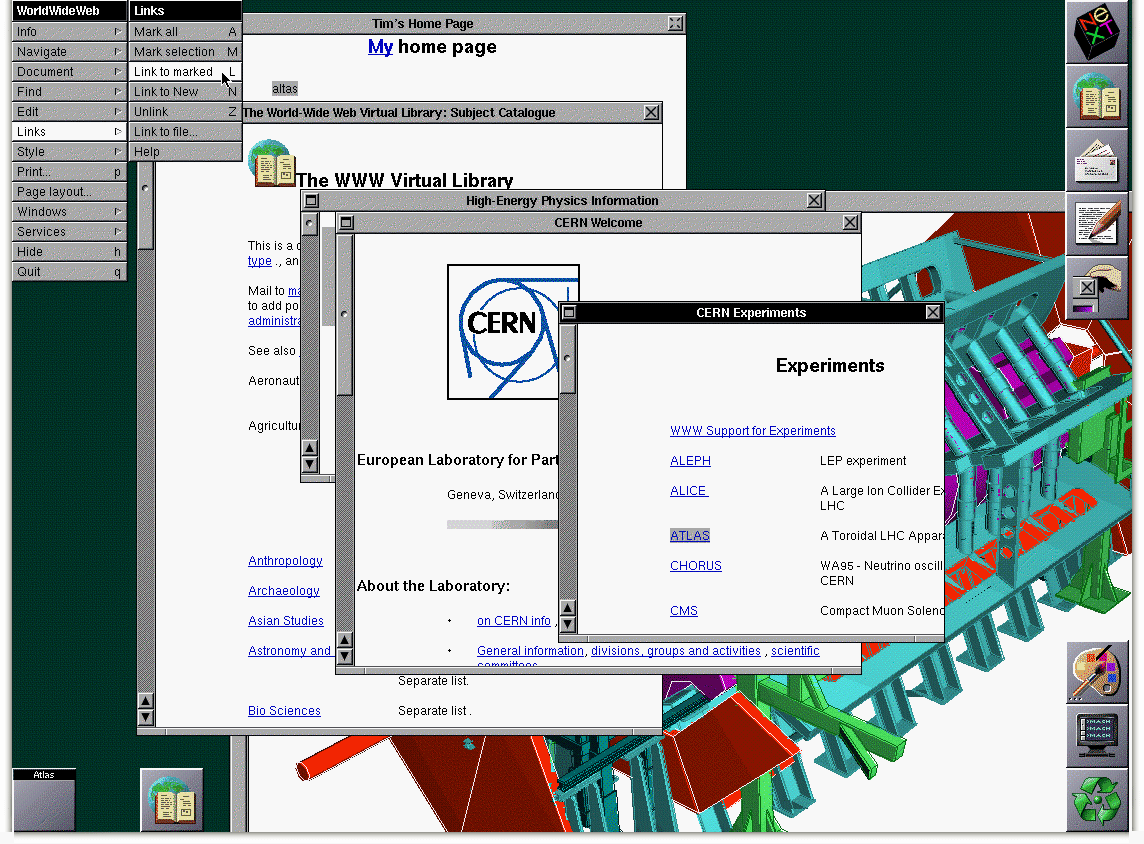
Berners-Lee created a browser-editor with the goal of developing a tool to make the Web a creative space to share and edit information and build a common hypertext. What should they call this new browser: The Mine of Information? The Information Mesh? When they settled on a name in May 1990, it was the WorldWideWeb.
Info.cern.ch was the address of the world's first-ever web site and web server, running on a NeXT computer at CERN. The first web page address was
http://info.cern.ch/hypertext/WWW/TheProject.htm
which centred on information regarding the WWW project. Visitors could learn more about hypertext, technical details for creating their own webpage, and even an explanation on how to search the Web for information. There are no screenshots of this original page and, in any case, changes were made daily to the information available on the page as the WWW project developed. You may find a later copy (1992) on the World Wide Web Consortium website.
However, a website is like a telephone; if there's just one it's not much use. Berners-Lee's team needed to send out server and browser software. The NeXT systems however were far advanced over the computers people generally had at their disposal: a far less sophisticated piece of software was needed for distribution.
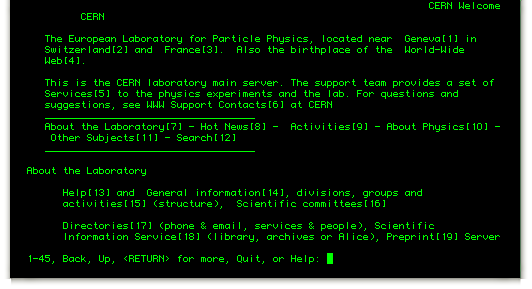
By spring of 1991, testing was underway on a universal line mode browser, which would be able to run on any computer or terminal. It was designed to work simply by typing commands. There was no mouse, no graphics, just plain text, but it allowed anyone with an Internet connection access to the information on the Web.
During 1991 servers appeared in other institutions in Europe and in December 1991, the first server outside the continent was installed in the US at SLAC (Stanford Linear Accelerator Center). By November 1992, there were 26 servers in the world, and by October 1993 the figure had increased to over 200 known web servers. In February 1993, the National Center for Supercomputing Applications (NCSA) in Chicago released the first version of Mosaic, which was to make the Web available to people using PCs and Apple Macintoshes.
... and the rest is Web history.
Although the Web's conception began as a tool to aid physicists answer tough questions about the Universe, today its usage applies to various aspects of the global community and affects our daily lives.
Today there are upwards of 80 million websites, with many more computers connected to the Internet, and hundreds of millions of users. If households nowadays want a computer, it is not to compute, but to go on the Web.
During the 1990s a visitor to CERN’s early homepage would have seen something like this. This looks much more primitive than the NeXT screen shots, and it was! But it was the first universal line mode browser that allowed anyone access to the Web, regardless of the kind of computer system used. When compared with the current homepage for CERN, most of the information provided is the same.